

Farmer Focus: Piglet vaccine technology saves time and stress
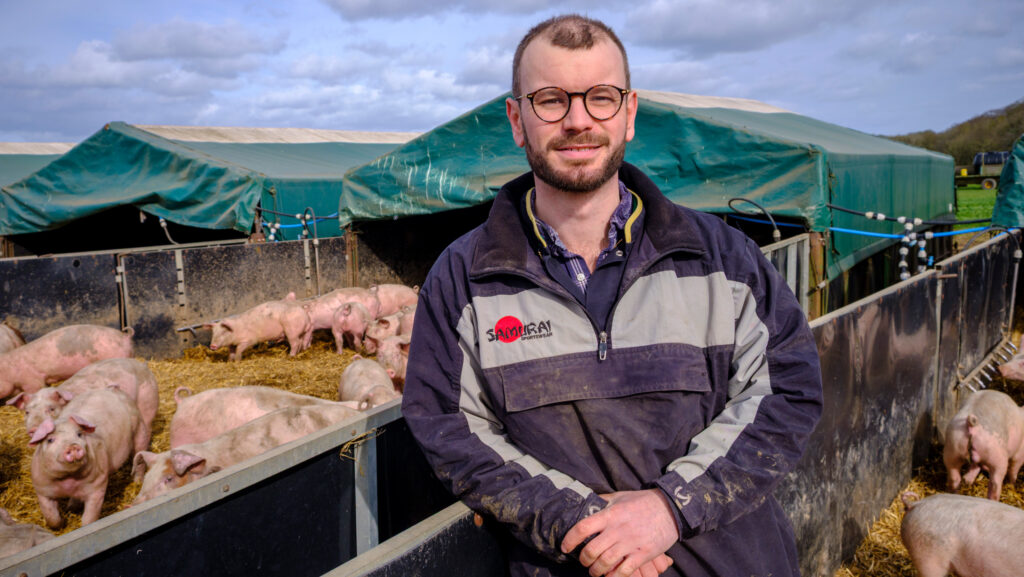 William de Feyter © Jason Bye
 Keeping pigs on three different sites often spreads the workload well, with the pigs all being at different stages. However, sometimes it can be very full on all at once.
We are, thankfully, in the former category, having just filled the outdoor unit and about to empty the indoor units.
See also: Pig vaccination without needles – how it works
About the author

Having pigs at different ages on different sites can present disease challenges, but separate boots, overalls and machinery minimise the risk effectively. After settling in, the piglets are vaccinated and split-sexed.
This process is time-consuming and physically demanding, as the average weight of each piglet is about 10kg.
But many hands make light work, and it only took three days to do more than 4,000 piglets.
Each piglet receives four vaccines: Mycoplasma hyopneumoniae (M hyo), Lawsonia, porcine circovirus (PCV) and porcine reproductive and respiratory syndrome (PRRS).
We have moved away from intramuscular administration via needles in favour of intradermal, needleless vaccine guns.
This reduces the amount of vaccine administered to each pig from 2ml to 0.2ml, which is shot under the skin using a high-velocity jet.
Since going down the intradermal route, we have noticed the recovery time for the piglets is much quicker and they get off to a better start at what is a particularly stressful time for them, having just been weaned.
The technology is not new, but has really made progress in the past few years, with significant improvements in battery life and the ability to administer multiple vaccines at the same time.
M hyo, PCV and Lawsonia can be given in one gun and PRRS in another, saving time. Further vaccine development will allow us to administer all four vaccines from one gun, saving even more time.
I recently had the pleasure of judging at the Norfolk Young Farmers Rally. It is good to see members still taking part in some sensible, skilled competitions – and some that can only be described as mad but very entertaining.
It seems membership is down in the county, though it was clear those who were there had an excellent day out.
I really cannot emphasise enough that any young person who is not a member should go and find their local club, as they will make friendships and memories that will last a lifetime.