

Farmer Focus: Rain gives clover-rich reseeds perfect soaking
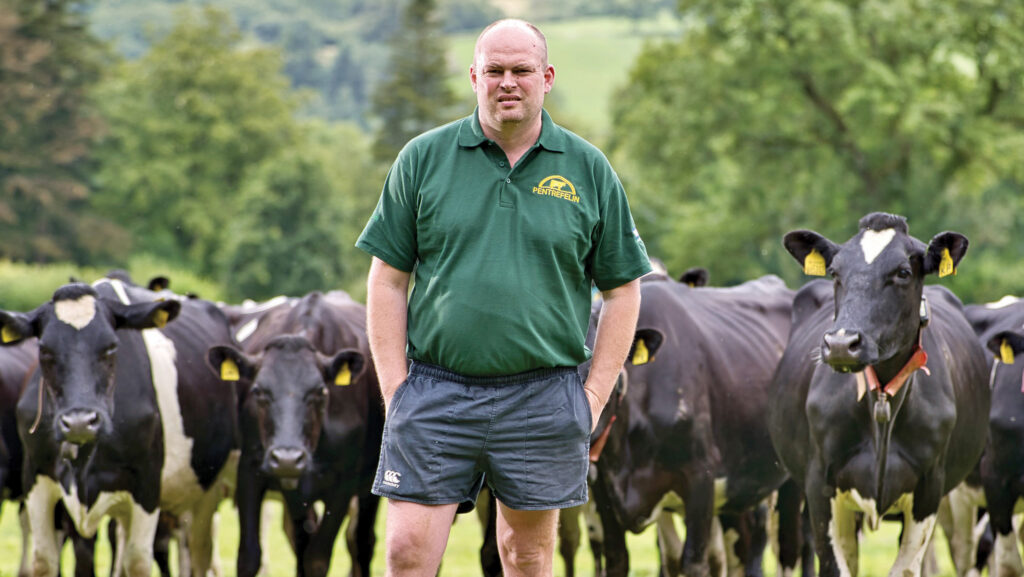 Eurig Jenkins © Richard Stanton
 Lampeter Serengeti is now green. To say that we planned for the rain to start on 27 August would be a lie. I finished sowing grass seed with the new Guttler at 6pm and the flat roller was done by 8pm. The ground had a perfect soaking 10 hours later.
See also: Advice on protecting grass reseeds with nurse crops
About the author

With regular light rain ever since, as well as warm temperatures, I could not have wished for anything better.
The ground turned over nicely, with a new set of points on the plough before starting, and basically everything was done in five big days. The diggers left that night as well.
As conditions were so dry, we decided to flat-roll everything after the prism roller on the back of the Guttler. The prism roller left the seed-bed too fluffy and we wanted maximum soil-to-seed contact to stimulate seed growth before the rain.
The terrain of the fields is quite extreme in some areas, and this meant the only possible option was rolling in one direction. This resulted in run-off from some areas, which then formed small ruts down the field. It just demonstrated that if land is left bare, soil erosion can be a major issue.
A lot of discussion went into choosing a ley that was going to be long-term, clover-rich and have a long grazing season. Eventually, we opted for off-the-shelf Wynnstay Crusader, with added plantain at 1.2kg/ha.
This upped the total sowing rate to 36kg/ha, with the hope of having a denser sward, as some competitors seem to think 30kg/ha would be ample.
The R1s (rising one-year-olds) were weighed on 16 September. Their target weight was 175kg, and actual weight was 184kg, with a gain of 0.62kg/day growth since weaning. We were pleased with them, even though they managed to eat more than 40ha (100 acres) of standing third-cut grass.
Every field we farm has also had fertiliser at this point, and the growth has been phenomenal – one week growing 80kg dry matter (DM)/day. Silage for the milkers has been removed for now as average farm cover is over 2,500kg DM, and parlour concentrates have also been reduced.
Our vet, Jim, pregnancy scanned 553 animals on 2 September to achieve 362 in-calf cows out of an eligible 402 cows (result: 10% empty). Heifers scanned 113 in-calf, but one already seems to be bulling after Jim suspected she was on the verge of reabsorbing.