

Farmer Focus: Schoolkids look on as crews tackle field fire
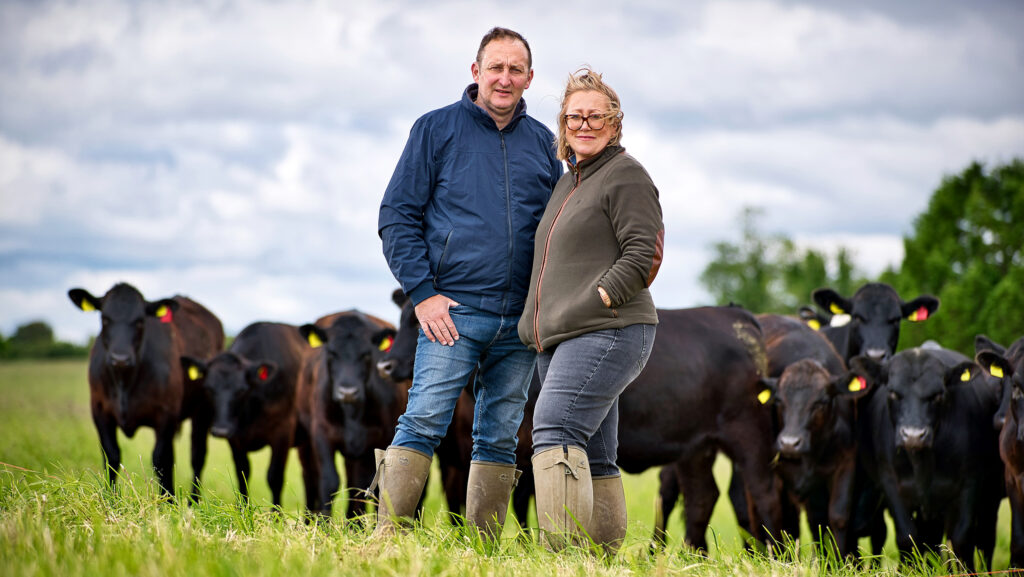 Dan and Catherine Mercer © Richard Stanton
 It has been a busy time in the run-up to harvest. The silage yielded better than expected, thanks to a bit of rain beforehand.
Salisbury Plain is currently very burned up; hopefully we have just about enough grass in front of the cattle to keep them going for the next six weeks.
See also: Benefits of digestible cocksfoot and tall fescue in drought
About the author

The suckler calves are looking well and are coping in the current conditions. The dairy-cross cattle are hitting their targets, and we will start drawing on them next month, which will help with cashflow.
Our local village primary school popped up to see us last week for an educational trip. Their teacher had approached us to ask whether we would be interested in hosting a school visit for years 3 and 4, who are currently learning about where food comes from and how it is produced.
Their teacher thought it was important for the children to understand how food ends up on a supermarket shelf.
The children were genuinely so enthusiastic. There were lots of questions asked about the cattle and how beef is produced, as well as about what crops we grow and what they are used for.
They also wanted to know how much machinery cost and how that related to everyday costs, plus many questions about the environment too.
It was refreshing and encouraging to see how much they enjoyed themselves and what they had already learned at school.
Hopefully, they went away with a positive outlook on farming and a better knowledge of what goes into producing some of their favourite foods.
We told the children to look out for the combine cutting winter barley opposite the school the following week, as they wouldn’t be able to miss it for the dust.
As it turned out, they couldn’t miss it because we had a field fire. With several fire crews in attendance and lots of help from some neighbours with cultivators and water bowsers, we managed to get it under control.
With only a small amount of standing crop left in the field, it was only some swaths of straw that were lost.
Thankfully, no one was hurt and all machinery is still intact. But with only a small chance of some light rain forecast, the fire risk continues to increase daily with the intense heat and wind.