

Farmer Focus: Show win softens fifth-cut silage fiasco
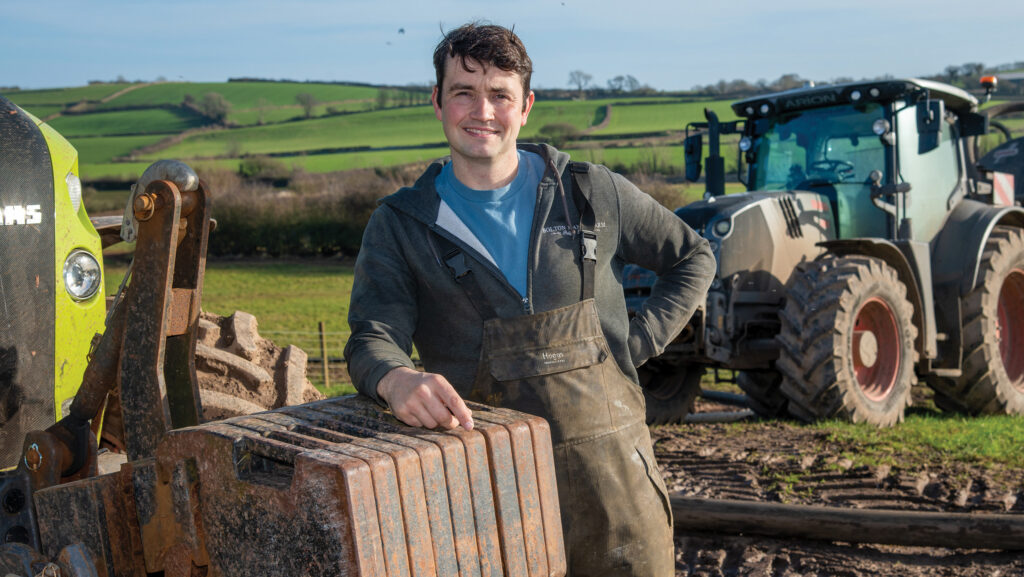 Tom Stable © John Eveson
 September is always extremely busy, and this year was no exception. We harvested the maize in three days during the first week of the month, and it was a very consistent crop, averaging just under 42t/ha at 33% dry matter.
See also: How to have a successful dairy transition – vet’s top tips
About the author

We have a pretty set system now and always put our grass reseeds in after the wheat. This allows earlier and more reliable establishment than after maize and doesn’t take any land out of production like a spring reseed does.
The 17ha (42 acres) we’ve put in have come well. Fifth-cut, however, wasn’t so slick. I don’t ever remember making such a mess of reading the weather forecast, resulting in the wettest silage I’ve ever seen, never mind made. I will update you with the spectacular analysis when I get one.
Something else that hasn’t gone so well is the move onto this year’s maize and first cut. I think the energy balance is out in the transition cow diet, as the fresh cows are calving in with low appetite and poor rumen fill, resulting in some of the old subclinical milk fever problems. We are taking bloods today to hopefully get this back in balance quickly.
In among all this, though, came some good news, when we took a cow and a heifer to Westmorland Show. The heifer stood fourth in a strong class of milking heifers, and we were delighted to see our cow, Bolton Manor Receive Janet, win the senior cow class.
She went on to win overall Holstein Champion and interbreed Dairy Champion – a tremendous achievement with some very stiff competition.
The building work is progressing well. We’ve ended up with about 800t of stone, which has come out of the hole where the second section of slurry store is going. This will be used to face the building, while the rest is crushed and used on site.
The concrete pump is back this week to put the floor section in after a full week of welding reinforcing in the base. The progress has been slower than I’d like, but I think that is mainly down to me underestimating the work that is going into this part of the project.
Hopefully, by the next time I write, the wheat will be in and the fieldwork done. I’m ready to settle into a more normal winter routine.