

Farmer Focus: Strong grass growth prompts early ewe purchase
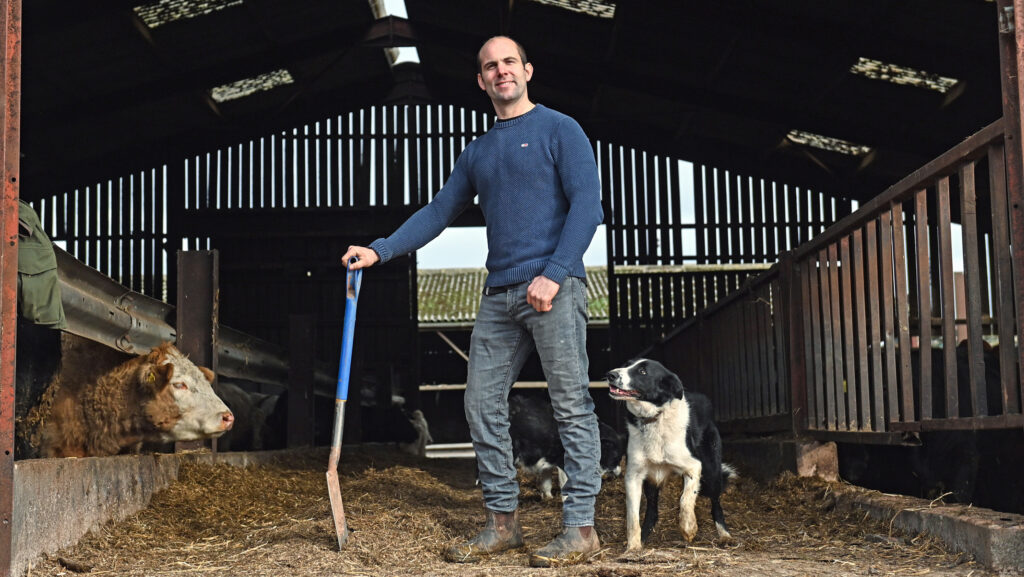 Dan Phillips © Richard Swingler
 I am writing this sat by the pool in Sardinia, and what a lovely place it is.
June has always been the time for a family holiday for us, and while it can be tricky to get away, it is really great to relax and switch off for a week.
See also: How off-farm pursuits are benefiting two livestock farms
About the author

First-cut silage is done and dusted, and apart from a fight between the rake and a fence post, all went smoothly.
Unfortunately, the fence post won, which meant a late night in the workshop, and an early morning to catch up.
Yields were good, which will go some way to making up for last year’s shortfall caused by the summer drought.
In fact, grass growth is still so strong that we decided to buy some replacement yearling ewes earlier than normal, as we have grass to spare.
Also, the buoyant lamb trade made me think replacement ewes will cost a fortune this year. We have yet to sell any spring lambs but, with the trade holding up at £9.05/kg, I am hoping we will have a pull soon.
Lamb growth in two groups has been disappointing. After giving them the normal drench and Ovivac after six weeks, we were still seeing some loose muck a couple of weeks later.
Samples were taken and the faecal egg count showed up coccidiosis. They have now been drenched with a medicated cocci-drench, and I am hopeful of seeing an improvement soon.
I also managed to get away to visit Cereals, which was a real treat. The fact it was at Jeremy Clarkson’s farm made it a lot easier to get to from this side of the country.
The main takeaways for me were abundance of drone stands. Clearly, this is the way the future of crop spraying will go, with some of the machines incredibly impressive.
And when a run-of-the-mill mounted sprayer is priced at about £65,000, before tractor, diesel and operator, it may be a more affordable way of doing things.
The other standout was the closed transfer systems. With grant funding available, it looks like a no-brainer to invest in something that will improve operator safety and reduce the risk to the environment from spills.
With technology advancing so quickly and regulation only heading in one direction, I reckon these innovations will become commonplace on farms sooner, rather than later.