

Farmer Focus: Westerwolds crop of choice on pig ground
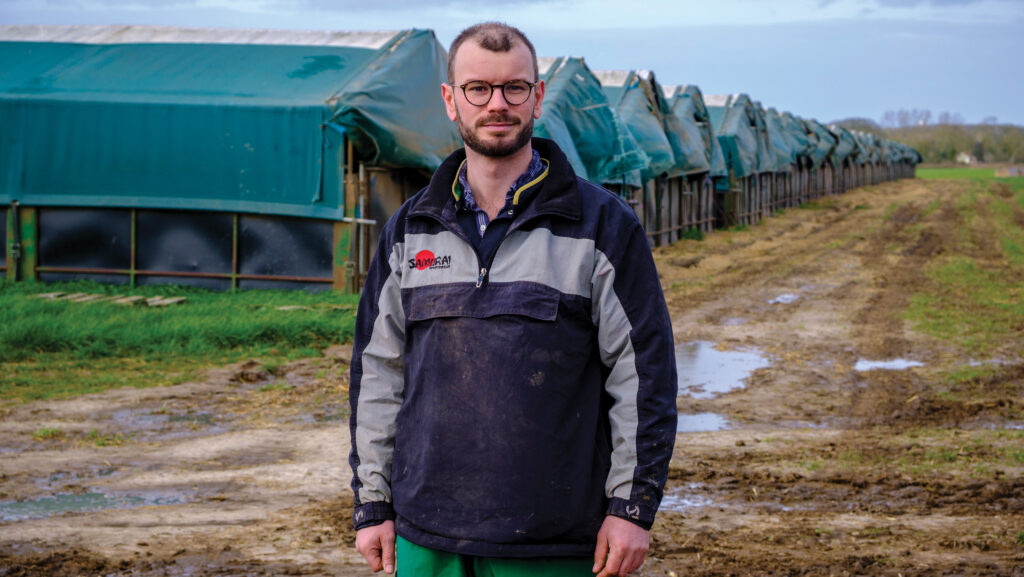 William de Feyter © Jason Bye
 The recent hot weather will have been a challenge for farmers across the board. I was very grateful that we had only just taken piglets into the indoor units.
And at the outdoor unit, we only had a handful of tents left with pigs in, before emptying them out in preparation for the next batch.
See also: Benefits of grass leys for outdoor pig units
About the author

We have always drilled grass after the muck is cleared between batches of pigs.
We do this to prevent run-off, leaching of nutrients and to bind the soil together where the traffic and pigs will be in future batches.
Westerwolds ryegrass has become our “cover crop” of choice, as it seems to grow in almost any conditions, establishes quickly and is cheap compared with other species.
Establishment is kept simple with a couple of passes of an old Terradisc mounted with a seed box to level and mix the soil, and a final pass with the metering wheel dropped down to drill the grass.
We then roll the seed-bed with a Cambridge roll to consolidate it, if conditions allow.
The latest we have dared drill the grass has been in November.
This went against all growing advice, but it established and produced useful green cover for the pigs moving onto the area in the spring.
However, it did take several weeks to emerge and a lot of questioning whether we were right to drill so late in the year.
This year has been a bit challenging, as in early spring the ground was really too wet to drill.
But knowing that the pigs would be back on there in a matter of weeks, it was a case of farming to the calendar rather than the conditions.
It has done far better than expected, producing a thick mat of grass, although that may be down to my miscalibration of the drill and putting on 50% more seed than we should have.
Thankfully, it wasn’t a particularly expensive mistake as it was only 2ha. The grass drilled at the correct seed rate of 35kg/ha at the end of April is a different story.
So far, it has only seen 20mm of rain, and while the emergence is relatively widespread, so is the emergence of the fat hen, which I fear will overtake it if and when we see some more rain.