

Farmer Focus: What farmers need from new Welsh government
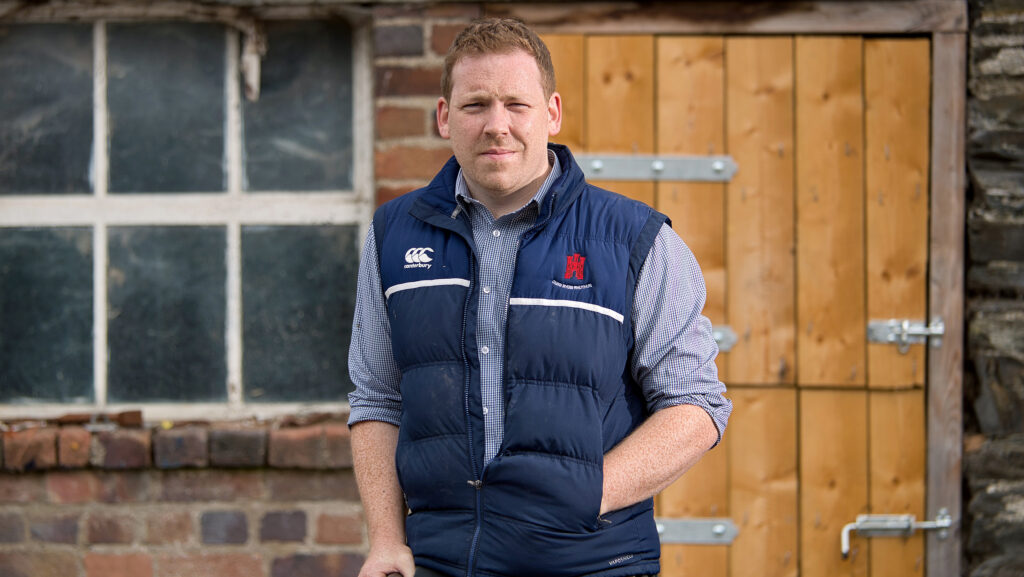 Joe Mault © Richard Stanton
 Finally, a change has happened in Wales. For all of my adult life, the Welsh government has been run by Labour and, as is well documented, many farmers think Labour has not been a friend to agriculture.
We have had 27 years of what many would describe as poor management and frustrating agricultural policy, from a wishful-thinking approach to bovine TB to an unscientific, “desktop” approach to farming by calendar rather than by practical, on-the-ground reality.
See also: Wales’ Sustainable Farming Scheme: What you need to know
About the author

My hope is that the new government can create a prosperous Welsh agricultural industry built on realism, trust and proper consultation with working farmers.
That should start with a refreshed and practical approach to bovine TB, improved water quality policies that work with farmers rather than against them, and a serious reduction in the red tape surrounding the Sustainable Farming Scheme (SFS).
I have recently completed our SFS application, in preference to the Basic Payment Scheme (BPS).
Choosing BPS would have resulted in a reduction in overall payments of about 40%.
In classic Labour-led Welsh government fashion, they claim there is still a choice to remain with BPS; in reality, they heavily penalise those who do.
To me, that’s not a choice at all and feels like we’re being forced down one road while being told there are two.
We also chose SFS because we already complete the majority of the universal actions required, such as nutrient management planning and other environmental responsibilities that active farmers naturally carry out.
However, there is still a real concern that the policy itself is not yet finalised. With a change of government, it feels a little like jumping on a bus without knowing the destination.
As I write, the Senedd election has happened but the first minister has not yet been chosen.
It is difficult to predict who will become the next Minister for Rural Affairs and, more importantly, what their view of SFS will be in its current form.
My hope is that SFS remains largely the same in principle, but becomes far less burdensome in practice.
Farmers should be rewarded for the work they already do, not buried under paperwork trying to prove it.
Trust must be restored between the Welsh government and farmers so that support schemes focus on food production, environmental stewardship and long-term sustainability, rather than being an endless box-ticking exercise.