

Wholecrop barley silage solves key challenges on dairy farm
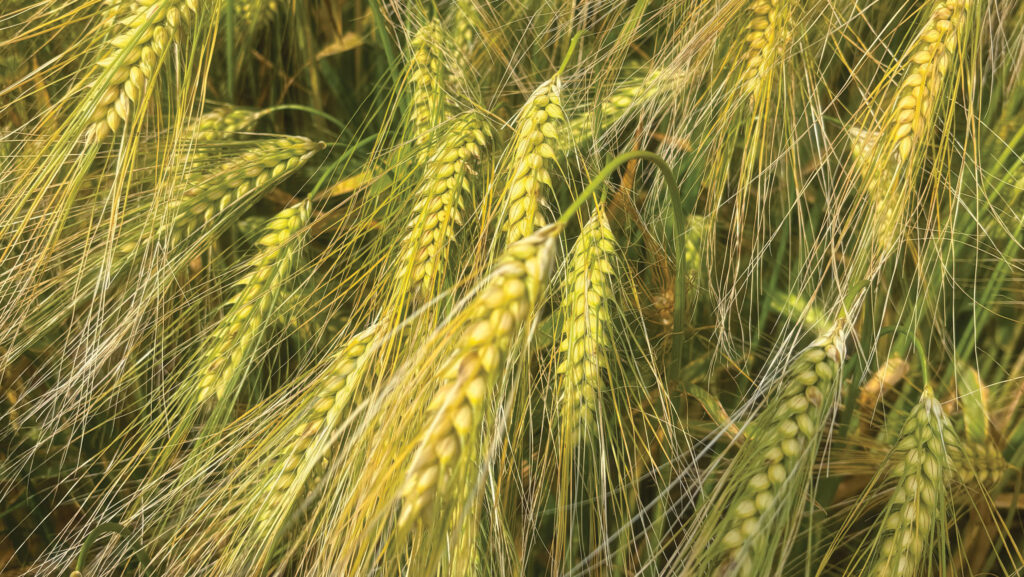 Roger Lewis's barley at wholecrop stage © Roger Lewis
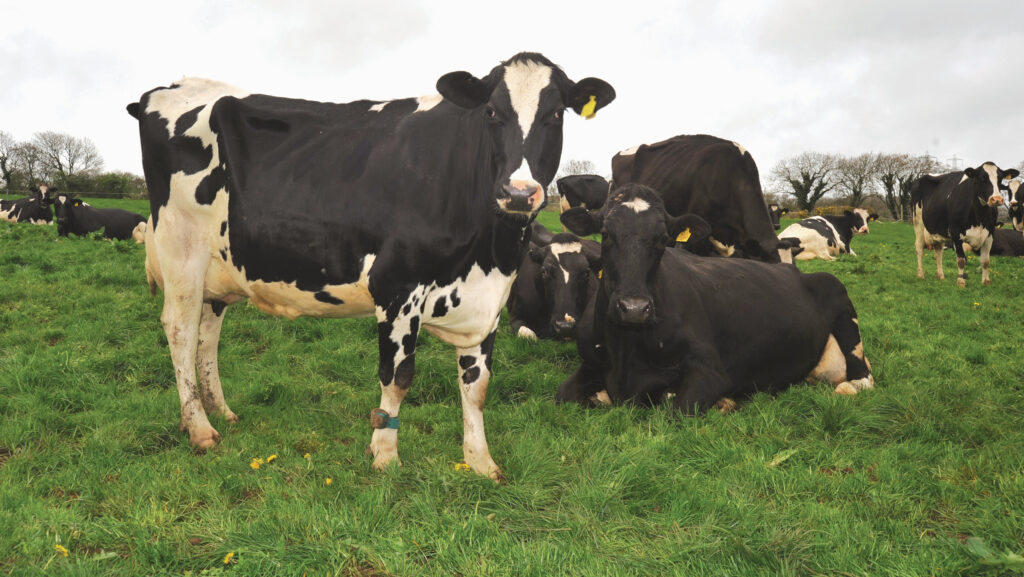
 Cases of milk fever in the 400 high-yielding pedigree Holsteins at Poyerston Farm numbered just two in the last calving period.
Roger Lewis, who runs the autumn-calving herd in partnership with his parents, Philip and Sheila, says feeding wholecrop barley in the dry cow ration has driven down metabolic disorders in fresh calvers, and offered a solution to other challenges too.
See also: How one dairy grows top-quality grass for grazing and silage
Farm facts: Poyerston Farm, Milton, Pembrokeshire
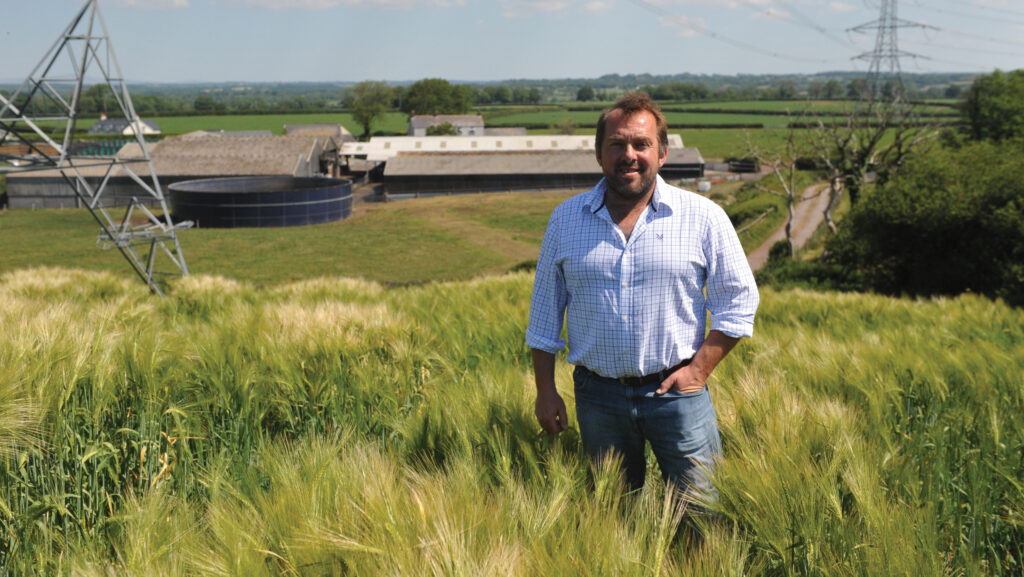
Roger Lewis © Debbie James
- 304ha farmed
- 10,426 litres milk sold
- 4,831 litres from forage
- 4.24% butterfat 3.40% protein
- Milk supplied to First Milk
- 40ha maize grown
Previously, all barley grown on the farm, near Milton, Pembrokeshire, had been combined and crimped – the grain fed in a mixed ration and the straw either chopped for the transition diet or used as bedding.
“We were feeding chopped straw for 15 years but went down the wholecrop route because it meant we didn’t have to process chopped straw.
“We had basically been pulling the barley apart at harvest, then putting it back together again at feeding – it didn’t make any sense,” Roger admits.
In addition, chopping straw is costly and dusty, he says, and ideally the straw needs be kept dry, which creates storage challenges because it is bulky.
Increased barley acreage
When the Welsh government introduced the Water Resources (Control of Agricultural Pollution) (Wales) Regulations in 2021, the business acquired additional land.
This enabled it to comply with the limit of 170kg nitrogen (N)/ha from all livestock manure and maintain cow numbers – the farm’s loading had been 220kg/ha.
This introduced inefficiency, but by increasing the acreage of barley grown to 51ha (126 acres), purchased feed could be displaced with crimped grain, and costs reduced.
About 15ha (37 acres) is harvested as wholecrop.
Low-potassium advantage
It has been a valuable addition to the dry cow diet. The 2025 crop analysed at 35.1% dry matter (DM), 26.5% starch and metabolisable energy (ME) of 10.8MJ/kg DM.
Crude protein (CP), at 10.2%, is low compared with other silages, but higher than straw, which typically analyses at 5%.
But most important of all is that wholecrop barley is low in potassium.
“It doesn’t carry the potassium loading you get in grass silage, and that is a real positive when feeding to dry cows,” says Roger.
He grows six-row hybrid winter barley for its vigorous tillering ability and drills it at a seed rate of 100kg/ha.
A hybrid is not only good for wholecropping, but also for crimping because it produces large volumes of straw, says Roger, who crimps the remaining 36ha (89 acres) of the crop.
Early harvest
Roger’s wholecrop yields an average of 30-32t/ha, harvested in June with a forage harvester fitted with a wholecrop header; it is cut at a 15mm chop length.
He says knowing when it is at the right stage for harvesting can be difficult.
“The straw will still be green but the grain cheesy, with a bit of moisture in it. The weather can be very changeable in June, so we monitor it daily.”
He aims for a product that is 35% DM clamped.
“It is about hitting a balance between starch and DM – we don’t want it too dry, because the drier it is the more difficult it will be to consolidate, and it will be more unstable in the clamp.”
It remains in the clamp for six weeks before the early calvers in the 10-week block are housed in the first week of August.
This gives sufficient time for an additive, applied at harvesting, to work. This is important as stabilising wholecrop is key.
Metabolisable protein
© Debbie James
Inclusion rate in the dry cow ration is 20kg, fed with 14kg first-cut silage, 350g minerals, 150g magnesium flakes and 1.75kg blend containing Hi-Pro soya, Novapro and rapeseed.
The aim is to create a diet at 14-15% CP and, crucially, has 1,300g of metabolisable protein (MP).
Roger set up the diet with his nutritionist, Ken March, of Perfekt Cow Nutrition.
Ken says MP is key to minimising metabolic diseases such as ketosis and aiding a smooth transition.
“It also ensures sufficient amino acids are available for foetal growth, udder development, and colostrum synthesis,” he adds.
Cows are given a slow-release trace element bolus at drying off; the far-offs follow the milking herd round the grazing platform so are not fed the ration for the first three weeks of their dry period.
Roger draws off cows that are 25-32 days from their due calving date weekly – cows are dry for 50 days and first calvers for 60.
The aim is for cows to be in the transition group for 28-30 days.
Driving intakes
In the years Roger has been perfecting the system, he has learned that driving intakes is key to a successful transition.
He aims for an intake of 14kg DM a cow a day in the four weeks pre-calving – higher if possible.
Previously, he had focused heavily on limiting energy in the diet.
“The only way to do that was to feed straw – if we could get 6kg of straw at 7MJ of ME/kg DM in the ration and they were eating 13kg DM in total, we could limit their energy.
“But that didn’t work when cows’ appetites dropped off in the days leading up to calving, and they went into negative energy balance.
“It meant that if there was a daily diet of 105MJ in front of her, she might be eating only 80MJ in the days before calving – and that is a disaster.
“We were getting metabolic disorders, but now we absolutely drive intakes,” he says, adding that in the 2025 calving season, he had only three cows with retained placentas.
Wholecrop works in his dry cow diet because the herd is block-calving, he points out.
“It isn’t going to work in all systems, but we can get away with slightly excess energy in the transition diet as we don’t have fat cows, because cows calve every 12 months and we push them quite hard for yield, so they are always at body condition score 2.5-3.”
Roger does not see wholecrop as a great feed for lactating cows but includes 3-4kg in their ration in the autumn as a tool for keeping the clamp face fresh.
That face is only 9.1m wide and is deliberately narrow to prevent secondary fermentation and minimise spoilage.
Crop rotation
Barley wholecrop fits into a two-year, three-crop rotation at Poyerston Farm, following a grass crop ploughed in autumn.
Once the barley is harvested, 25kg/ha of Italian ryegrass seed is scratched in as a cover crop and either cut as silage in the autumn or grazed; it is again harvested for silage in mid-April and followed immediately with a crop of maize.
Winter barley is drilled after the maize is taken off at the beginning of October.
“We then either do another full lap with the winter barley rotation, or it leads us back into a longer-term grass reseed.”
A catch crop of stubble turnip or rape would also be an option.