

Nematodirus risk as weather favours ‘mass hatch’
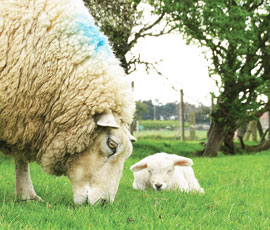
Sheep farmers are being advised to assess risk factors for Nematodirus battus worm as cold weather followed by warmer conditions could trigger a mass hatch.
Immature Nematodirus worms can cause sudden death or watery diarrhoea, which leaves unthrifty lambs susceptible to other diseases and parasites, explained independent sheep consultant Lesley Stubbings.
She stressed the importance of farmers being aware of the risk factors for Nematodirus, particularly with changeable weather conditions.
“If the weather suddenly warms up following the recent cold spell, there could be a sudden hatch of infected larvae on pasture. This could put March-born lambs at risk,” she said.
The timings of a potential problem will vary from region to region. In southern England, for example, it is likely to occur earlier in April/May, whereas it could be slightly later in northern England. However, Ms Stubbings said cases had already been seen in Wales, with flocks in Scotland also at risk.
George Mitchell, of SAC Consulting Veterinary Services, said a mass hatch would be expected from April onwards, posing a threat to six-week-old lambs over Scotland.
“Permanent and heavily stocked, low ground pastures are particularly at risk,” said Dr Mitchell.
“If the Nematodirus hatch continues into June, then hill lambs on improved pasture which are relatively heavily stocked may also be affected. The parasite can kill lambs before the eggs appear in the dung, so any unexplained deaths should be investigated,” he advised.
Faecal egg counts will not give an accurate indication of the problem, since it is the immature larvae causing the damage. So farmers are advised to assess whether to treat with an anthelmintic wormer by assessing the risk factors (see box) and speaking to their vet.
When risk factors are high, Dr Mitchell recommends treating lambs with an appropriate anthelmintic wormer from six weeks old.
“As the rise in worm numbers is extremely rapid, two doses, seven to 10 days apart, are advised. However, it is important farmers take advice on which wormer to use as, on some farms there is evidence Nematodirus worms are resistant to some treatments.”
And with some resistance reported, Ms Stubbings stressed the importance of testing wormer efficacy. “If farmers take faecal samples from a selection of lambs before treatment and then seven to 10 days after treatment this will check whether the lambs were carrying worms and whether the treatment has been effective.”
Risk factors
• Lambs grazing pasture that carried lambs the previous spring
• A sudden, late cold snap followed by a period of warm weather
• Lambs that are old enough to be eating a significant amount of grass (six to 12 weeks of age)
• Groups where there is also likely to be a challenge from coccidiosis
• Lambs that are under other stresses e.g. triplets, fostered, on young or older ewes
Nematodirus facts
• Nematodirus battus has a different life-cycle to other sheep worms
• Infective larvae takes place within the egg and infection passes from one lamb crop to the next year’s crop
• Before hatching, eggs have to undergo a period of cold weather, followed by temperatures of 10C or more
• Under certain climatic conditions can strike quickly with no warning
More info
Find out more about effective worm control or visit Sustainable Control of Parasites in Sheep website for up-to-date worm reports