

How NZ pig unit upgrade beat welfare code deadline
 © NZPork
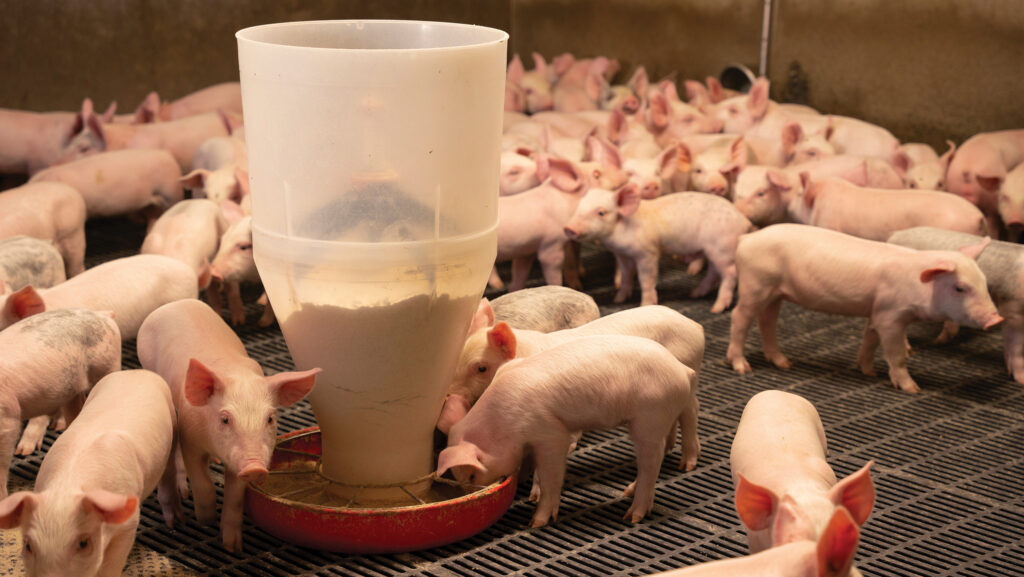
Spending NZ$2m (£0.84m) on a new pig building three years after a NZ$1m upgrade of farrowing accommodation is an investment to stay in business for Kiwi pig farmer Karl Stanley.
See also: How move to flexible farrowing systems worked for two pig farmers
There are no government grants in New Zealand – just a 20% tax rebate spread over eight years. And with no major increase in production expected from his latest new building, for 1,000 grower pigs, Karl thinks that direct payback, this time, will take 15 years.
However, he is optimistic it could be sooner if it can bring marginal gains in feed conversion and growth rates, leading to a quicker turnover of pigs.
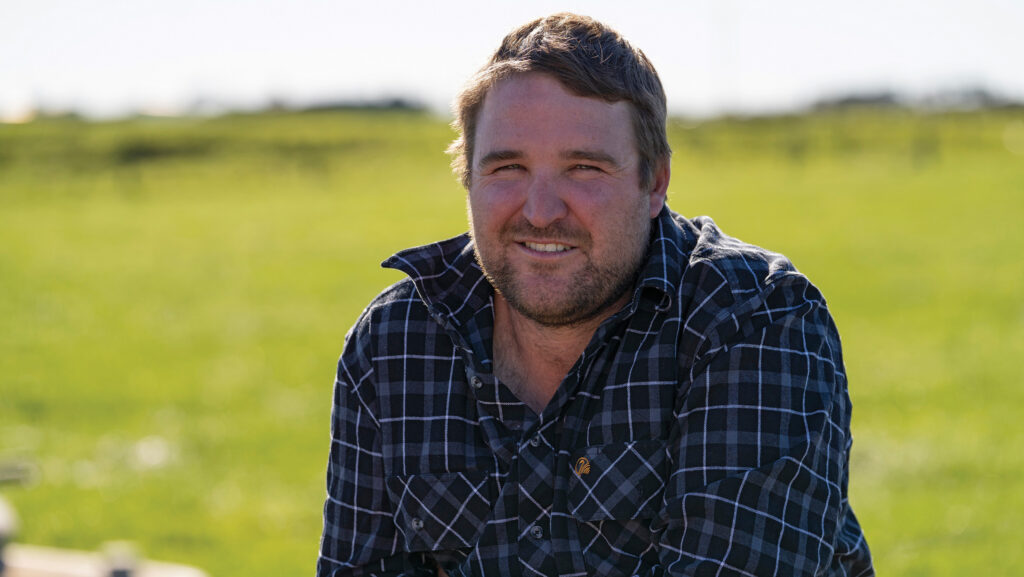
Karl Stanley © NZPork
Farm facts: Stanley Bros, Taranaki, New Zealand
- Farms 133ha mostly volcanic soils
- Grows grass for silage or hay plus maize to sell to neighbouring farms
- Large White cross Landrace sows and Duroc-cross sires
- Bred using artificial insemination with boars for returns
- Finishes 216-250 pigs a week at 100kg
- Sells to abattoir for domestic market
- 139 days from birth to slaughter
- Buys in 20 replacement gilts monthly
- All feed is mixed in-house
Payback challenge
“We haven’t increased herd size or growth rates, so there is no gain,” says Karl. “We did it to meet regulations and we’ll see how quick we can make it pay back.
“We had to decide whether to build or go and do something else, but I’m a third-generation farmer at Stanley Bros and my name is on the gate – it’s not for sale.
“[Farming is] a challenge and it’s stressful, but it’s nice working the land we’ve had for generations; we do well and have a good way of living.”
Karl’s commitment to the business and philosophical approach to meeting changing welfare requirements from his own pocket doesn’t mean he is keen to chase extra production without financial return.
Having already expanded to maximum capacity and improved both pig welfare and production, he is more interested in increasing efficiency and reducing input costs.
Changes to pig welfare code
Situated in Taranaki on the south-west coast of New Zealand’s North Island, his 500-sow farrow-to-finish unit sells 240-260 finished pigs a week into the domestic market.
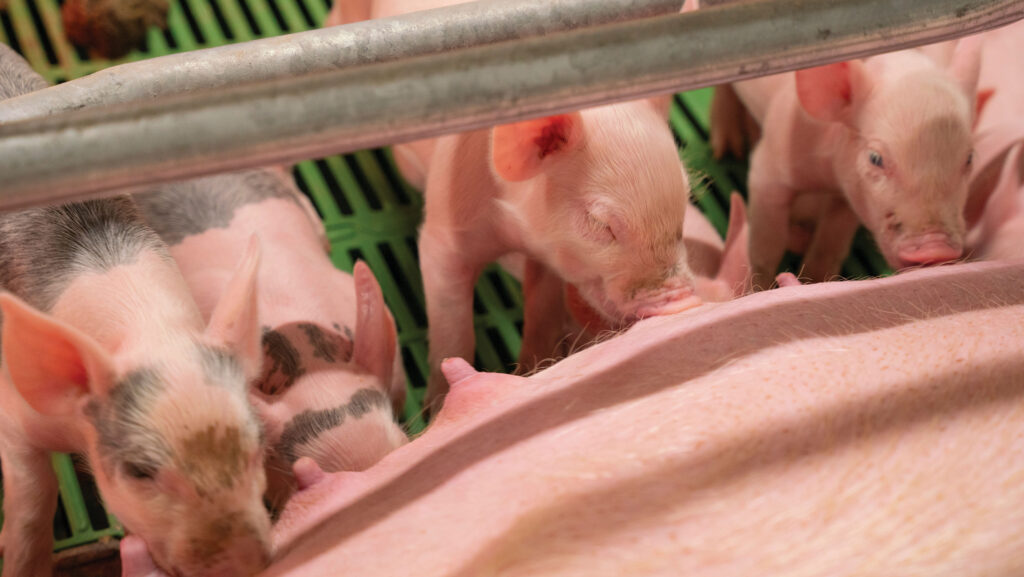
Last year’s job of increasing pen size and adding nesting areas alongside crates in farrowing sheds had just been completed when the government announced changes to its pig welfare code.
Sows can only be confined in crates for a maximum three days before, and four days after, farrowing.
In addition, mating stalls must be used, at most, for three hours at a time (down from seven days) and minimum space requirements for grower pigs will increase by 13.3%.
Although there is a 10-year transition period, Karl likes being one step ahead, so he set about reconfiguring the site this year.
He created a new mating area and converted a weaner shed to provide more gilt and sow storage.
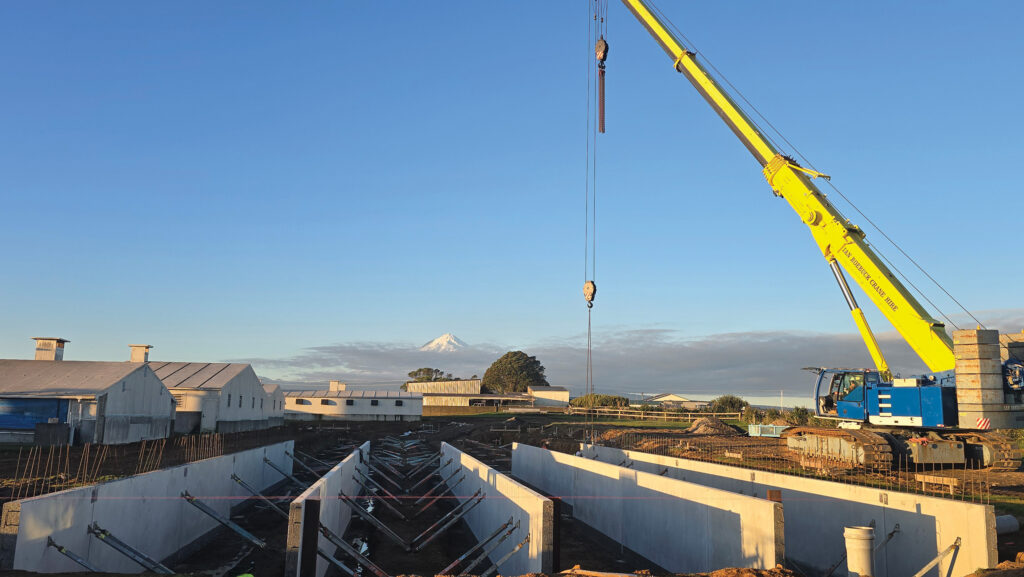
By adding a 75x16m grower shed (to be finished by Christmas), he will effectively reduce the site’s overall stocking density.
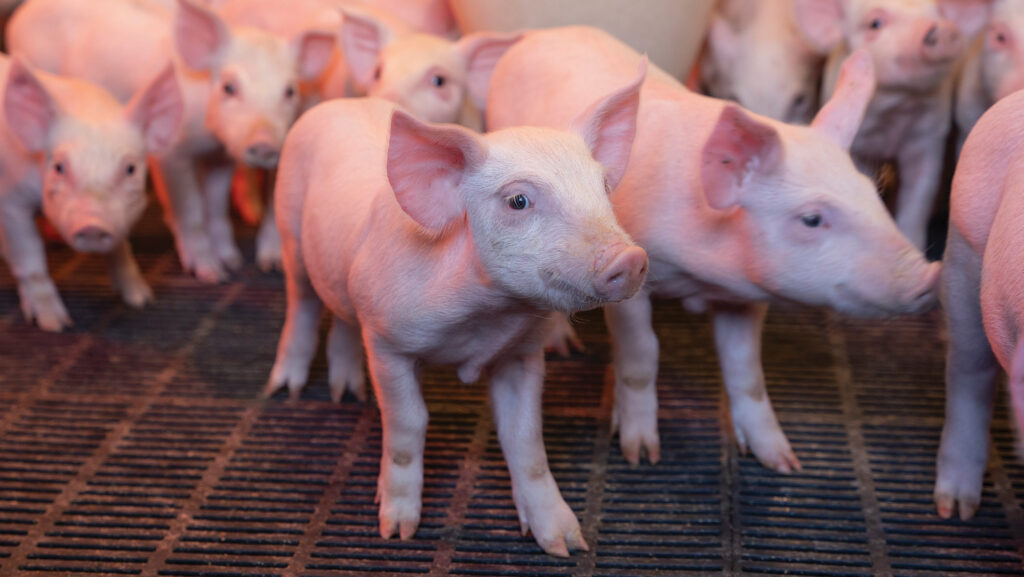
The building is providing 1,200sq m of space and pigs will be reared in four batches of 250, split by sex, for 10 weeks.
© Karl Stanley
Investment based on best-performing sheds
His simple formula for construction is to “replicate our best sheds”, factoring in changing weather patterns and running costs.
Automation is used to save time, and solar energy to reduce costs, as all housing is climate controlled.
Construction uses insulated, 100mm-thick composite panels to prevent extreme fluctuations in temperature, with sideways vents on the outer walls and vent ducts in the roof.
“It makes the environment very cool in the peak of summer and warm in winter. Our temperatures go down to 4-5C in winter, but the wind chill makes it feel like 0C and, in summer, our peaks are 29-30C.
“Our farm goes right down to the sea and we get coastal breezes most days,” he explains. “We don’t need heat – only in the nursery and heat lamps at farrowing – as we try to maintain, or remove, heat produced by the pigs.
“We run the temperatures about 19C for all ages and that will be very stable throughout the year.”
© NZPork
Lighting to mimic outdoors
Every shed has LED lighting, operated via auto dimmers and timers to feel like the outdoors. Lights switch on at about 5.30am, gradually becoming brighter and remaining fully on all day.
They begin to wind down in the evening, leading to full lights-out at 6.30-7pm, after feeding.
“We chose the lighting as part of our energy-saving plans. But when making that call, we definitely had to ensure the sheds had the best natural lighting,” says Karl.
There are cameras “all over the property” for security and monitoring, and every shed has alarm systems for ventilation or power issues “so we are alerted as soon as something happens”.
Drainage channels under slats are flushed daily in some sheds, three times a week in others. This is a manual process, and the slurry runs to the farm’s effluent lagoon, which holds 15m litres – about four months’ storage.
© NZPork
Cost control
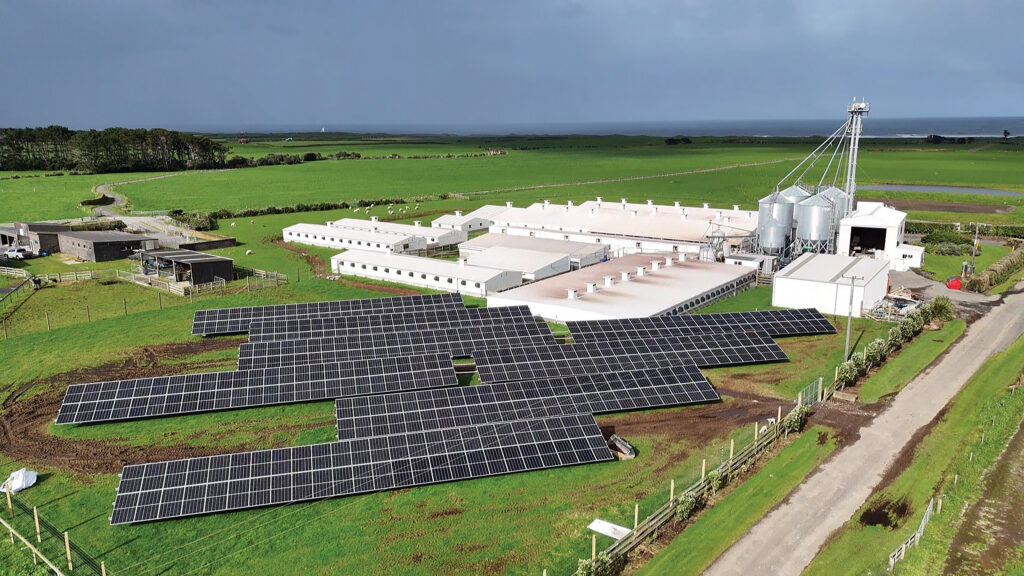
Two key areas for cost control are power and feed. Karl’s biggest win to date was to install a 400-panel, 200kW solar array on 0.4ha (1 acre) of paddocks surrounding the buildings. On average, it supplies 70% of the piggery’s annual power requirements.
“It saves us NZ$75,000 [£31,073] a year,” he points out. The system was built to reach peak power production fast: by 9.30am, Karl says the site is self-sustainable and, in summer, stays like this to 4-5pm.
Any electricity needed at night comes from the grid. Up to the end of October 2026, the system had generated 208.17MWh, of which 83% was used on site and 17% sold to the grid.
Furthermore, using solar helps the farm’s carbon footprint, which Karl monitors with help from New Zealand Pork (the statutory industry board). He is keen to consider using wind power and batteries for the solar system as well.
Feed remains his greatest expense, at 64% of total costs. For this reason, Karl applied for an import licence to allow him to buy half of his wheat and barley from overseas countries such as Australia.
“We consume 2,500t/year. I have to try to buy four to five months ahead, and once we’ve signed contracts, it’s a relief. It has taken the peaks out of feed costs and gives us flexibility and assurance [of supply],” he explains.
© NZPork
Balance
Karl has permits to cover pig numbers on his acreage, slurry storage and its use on the crops. He reckons pushing sow numbers further would eat into efficiency, losing a bit of control and fine-tuning. Expansion would require more land, and local farms are not for sale.
“We have a good team of people, and it works perfectly for our land use with crops and time – you can’t get that back. We could have 1,000 sows and no time off [and struggle] to cover for sickness and holiday. It’s a balance between reward and return, and it’s a good lifestyle.”