

MPs seek greater funding for poultrykeepers hit by bird flu
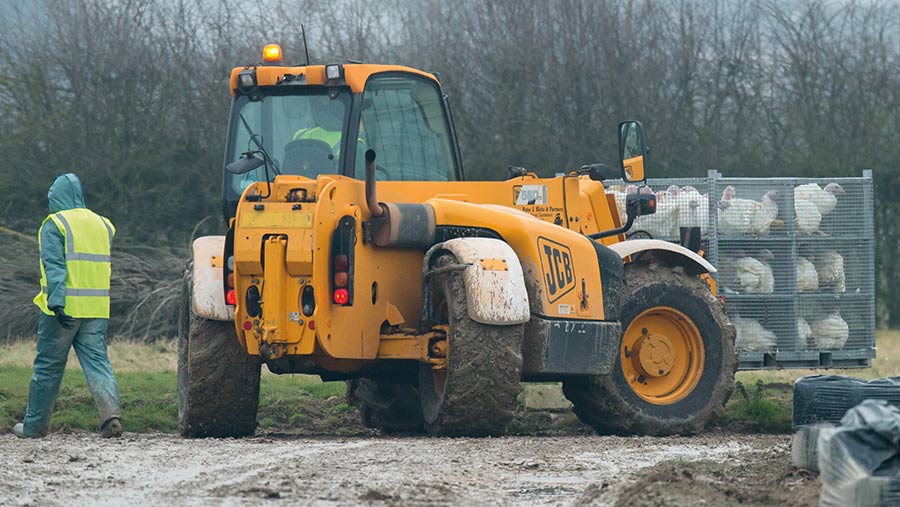 © Tim Scrivener
 MPs on the Environment, Food and Rural Affairs (Efra) select committee have added their weight to recent efforts by the NFU to improve the way poultry farmers are compensated for bird losses during an avian influenza outbreak.
Committee chairman Sir Robert Goodwill has written to Defra secretary Therese Coffey expressing concern that compensation is only made for healthy birds culled by government vets from the Animal Plant and Health Agency (Apha).
Birds that are already dead or showing clinical signs of the disease do not qualify for compensation.
See also: NFU backs legal challenge for better bird flu compensation
Recent changes to the rules mean that the number of birds qualifying for compensation are now assessed once a culling order has been granted, rather than at the end of the process.
But this can still be several days after the disease was first confirmed, during which time many birds may have died or become sick, and so do not qualify for compensation.
The NFU recently agreed to help fund a group of its members who want the rules changed so that compensation is payable on all live birds from the moment avian influenza is confirmed on a holding.
The Efra committee letter supports this idea.
‘Unfair’ compensation
“The current compensation regime is fundamentally unfair as compensation is only paid for healthy birds that are culled,” it says.
“However, due to the highly pathogenic nature of this strain of the virus, a large number of birds die between identification of the virus and the affected flock being culled.
“This means that the level of compensation received depends on how quickly the Apha can arrive to undertake the cull, with those at the back of the queue being much less likely to receive a fair level of compensation.”
The committee is requesting compensation is paid based on the number of birds alive in the affected flock at the point of disease notification.
Restocking
The Efra committee is also concerned that it is taking so long for egg and poultry producers to be able to restock their farms after an outbreak of bird flu.
Currently, farmers must either wait for 12 months after an outbreak before restocking, or pay for the deep cleaning of sheds where affected birds were housed.
The committee has, therefore, asked Dr Coffey to set out how Defra will support farms seeking to restock following an avian influenza outbreak.
“As a minimum, if the department is not willing to broaden the compensation scheme in the way we have suggested, we believe that it should provide financial support for deep cleaning of sheds, to enable growers to restock as soon as possible,” said Sir Robert in his letter.
Worst outbreak
The UK is currently facing the worst-ever outbreak of avian influenza. Latest government figures show there have been 144 cases in the UK since the start of October – 130 of them in England, 10 in Scotland, three in Wales and one case in Northern Ireland.
The most recent case in England was confirmed on Tuesday 13 December in a commercial free-range laying flock at a premises near Much Marcle in north Herefordshire.
The birds were already housed, under the terms of the national housing order.
A 3km protection zone and 10km surveillance zone was declared.