

How a Romney flock is adapting to frequent droughts
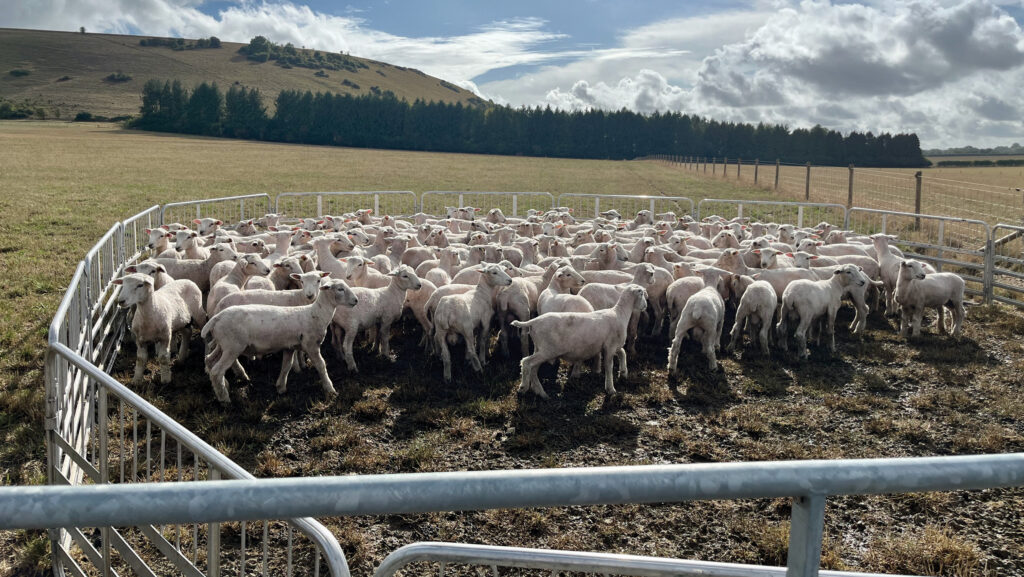 Lams at Dineley Farming © Aly Balsom
 Repeat periods of drought have highlighted the value of selecting resilient forage crops and breeding animals at Dineley Farming, near Shaftesbury, Dorset.
Perin Dineley says the business, which is home to Stonehill Romneys, has tackled drought in 2018, 2022 and 2025.
See also: How an upland farm is adapting to unpredictable seasons
“That’s three times in eight years. I reckon it takes a year to come back for the stock,” he said. “I’m trying not to use the word resilience too much… but we’re all looking for a degree of resilience.
“We’re looking for resilience in our forage platform and our sheep.”
Head shepherd Martyn Fletcher said that although this year had brought “massive challenges”, the Romney breed had proved its worth, as had drought-resistant crops such as plantain and lucerne.
“The lucerne has been very impressive – it’s right on the top of the Downs. But we’ve only got 30 acres [12ha] of that, so we need to grow more,” he said.
Farm Facts
Dineley Farming, Shaftesbury, Dorset
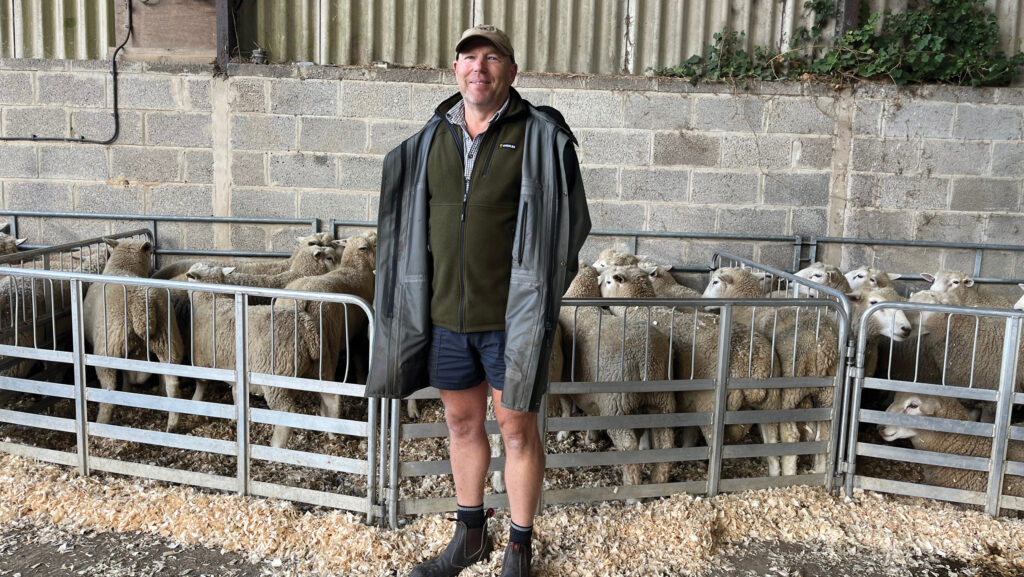
Martyn Fletcher © Aly Balsom
- 728ha farmed
- Stonehill Romney flock of 3,000 ewes
- Lambs outdoors in mid-April
- 1,500 stud ewes in A flock, single sired (one ram to every 100 ewes) with performance data collected from ewes and lambs using electronic identification.
- Produces breeding rams for retention and sale
- 1,500 ewes in B flock, including ewes without pedigrees, mob mated to a Romney
- 1,000 ewe lambs
- 30 Belted Galloway suckler cows
Plantain performance
Kale undersown with plantain had also worked “really well”, with the kale producing about 8t dry matter (DM)/ha and the plantain 15t DM/ha, at a cost of £400/ha.
The kale provides a high-protein feed for the shearlings, which cannot graze the fodder beet used for the main flock because they only have two teeth.
This year, the shearlings lambed on the undersown plantain, with the lambs remaining on the crop post-weaning. They were then rotated round four plantain paddocks.
Some stud sheep also went on the kale for tupping in November and lambed there in April, by which time there was only plantain left.
“If we’d had a wet spring, we would have direct-drilled grass straight into it, which would have given a better balance, because we don’t like monocrops,” Martyn said.
“But because it’s stayed dry, we didn’t, we’ve only just direct-drilled it and it hasn’t started growing yet. But the plantain, we hammered it down to the dirt every time and it just kept coming back, it was really good.”
Lambs finished grazing the plantain at the end of August to enable grass to be direct-drilled into it.
This delayed the need for creep feeding, in contrast to those on the herbal leys, which were already being supplemented.
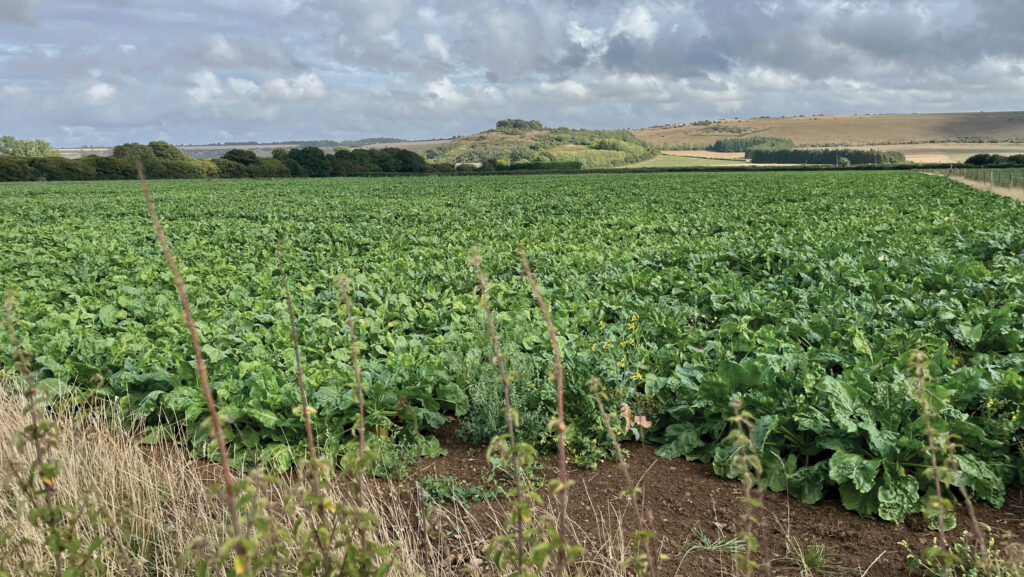
Sheep graze kale underplanted with plantain © Aly Balsom
System pressures
Consequently, the plan is to favour more drought-resistant varieties and plant more lucerne and plantain in the future.
As the farm is Pasture for Life certified, animals do not usually receive concentrates. This year, supplementation has been essential for animal welfare.
However, because they are not used to such feed, it has taken lambs four weeks to start eating it. About 1,000 store lambs have also been sold to take the pressure off the system.
At the same time last year, lambs were achieving 400g/day on herbal leys and sold through the light lamb scheme for ABP at 35kg.
This year, 120 have been sold on the same scheme, but the rest will likely go as stores, except for breeding stock.
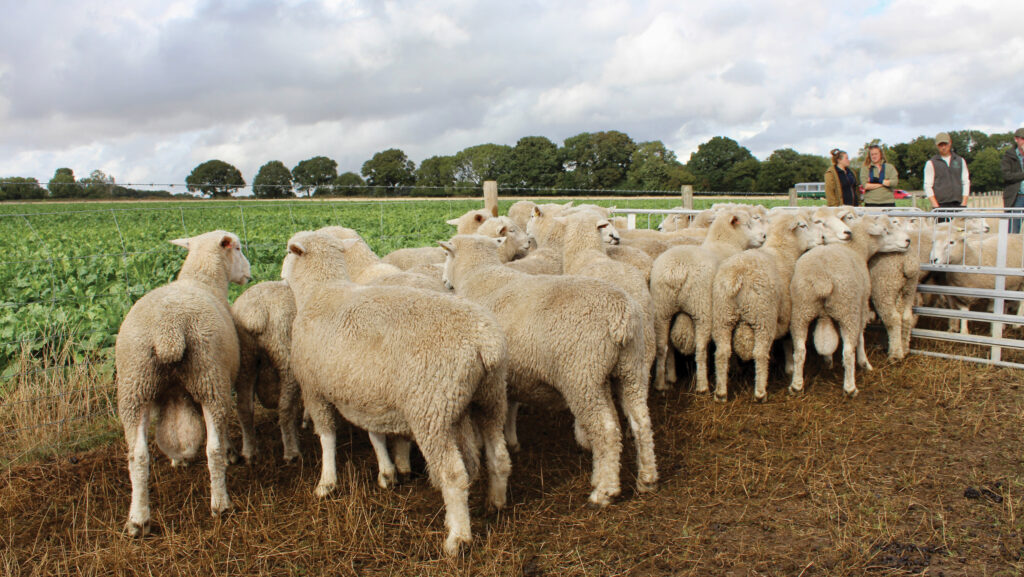
Romney rams at Dineley Farm © Aly Balsom
Breeding
Avoiding breeding ewes that are too big – by not chasing eight-week lamb weights and not retaining ewes weighing more than 70kg – has also eased the pressure in forage-challenged years.
An 80kg ewe eating 3% of body weight has a bigger feed requirement than a 60kg ewe eating 3% of body weight. “So, when feed is really scarce like it is now, our 60kg ewe is a lot easier to look after than a 80kg ewe,” Martyn explained.
“And our stud ewes will still wean two lambs in a normal year at 30kg or more, so they are just more efficient.”
He added that ewes had also coped well in the drought, showing no major dips in body condition.
However, to mitigate risk, lambs had been weaned at eight to nine weeks rather than 10-12 weeks, using an auto drafter to wean precisely on age.
Martyn said the ewe’s ability to look after herself was a reflection of the breed, but also ongoing selection pressure within the flock. Stonehill Romneys is one of the largest recorded Romney flocks in the UK.
Ewes must be a twin and maintain their condition to earn their place in the stud flock.
Ewe condition
“The stud sheep are only allowed to fluctuate half a score in their condition anyway,” he said, adding that the ewe efficiency they looked for was a 60kg ewe rearing two lambs at 30kg and maintaining her weight.
“I don’t want her to milk that much off her back that she then becomes 40kg; then your 60kg of lamb meat suddenly becomes 40kg because you’ve got to put the 20kg back on the ewe.”
Ultimately, the system is geared around optimising the number of kilograms produced from each hectare.
If a ewe has a body condition score (BCS) of 2.5 at weaning, she needs to put on half a score to get to tupping weight.
She can then put on another half a score on the fodder beet to go into lambing at BCS 3.5.
“Any ewe that varies from that in the stud too much, she’s dropped down into the B flock,” Martyn said, adding that sheep with a low BCS were also likely to be less resistant to worms and other diseases.
This makes body condition an important selection trait.
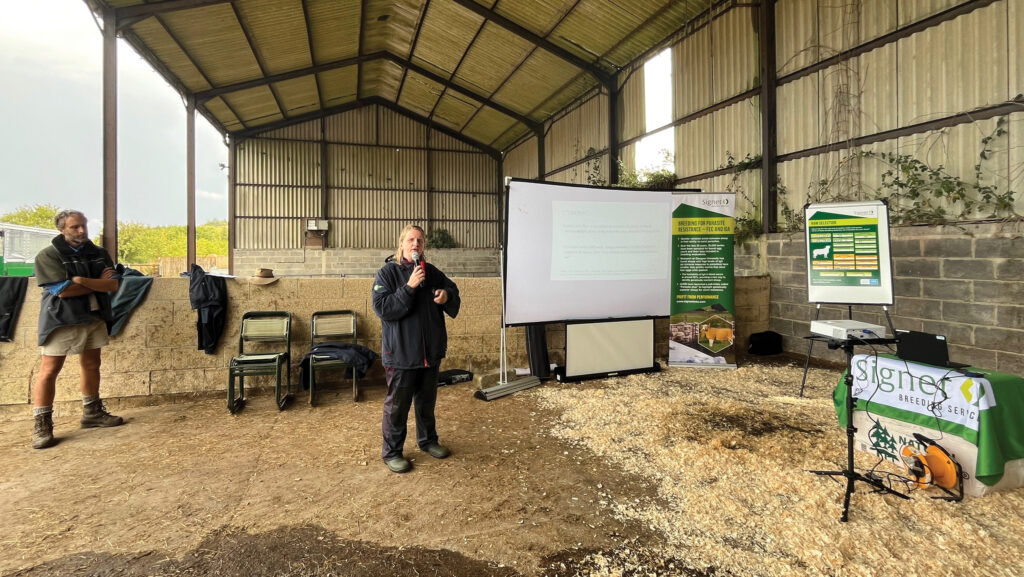
Emily Gascoigne © Aly Balsom
Worm resistance
Specialist sheep vet Emily Gascoigne of Synergy Farm Health said “recognising anything that could put the brakes on performance” was also essential in optimising efficiencies.
As well as disease surveillance, this includes a strict worming strategy based on faecal egg counts, along with appropriate use of anthelmintics, and breeding for worm resistance.
The Dineley team has also started working with Emily to blood-test animals for immunoglobulin A to get an idea of genetic resistance to the Teladorsagia parasite.
This will be incorporated into overall selection criteria.
Perin Dineley and Emily Gascoigne were speaking at a recent Realising Performance from Genetics event at Dineley Farming, Dorset, run by the AHDB and Synergy Farm Health.