

How failed succession plan led to new beef and sheep setup
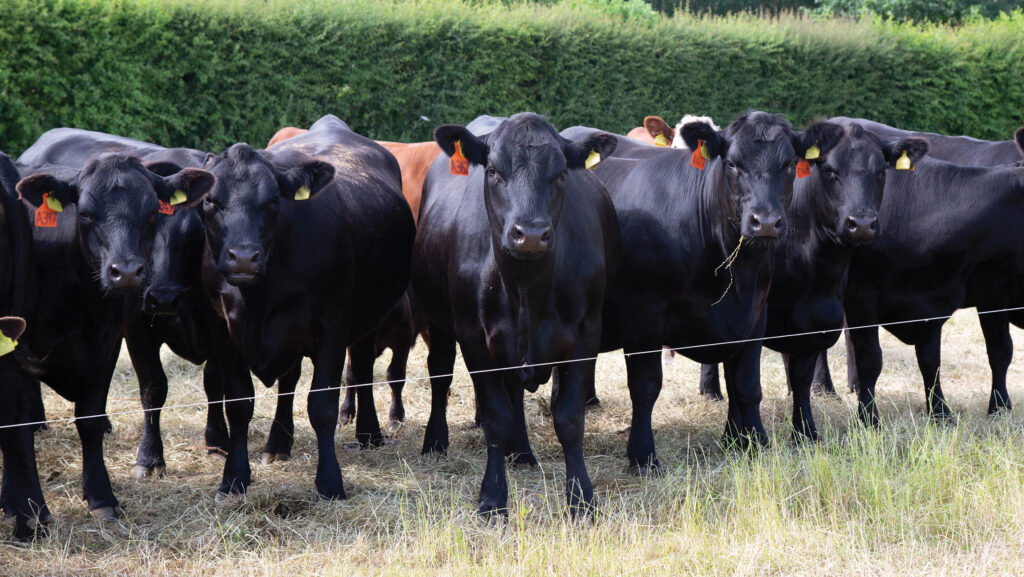 © MAG/Judith Tooth
 A progressive beef and sheep farmer in the Scottish Borders served notice to vacate the family farm after 32 years has succeeded in rebuilding a profitable business.
Determined it would not finish his career in farming, Jim Logan kept faith that the resilient, low-input system he had developed would see him through.
See also: How farming brothers are preparing for business succession
Jim and his wife, Jane, say bringing their son, James, on board has also been instrumental in regrowing the business.
“He is now in partnership with us; he’s helping keep the ship afloat with his hard work and desire to progress the business. That’s what has kept us going,” says Jim, who previously farmed 632ha (1,562 acres) near Galashiels, in a family partnership with his mother.
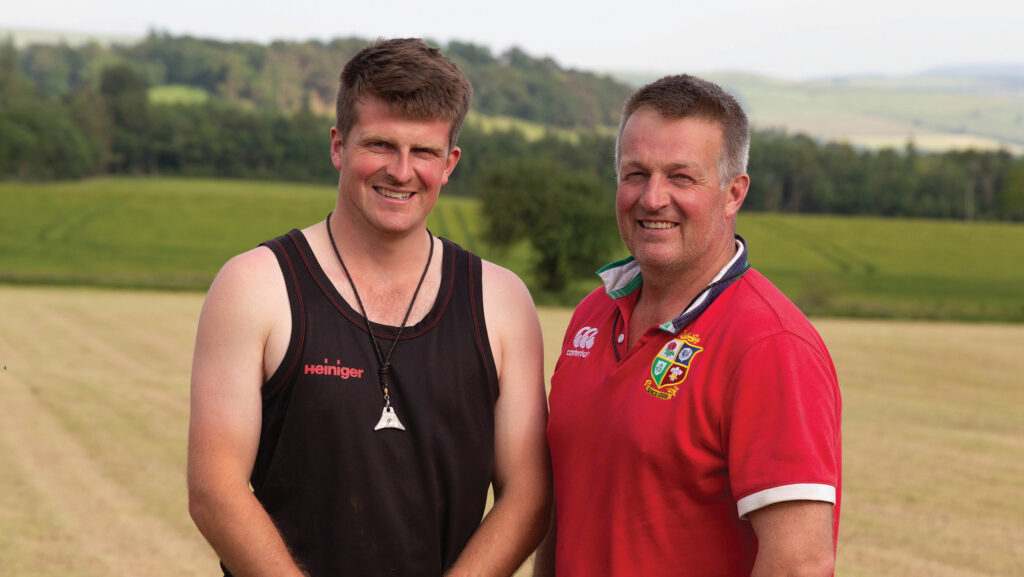
James and Jim Logan © MAG/Judith Tooth
Romavale, Hawick, Scottish Borders
- 1,800 ewes: 200 purebred Suffolks, 200 purebred Texels and 1,400 New Zealand Romney composites
- Purebred flocks lamb indoors early April; commercial flock outdoors mid- to late April
- Suffolks and Texels used as terminal sires
- Lambs finished off forage and sold mainly to Dawn Meats
- 170 suckler cows, including 50 pedigree Aberdeen Angus and Hereford
- 30ha owned; seasonal grazing on multiple holdings
Resistance to change
Jim thinks some resistance to the changes he had made to the farming system a few years earlier were probably the driver for the unexpected ending to his time at Pirntaton.
These changes, prompted by an animal health issue, “focused the mind on how reliant we were on high-value [pedigree] animals to cover a lot of the cost that had crept into the system”.
“For the next six or seven years, it was full-on to manage that risk, to take away that exposure of relying on a relatively small number of animals making a big difference to the success of the business,” he explains.
He switched production to a low-intervention, forage-based system using genetics that required low labour and feed, while keeping overall production levels high.
“Each individual animal was worth less, but production was cheaper and there were more of them.” It was an approach that won him the Farmers Weekly Sheep Farmer of the Year title in 2019.
Yet now Jim was faced with a stark choice: he could cede control of the business, or his services would “no longer be required”. “If we had complied, we might still be there, but that’s no way to keep a business vibrant and progressive,” he says.
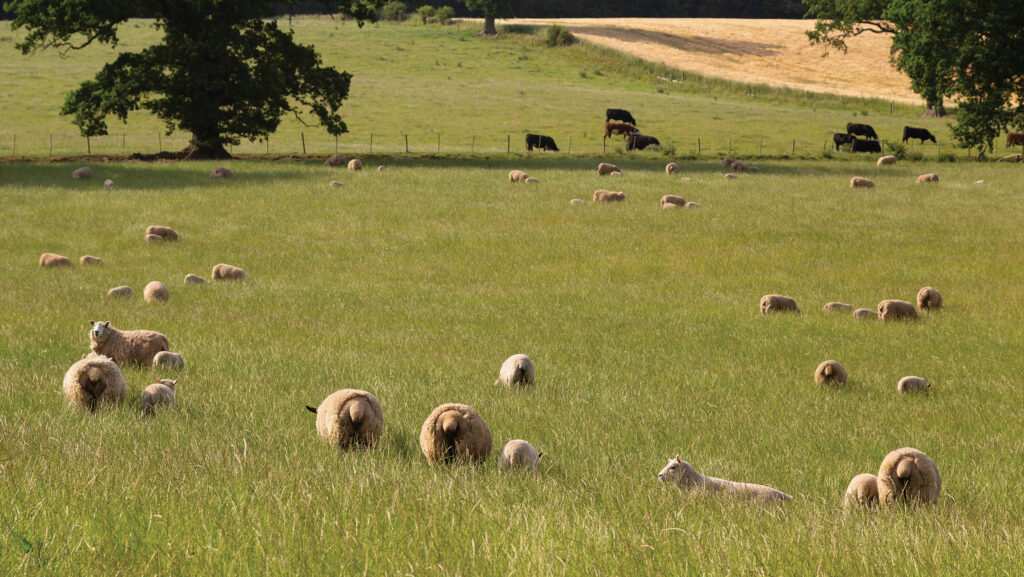
Ewe hoggs with Shetland-cross lambs © MAG/Judith-Tooth
Search for land
Jim and Jane secured a new home with 30ha (74 acres) of grassland and some cattle yards at Denholm, near Hawick, in 2023. “Initially, the emphasis was on consolidation and survival,” says Jane, who works full-time off farm.
“However, Jim was always clear we would farm our way out of the situation – I thought we might have to pull back.”
The immediate challenge was to find more land for their livestock. “I didn’t realise how small the lettings market was in Scotland,” says Jim.
“Everything we do now is on seasonal grazing, with no subsidy payment. We’ve had to accept that that’s how it is. With the permanent grazing infrastructure previously in place, we knew pretty much what grazing was in front of us. Now that system is gone, it’s a lot more reactive than proactive.”
However, the building blocks of their low-input, forage-based system remain: the right genetics, together with temporary electric fencing and mobile handling facilities.
In fact, having sold the 350 hinds they had farmed at Pirntaton (for lack of a suitable base elsewhere), and gradually having found more grazing, ewe numbers have increased from 1,300 to 1,800, and suckler cows from about 100 to 170.
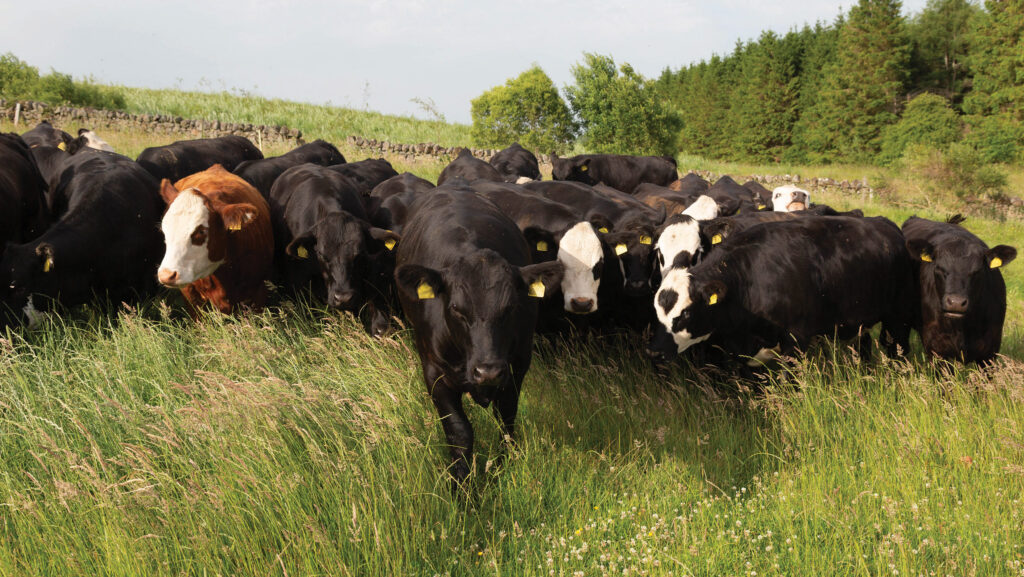
Bulling heifers © MAG/Judith-Tooth
Support
Continued involvement in their benchmarking groups for feed and financial budgeting has been invaluable in the success and resilience of their new setup. “Discussing problems and tactics with a close group of peers is incredibly powerful,” says Jim.
He and Jane credit their network of friends as crucial to their survival – as well as supporting each other within the family.
“With the four of us [with daughter Beth, a farm consultant], when one of us was having a down day, the rest of us could help. We were like geese: always someone to fly at the front of the ‘V’. We have learned a lot through tough times,” says Jane.
© MAG/Judith Tooth
Flock and herd development
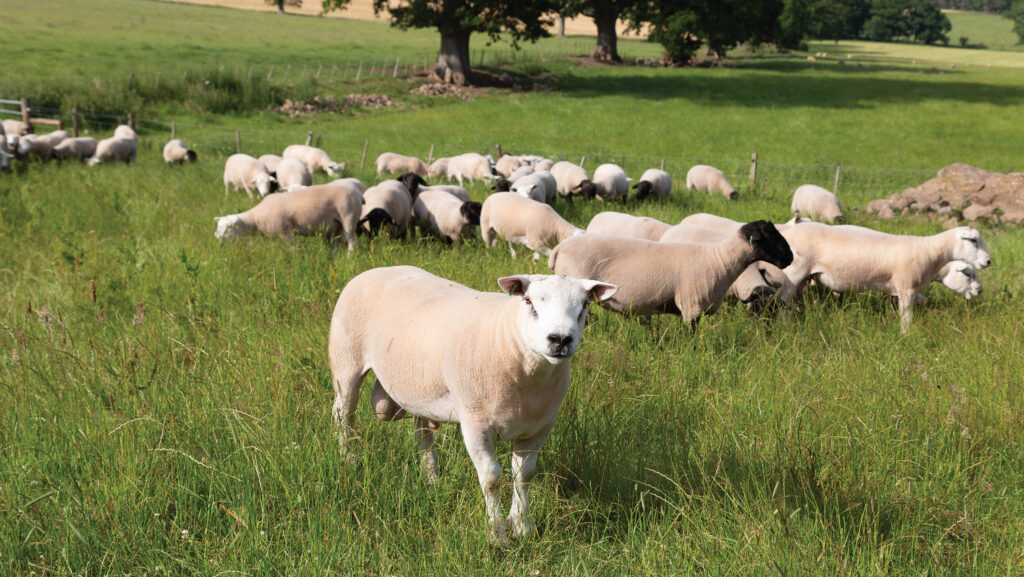
The business continues to run purebred Suffolk and Texel flocks, and a commercial flock, currently across five main holdings.
One of James’ strengths is his organisational skills, says Jim. He looks after logistics and the day-to-day running of the sheep enterprise, while Jim does the paperwork (there are 21 sets of sheep records) and manages the cattle enterprise. They also employ a full-time student.
Half the ewes run on an organic farm where Higher Level Stewardship limits winter grazing, necessitating a wintering spread from St Andrews, Fife, to Newcastle. The other half run on a conventional farm in East Lothian. Tail-end lambs are finished with concentrates, but there is no creep feeding.
Recording and selection for lambing ease and mothering ability are done at lambing time in the maternal flocks.
“This is one of our unique selling points for selling 130 Suffolk and Texel shearling rams a year from mid-August – a lot of them unseen, including to Orkney and Shetland, and down to Wales,” he explains.
Driven by James, females are now mated for the first time as ewe hoggs and are put to a Shetland tup for easy lambing and hybrid vigour. They scan at 100%, with a weaning target of 92-93%.
Lambs have a low birthweight but are “really vigorous”, says Jim, adding that they make very good late-season lamb off forage. He collaborates with arable contractors on two holdings for extra winter grazing and has invested in silage reseeds on another.
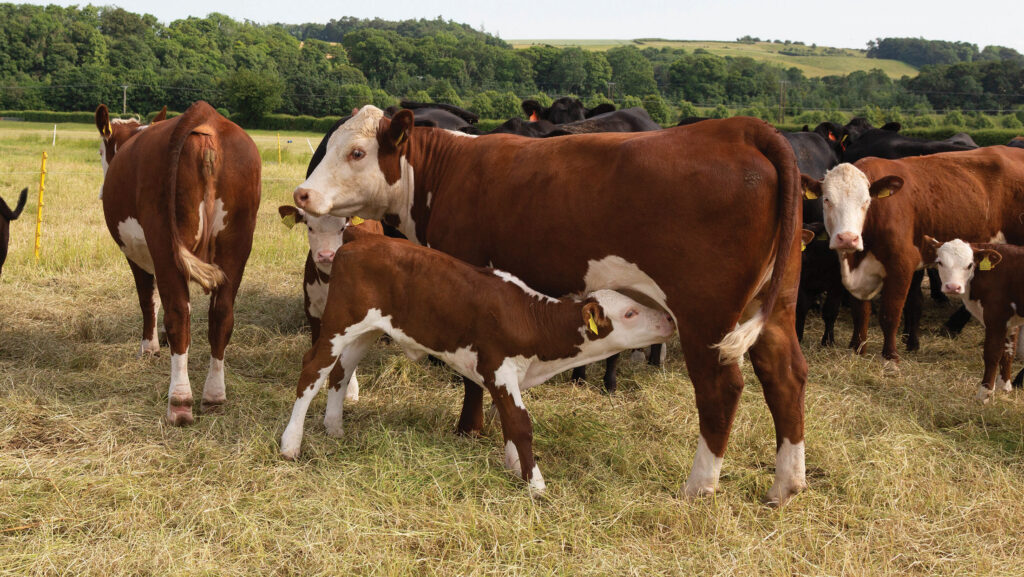
Cattle – pedigree Aberdeen Angus and Herefords, plus their crossbreds – are based on three holdings. They now winter inside as facilities at Romavale are good, and suitable outwintering land is in short supply.
Some of the crossbreds are being used as surrogate mothers for embryos stored 15-20 years ago at Pirntaton, to produce moderately framed, easy calving, easy fleshing females. Recent investment in a small number of “top” cows is also helping to grow the herd.
Cows calve outdoors 25 minutes from home and are checked twice daily, while heifers calve at home so they can be checked more frequently.
Progeny are retained for breeding or sold as forward stores, with some bulls also sold for breeding – an expected 10 for sale in 2027 and 30 the following year.
© MAG/Judith Tooth
Business confidence
The strain of the failed family partnership continues to be felt, even though Jim has demonstrated great resilience in farming his way out of the mess. “We still have a profitable business and we’re still smiling,” he says.
“Jim has great self-belief and confidence in our farming system, and that has been key – along with the injection of youthful enthusiasm,” adds Jane.