

How regularly condition scoring ewes reduces losses
 © Elanco
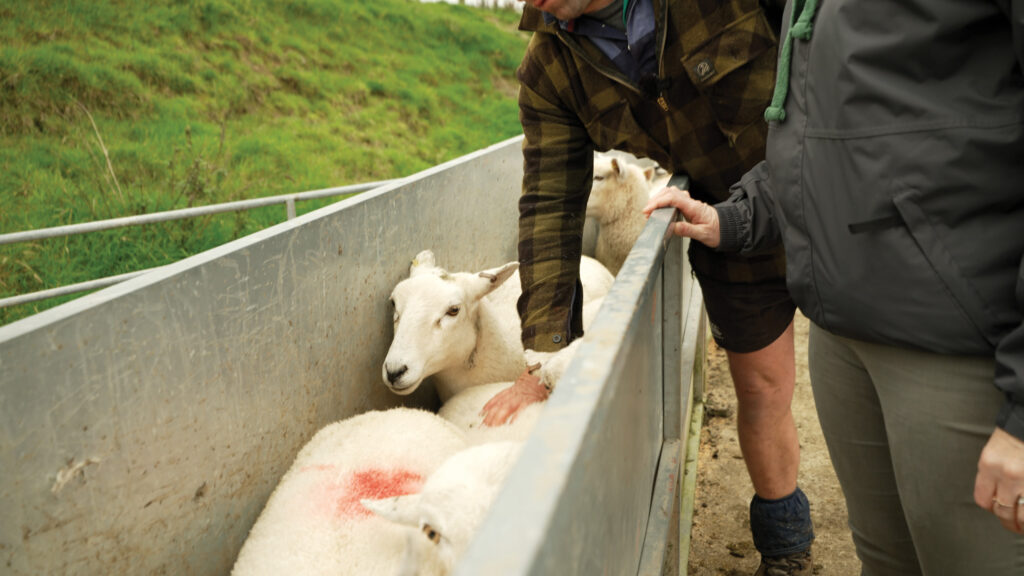
 Regular body condition scoring proved critical for Devon sheep farmer Richard Stanbury during last year’s dry summer.
It highlighted how timely data and targeted management – particularly for young ewes – can help safeguard flock performance under pressure.
Weston Farm, near Knowstone, has undergone a transformation under Richard’s stewardship.
Over the past four years, the system has shifted from indoor, intensive production to an outdoor, forage-based management approach.
See also: Advice on using flock data to set achievable goals
Farm Facts: Weston Farm, Devon

Richard Stanbury © Elanco
- 202ha owned, 142ha rented, 61ha of grasskeep and 142ha of common grazing
- 160-cow suckler herd
- Outdoor calving, progeny sold store and fat through Sedgemoor Livestock Market, and direct through a local butcher and small farm shop
- 1,400 Exlana and Easycare ewes
- Outdoor lambing from 25 March
- Lambs sold to ABP
This transition has seen the business move away from Mule and Suffolk-cross ewes towards wool-shedding Exlana and Easycare genetics within the 1,400-ewe flock.
While the change has reduced labour and input costs, the dry summer exposed the vulnerabilities of a forage-based system.
With flock expansion ongoing, and more than two-thirds of ewes under three years old, pressure on sufficient grazing for younger ewes was intensified.
“Grass growth slowed, and competition for grass increased.
“We also reseeded 101ha [250 acres], which was a lot to remove from the grazing profile, especially in a dry year,” reflects Richard, who farms alongside his parents, John and Rosemary, and wife Laura.
Importance of regular body condition scoring
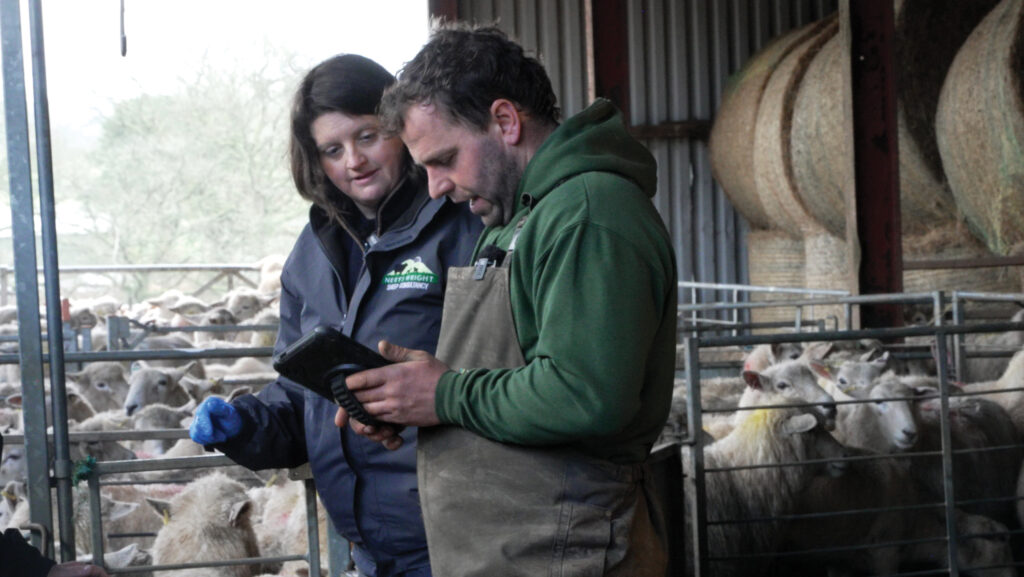
Richard Stanbury uses condition scoring as a management tool, with advice from sheep consultant Nerys Wright © Elanco
For Richard, the dry weather highlighted the value of proactive body condition scoring (BCS) and data recording.
He has been working with independent sheep consultant Nerys Wright since August 2025 as part of a three-year data recording and worm management project with Elanco.
“Ewe body condition drives fertility, lamb survival, lifetime productivity and overall flock resilience. Yet, in many flocks, condition scoring remains irregular, reactive and lacking structure,” says Nerys.
At Weston Farm, BCS became a key management tool. Initially planned for October, ewes were instead scored in August to give Richard more time to act ahead of November tupping.
Using a handheld reader, ewes were individually scored and split into three management groups: thin (BCS 2.5 and below), medium (BCS 2.5-3.5), and fat (more than 3.5 BCS).
Doing this allowed thinner ewes to be given the best grazing with the aim of getting them up to 3-3.5 for mating.
Faecal egg counts taken between August and November added another layer of insight. Thin ewes recorded counts of 1,900 eggs/g.
These were treated with a clear wormer for strongyles, and a reduction test was repeated 14 days later, which revealed 99% efficacy.
“They probably weren’t thin because they had a worm burden; they had a worm burden because they were thin,” points out Nerys, while Richard confirms that ewes began to pick up after treatment.
Intervention before mating
Two weeks before tupping, ewes were re-scored. Most thin ewes had recovered, but 50 remained below target. Of these, 20 were sold and 30 were managed separately and tupped.
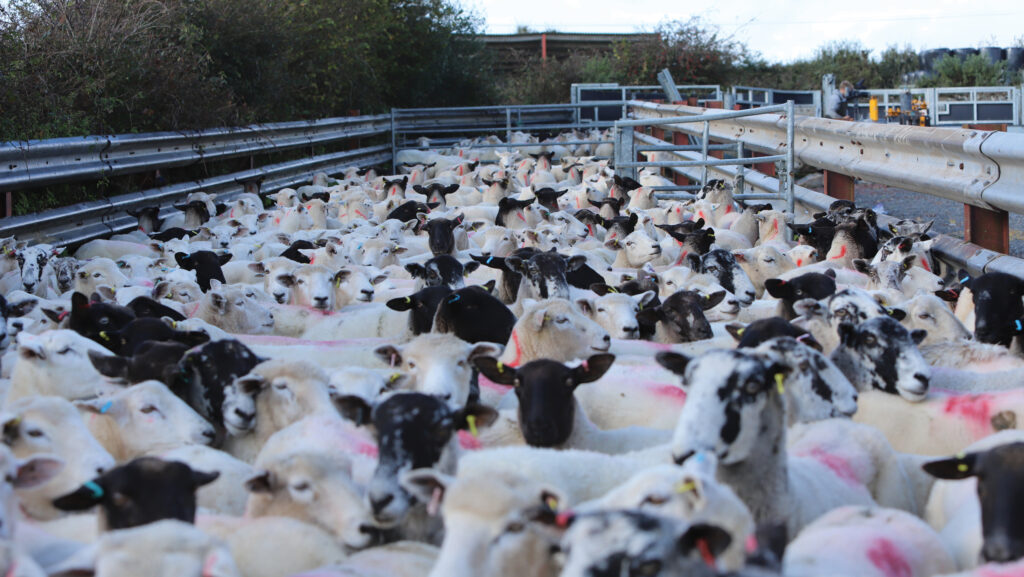
Ewes typically run in mobs of 400 at tupping, with a ratio of one ram for every 50-55 ewes.
Easycare and Exlana rams are used to breed replacements; remaining Mules and Romneys are mated to terminal sires. In addition, 320 ewe lambs were bred to Southdown rams.
On Nerys’s advice, rams were left in for two cycles rather than until scanning in January.
This has helped tighten the lambing period to 35 days and avoids having stragglers born in June.
Young ewes hit hardest
January scanning revealed a mixed picture. The previously thin group scanned at 110%, highlighting the lasting impact of earlier condition loss, despite these ewes subsequently being given preferential feed.
Compared with the previous year, barren rates were similar, twin and triplet rates declined, and singles increased (see table).
Scanning results compared |
||||
|
% of flock |
Barren |
Singles |
Twins |
Triplets |
|
2025 |
4% |
34% |
52% |
13% |
|
2026 |
5% |
45% |
46% |
4% |
|
Scanning % |
Ewe lambs |
Shearlings |
Three-crop |
Overall |
|
2025 |
65% |
n/a |
n/a |
169% |
|
2026 |
70% |
123% |
145% |
149% |
|
Source: Weston Farm |
||||
Detailed analysis showed that shearling ewes were the main contributor to poorer scanning results.
Ewe lambs bucked trends, scanning at 70% this year – up from 40% three years ago – largely due to a focus on lamb growth rates during the summer drought, and being run as a single group.
“Managing shearlings alongside adult ewes is common across the industry, but it hides their different needs. Without detailed data, underperformance can be masked,” says Nerys.
“We need to remember that sheep don’t reach full maturity until they are three or four years old. We are asking a lot of them.”
Improving performance resilience
© Elanco
Although Nerys believes improvements to condition monitoring, groups and grazing strategies undoubtedly reduced losses at Weston Farm, the experience has prompted further changes in management for the year ahead.
Ewes will be condition-scored earlier this year – around eight weeks post-lambing – to allow thinner animals to be weaned sooner thus preventing a greater loss in condition.
Nerys thinks more flocks could benefit from regular BCS, so encourages shepherds to score at least at weaning to allow sufficient time for condition to be rebuilt ahead of tupping.
“I like to think of it as a car battery: don’t let the condition get to its reserve. Keep it topped up or it will cost you more to recharge,” she explains.
Building data capture
Richard has individually tagged lambs from birth rather than at weaning, which will give better insights into performance and targeted use of anthelmintics.
A key decision still under review is whether to manage shearlings separately.
“We will review weights at key stages throughout the production cycle this year and discuss.
“Evidence from industry suggests it is beneficial to manage shearlings separately, but we will now build farm evidence,” says Nerys.
Richard adds: “We are going to concentrate on body condition scoring this year, and we are hoping to see the results come scanning for the 2027 lamb crop.”
The drought was a tough test for Richard’s new system.
However, the experience has served as a catalyst for change, proving that timely condition scoring and robust data are not just management tools, but essential foundations for building a more resilient and productive flock.
You can follow Richard on his journey at Weston Farm on youTube
Scoring advice
- Condition score often (ideally at tupping, scanning, lambing, eight weeks and weaning)
- Give young ewes the best feed. They fall behind fastest and recover slowest
- Draft thin ewes early (at weaning or earlier). Prevention is cheaper than recovery
- Use scanning data to identify repeat offenders and cull empty ewes on a two-strike basis (as shearlings) if they were also mated as ewe lambs
- Consider weaning earlier at 12 weeks or even earlier (at 10 weeks) in dry years to relieve pressure on ewes, and avoid ewes and lambs competing for food
- Manage shearlings separately where possible.
Source: Nerys Wright