How to breed replacements using an ‘A’ and ‘B’ flock system
 © Tim Scrivener
Clear breeding objectives and simple management strategies are the key to successfully setting up an “A” and “B” flock system to breed replacement ewes – and guarantee genetic progress.
See also: How data management drives decision making for Romney flock
At its simplest, a flock’s best ewes (classed as the A group) can be selected by eye to breed with a maternal ram to produce the flock’s next generation. The rest of the ewes (B) are then mated to a terminal sire for meat, says sheep consultant Dr Liz Genever.
Health issues usually trigger the move into replacement breeding. However, Liz says that running the A and B system is not just about the number of ewe lambs on the ground.
Ultimately, it must lead to genetic gain to justify the effort in managing two separate groups. There isn’t much point if both groups produce similar lambs and replacements are selected out of A and B ewes, she points out.
Selection criteria
Arbitrary decisions on allocating ewes to groups can be refined as more performance figures accumulate, she adds. Different layers of genetic progress are possible from using performance recording, electronic identification, DNA testing and multiple management groups.
Ideally, a farm’s best females for the A flock are chosen based on type, size, health and condition, but also by using performance records. They might also be DNA sampled to determine parentage. Ewes that have single lambs, bad feet, poor condition or a health event automatically move into the B flock where all progeny are reared for meat.
“Keeping it simple means a ewe stays in the B flock, so there is no risk of inferior genes moving back into the A flock,” says Liz. “But it’s important to be very clear of your objectives and expectations [of A and B flocks]. As you gather more data, it can lead to more complexity in decision-making.”
While there is usually some movement between the groups initially (some B ewes, for instance, could improve and switch into the A group), Liz says after two to three breeding seasons, there should only be one-way traffic. This is how to ensure continuous genetic gain.
At tupping, the A flock is split into several sub-groups, each bred to a single sire. This ensures a tup isn’t being used on his own offspring and genetics can be identified. The B flock is mob-tupped at a ratio of one ram to 40-60 ewes.
Logistics
One of the biggest mistakes Liz sees in these systems is when tupping schedules create multiple groups – she has seen instances of 21 single-sire tupping groups within an A flock. This not only makes logistics hard, it also affects grazing management.
To get round this, she suggests DNA testing to determine parentage. Depending on scanning level, sex ratio and (usually) removing the bottom 20% of poorer lambs, Liz says the aim is for 30-40% of female lambs born in the A flock to be used as replacements. (At a rate of four to five breeding seasons a ewe, this gives a replacement rate of 20-25%.)
Simplicity and efficiency
Most of the year, the two flocks are managed in their separate groups. However, this approach is farm specific, depending on land area and whether lambing indoors or out. Liz advises that management should be set up for simplicity and efficiency.
Ewes lambing at a similar time can be run together, although lambing the B flock first gives terminal lambs more time to grow and hit markets earlier.
Different lambing dates affect nutritional requirements, which must be geared according to ewe condition and lambing date.
Why a Somerset flock is running four breeding groups
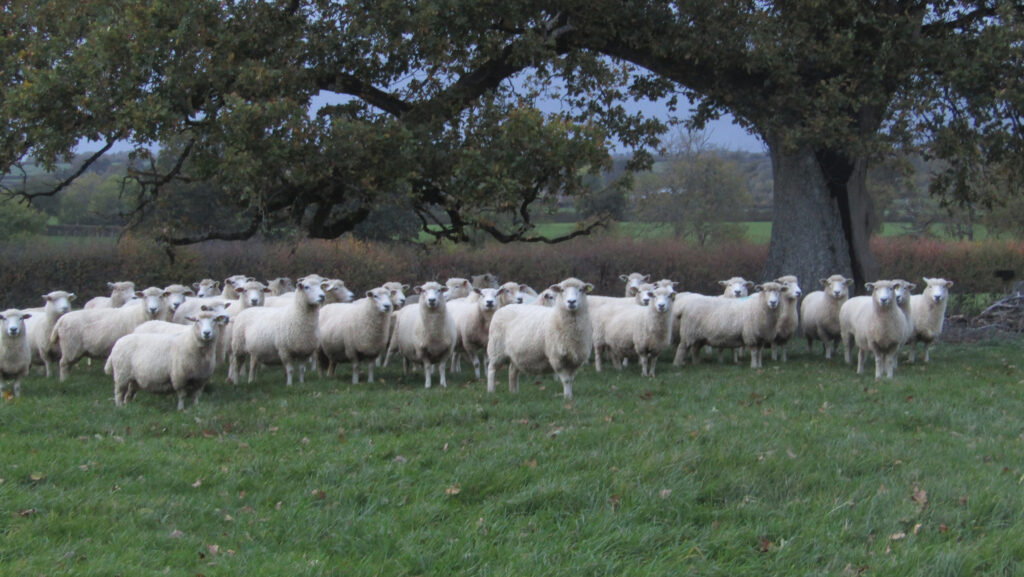
A planned flock expansion, together with a breed change, mean Andy Smith is running four breeding groups to generate his own replacement ewes. Within five years, he hopes this will fall to just three at Lodge Farm, near Wincanton, Somerset.
As genetics improve further, he might even drop to a simple A and B flock system. “When we get to 1,100 ewes, we’ll need about 200 replacements a year, so we could run an A flock of 400 ewes and the rest will go into the B flock. We might still keep three flocks because of the price of wool, though, and a C flock progeny will be meat,” he says.
© Andy Smith
Farm facts: Lodge Farm, Wincanton, Somerset
- Farms 160ha of rough grazing, permanent pasture; new leys; lucerne and 7ha winter bird food
- 500 Romney ewes lambing outside from 1 April aim to finish in four weeks
- 700 put to tup this autumn
- Target to finish 75% of lambs
- 60 pedigree South Devons calving outside from 1 April, with 90% in first four weeks
- Stores sold at 18 months
Breeding goals
Having experienced the downside of buying in replacements with his previous flock of North Country Mules – unknown genetics, lameness and no market for Mule wethers – Andy thinks this route is better. His end goal is to raise farm productivity and profitability by setting up a low-labour/high-welfare flock, adding value to meat and improving wool quality with Merino genetics.
He is looking for a robust, productive ewe that maintains condition, lambs easily and is good at grazing.
But he is also looking for worm tolerance and fly strike resistance. To select ewes to breed replacements, Martin Howlett from sheep stud Parkdale SRS has graded them according to their skin and wool quality.
© Andy Smith
Lodge Farm’s flock replacement groups
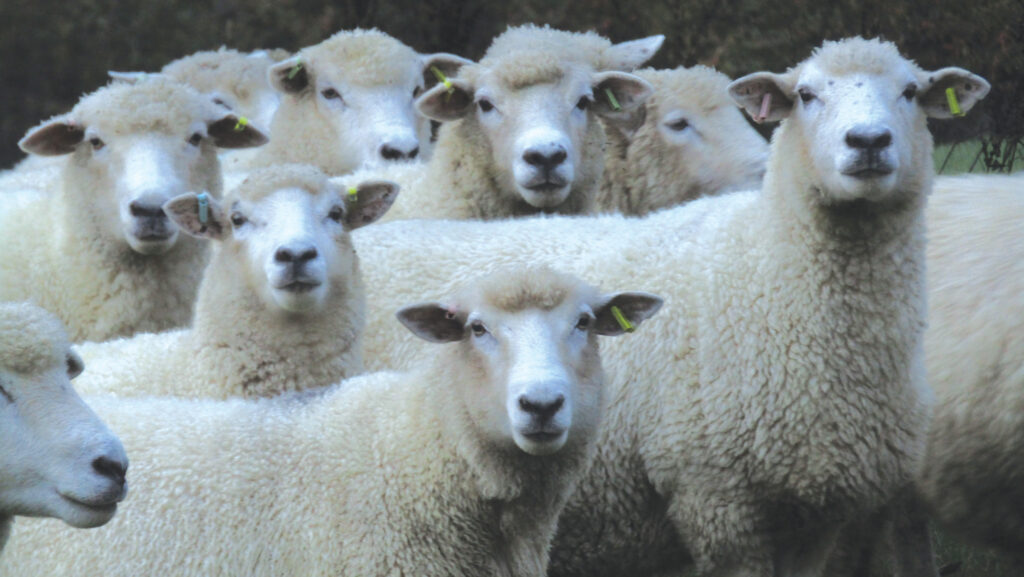
- A flock Structurally sound Romney ewes with good wool quality, bred with a crossbred Merino tup; two tups for 220 ewes
- B flock Structurally sound, but only some good wool, bred with a pure Merino tup; two ram lambs for 130 ewes
- C flock Sound, but wool not good enough to grade up; bred to Romney tups (five). Some female lambs retained to help flock expansion
- D flock Ewes not as sound; wool type more likely to get fly strike; routinely treated for strike and foot-bathed. Bred to two Suffolk tups for 200 ewes. All progeny sold for meat
“We’re looking for fly strike prevention so that we don’t have to treat for it. These ewes have good feet, legs and udders, and are wedge-shaped. Everything is electronically identified and we record,” says Andy.
Body condition score
In autumn, until tupping, Andy groups ewes according to body condition and these groups graze round the farm. They are further sub-divided into ewes above body condition score 3 and those below, with separate mobs according to age.
Shearlings and the previous year’s shearlings are on better-quality pasture because they are still growing, and older ewes in poorer condition are supplemented.
“We target feed according to condition and fertility because we want as many lambs as possible on the ground in April,” he adds.
Between tupping, for lambing and until weaning, ewes will be run in their four groups. He agrees it sounds complicated, but points out that is why he is breeding for a low-maintenance sheep to (eventually) make life simpler.