

How phosphorus recovery could change dairy slurry management
As pressure grows on dairy farmers to manage phosphorus more carefully and reduce water pollution, novel technology to remove phosphorus from slurry could offer a game-changing solution.
The technology has been shown to consistently remove 98% of phosphorus.
Makers elentecBio have been working alongside researchers at Harper Adams’ dairy unit in Shropshire to trial the system. Innovate UK has funded the work in partnership with Defra; the NFU Midlands Regional dairy board recently visited to learn more.
See also: What to consider ahead of new slurry regulations
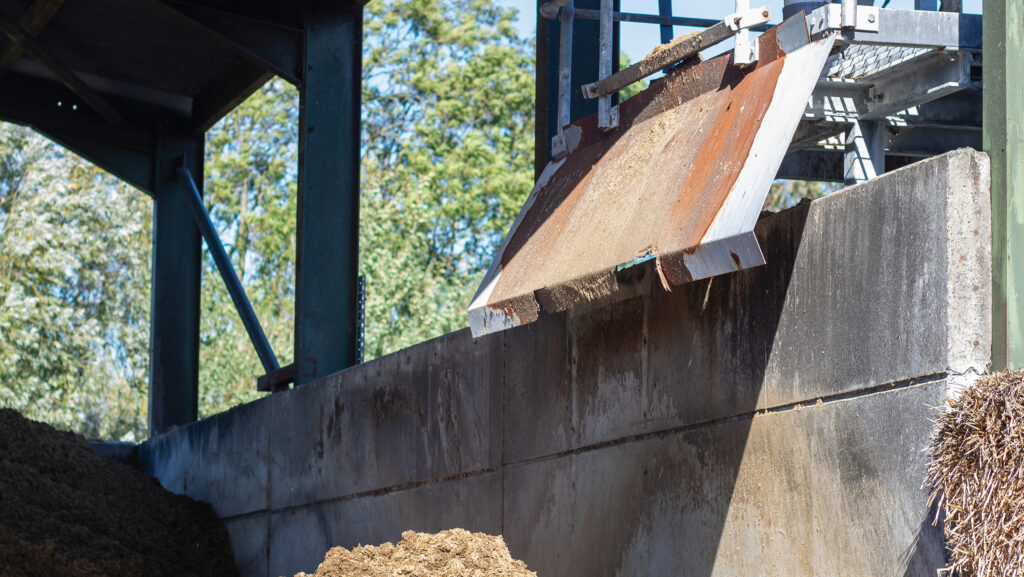
Solid particles are first separated © Rhian Price Media
How the technology works
The modular system has been operational at scale at the university since April 2026 and is housed in three, 6m (20ft) shipping containers near the slurry store. Duarte Tito from elentecBio says its modular design means capacity can be increased or reduced to match herd size and slurry processing needs.
Slurry initially passes through a conventional screw-press separator to remove larger particulates above 0.75mm, which contain high levels of phosphorus. The remaining liquid then has a three-step treatment.
Duarte explains that inside the first container, the liquid undergoes electrocoagulation, where an electrical current helps remove suspended solids.
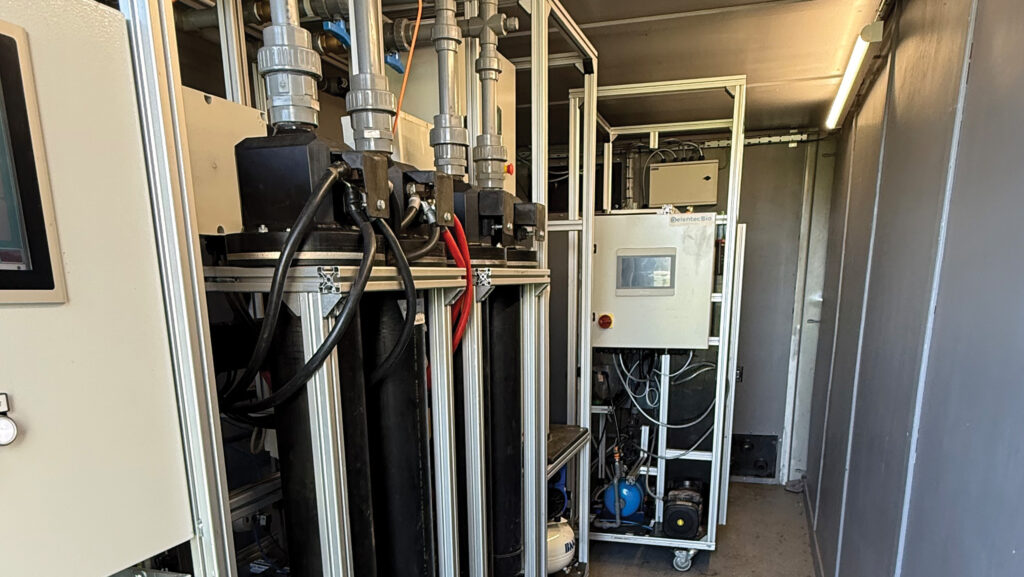
The liquid undergoes electrocoagulation © Rhian Price Media
Instead of using potentially harmful chemical coagulants, iron from the electrodes binds with phosphorus.
It is dosed through a series of cartridge-style units and can process up to 3 cu m/hour.
The remaining liquid is then ultrafiltered to remove finer particles, before passing through reverse osmosis in the final shipping container, where it separates water from the remaining nutrients.
This leaves three products:
- A phosphorus-rich fraction containing over 98% of the original phosphorus entering the unit
- A phosphorus-stripped liquid containing dissolved nitrogen, potassium and salts
- High-quality processed water, which could potentially be reused for parlour washdown or cattle drinking water, subject to Environmental Agency approval.
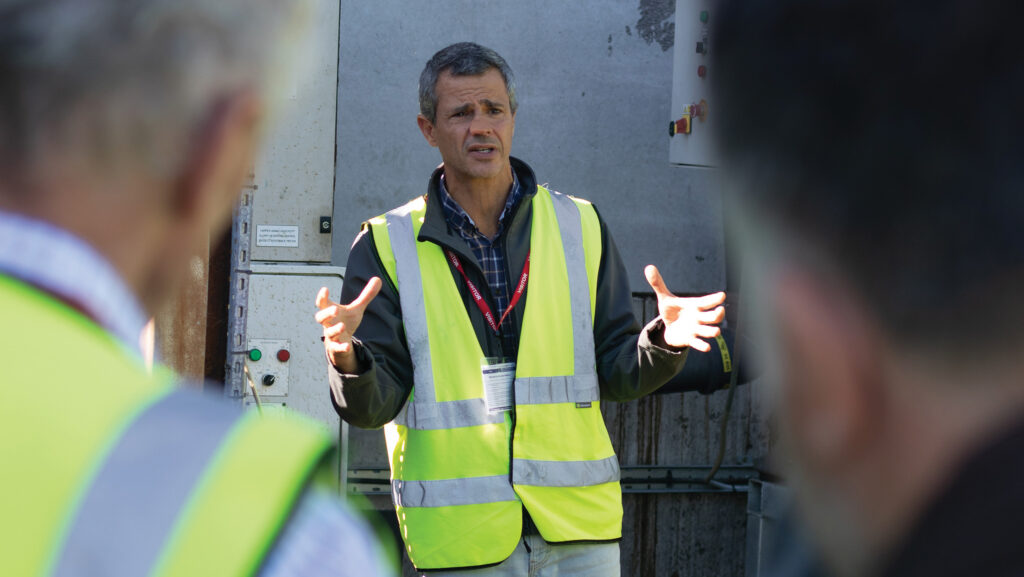
Duarte Tito © Rhian Price Media
Challenges and costs
The technology does, however, require significant capital investment. For a 400-head milking unit, Duarte estimates the system would cost around £500,000.
Researchers are still establishing its full energy requirements because the demonstration unit is not yet operating continuously. At Harper Adams, the slurry is pumped to the main store, with liquid intercepted at the transfer point.
Duarte says a commercial unit should ideally be installed at the store and run constantly to maximise efficiency. He estimates power demand of 10-20kW during operation, although more precise running cost data is expected by early 2027. Maintenance requirements include replacement components within the electro reactors, plus the cartridges used for iron dosing.
Results and next steps
So far, results show the system consistently removes 98% of phosphorus from the slurry entering the unit. Harper Adams soil scientist Dr Ana Morais Natalio is examining the value of the recovered nutrients by running application trials on Italian ryegrass under a four-cut system.
Ana is comparing phosphorus-rich applications with separated slurry, conventional fertiliser, and water as a control.
Preliminary results show that ryegrass receiving phosphorus outgrew plants under other applications by around 10%.
One possible explanation, she says, is that the recovered phosphorus is more readily available to the plant, although further analysis is needed.
Trials are also under way in spring wheat to assess nutrient uptake and crop yield, as well as potential nutrient leaching and greenhouse gas emissions.
© Tim Scrivener
Reducing pressure on slurry and land
For farmers with high soil phosphorus indices or limited slurry storage, Duarte believes nutrient separation could be valuable.
“Farmers are running out of storage capacity and the land bank [to spread slurry]. If phosphorus indices are already high, this technology could enable farmers to export it,” he says.
Under Farming Rules for Water, farmers must plan organic manure applications so they do not create a significant risk of agricultural diffuse pollution, matching nutrient applications to soil and crop requirements.
By separating nutrients, Duarte says they could target nitrogen and phosphorus applications more effectively.
Removing water also helps reduce the overall volume of slurry that needs to be stored, while cleaning water for potential reuse. The next challenge is to concentrate the recovered phosphorus enough to make transportation economical.
Duarte says this will be important to create a circular nutrient system, allowing phosphorus to be exported from farms with surpluses to those with a nutrient requirement.
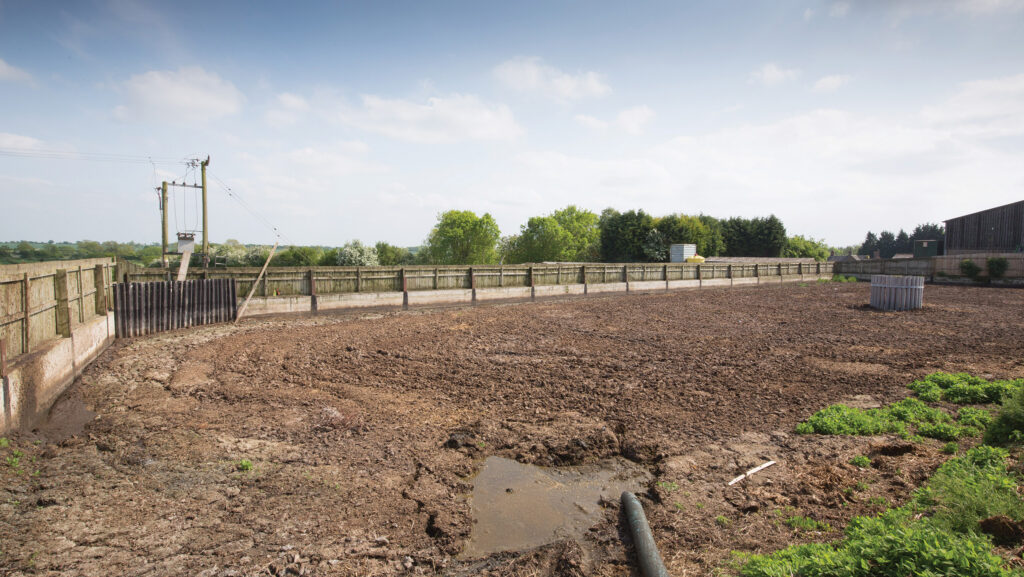
© Tim Scrivener
Barriers to adoption
However, regulation is presently a barrier to adoption. NFU Midlands regional dairy board chairman and national dairy board vice-chairman Robert Davies says the Environment Agency (EA) permitting requirements could prove a significant obstacle.
“The EA classes this as a waste treatment process, so farmers need a permit which costs tens of thousands. But it is not a waste; it is a valuable resource.”
ElentecBio says it is working with the EA to overcome these challenges and is reporting water-quality data to allow farmers potentially to reuse the treated water on farm.
The company is now beginning to deploy the technology to demonstration farms as it works towards wider commercialisation. “We want to have three static units next year and are demonstrating a mobile system for smaller farms over the winter,” says elentecBio chief executive Jayne Brookman.
Case study: Phosphorus management in practice
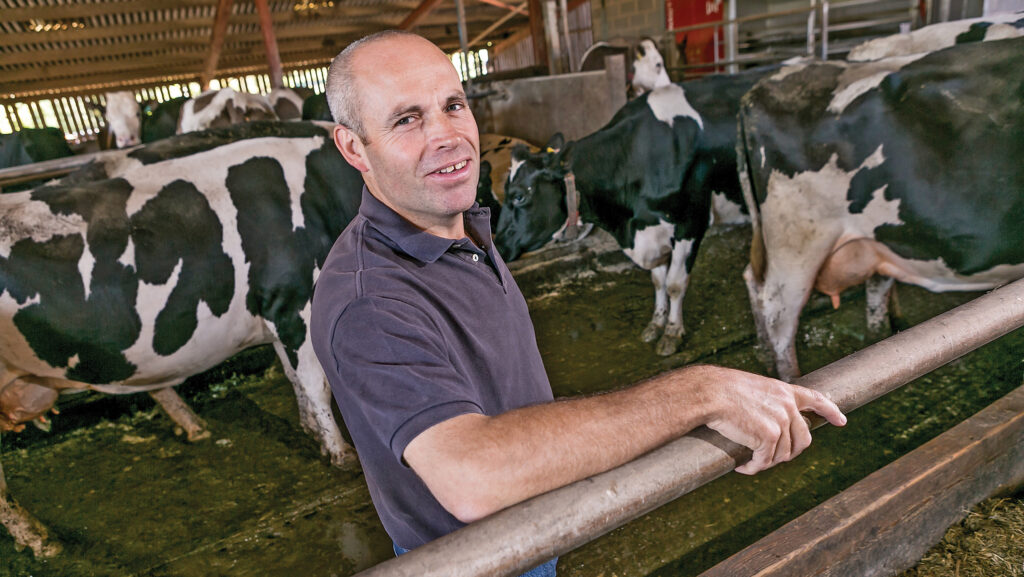
Robert Davies © Richard Stanton
Separating phosphorus from other slurry nutrients could be valuable in catchments where soil phosphorus levels are high, says mixed farmer Robert Davies, whose holding is soon to become an elentecBio demonstration farm.
Farming within the Wye Valley catchment, near Ross-on-Wye, Herefordshire, Robert is already accustomed to greater scrutiny of slurry and its impact on water quality.
“We’re very much at the forefront of the EA’s focus on farming soils and water,” he says.
Removing phosphorus from slurry could allow farmers to transport it elsewhere while retaining more of the nitrogen-containing fraction for use where crop requirements allow.
“The Farming Rules for Water are there, and they supersede nitrate vulnerable zones. They are currently not being enforced across the whole country, but they are in the Wye, and they are heading that way everywhere,” he warns.
Robert has been calculating his farm’s phosphorus balance for the past three years, measuring phosphorus imported in feed and fertiliser against that leaving the business in milk, meat and crops.
His interest in nutrient management was galvanised by his son, Harry, who studied at Harper and completed his dissertation on responsible use of nutrients.
Although he says this technology will not suit every business, Robert believes greater control of slurry will improve his farm’s nutrient efficiency.
“Phosphorus is a finite mineral that’s very expensive to buy and could save us a significant amount of money,” he says.
He believes other farmers need to understand their own farm’s phosphorus balance and consider how they will respond to tightening restrictions.
“The NFU Dairy Board is pushing back hard against the EA’s desire to permit intensive beef and dairy. But we must become more compliant. If we don’t abide by the [regulations] they will be heavily enforced.
“We may lose the fight against permitting, and a day could come where some farmers can’t spread slurry on their own land.”
Farm facts
- Milking 130 pedigree Holsteins
- Rearing own replacements and finishing beef
- 45,000-bird organic enterprise, rearing chicks
- Farming 607ha