

Advertiser content
What will the dairy farm of tomorrow look like?
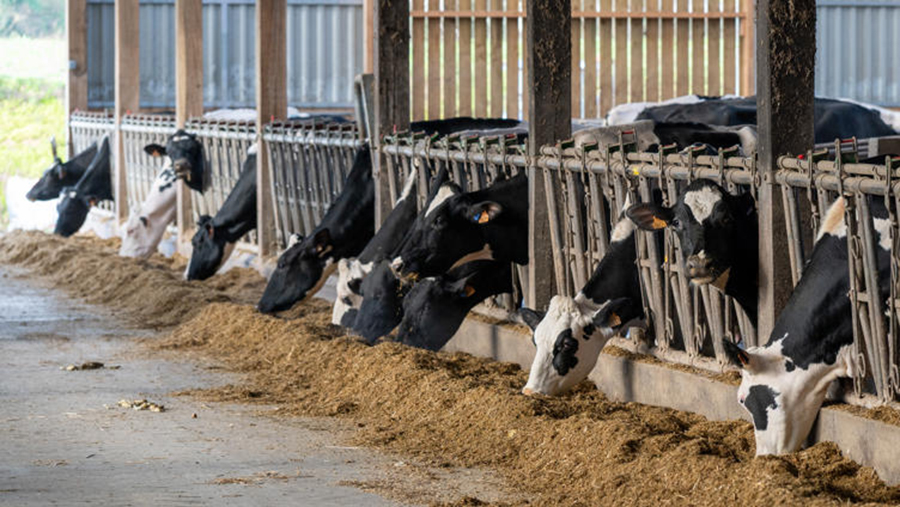
For dairy farmers, the next big decision may not simply be about producing more milk. It could be about finding a way to produce it with less pressure on labour, better information or a system that works for both the cows and the people running the farm day to day.
Across the UK and Ireland, those questions are becoming harder to ignore. Labour availability, input costs and milk-price volatility continue to influence decisions, while automation, robotics and data are opening up different ways and opportunities for managing a dairy business.
DeLaval sees these pressures as the factors accelerating interest in robotic milking.
But making the move towards automation isn’t as simple as just choosing a robot.
How many cows can one robot actually milk? Can robots work with grazing? Do you need a new shed? Does collecting more data make managing the herd easier?
These are exactly the kinds of questions explored in DeLaval’s new Dairy Pocketbook 2026/2027.
Rather than looking at technology in isolation, the pocketbook examines the on farm decisions behind it, comparing conventional and robotic milking, exploring how robots can be incorporated into grazing systems and following the journey from initial site and barn planning through to start-up and ongoing support.
Challenging some assumptions
One of the most useful sections tackles some of the myths surrounding robotic milking.
For example, there isn’t a fixed 60-cow capacity for every robot. DeLaval has working examples average around 50-70 cows per robot, depending on factors including production, milking time, cow flow and barn design.
Nor does investing in robots necessarily mean having to build a completely new shed: systems can be installed in existing buildings as well as green field sites.
Grazing systems also don’t automatically rule robotics out either.
The pocketbook looks at how the business case changes in a grazing system, including the potential value of labour savings and, importantly, what farmers can do with the time released from conventional milking.
That could mean putting more attention into grass utilisation, fertility or milk-from-forage performance.
From more data to better decisions
The other significant shift taking place on dairy farms is often less visible. Modern dairies can generate a constant stream of information from milking equipment, behaviour monitoring, feeding systems and other connected technologies.
The opportunity is to turn that information into decisions farmers can actually act on.
The pocketbook explores technologies including activity monitoring, body-condition scoring, in-line milk-cell and milk-solids analysis and fertility monitoring, as well as the wider move from fragmented farm software towards connected data and more predictive management.
And it isn’t only theory.
The final section takes a deeper dive into dairy businesses already putting robotics into practice, sharing example scenarios from some of the wider range of active farming systems.
This includes making a common transition to a conventional robotic milking designed system, grazing systems management and batch milking capability.
The farms may be different, but that is perhaps the point. There isn’t one blueprint for the dairy farm of tomorrow.
The more useful question is: what could the right system look like for yours?
Explore the trends, challenge the myths and see robotics and dairy data in practice in the DeLaval Dairy Pocketbook 2026/2027
Provided by
DeLaval is a global dairy solutions leader, driven to make sustainable food production possible through innovative milking, automation, digital services and farm expertise, supporting farmers, animals and productivity worldwide.