

Calf checks for passive immunity down, study suggests
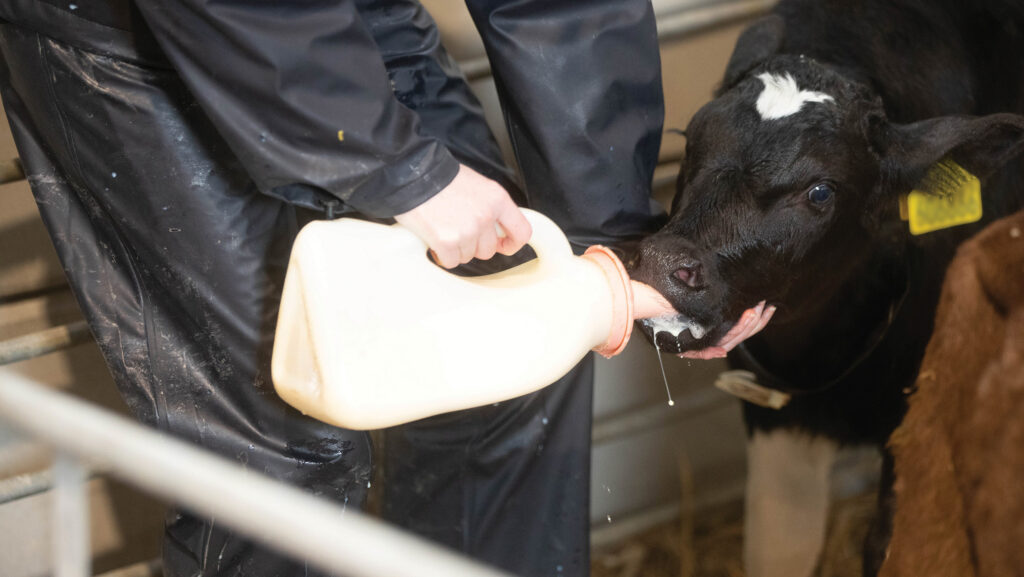 © Tim Scrivener
 More farmers are checking the quality of colostrum they feed to calves, yet few are monitoring passive transfer of immunoglobulins to see whether their calf management protocols are working.
See also: How passive transfer testing gives calves a good start
A survey of 142 British dairy farmers by MSD Animal Health found that 66.2% now test colostrum quality, up from 48.8% in a comparable 2022 survey of 248 dairy farmers.
However, results revealed at UK Dairy Day showed the proportion of dairy farmers testing calves for failure of transfer of passive immunity fell from 41.1% in 2022 to 31.7% in 2026.
Dr Katie Denholm, a senior university clinician in farm animal clinical sciences at the University of Glasgow who was involved in the survey and analysis, said it is positive that more farmers are testing colostrum.
However, they also need to know if calves have successfully received and absorbed enough immunoglobulin.
“Poor-quality colostrum, bacterial contamination or delayed feeding can affect absorption, so testing calves for passive transfer can help identify where management protocols may not be working as expected,” she said, adding that farmers should work with their vet to routinely monitor immunoglobulin levels.
Test the colostrum and the calf
Dr Kat Baxter-Smith, veterinary adviser at MSD Animal Health, advised dairy farmers to monitor calf bloods regularly, and ideally monthly.
“Testing the colostrum tells us about the input, while testing the calf tells us about the outcome. We need both to understand whether a colostrum management programme is working effectively.”
Good colostrum management is particularly important where cows have been vaccinated to provide passive protection to their calves, she added.
Vaccines that help manage key scour pathogens in calves increase the levels of specific antibodies available in the dam’s colostrum. These antibodies are then transferred to the calf through colostrum and transition milk.
“When farmers are investing in vaccination to help protect their calves, it is important that the management protocols are in place to allow calves to receive this antibody-rich colostrum effectively,” she said.
“Vaccination is only one part of the protection strategy. Calves need to receive sufficient antibody-rich colostrum quickly and hygienically to benefit from the passive immunity the vaccination programme is designed to provide.”