

How simple system keeps calf losses at 1% for block calver
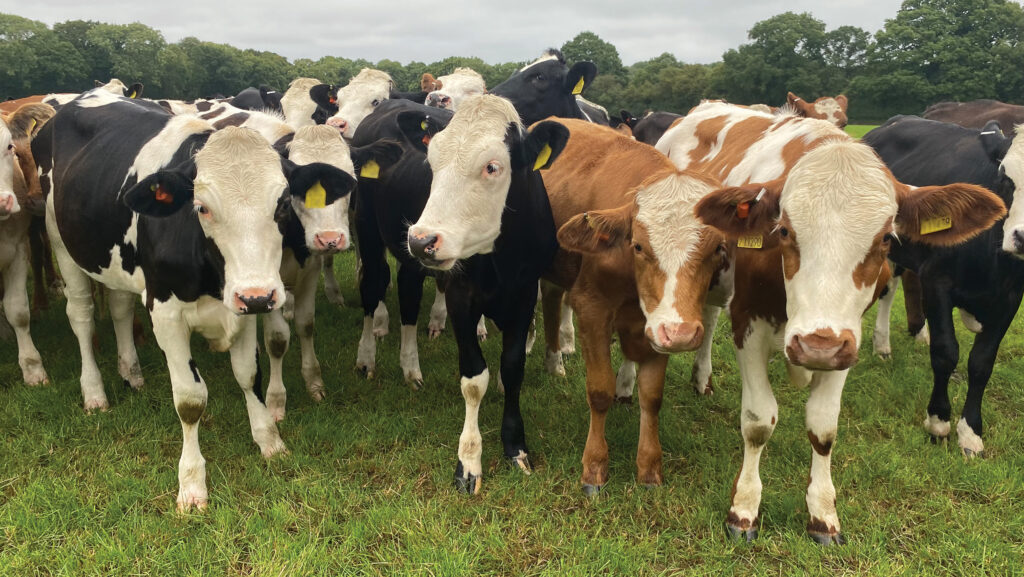 Norwood Place Farm dairy heifers © Emma Knight
 Keeping calf mortality low while calving 650 cows in a 10-week block is no small feat.
At Norwood Place Farm in Surrey, a simple feeding system, tight hygiene protocols and a robust herd health programme help keep calf mortality consistently below 1%.
See also: How spring block calver uses nurse cows to rear replacements
Emma Knight farms alongside her father, Paul, milking 950 crossbred cows across three farms in Surrey and West Sussex.
She returned to her family farm about one year ago, having completed a degree in agriculture at Harper Adams University then two years working for a contractor in New Zealand.
Calves from the 400-cow crossbred, autumn-calving herd on the home farm are reared there, together with those from the Knights’ neighbouring 250-cow dairy unit. Another 110 heifers are reared at the third farm.
Farm facts
Norwood Place Farm, Surrey
- Farming 486ha (162ha maize, the rest grass)
- 950 crossbred cows (Holstein, Norwegian Red and Fleckvieh) across three farms
- Average yield 8,000 litres at 4.6% butterfat and 3.6% protein
- Autumn calving
- Milk sold to Arla on a Welfare Pro Plus Grazing contract
- Typically, two full-time employees manage the calves, with relief labour at the weekends.
Breeding strategy
They need 185 replacement heifer calves for the two farms each year. These are bred from heifers and young cows to maximise genetic gain.
The remaining cows are served to Angus, with beef calves sold direct to repeat buyers.
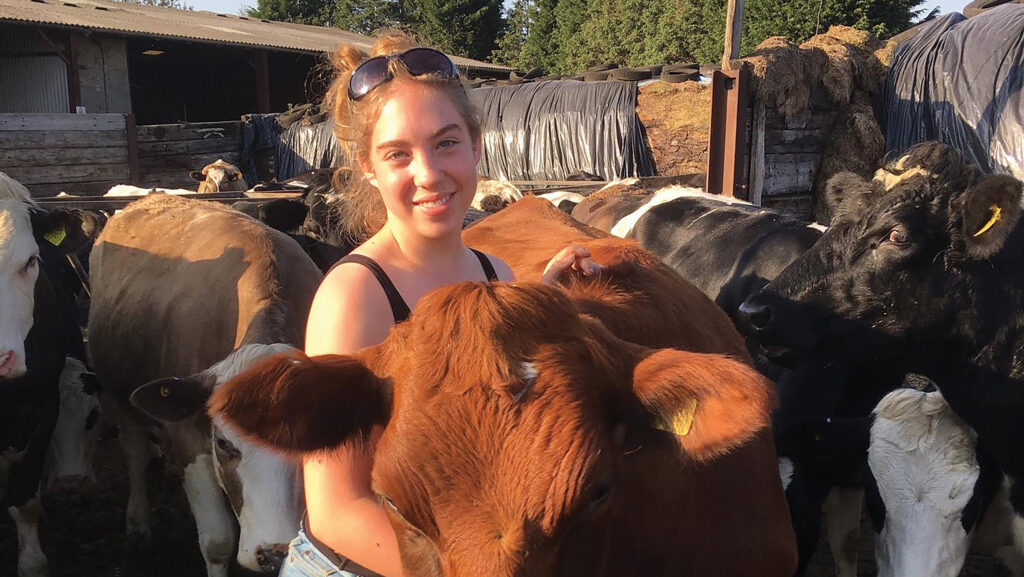
Emma Knight © Emma Knight
“We look at lameness, mastitis, yield, fertility and health status, and anything that doesn’t meet our criteria is bred to beef,” Emma explains.
Upgrades to the parlour meant that, for the first time last September, they began recording individual cow yields monthly.
This was enabled by adding milk meters to the automatic cluster removers when the parlour was extended from 20/40 to 25/50, reducing milking times by 1.5 hours/day.
“We look at yield now for breeding, but we don’t want to fall into the trap of breeding for yield alone,” she adds.
Simple system
Cows normally calve outdoors on standing hay from 18 August, with 70% calving in the first six weeks of the 10-week block.
This year’s drought means there is no standing hay available, so silage taken from the grazing platform in April has helped bridge the gap.
“We are feeding all our dry cows grass silage alongside a dry-cow nut. It’s like a dessert,” says Emma.
With up to 25 calves born a day at peak, Emma says the calf-feeding system has deliberately been kept simple to minimise labour.
Calves are left with their dams for 12-24 hours to suckle colostrum naturally.
“We only supplement colostrum if we see a need, like the cow is down, or if we don’t observe the calf sucking,” she explains.
Calves from Johne’s-positive dams are given clean colostrum to reduce infection transmission.
Random blood samples have been taken several times to assess passive transfer of immunity, with results showing calves are receiving adequate levels.
Accelerated milk feeding trial
Once calves have received colostrum, they are split into pens of five inside a straw shed and fed on a Wydale feeder.
Calves are fed three litres of milk replacer twice daily for the first month, followed by 4.5 litres once daily until weaning at eight weeks.
As part of her studies at Harper Adams, Emma completed a placement on a Wiltshire farm where calves were fed twice daily until seven weeks old.
Keen to establish whether feeding more milk could improve growth, the Norwood Place team trialled an accelerated feeding regime four years ago.
Calves received 900g of milk powder (20% fat and 23% whey protein) daily until seven weeks, then dropped to once-a-day feeding and were weaned over the following week.
Regular weighing showed little difference in growth rates, with 80% of calves achieving more than 0.8kg/day.
However, the trial highlighted housing differences, with calves in one shed consistently outperforming those in another.
Furthermore, calves receiving less milk ate more starter and transitioned much more easily, says Emma. Therefore, the team decided to return to their original milk-feeding strategy.
Housing and hygiene
They have since built a new shed for straw storage, and this year heifer calves are moving into the old straw shed, which has a higher roof and better ventilation.
Beef calves will remain in the existing calf shed on the farm, although this has been improved by removing Yorkshire boarding to increase airflow.
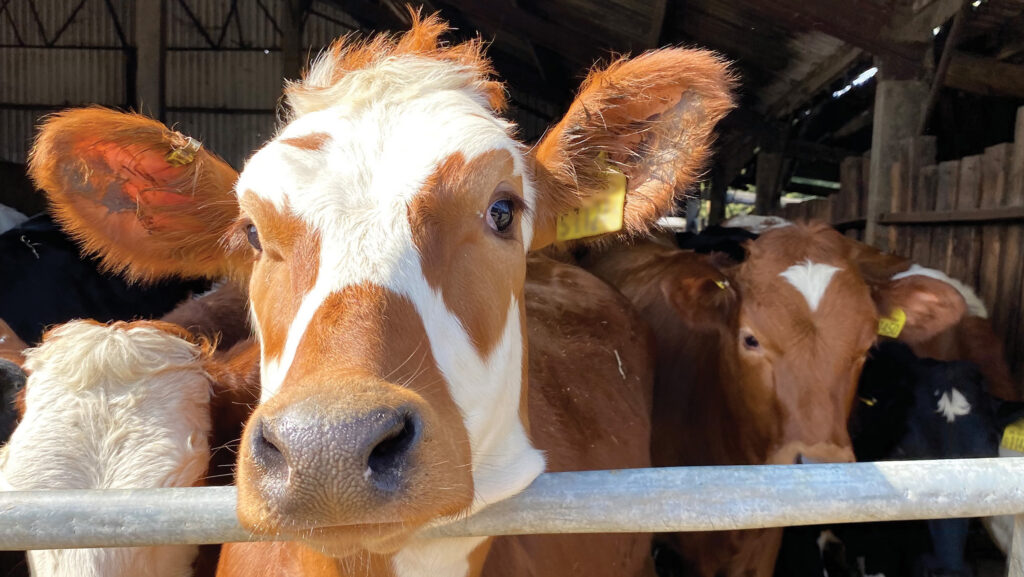
Eight-month-old heifers before turnout in April © Emma Knight
Housing has historically been one of their biggest challenges because of the sheer number of calves arriving in such a short period.
“We relied on selling beef calves quickly, but I think this year we will have solved that with the straw shed,” she says.
Hygiene is equally important. Calves are bedded daily with plenty of straw to keep them dry, warm and clean.
Meanwhile, feeders are cleaned thoroughly between uses with hot water, washing-up liquid and sodium hypochlorite.
The block-calving system has the advantage of allowing an all-in, all-out operation, which makes cleaning the calf sheds inherently easier.
Post-weaning management
After weaning, calves continue to receive ad-lib concentrate until they are eating about 3.5kg a head a day.
At 11-12 weeks, ad-lib silage is introduced. At this point, heifers will be run in three groups of about 60.
Then concentrate is gradually reduced in preparation for turnout. The two farms are on heavy clay, so this usually takes place in April.
Heifers graze rotationally until October or November, when pre-breeding checks will be carried out by Olly Giles from Ruminant Health Solutions in preparation for insemination at 15 months. Heifers calve at 24 months, on average.
Disease prevention
Johne’s control has been ramped up in the past three years. Family trees are used to identify heifers descended from positive animals, which are marked DNB (do not breed) or served to beef.
Cows are tested for Johne’s twice a year – before service and again before calving – using individual milk sampling. This has reduced the herd’s average test value from 6.7 to 5.3.
The whole herd is vaccinated against infectious bovine rhinotracheitis, bovine viral diarrhoea, and leptospirosis.
The Knights also vaccinated their animals against bluetongue last year, followed by a booster this year.
For Emma, achieving good results doesn’t require a complicated, costly system. Keeping things simple and following the basics every day matter most.
“About 650 calves come through the shed in a relatively short space of time, so you have to be methodical and consistent with protocols,” she says.
Emma Knight’s top tips for managing calves
- Be methodical and prioritise sick calves – deal with problems when you spot them rather than risk forgetting later
- Pay close attention to hygiene, particularly bedding and feeding equipment
Keep a written record of sick calves, treatments and observations - Have a clear staff handover, so everyone knows which calves need monitoring or treatment