

British-built diesel-electric off-roader promises huge range
 © Ben Scott-Geddes
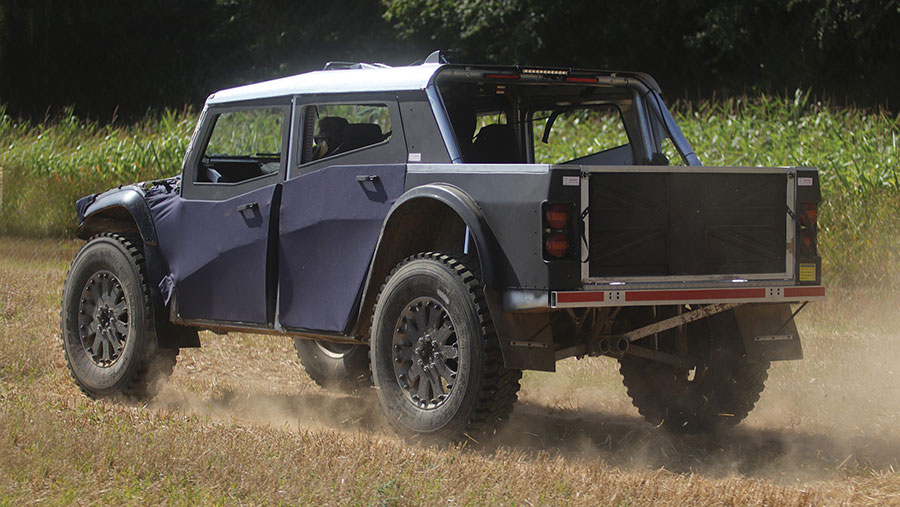
 Engineered to traverse raging waterways, skip through rock fields and access the darkest reaches of the globe on a single tank of fuel, the Fering Pioneer is the antithesis of the average soft-roader.
Built in Surrey by former McLaren and Ferrari designer Ben Scott-Geddes, this expedition-spec vehicle features an aluminium body-on-chassis construction with a novel diesel-electric drivetrain that gives it a self-contained range of some 4,300 miles.
See also: British-built Ibex 4×4 offers Land Rover Defender alternative
In contrast to conventional electric vehicles that need to lug around weighty battery packs, the Pioneer has a small 20kWh unit – powering a motor on each axle – that gives it an electric-only range of about 50 miles.
When charge starts to deplete, an 800cc biodiesel generator fires up to keep them replenished.
This has sufficient output for continuous driving in most situations, but during extreme off-roading the driver might need to pause to top up the batteries.
Maximum torque is 600Nm and top speed is about 80mph.
The simple drivetrain means there is no need for a heavy transmission and transfer box, which helps keep weight to just 1.5t – at least half a tonne lighter than the average double-cab pickup.
Other weight-saving measures include waterproof fabric body panels and keeping interior fitments to a minimum.
Fuel economy is impressive for a bulky off-roader, at about 50mpg with the generator running, but it’s a set of cavernous diesel tanks that give it such a prodigious self-contained range.
The Pioneer’s off-road credentials are also in a different league to conventional 4x4s. Ground clearance is a massive 800mm, it can wade through 1.4m-deep water and can climb a 60% gradient.
No front overhang and massive 22.5in wheels also mean it can hop up a 500mm vertical wall.
Customers are likely to be those carrying out expeditions or rescue missions in remote locations and prices will be £150,000 plus, depending on specification.
For the rest us, it shows a possible solution for extending the range of electric vehicles, particularly when they’re required to carry or tow heavy loads.