

Isuzu D-Max EV matches diesel in all but range
 Isuzu D Max EV © Peter Hill
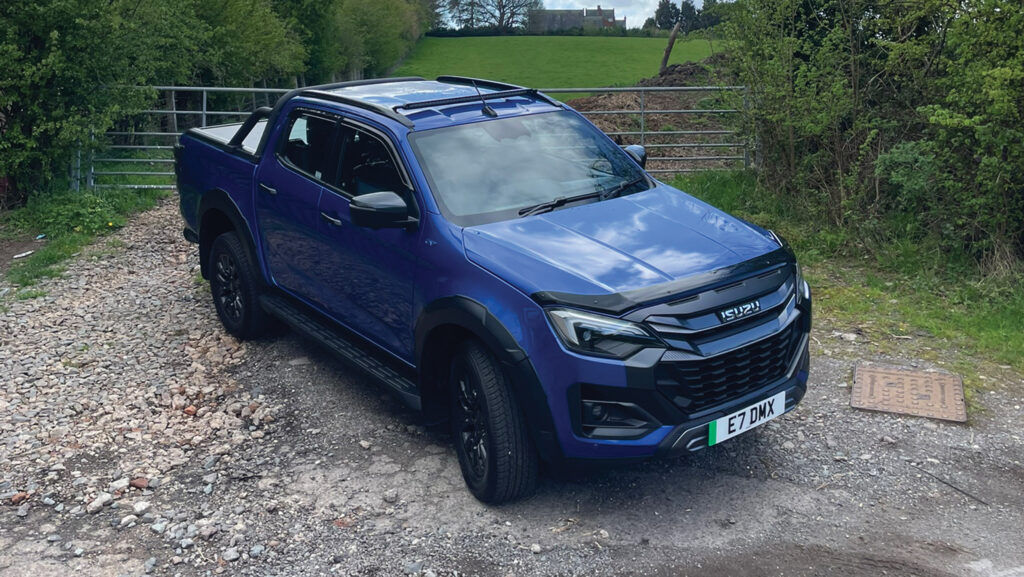
 Walk up to the latest addition to the Isuzu D-Max stable and you’d be hard pressed to determine its means of propulsion. It looks like, well, every other D-Max.
There are no fancy strip lights, nor an illuminated brand logo like you see on many electric cars.
See also: On test: Ford ramps up Ranger pickup power with 281hp hybrid
Heading around the back provides the first indication that it’s something different: there’s a modest “EV” addendum to the chrome nameplate on the tailgate.
Flicking open the “refuelling” flap on the left-hand flank uncovers a charging socket and, for further confirmation, dropping to your knees for a peer beneath the body reveals a large, extruded aluminium guard.
It protects the hidden battery from below-the-belt bashings – think driving along a deeply rutted track.
Isuzu D-Max eDL40 |
||
|
|
D-Max eDL40 (electric) |
D-Max DL40 (diesel) |
|
Power |
200hp (149kW) |
164hp (120kW) |
|
Torque |
347Nm |
360Nm* |
|
0-62mph |
10sec |
13sec |
|
Kerb weight |
2,345kg |
2,015kg |
|
Ground clearance |
210mm |
230mm |
|
OTR ex-VAT |
£55,955 |
£37,645 |
|
* Torque at 2,000-2,500rpm |
||
Same but different
The D-Max EV, then, is an unfamiliar vehicle in familiar clothes, largely thanks to a bit of foresight when Isuzu developed the current diesel-engined model.
It envisaged building an electric version sometime and made provision to install a decent-sized battery and a different rear axle setup – more on that in a moment.
As a result, the EV isn’t an awkward conversion but a model in its own right, with no compromises when it comes to those all-important pickup stats.
It can tow 3.5t and carry at least 1t in its load bed, just like its popular diesel counterpart.
It also retains four-wheel drive, of course, but in full-time form rather than selectable, and is available to order now with stock vehicles in eDL40 extended cab guise and both eDL40 and higher-spec eV-Cross spec in double-cab body style.
EV badge and charging socket apart, D-Max geeks might spot subtly different surrounds for the fog lights and a new design of fancy 18in alloy wheels.
And lifting the bonnet reveals an engine bay crammed with high-voltage electric control gubbins, plus the usual under-hood components, with no room for a front storage compartment common on many battery-electric cars.
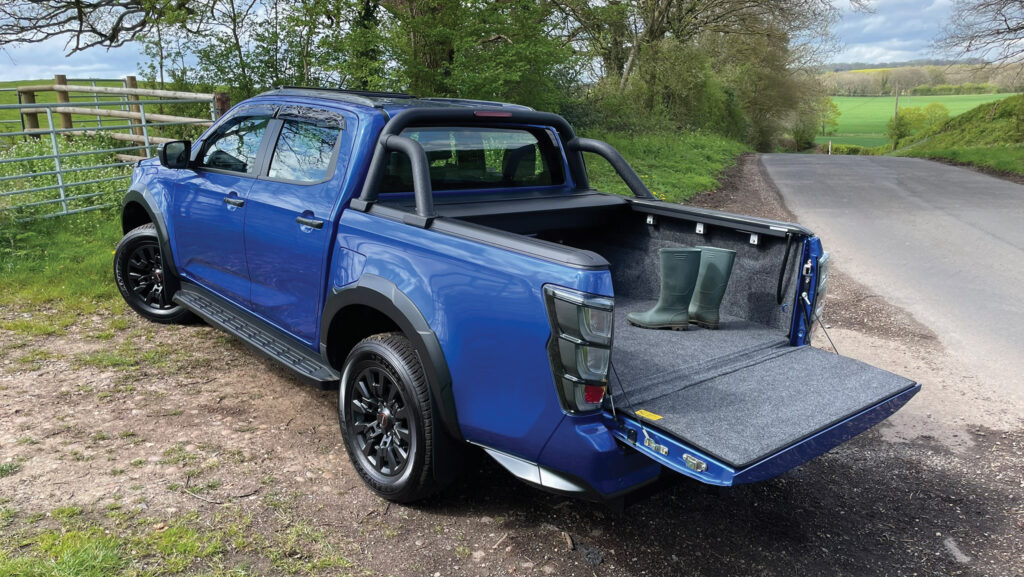
But then there is more than enough space in the load bay out back, which is identical to the diesel’s, and in the cab – whether extended or double.
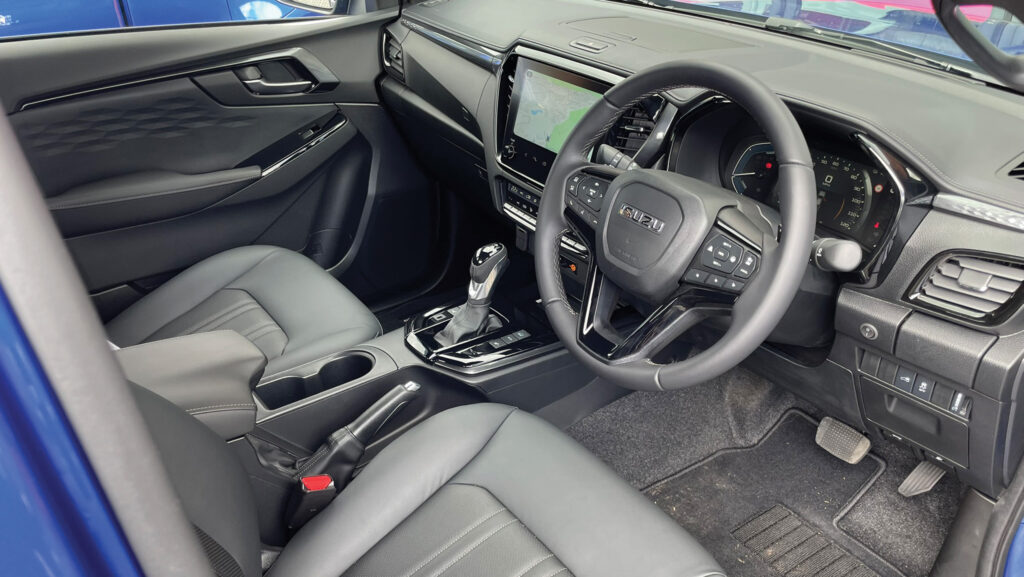
Here, pretty much everything is familiar D-Max, right down to the PRND selector in its usual place on the transmission tunnel.
Isuzu D Max EV interior © Peter Hill
Revamped rear axle
Push the “start” button to switch on, however, and the instrument panel lights up with some uncustomary info, such as battery charge level and energy regeneration status when slowing down.
There have been even bigger changes to the rear axle arrangement because in place of a traditional beam is a de Dion design, a shaped cross beam that plays no part in transmitting drive.
Instead, this installation rigidly mounts the differential and an electric motor to the chassis, resulting in maximum ground clearance, with power and torque transmitted to the beam-mounted wheel hubs via driveshafts.
The axle and hub assembly is supported on leaf springs in a packaging arrangement said to also help with rear-end refinement.
More power
The combination of a rear-mounted 103.4kW (139hp) electric motor and a 45.9kW (61hp) unit up front provides full-time four-wheel drive and total outputs of a smidge over 149kW (200hp) and 347Nm of instant torque.
That compares with the 1.9-litre and forthcoming 2.2-litre diesels’ 164hp/360Nm and results in the EV scooting from zero to 62mph in 10sec, versus 13sec with combustion, and seamlessly on to 80mph if given its head.
Of course, enjoying the hushed whoosh of the electric powertrain with regular pedal-to-the-metal acceleration, whether from standstill or when exiting a 30mph speed limit zone, does nothing for the range.
Gentler driving does; the official WLTP figure is 163 miles but the simulated cycle of mixed driving environments extends that to 224 miles when lightly loaded; and using the “eco” mode will doubtless help in that regard.
In theory, it should be feasible to get to, say, the Lamma show from Doncaster or Bristol and home again on a single charge or from further afield as long as an NEC car park charger is available for a hook-up.
For the most part, though, a D-Max EV in a farmer’s hands will spend most of its days performing multiple short runs – to distant fields, to a local machinery dealer to collect parts, or to visit the weekly livestock market.
In which case, an overnight top-up for the 66.9kWh lithium-ion battery, which is covered by an eight-year warranty, will see it ready for more running around the next morning.
Keen spec
During a 60-minute mostly country lane familiarisation drive, the newcomer and its powertrain impressed.
The top-spec V-Cross interior is pretty posh for a pickup with generously upholstered seats promising a reasonably comfortable ride – great on smooth tarmac but teeth shattering over pockmarked and potholed country lanes.
Press the starter button to switch on and nothing but the digital instrument panel lighting up indicates the vehicle’s ready for the off; and just a hum results from snicking the stick into “drive” and pressing the accelerator pedal.
It stays that way too, until there’s sufficient speed for the 265/60 R18 tyres to make their presence felt and, beyond that, the wind noise generated by the bluff frontal area as it intrudes on peaceful progress.
Regeneration is another new experience; not in the farming sense but in the way lifting off the throttle induces rapid deceleration as the electric motors briefly become generators to help replenish the battery.
There are four regen settings, from full-on to modest, to suit different driver preferences.
At first, embarrassingly jerky approaches to oncoming vehicles, tight corners and road junctions come from raising a right boot as you would with a diesel.
But the art of achieving smoother progress is soon mastered thanks to a nicely weighted accelerator pedal.
With practice, it becomes second nature to ease up to a junction on regenerative braking only, with just the slightest of touches on the brake pedal to bring the EV to a halt.
© Peter Hill
FW verdict
So far, so good, then.
But a final verdict on the market’s first fully-capable electric pickup will have to wait until we’ve spent more time plying country lanes, hills and dales, and rough farm tracks with a loaded deck and a cattle trailer in tow.
Only then will we know whether battery range is irrelevant, a minor inconvenience, or a deal breaker.
Likes and gripes
Likes
- Whisper-quiet powertrain
- Regen braking effect
- Comfortable cabin
Gripes
- Price premium
- Crashy over potholes
- Wind noise