

Contractor Comment: DJ McKay plans home-built nurse tank
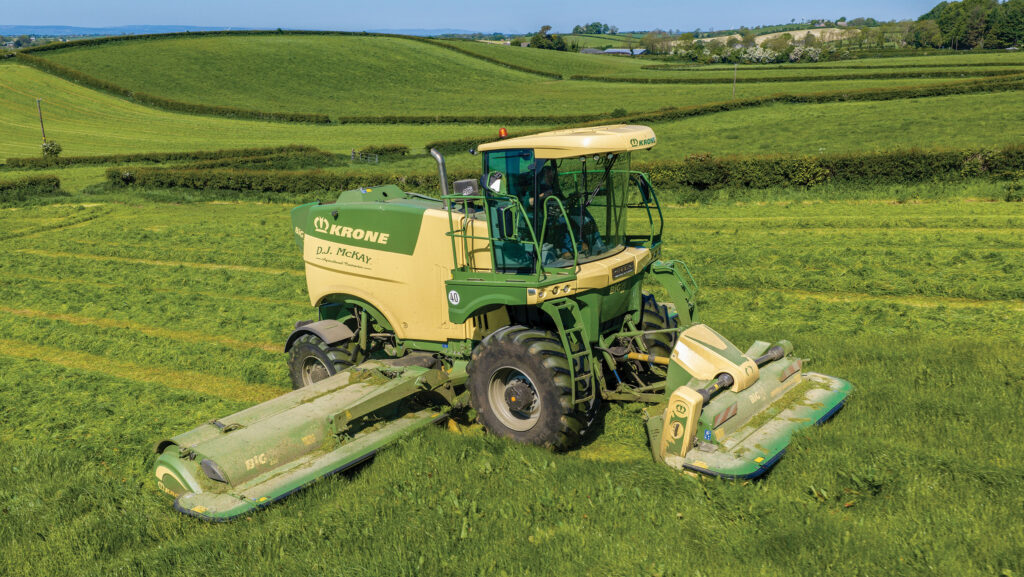 Krone Big M 450 © AR Imagery
 “Where’s the rain?” said no farmer in Northern Ireland, ever. While those in England have spent the summer staring at Britain’s answer to Death Valley, conditions across the Irish Sea were, as ever, perfect for grass.
See also: Contractor Comment: Wearing metal shortage concerns Brewster
Plenty of clamps were filled by July, forcing balers into action for a fifth cut, and slurry stores have been bled near-dry, giving Ballymena-based contractor James McKay a chance to mull changes for next season.
Efficiency gains top the priority list and, in particular, finding a means of reducing downtime due to maintenance and breakdowns. The current thinking is to employ a dedicated mechanic.
© AR Imagery
About the contractor
Silage and slurry dominate the workload of Ballymena-based DJ McKay and Son, headed by David and James McKay. Alongside this, it offers a raft of other predominantly grass-orientated services, plus stone processing using a custom-made crusher.

James McKay © MAG/Oliver Mark
“We’ve got the work to justify it – the stone crusher alone needs an overhaul every few months,” says James. “And it’s a lot to expect of the men coming back from a full day’s work to then grease, service and fix their machines.”
As well as the crusher, there are 13 tractors, two foragers, a self-propelled mower and umpteen implements to keep tuned up.
It would be a substantial investment, with the extra pair of hands likely to command a healthy salary and possibly need access to a diagnostics tool for working on out-of-warranty tractors.
But as well as keeping staff on their machines rather than in the workshop, it could reduce the frequency of machinery replacements and, with improved reliability, allow the current fleet to handle more work.
However, taking on more in-house repairs comes with compromises – something James was reminded of just a couple of months ago.
His prized 9,000-hour 7930, which is the main tug for the crusher, dropped a valve. It required a full engine rebuild that tested the patience of engineers at local dealer Moores, which demonstrated the benefit of making a major overhaul someone else’s responsibility.
Unfortunately, that wasn’t the end of its woes. Braking issues followed soon after. The total cost of this unfortunate series of troubles was about £20,000 – 40% of the tractor’s value. It was a bitter pill to swallow given that it arrived little more than a year ago.
But the repairs were worth it, says James. “We know what sort of tractor we have now. We’ll probably work it hard for another five years, and keep it forever.”
Business facts: DJ McKay and Sons, Ballymena, County Antrim
- Main services Silage, slurry spreading, ploughing, drilling, hedgecutting, stone crushing
- Others Hen house clearing, stone picking, rush mulching, digger work
- Staff 10 full-time, plus another 10 during seasonal peaks
Nurse tank project
Efficiency gain number two is also workshop related, with James hatching a plan to build his own nurse tank – if he can’t find one to buy.
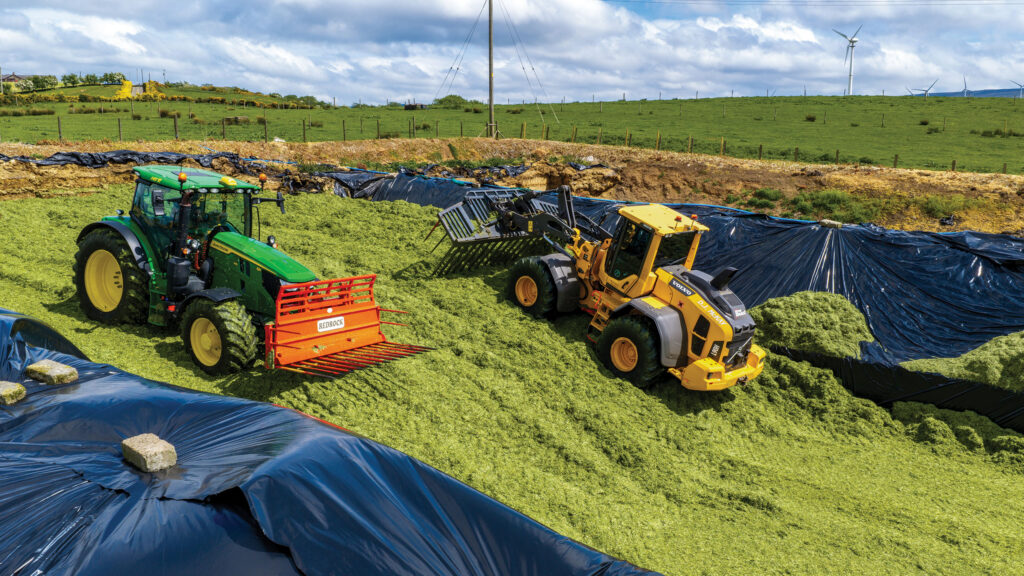
A successful track record of home-builds already includes two engine-driven pumping trailers and, last winter, a 2.8m, near-5t silage compactor.
This cost £3,500 to assemble and proved its worth during its first campaign, mounted on a R-series tractor operating in tandem with the firm’s loading shovel.
“It’s perfect for working alongside the Volvo when we have grass coming in from two foragers,” says James. “The shovel does the pushing and the tractor does the pressing, which has really sped things up.”
And he hopes for similar performance gains once the nurse tank project is completed. Planned capacity is 10,000-12,000gal, which he reckons will be the ideal match for his pair of 3,500gal Herron tankers.
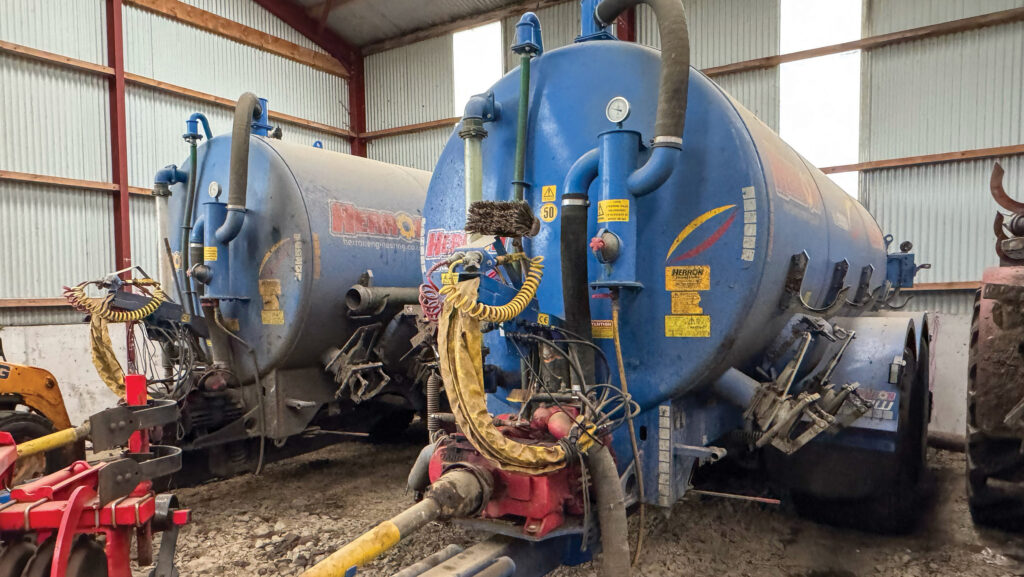
Herron tankers © MAG/Oliver Mark
“They’ll be able to keep it topped up without queuing, and having mobile storage in the field will potentially reduce our pump requirement from four to one,” he says. “Plus, customers will be able to help out with carting by blowing straight into the tank.”
The downside is that it will require an extra man, but that’s quickly offset by the potential to shift 20% more slurry in a day.
Big M conundrum
A bigger outlay could be on the cards if James decides to pull the trigger on a replacement for his Krone Big M 450. The self-propelled mower has been almost faultless over the four seasons since arriving from Germany with just 400ha under its belt. But, he says, that isn’t a reason to rest on his laurels.
“Running it to high hours is too much of a gamble. It could end up being incredibly cheap, but all you need is a £15,000 wheel motor failure to ruin things.”
And it’s not only the cost implications of any breakdown; it’s also the firm’s main machine for dropping grass, so any extended downtime would be disastrous.
“No question, it has been good,” he adds. “But it has now done 10,000ha and is still worth strong money, so I’ve put the feelers out.” One slight deterrent is the major service it had last year, which the business hasn’t fully reaped the benefit of.
As for any temptation to revert to a tractor and triple-mower setup? “Absolutely not – if anything, I’d buy a second Big M,” says James.
“It takes more money to run – especially if you had the wrong man on the seat – but it’s easier on fuel, more manoeuvrable on the headlands and folds far quicker, which is critical for the small fields we work in.”
Tractors and baler pending
Further funds have been earmarked for a tractor fleet freshen-up, though, like the Big M, it will depend on what’s available – and at what price.
Two of the 6R 145s have now grafted their way through 8,000-plus hours and, in the interests of reliability and warranty, could swapped for the same again.
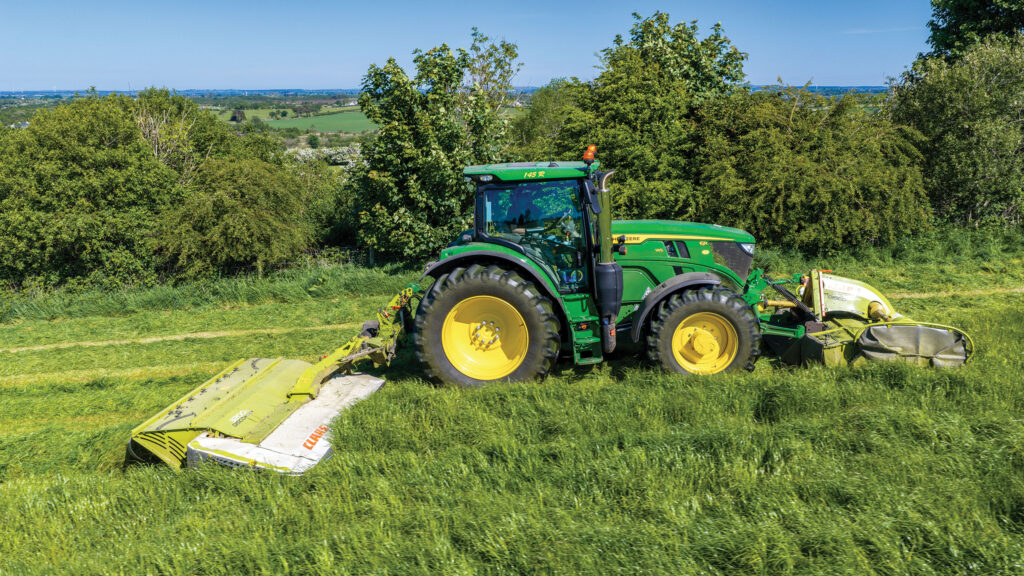
John Deere 6R 145 © AR Imagery
Whether they do will depend on the cost to change, which James will only entertain at close to the £10/hour mark. “Ideally, I’d like brand-new, but I would take a 1,000-hour ex-demo model and sacrifice some warranty if the price is right,” he says.
The annual hour counts have eased slightly over the past 18 months following the decision to add three extra tractors to the fleet, purely to help keep two silage gangs, two balers and four tankers going at peak times.
This extra capacity has also brought a third baler into scope.
“Two balers would do it all, but it’s such a short, intense window,” says James. “And we never say no to work, so the third would take the pressure off any extra baling that comes our way.”
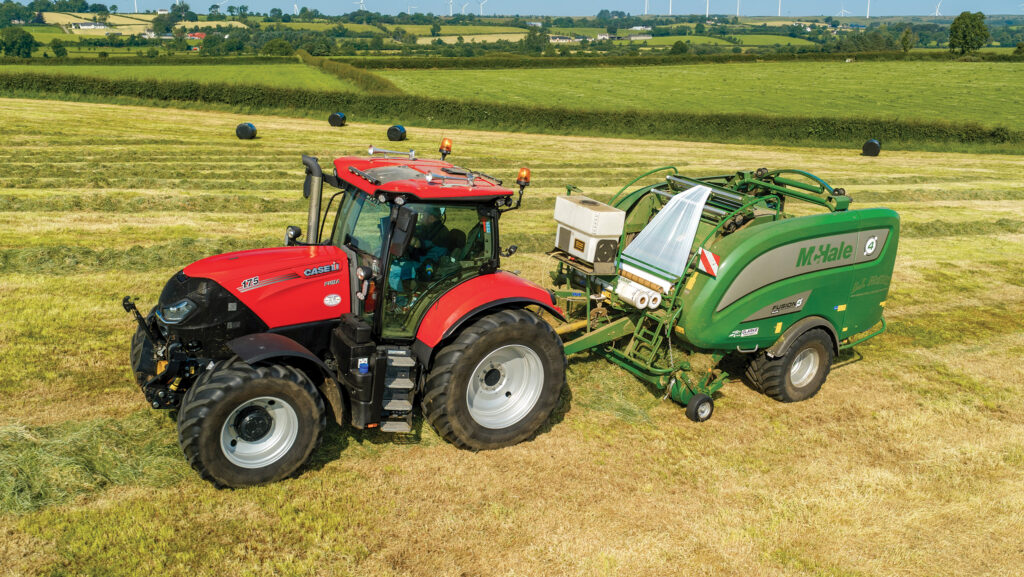
McHale Fusion 4 © AR Imagery
He’s targeting a late McHale Fusion 3 or early Fusion 4, owing to their superior feed-in system that makes them almost “dummy-proof”.
Expected cost is about £50,000, though the fact that they’re the slowest-depreciating machines in the McKays’ fleet should make it a sound investment.
While mower, tractors and balers remain up for debate, one replacement that has had sign-off is a new McConnel hedgecutter. This has replaced the oldest of four machines, each of which typically clocks 1,000 hours during their semi-permanent employment from September to February.
They’re currently flat out, alongside the pair of diggers, mulchers and muckspreaders. The last of the slurry is going out too, with the window slamming shut on 15 October.