

Contractor Comment: New shed up, 50,000t of straw secured
© MAG/Oliver Mark
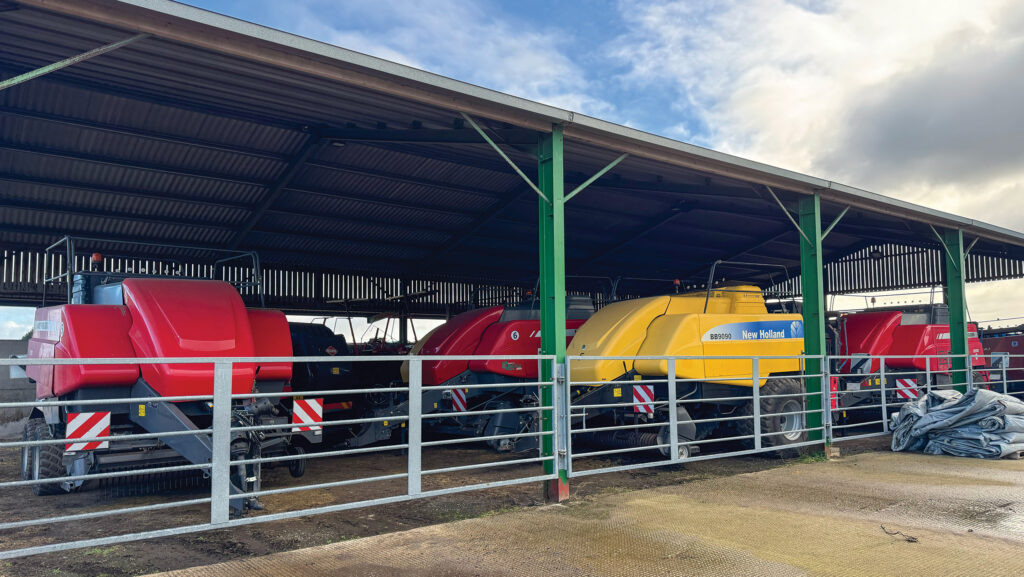
The balers are now hibernating at Orchard Farm near Warboys, Cambridgeshire, having been put to bed with several hundred slugs of grease, a handful of new bearings and assorted other replacement parts to remedy summer ailments.
Annual services for each of DRA Fabb’s eight frontline machines cost £2,500-£3,000 apiece, including preventative maintenance that reduces the risk of losing critical baling hours to perennially troublesome components.
The five Heath Super Chasers have also been shuffled through the workshop, with an overhaul of their headstocks pushing the spend slightly north of the usual £1,000-£1,500 per implement.
See also: Contractor Comment: Static Orkel starts packing maize bales
About the contractor
DRA Fabb, Orchard Farm, Warboys, Cambridgeshire
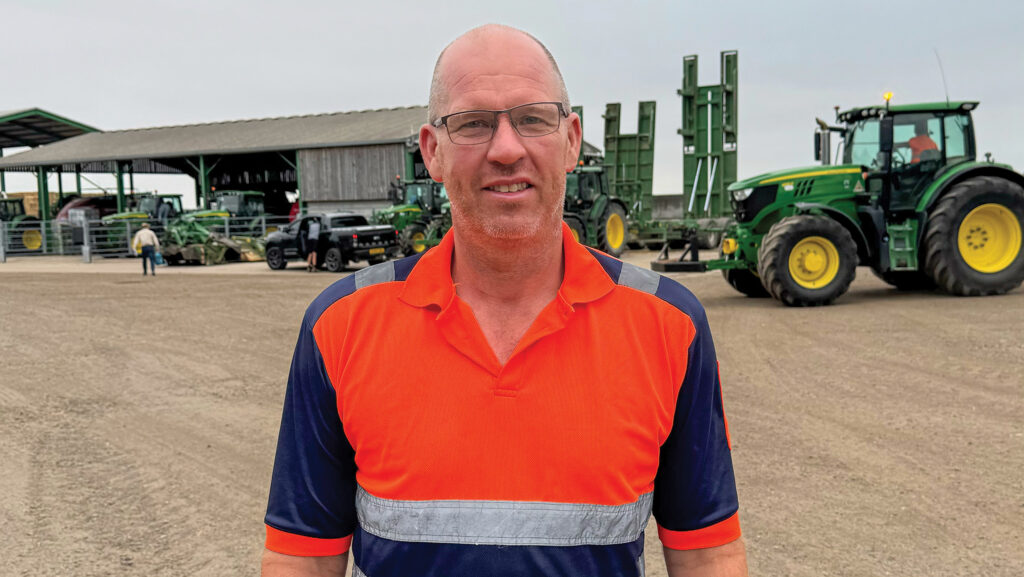
Straw and hay baling, chasing and storage have been the cornerstone of Dan Fabb’s contracting business for the past 30 years.
Alongside this, he has a recently established arable farming operation, offers construction and tree services, and supplies plant and machinery for hire.
Dan Fabb © MAG/Oliver Mark
Business facts
- Main services Stubble-to-stubble arable contracts (232ha), straw baling (40,000 bales/year), muckspreading (up to 9,000t/year), spraying (100ha/year), silage and hay baling (up to 500 and 1,500 bales/year), subsoiling and grass aeration
- Others Groundworks, steel frame building erection, landscaping and grass seeding of amenity areas, muckspreader and plant hire, straw storage, machinery repair and fabrication, tree felling, shearing and pruning
- Farming 80ha owned, 358ha tenanted, 325ha contract farmed
- Staff 10 full-time, plus another seven during seasonal peaks
And proprietor Dan Fabb will be parting with another £3,500 to fix a pto speed-selection fault on one of the four John Deere 6R 155s.
This hedgecutting tractor is only the second machine in his 8,000-hour-plus tractor fleet to be sent for emergency main-dealer surgery, and it’s a process Dan has found surprisingly painless.
“Dealers seem to be pricing their work more competitively, especially for older tractors,” he says.
“Traditionally, it has been cheaper to use an independent engineer, but the quote was very reasonable and the upshot of using Ben Burgess is that the figure won’t change – even if there are unforeseen problems during the repair.”
“Maybe they’re more accommodating because they are quieter, which certainly seems the case,” he adds.
“One thing I have noticed is the lack of stock they carry. We’ve found relatively common parts have to be ordered in.”
Harvest
With outgoings aplenty, it’s a good job that the baling campaign turned good – having looked less than rosy at the time of our last visit in mid-July.
Settled weather convinced growers to keep their combine choppers disengaged so, while straw yields were down by about 20%, the overall bale count was up on 2025.
“We had a big area to go at, so we ended up no worse off than a typical year – even if it meant travelling around a bit more to get the numbers,” says Dan.
“The highs and lows were localised. Early wheats on droughty land at Downham Market were terrible, but those on heavy clay held on much better.”
The dry conditions also meant crops were cut in a timely fashion and nothing went over-ripe.
Consequently, all the straw ended up in the swath, rather than being smashed to smithereens and launched out with the chaff.
To meet its contract targets for Brigg power station, the business supplemented its straw supplies with bought-in tonnage, taking the total tally to a record 50,000t.
Comings and goings
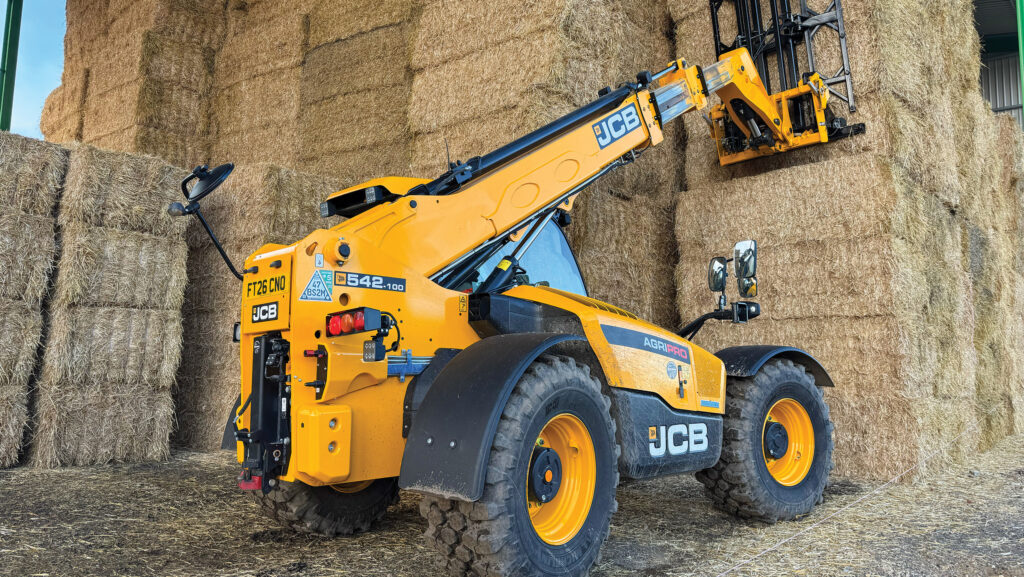
That straw is currently being moved by a new member of the fleet. Having gone several years without replacing a telehandler, Dan has addressed the stagnation with the purchases of three JCB 542-100s.
The first two came pre-harvest for a combined cost of £250,000 and the third recently rolled through the gate.
All have gone well so far, with the combination of air brakes and 50kph transmission proving a hit for towing flatbeds.
© MAG/Oliver Mark
The drivers reckon they’re more stable on the road than the ageing Deere 6155R loader tractor.
To accommodate the latest newcomer, its predecessor – a 19-plate, 6,500-hour JCB 536-95 – is now in the virtual departure lounge that is Facebook Marketplace.
This has become Dan’s sales platform of choice, following recent success in shifting his long-in-the-tooth Volvo FM wagon for £12,500.
The 56-plate model had been with the business since new and clocked 1.3m kilometres during its 20-year tenure.
For five of those, it sat idle when the power station hauled all the straw; for the last 10, it has cost an inordinate amount in repairs. For his own sanity, Dan declined to tot up total expenditure.
Next year, it will be plying its trade in Zimbabwe. The buyer will take care of its onward journey: from Cambridgeshire to Southampton docks, followed by a few weeks at sea and a 1,000-mile drive to its new home on the China-funded roads of southern Africa.
Its replacement, a 300,000km Volvo FH500, is already working alongside another Volvo artic, both dragging 50ft LST trailers.
The plan is now to invest in a bulk body or two to move digestate, sugar beet and grain, and a low-loader for plant.
“We’re currently using quite a bit of subbed-in haulage for farm stuff when we could be doing it ourselves,” says Dan.
Tractor changes
The shopping is unlikely to stop there, with another contracting tractor on the cards.
Although tempted by a Case IH through local dealer Sharmans, Dan concedes that he will almost certainly revert to type in opting for an ex-demo or low-houred 6R 155.
“We already have four of them and they’ve been good for us,” he says.
“Plus, the Operations Center platform is the best around and, more importantly, I know how to drive them. I can’t be bothered to retrain on a completely different tractor.”
The investment is overdue, with most of the fleet bought pre-Covid and, in some cases, pre-Brexit.
“At the time, I thought the world was going to end,” he says. “And I was half right: the prices have shot up since.
“But, at some point, we were going to have to bite the bullet and buy replacements that cost a whole lot more.”
Expected spend is circa £130,000, with its predecessor likely to stay and chip in with baling and muckspreading when required.
“I usually keep things a week too long, then curse it when I’m landed with a £10,000 repair bill.”
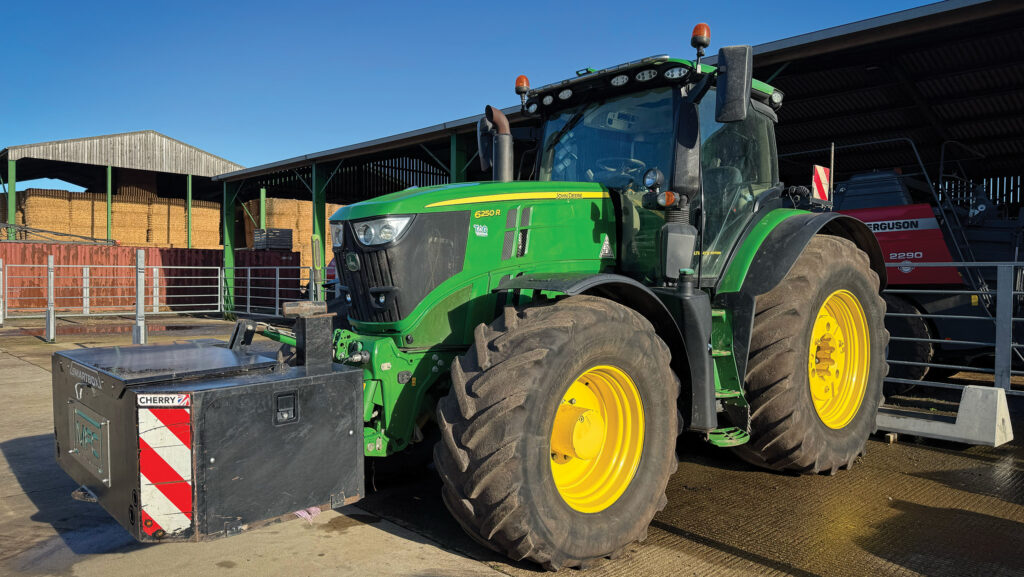
Change could also be afoot on the arable side of the business. Millenium Farming currently has a 6250R on its books – the biggest tractor under the Fabb umbrella – but, with the acreage set to grow, more power might be required.
© MAG/Oliver Mark
“I don’t want to be lumbered with a clumsy one-trick pony,” says Dan. “But it’s probably cheaper to run something slightly bigger rather than having to man two smaller machines.”
The plan is to ramp up the arable area from 765ha to 1,000ha. This should hit the economies-of-scale sweet spot, as most of the machinery is already in place and has capacity to spare.
“Hopefully, that will make the numbers stack up,” he says. “Plus, the block we’re taking on will complement what we already have, both in size and workload timing – it should fall between the light, easy-working sand at Downham and the heavier black land.
“We’re never going to make millions at it, but it all helps.”
Groundworks
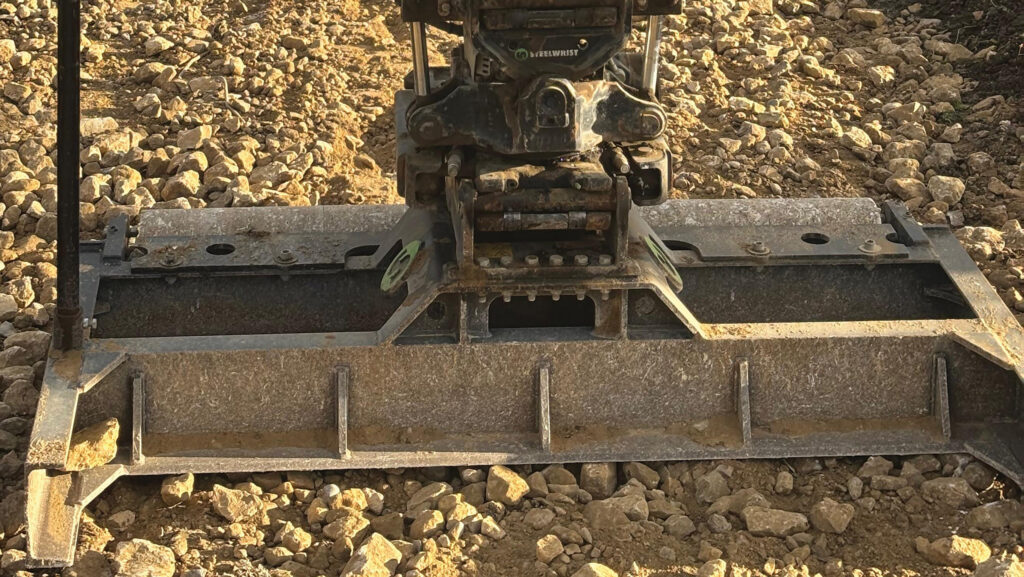
For now, the focus is on groundworks. At the time of our visit, Dan was laying a 600m grant-funded track for a nearby farm and there are two barn-to-industrial conversions in the diary.
© MAG/Oliver Mark
Several more are likely to follow. “With little in the way of government support, I think a lot of people are looking for ways to make money through diversifications,” he says.
The business has also completed a job for Niab in Cambridgeshire, installing hardstanding, drainage and a 6ft perimeter fence around raised beds for potato cyst nematode trials.
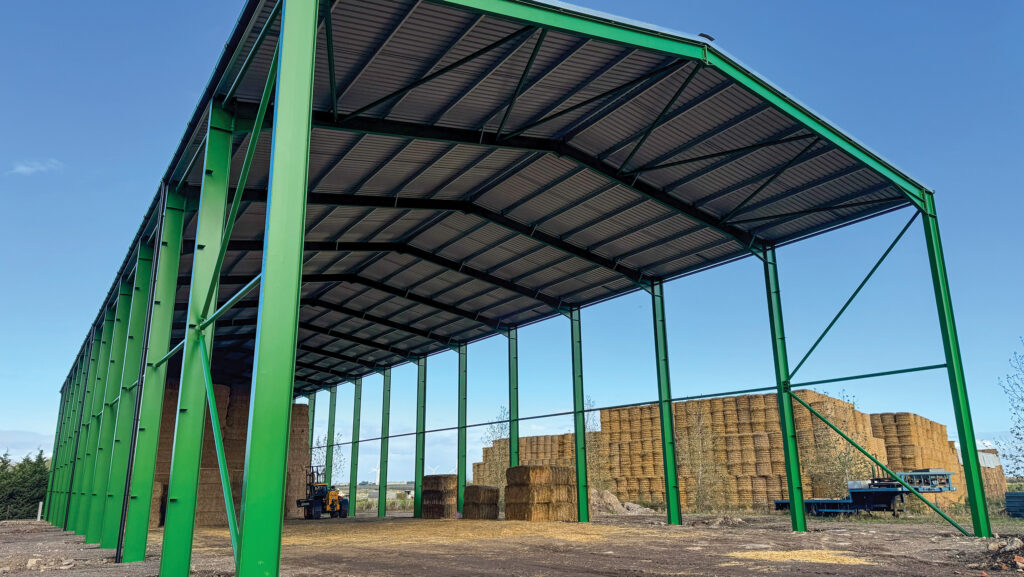
Closer to home, the drawn-out construction of a new 72m-long, 21m-wide and 11.5m-high straw shed is nearing completion.
The frame is up, the roof on – cladding was subcontracted – and it’s now half-full of bales. All that remains is to sort the gutters and drainage.
“The challenge is always getting jobs finished,” says Dan, whose other outstanding yard projects include converting an existing building to grain storage and finishing a shotblasting bay at the end of an open-fronted machinery shed.
“I like putting up sheds as they add value to the business, rather than depreciating like tractors,” he explains.
“It would be nice to shut the gates for a few months, keep the men and diggers in the yard and blitz all the jobs. The trouble is, that doesn’t pay the bills and, though we’ve got a winter’s worth of it, customers come first.”
© MAG/Oliver Mark