

Contractor Comment: Static Orkel starts packing maize bales
The Krone Big X 980 belonging to R&L Anthony Contracting is often parked up in early October. What differed this year is that it had already sawn through the maize harvest rather than sitting there waiting to make a start.
Rain in June meant crops in the Vale of Glamorgan fared better than those in some parts of the UK, but sweltering temperatures thereafter put a noticeable dent in yields.
“As we’re selling everything we chop, we need to know exactly how much we’ve got, so we have a yield meter on the chopper that is regularly calibrated against the weighbridge,” says David Anthony.
Business facts
Main services: Grass silage (1,200ha), maize silage (500ha), wholecrop silage (80ha), maize drilling (500ha), digestate and slurry spreading (50,000cu m), big square baling (12,000/year)
Other: Round bale maize and forage sales, holiday cottages, airport maintenance
Staff: Five full-time, plus three part time and up to 17 at harvest
See also: Contractor Comment: DJ McKay plans home-built nurse tank
In a typical year, this will indicate that they’re averaging 38-40t/ha, but this season the readings dropped to 30-35t/ha. Their feedstocks are down as a result, but decent wholecrop barley and rye/Westerwolds yields mean they should have enough to satisfy their regular customers.
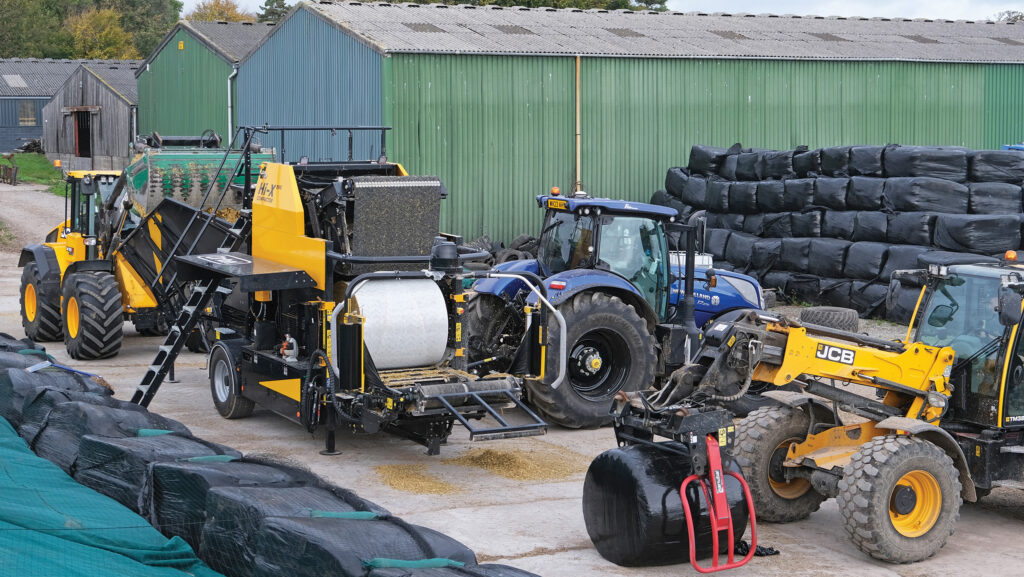
That said, with forage generally in short supply, silage has been going out at a fairly swift pace. Much of this is in bulk loads, but there has been a steady run on round bales produced by their Orkel Hi-X Evo static baler.
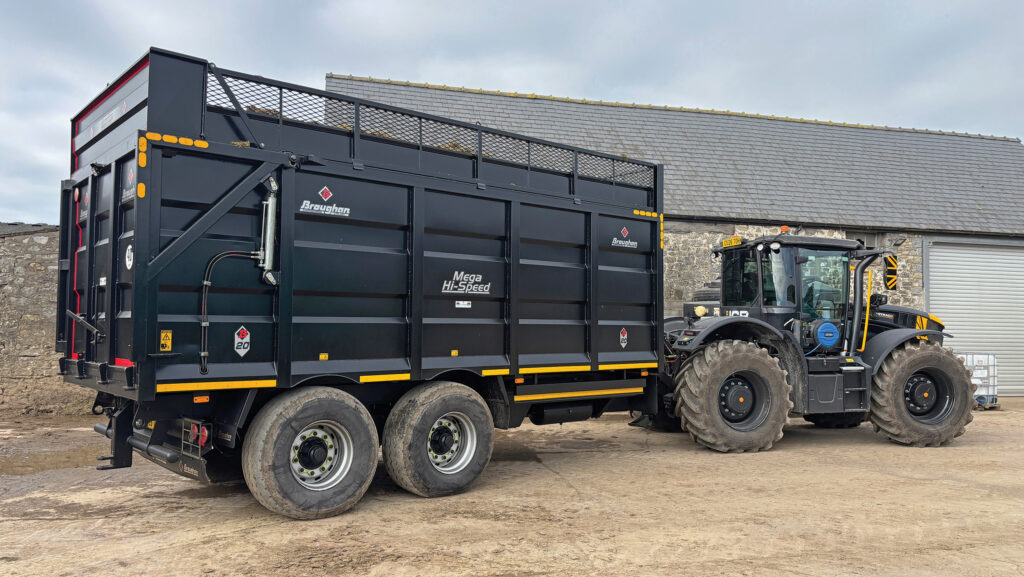
Fastrac delivering bulk silage © James Andrews
Precision-chopped forage bales
This arrived late last year and has made around 7,000 high-density bales so far, most of which go to local farms.
These weigh 1t each and are produced roughly to order so that there aren’t large quantities cluttering up their yards.
“On one farm, we have to net the bales to stop the rooks pecking them, so we don’t want more than a lorry load stacked up at any one time,” says David.
Once set up, the baler will work largely automatically, but it’s still a machine- and labour-intensive process.
A tractor is required to tow it around and spin the pto, and it needs the support of two loaders with operators – one to ferry silage from the clamp to the intake hopper and another to move and stack the bales as they roll off the wrapper unit.
As a result, there’s a fee of £20/t on top of the forage cost.
It will fire out a wrapped bale every two minutes. “If we need to, we can start baling as an HGV pulls into the yard and still send it off within an hour,” says David.
Often, Orkel balers are installed as static units for compacting waste materials, but they are geared up for towing.
This makes it easy to move between their own clamps, as well as carrying out baling for other people.
Typically, these are farms that want to clear their clamps ready for the next crop or have already filled them and need the baler to package any excess as it comes off the chopper.
“I’m keen to do more of this as it’s such a high-capacity machine and can easily cope with the extra workload,” says David.
Epic straw rows
One area where the dry weather hampered progress was the baling campaign. Drought-stressed wheat died off early and yields were down about 25%, but there were bumper straw crops that remained green at the time of harvest and were a pig to bale.
The problem was exacerbated by the fact that the Anthonys’ farming operation, run by David’s parents Richard and Lyn, had a New Holland CR11 with 13.7m (45ft) header on demo for part of the season.
“It left some ultra-wide, very dense swaths that were like speed bumps when you tried to drive across them,” says David.
If the straw had been ripe and dry, it’s possible that they could have baled it behind the combine.
But they were forced to ted it out so that it could dry, and then they couldn’t rake narrow enough rows for the pick-ups on their Krone Big Pack 1290 and 890 balers, which are the widest available.
Instead, they had to attack them in two swipes, which was inefficient and a bit untidy.
The farm might end up buying a CR10 and, if that happens, a tool that can split the rows will be top of the shopping list. “We’ve seen videos of the Kuhn Merge Maxx 442F working in straw and it looks ideal for the job.”
This 3m merger mounts on a tractor’s front linkage and is designed primarily for gathering forage in tandem with a rear rake or merger.
However, its twin belts, which deliver crop evenly to each side of the machine, make it well suited to dividing massive swaths into two more manageable ones.
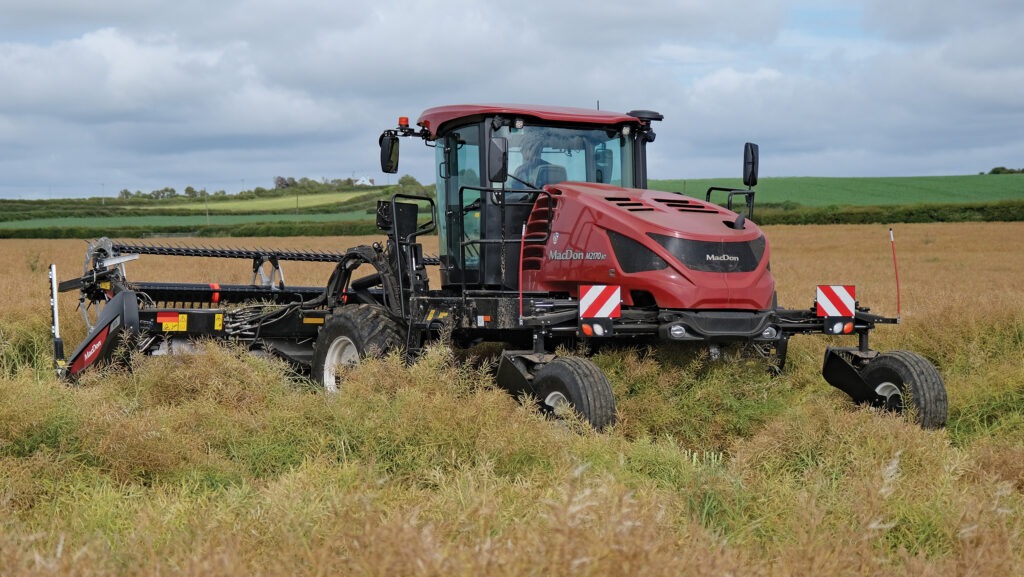
MacDon swather © James Andrews
Rape swathing lessons
At the time of our last visit in late June, a demonstrator MacDon M2170NT with 7.6m (25ft) draper header was busy swathing a portion of the farm’s 200ha oilseed rape area.
The idea was to see how well it performed relative to spraying off with glyphosate and work out if it would be a viable addition to the contracting fleet.
“It’s an awesome bit of kit and covers the ground quickly, but we’d need to take on a lot of work to make it stack up, which probably isn’t there as long as people can use glyphosate,” says David.
“However, if we do lose it one day it’s good to know that we’ve got a desiccation option.”
They also learned a lot about timings and how best to harvest the swathed crop. Some fields were cut too late, which meant there were more seed losses than they would like, and the initial plan of picking up two rows with the combine header was unsuccessful.
“They just wouldn’t feed in properly, so we ended up taking them one at a time, which wasn’t ideal either. If we did end up getting a swather, I think we’d need to get a proper pick-up for the combine.”
With the Orkel baler and three new tractors arriving in the past 12 months, there’s likely to be a hiatus in major machinery purchases for a while.
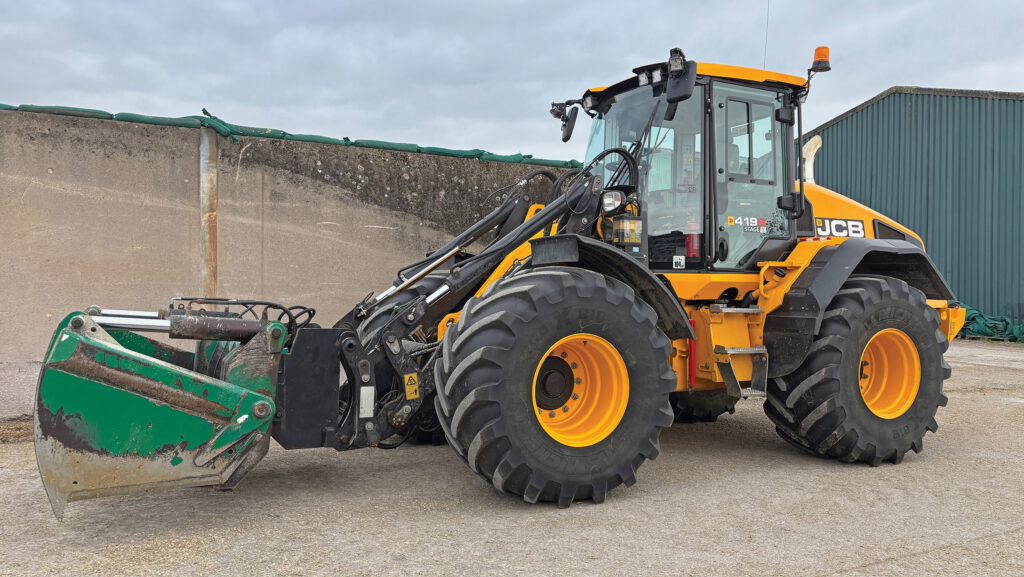
JCB 419S © James Andrews
Possible shovel upgrade
However, an attractive five-year, 5,000-hour warranty deal on JCB 419 loading shovels is already proving tempting.
Even though their 2020 machine is in mint condition and has been largely trouble free, it has clocked 3,500 hours and they now have to foot the bill for any breakdowns.
“We like our frontline machinery to be covered so we don’t have any nasty financial surprises, so we might make the switch, even though we’re perfectly happy with the one we’ve got.”
Now that the peak forage and arable seasons are behind them, there’s time to start catching up with other work.
This includes a maintenance contract at nearby MOD St Athan, where mowing and weed spraying are the main autumn duties, followed by de-icing runways and clearing snow in winter.
Lagoons and slurry storage bags dotted around the farms are being refilled with digestate from a local food waste anaerobic digester plant so that they’ll have a ready supply to put on maize crops next spring.
Plus David and wife Emma are hoping to push on with plans to gain UFAS (Universal Feed Assurance Scheme) accreditation. This will allow them to start adding concentrates to their precision-chopped silage bales to create a higher-value feed.
About the contractor
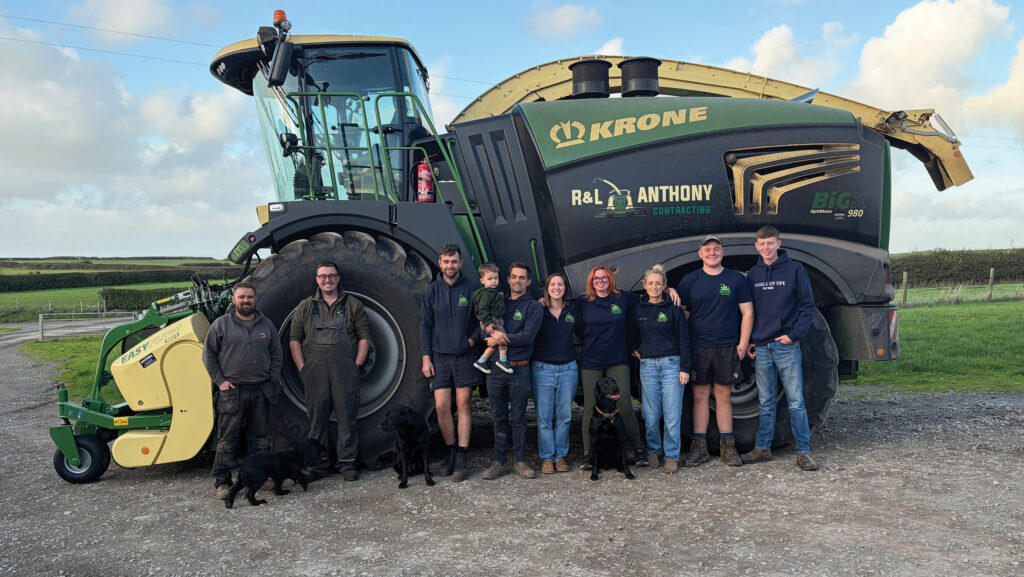
David and Emma Anthony (centre) with the team © James Andrews
R&L Anthony Contracting, Sealands Farm, Bridgend
For the past 13 years, David and Emma Anthony have been running a mixed contracting business from their base in the Vale of Glamorgan.
About 60% of their work is for the family farming operation, run by David’s parents Richard and Lyn, and 40% elsewhere. This includes farming customers and airport maintenance for RAF St Athan and Cardiff Airport.