

Contractor Comment: Stone crusher proves fruitful side hustle
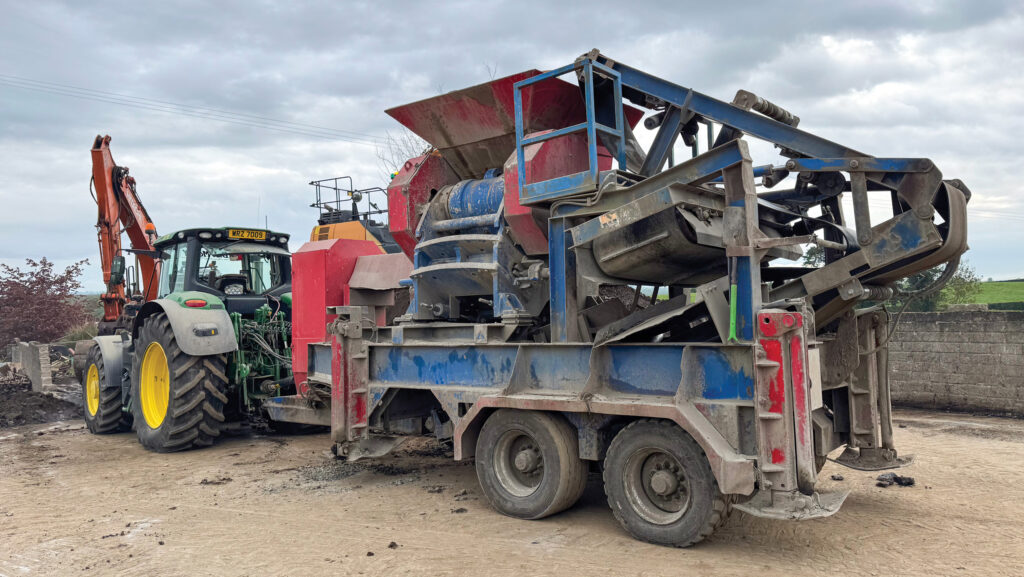 Stone crusher © MAG/Oliver Mark
 Farmers Weekly heads to Northern Ireland to meet up with Ballymena-based DJ McKay and Son, headed by David and James McKay.
We find out about the contractor’s main enterprises, kit and how business is faring.
See also: On test: Time-proven John Deere 6M 155 finally gets 50kph
Business facts
DJ Mckay and Sons, Ballymena, County Antrim
- Main services Silage, slurry spreading, ploughing, drilling, hedgecutting, stone crushing
- Others Hen house clearing, stone picking, rush mulching, digger work
- Staff 10 full-time, plus another 10 during seasonal peaks
How did you get into contracting?
With a double-chop harvester back in 1969, which only cost £600. It now takes millions of pounds’ worth of kit to cut and clamp silage.
In those days, we wouldn’t start knocking down grass until the end of May; now it’s April.
That means it clashes with other work, so there’s more pressure, more competition, and far less spare time in the winter.
Yet slurry brings arguably more heat. Farmers wanted it spread yesterday and, as it’s so valuable to them, it has to be done right.
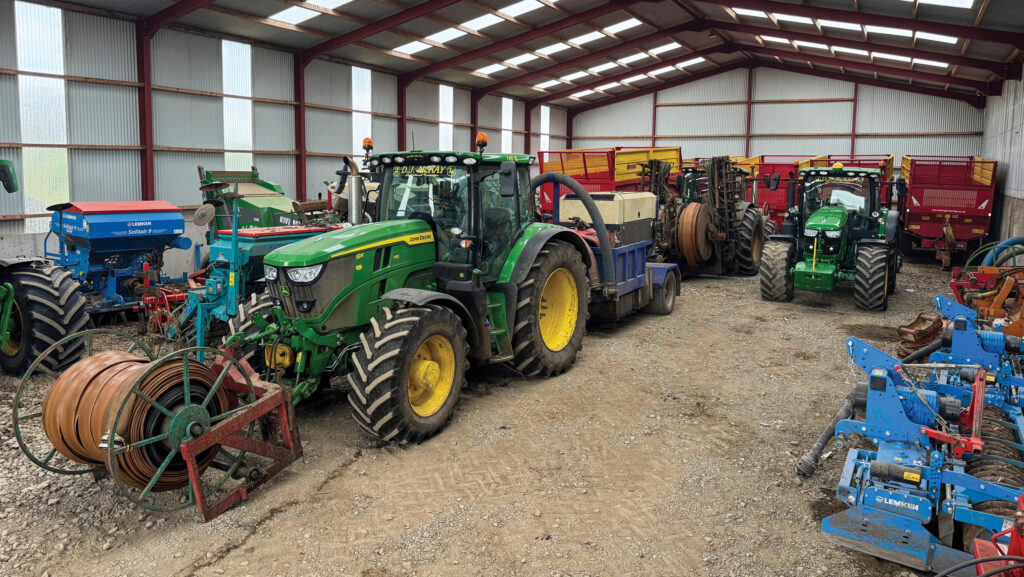
Full shed of kit © MAG/Oliver Mark
Main contracting services?
We might not be the biggest contractor around, but we aim to offer as broad a range of services as any.
In the spring, we can be chopping silage, spreading slurry, muckspreading, drilling and laying fertiliser in the same day.
Juggling what feels like 10 jobs at once is a challenge. Luckily, the lads are keen.
Hedgecutting also takes up a lot of our time. The fields are small around here, so there’s no shortage of work for our four machines from September to February.
To keep us moving on wet, mossy ground, one of these is now mounted on a tracked Yanmar CT-120, which we bought unseen for £16,000 last January.
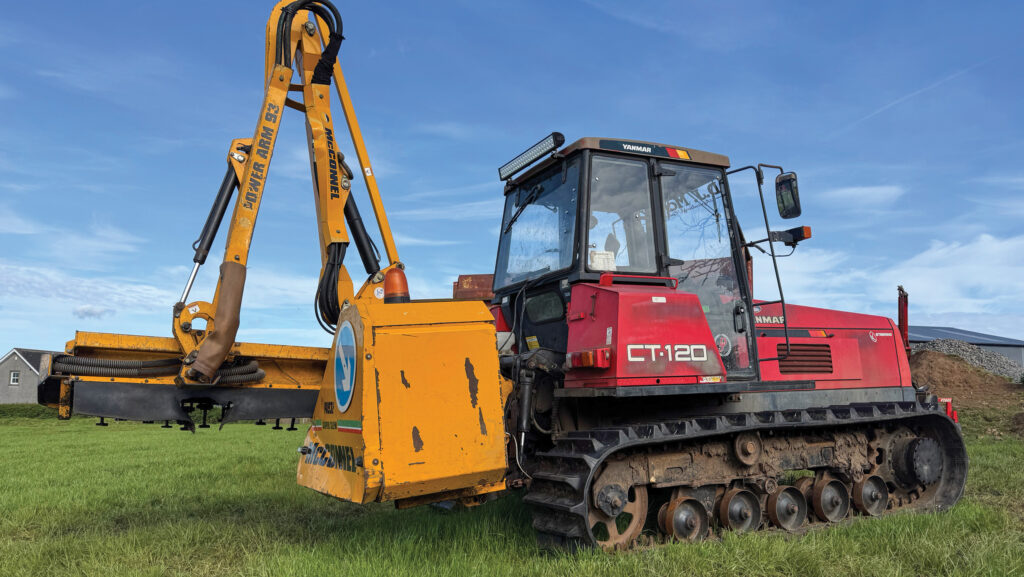
Yanmar CT-120 © MAG/Oliver Mark
Soon after, the tracks fell apart – we had to wait three months for new ones – and the hydraulic pumps played up. It probably ended up costing us £25,000.
As well as the trimmers, we have two diggers to go at the hedges with mulching heads, a saw and a shear.
Do you expect any major changes to the business?
Hopefully not. We’re happy where we are and push hard, though we’re always open to new opportunities that come our way.
The grass acreage goes up and down a little as farmers retire and other contractors poach a bit of work. But it’s swings and roundabouts, and generally stable.
Our biggest issues stem from government regulations. With so many rules in place dictating working windows, we’re effectively calendar farming at the expense of common sense – doable if the weather plays along with the schedule, which it rarely does.
Though last year worked well and we managed to get all the slurry out, this season has been the opposite and we’re well behind.
It’s been so wet that some people bought crawlers just to get their spreading done.
The one thing that has changed, and will likely continue to do so, is the expectations of customers.
The younger generation of farmers want things done quicker and more accurately.
It’s understandable – the margins in dairying are tight – but makes it far more intense on our side.
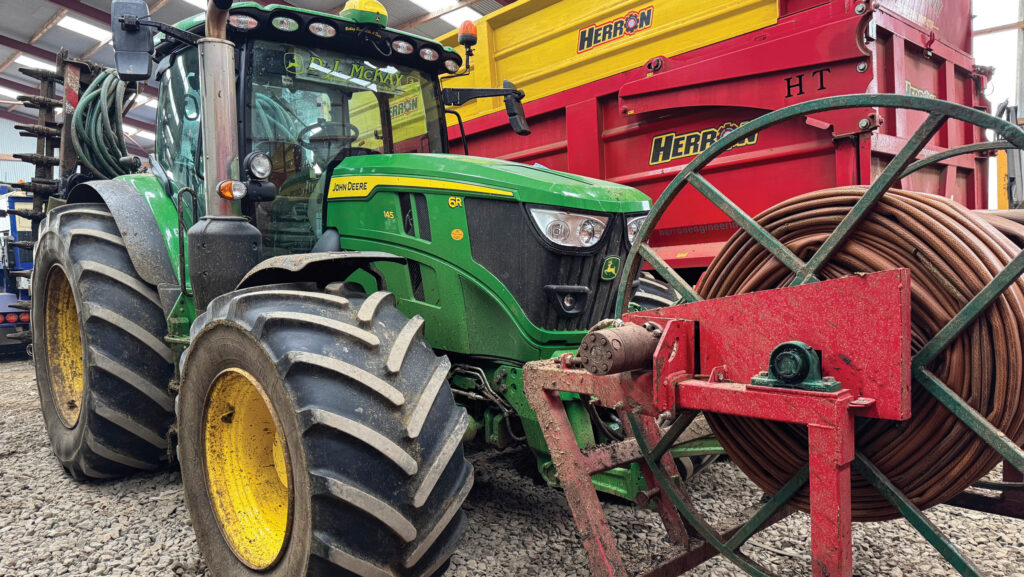
John Deere 6R 145 tractor © MAG/Oliver Mark
Any forms of diversification?
We’ve always looked to add extra services, whether it’s cleaning hen houses with the skid-steers, chopping trees for elderly locals, cutting rushes or stone picking.
But the one that has made by far the biggest difference to our business is stone crushing, which we’ve been doing since 2015.
This started with a Herbst machine, bought on a hunch without any real work lined up. Interest grew but it broke down so much that we couldn’t satisfy demand.
We got shafted, really: it wasn’t fit for purpose and the outfit that sold it to us just walked away. It cost us a fortune.
So, we chucked it in, assembled our own chassis and had an engineer in the South build the rest, at a total cost of about £140,000.
It and the accompanying screener now run all year, covering every corner of Northern Ireland and over the border as far as Kerry.
Output is 600-1,000t/day, and such is the workload that we’d quite like another. That said, it is high maintenance.
It’s a brutal job and wearing parts aren’t cheap – we probably spend £50,000-£60,000/year keeping it running.
Though we often price for whole jobs, we tend not to take our diggers, preferring to use local men and their machines.
That way, they get some extra work, and we’d like to think they promote our services to others – a bit like an unofficial marketing department. Plus, it doesn’t tie up ours when we need them for other things.
If one of the young lads was keen, then we’d be open to expanding and pushing into site work.
It’s not as competitive as silage and good, skilled men would get plenty of business.
Plus, spend £100,000 on a digger and £40,000 on attachments and you’re good to go; buy a tractor for £140,000 and you still need a load of expensive implements to go on the back.
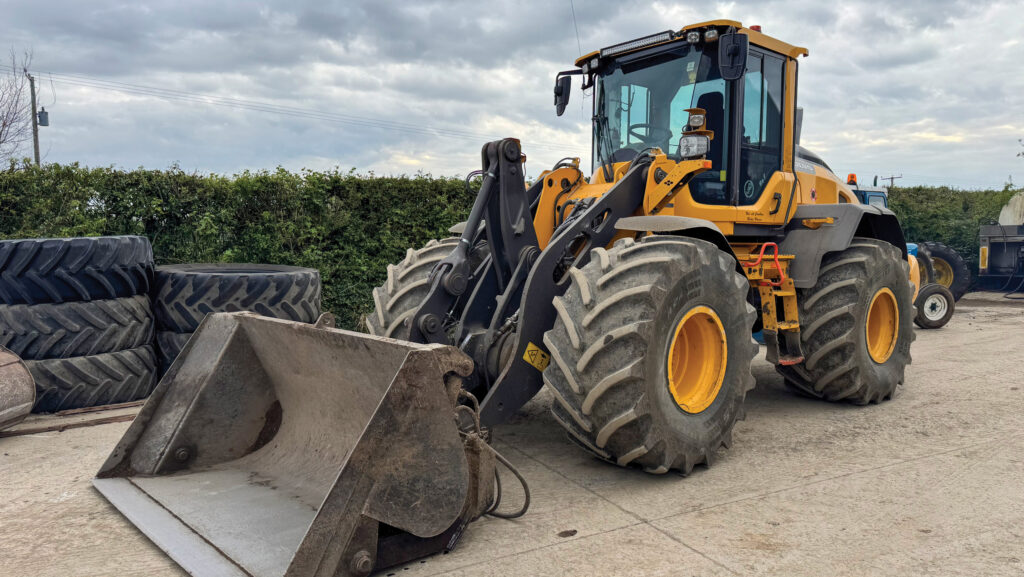
Volvo shovel © MAG/Oliver Mark
Most profitable contracting enterprise?
We always look at the business as a whole. All of our services are interlinked and concentrating only on the best earners, or culling the worst, would mean losing a load of other work as a result.
Take silage and slurry, for instance. We’ve a huge amount of money tied up in machinery.
But if we were to give up any element of those then we’d lose umpteen other jobs that come off the back of them.
And the least profitable?
Some gigs don’t pay at first but hang on in there and the returns often come further down the line.
Our approach is that a job well done is marketing in itself, potentially attracting more work without having to ask for it.
For this reason, we’ve never dropped any service and instead concentrate on the bigger picture.
Small jobs covering just a couple of fields are one example. By their very nature, they are less efficient.
But the customers are essential to our business and we aim to treat them as such.
Biggest threats?
Overheads – machinery finance, insurance and fuel. We’re more aware of it than ever and we need to sit tight, though mother will say that we haven’t put the brakes on enough.
It’s the same for all contractors. Our costs have shot up far quicker than milk prices, and, at the end of the day, it’s the animals that pay the bills. That squeeze simply works its way down the chain.
As with all businesses, cashflow is a major challenge, and the cost of machinery certainly isn’t helping matters.
When we switched from New Holland to John Deere in 2008, we thought that paying £42,000 apiece for three 6830s was serious money. Today, a 150hp tractor would be £140,000.
But we’ve been through tough times before and will hang in there. The torture helps motivate us to get to better times.
Difficulties with recruitment?
Finding good staff is a growing problem. The success rate isn’t as high as it once was, but we have to give youngsters a chance, otherwise we’ll get nowhere.
Fortunately, we have a great team that we can trust to do anything, and they have the passion to go with it.
One of our men puts 2,500-3,000 hours/year on his tractor. That sort of work ethic is becoming rarer.
The longest serving four have now done 25, 22, 18 and 12 years with us.
It won’t be easy to replace them when the time comes – nor the men who come and work part-time, often as a second job.
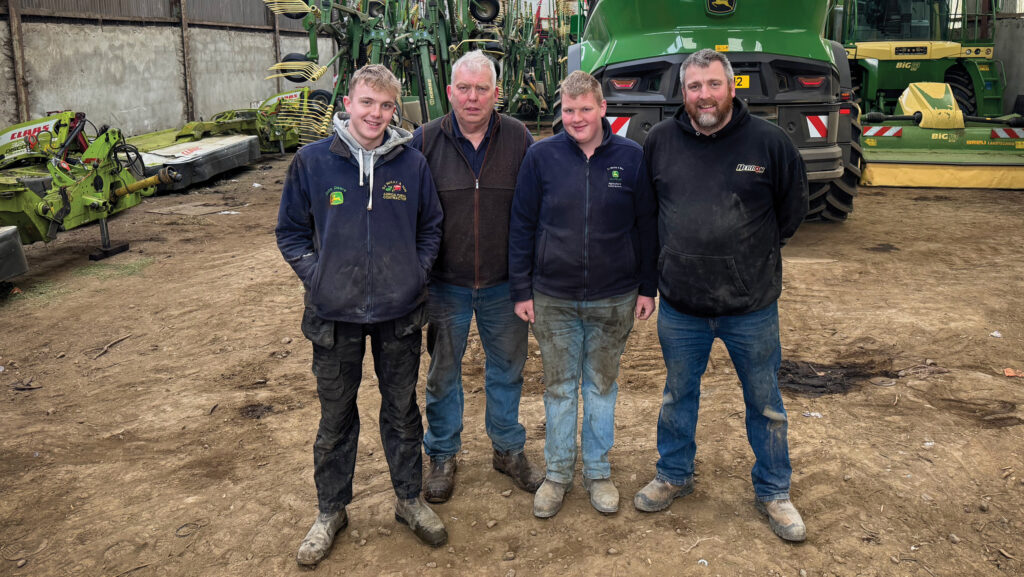
Team McKay (from left): Finlay, David, Archie and James © MAG/Oliver Mark
How’s this season shaping up?
It started badly. Winter was wet and that constant rain got everyone down.
Combined with financial pressure, it was noticeable how hard it hit farmers’ mental health.
That weather delayed slurry application, ploughing and sowing, but we’re gradually clawing it back and will properly catch up with the spreading in the summer.
Looking forward, it might be a leaner year for us. When the milk job is down, customers only tend to do the necessary and leave less pressing jobs for another time.
That said, we still love it. There’s no better occupation in the world when the weather is good and the men are out.
As crazy as it sounds, no amount of money can replace the buzz of getting stuff done when we’re in full swing and breakdown free. It’s that feeling that drives us on.
New machines in 2026?
Our new Deere F9 900 harvester came a few weeks ago to replace a 9800, which had completed four trouble-free seasons alongside the backup 7480.
It may not be the best chopper out there, but it’s solid enough.
The main selling point for us is the unbeatable 24-hour dealer support. Whether it does four seasons remains to be seen – it’ll come down to cost to change.
We’ve also added another 6R 155 to the fleet, purely to try and spread the hours out a bit. As it stands, the tractors are averaging 2,200-2,500 a year and they tend to get moved on at the end of their 6,000-hour warranty.
We’re trying to pay off the finance a bit quicker too, which is no easy task when costs are constantly rising.
As for spec, we opted for an R rather than an M, as it’s better suited to ploughing and sowing.
Plus, we knew the tractor was in the dealer’s yard, and sooner or later they would be under pressure to sell it. We held our nerve and got the deal done.
Recent major breakdowns?
The new chopper ate its knives on the first day, much to our dismay.
We’ve also had a 6145R laid up after one of the lads snapped off the dipstick tube, which proved a right pain to replace.
And the stone crusher was in the workshop – again – for another £30,000’s worth of maintenance, following £10,000 a few months before that. It is not cheap to run.
Any projects on the go?
Our latest engineering project is a 9ft silage compactor, which can be water ballasted to 4t.
We’ve not run one before but decided it might be a good addition to the buckrake tractor on the clamp.
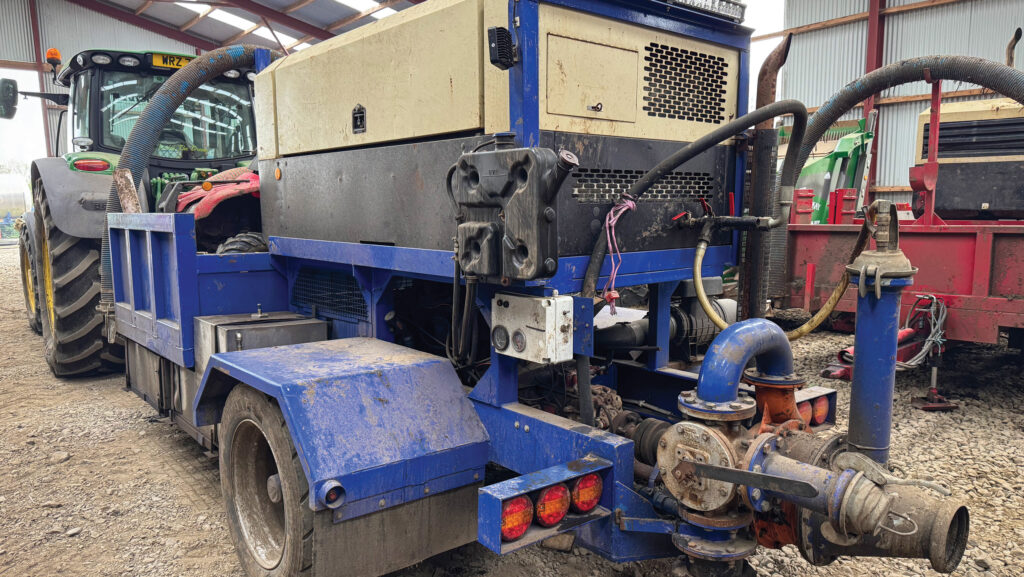
Last year, we built our second slurry trailer with a Doda pump, a Cummins engine from an old lorry, and a compressor on the top.
The idea came from Nick Hoyle, a contractor in Lancashire, and it has made a massive difference – half the fuel of a tractor-powered pump and practically zero depreciation on the £12,000 they each cost to assemble.
Though we could diversify into engineering, we’d hate the thought of selling one to someone, it breaking down, and us trying to avoid the bother like the Herbst crusher man.
Current contractor frustrations?
Rain and breakdowns.
Kit list
- Tractors John Deere 6R 155 x2, 6M 155, 6155MC, 6R 145 x6, 6130R and 7930; Case IH Puma 175
- Foragers John Deere F9 900 and 7480
- Handlers Volvo L90H, Mustang and Wacker Neuson skid-steers
- Mowers Krone Big M 450, Claas Disco front and rear sets x2
- Rakes Krone Swadro 1370 x2, Claas 2700 and 2900
- Balers McHale Fusion 4 x2
- Cultivators 3m Lemken power harrow x3, four- and five-furrow Kverneland ploughs, 10ft home-made land leveller, 9m Cambridge rolls
- Drills 3m Lemken Solitair 9, 3m Sulky box, 6m Einbock grass seeder
- Applicators Amazone UF 1201 sprayer (24m/1,800 litres) and ZA-V 3200 spreader
- Slurry and muck 3,500gal x2 and 2,500gal x2 Herron tankers, Agquip umbilical system x3, Agquip tanker dribble bar, home-made trailed pumpsets x2, NC x2 and Doda pumps, Ktwo Duo 1100 muckspreader
- Trailers 16t Herron H2 x5, 16t Broughan, plus extras on hire
- Hedgecutters McConnel 6565T, 6570T, PA5570 and PA93
- Other Custom stone crusher and screener, Kivi Pekka stone picker