Contractor Comment: Summer scorcher sets off baling frenzy
 © Dan Fabb
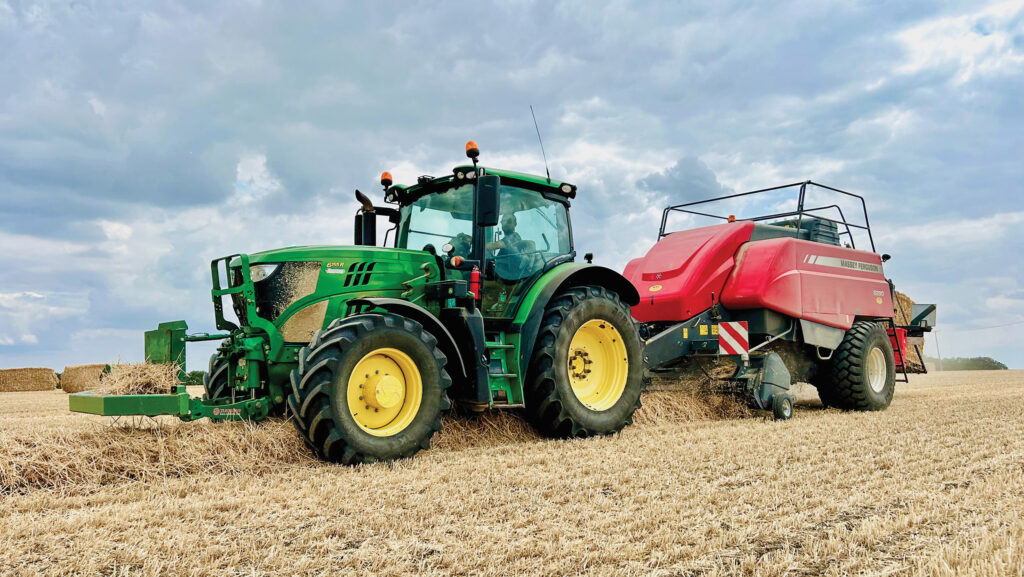
 Searing summer heat saw Dan Fabb’s baling fleet thrust into action earlier than ever, forcing a rush on baler prep and hasty arrangement of his six harvest hire tractors.
Crops ripened in double-quick time, with winter barley followed immediately by wheat – two weeks ahead of usual. This meant groundworks and building renovations had to be put on ice.
Frustratingly, among those frozen was the construction of a new 72m-long, 21m-wide and 11.5m-high straw store.
Only the footings were in when silly season commenced on a record-early date of 8 July, leaving the steelwork laid forlornly on terra firma. Consequently, covered storage space is in short supply.
Though it would only be a week’s work to erect, Dan doesn’t envisage the workload lightening sufficiently until October and is mulling the £10,000-£15,000 cost of outsourcing the job.
See also: Contractor Comment: Harvest headaches for R&L Anthony
“We’ve coped without it for ages and I’d rather not pay for subbies, but, now that we’ve started it, I’m keen to have it up,” says Dan.
“As ever, we prioritised outside work [the business has a steel-frame construction and building conversion division], which has left us with a load of outstanding projects in our own yard. We could do with a good year to pay for them.”
Sadly, this might not be it, with the shortage of rain in Cambridgeshire stymying yields for a second year in succession.
“We seem to have a particularly dry microclimate – Northampton and Grantham got 50mm in early May, while our 9mm did little more than dampen the dust,” he says.
Dan Fabb © MAG/Oliver Mark
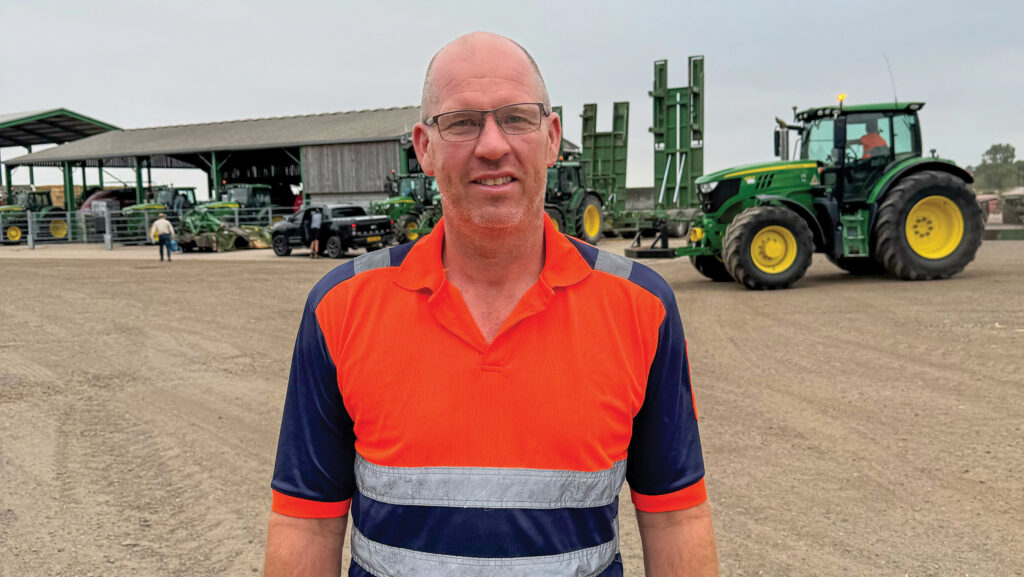
Business facts: DRA Fabb, Orchard Farm, Warboys, Cambridgeshire
- Main services Stubble-to-stubble arable contracts (232ha), straw baling (40,000 bales/year), muckspreading (up to 9,000t/year), spraying (100ha/year), silage and hay baling (up to 500 and 1,500 bales/year), subsoiling and grass aeration
- Others Groundworks, steel-frame building erection, landscaping and grass seeding of amenity areas, muckspreader and plant hire, straw storage, machinery repair and fabrication, tree felling, shearing and pruning
- Farming 80ha owned, 358ha tenanted, 325ha contract farmed
- Staff 10 full-time, plus another seven during seasonal peaks
“Straw has been predictably variable. The early wheat was terrible; the rest has averaged a passable 3t/ha, so we’re probably a couple of bales per hectare down on a ‘normal’ year – whatever that is.”
This has heightened competition for crop in the swath, so securing straw for a sensible price is proving testing.
To add to the challenge, Dan is relying on new-season crop to meet his 35,000t contract for Brigg power station, having cleared last season’s supply before harvest – something he hopes to address going forward.
“We could do with carrying some stock over to help iron out the annual highs and lows,” he says. “That said, we’ve had worse years, and it’s unusual to have two dry ones on the trot.”
On the upside, he dodged a big smack in the chops by timing his diesel purchases just right.
The 50,000-litre store was brimmed on 11 February for 64p/litre and again on 13 June at 73p, with a modest 10,000-litre hit between times, at £1.12.
“The timings were as much luck as judgement. We’ve got a fuel escalator in our pricing structure anyway, but the benefit of having plenty of capacity is that we can decide when to buy – and it turned out pretty well.”
© MAG/Oliver Mark
New balers hit their stride
Pre-harvest arrivals included two additional Massey Ferguson 2290s in June, bought as a pair from Sharmans for £80,000.
With 45,000 bales apiece on their clocks, these were hastily shuffled through the workshop for a cosmetic tidy-up and thorough service. Bar some string guide alterations, they’ve been trouble-free.
Their arrival has pushed the lower-order machines – some of which have pumped out well over 100,000 bales – into backup roles, with the business now comfortably over capacity.
© Dan Fabb
“Our oldest models are long in the tooth, but they’re worth more to us than they would be to sell,” says Dan.
“I’m a big believer in second-hand kit – there’s too much depreciation on new stuff and we’ve got a capable workshop to keep them going relatively cheaply. Plus, it gives us the flexibility to pull extra machines into play if the weather turns.”
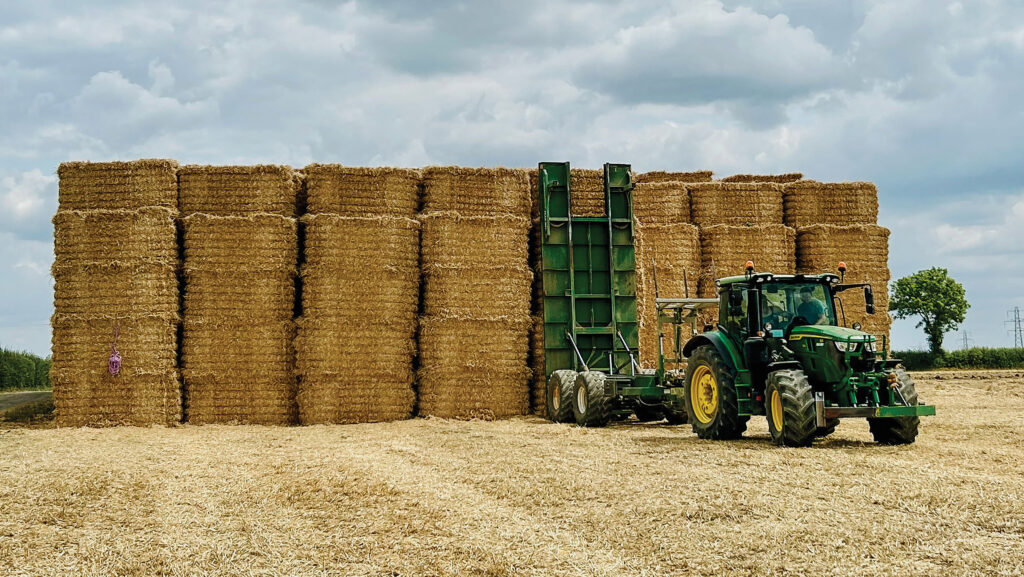
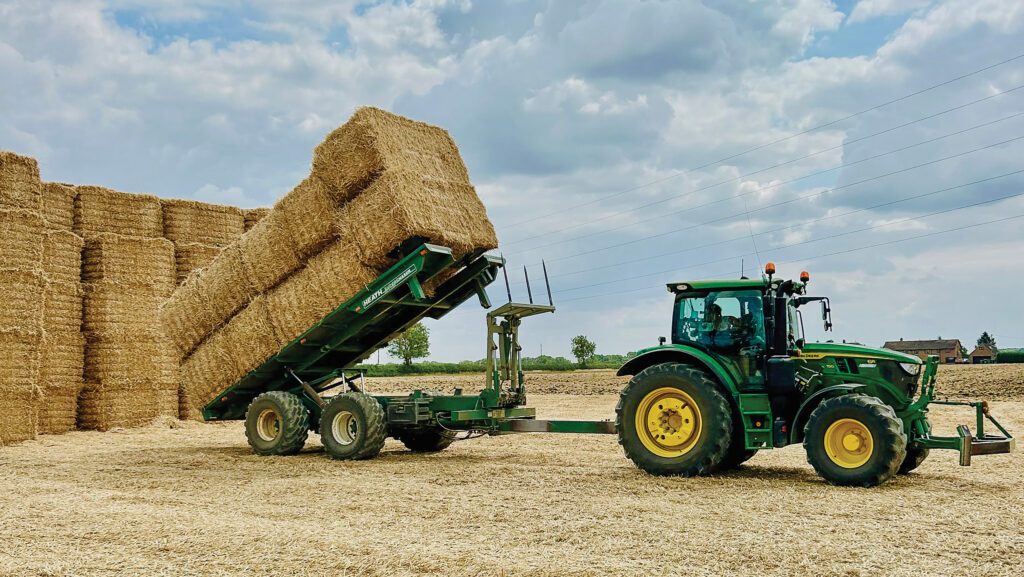
Another DRA Fabb debutant is a 2018-built, 12-bale Heath Super Chaser. Though it has gone well thus far, Dan is yet to be convinced of its merits over the four 10-bale versions that it runs alongside.
“It’s nicer for stacking as it works in threes, but no quicker for in-field chasing,” he says. “In fact, the 10s probably have the edge, as they’re lighter, smaller and need less power.”
© Dan Fabb
Loadalls cause minor headaches
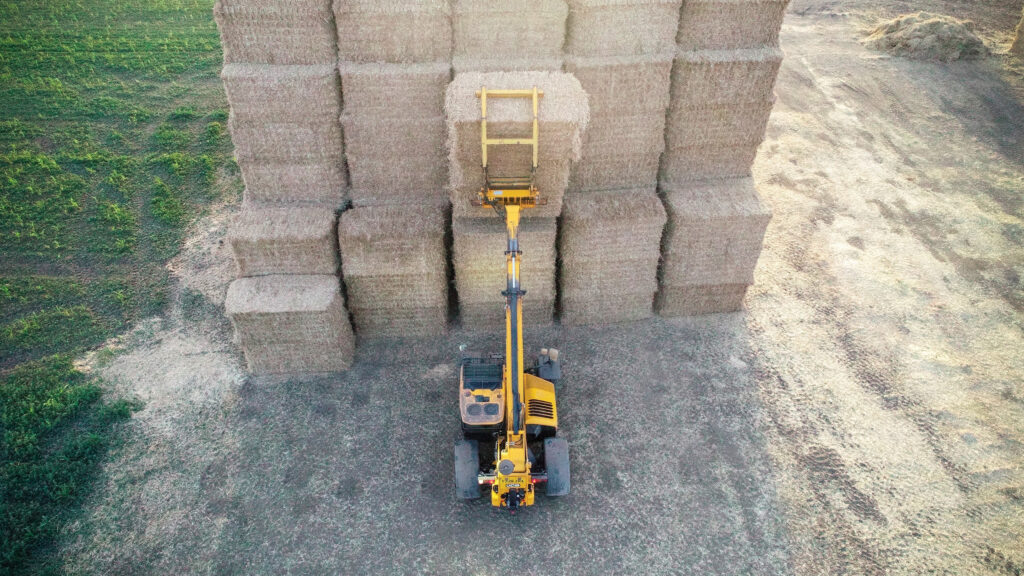
The only machines bought new for the contracting operation are telehandlers. “Loaders are a ticking time bomb when they’re out of warranty, and of all the machines we have – plenty of which are much older – they require the most mechanical attention.”
With that in mind, he parted with £250,000 this year for a brace of JCB 542-100s. A 21-plate 536-95 has already left and a 19-plate is likely to follow it out of Wilsons Orchard Farm after harvest. It has clocked 6,000 hours and is still worth the best part of £40,000.
Dan has been impressed with the newcomers’ performance and comfort, if not entirely with their build quality. “They’re great machines, but they always seem to come with preventable teething problems,” he says.
“Especially when it comes to the routing of hydraulic pipes and electric wires – they’re just lacking some attention to detail.”
© Dan Fabb
One issue of note was an oil pipe circled awkwardly around the chassis, which chafed to leaking point after a few hundred hours.
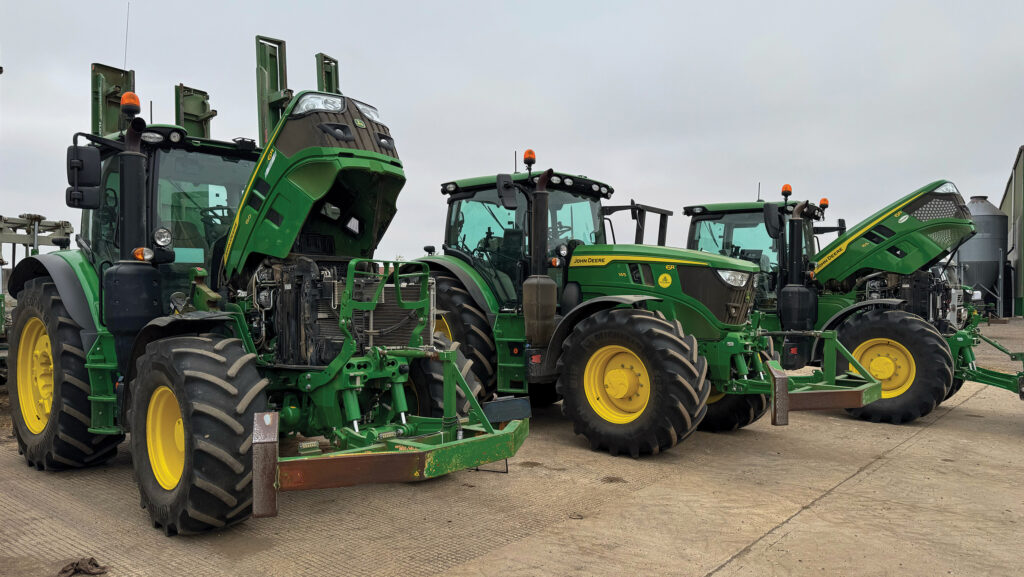
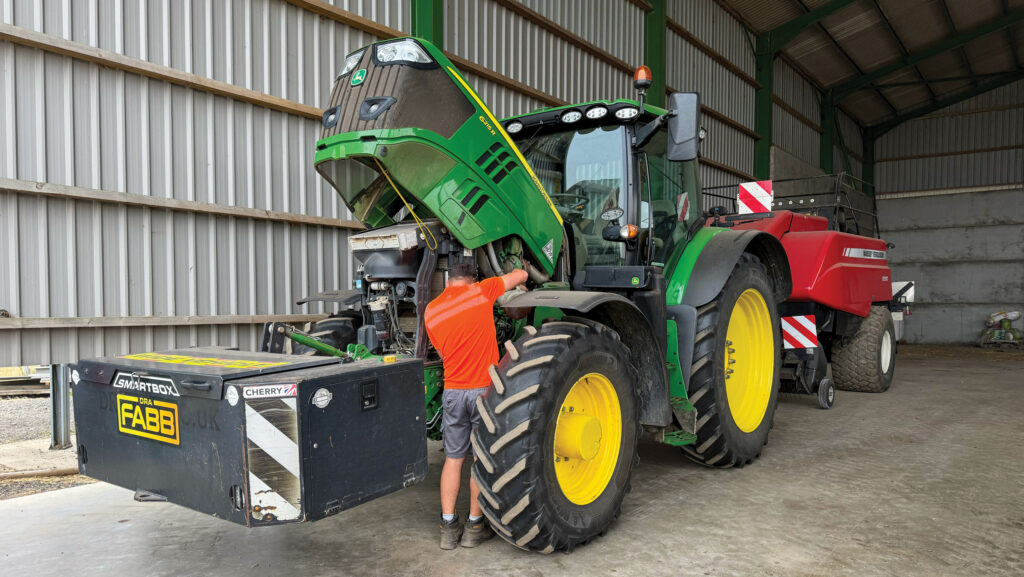
Another frontliner required more extensive surgery: the 8,500-hour John Deere 6155R was diagnosed with a failed rear engine mount.
With time tight and the job big, Dan opted to use local dealer Ben Burgess for the work, mainly because of the combined parts and labour warranty that an independent engineer couldn’t offer.
It was priced at £2,400 on the basis that it could be done without removing the engine, which proved not to be the case.
This, and four other R-series tractors, are joined by six hire machines for harvest, at an average cost of £900/week. For the first time, the cohort included an M-series.
“The 6M 200 [220hp] is the same price as a 6R 185 [204hp] and it’s perfect for baling, though I’m not sure we’d have one for the arable farm, as we need the screens and technology of an R.”
One tractor that is unlikely to be gracing the fleet anytime soon is JCB’s Fastrac – many a baling contractor’s best friend. “It is the ideal machine, but the Deeres are just so reliable and the extra speed probably wouldn’t make a material difference to our output.”
Hay in short supply
The last of 800 hay bales was plonked on the stack on 13 July, drawing a less-than-vintage campaign to a close.
Quality was reasonable and it went relatively smoothly, but yields were down 30-40%, with Mother Nature once again to blame. The heavy ground performed particularly badly, and some areas weren’t worth baling at all.
However, strong prices should be the saving grace, with Dan expecting them to remain close to the £60/bale mark achieved last year.
“We needed a good season to fill the sheds after last winter’s demand, but everything seemed to grow except grass,” says Dan. “And it was so dry that we struggled to get around quick enough with the baler.”
© MAG/Oliver Mark
The solid ground also tested the 9m Krone tedder and Lely rake, both of which are well over a decade old, with a few too many acres under their belts.
“Haymaking is a nice sideline, but we don’t do enough work to warrant regular machinery upgrades,” he says.
“Though I’d like to pull the trigger on some replacements, what we’ve got costs more in workshop time – mainly welding – than parts, and those repairs are lost among our overheads.”
That frees up funds for yard projects, with the straw barn to finish, another to convert into a grain store, and roller shutter doors to go on a currently open-fronted machinery shed. There are also plans for a classroom to host weekly school visits, complete with toilets and an office.
“The problem is time,” concludes Dan. “Unlike the contracting work, I don’t get earache for not getting my own jobs done.”
About the contractor
Straw and hay baling, chasing and storage has been the cornerstone of Dan Fabb’s contracting business for the past 30 years. Alongside this, he has a newly established arable farming operation, offers construction and tree services, and supplies plant and machinery for hire.