

Combine specialist’s top tips for maintenance, repair and storage
 © James Andrews
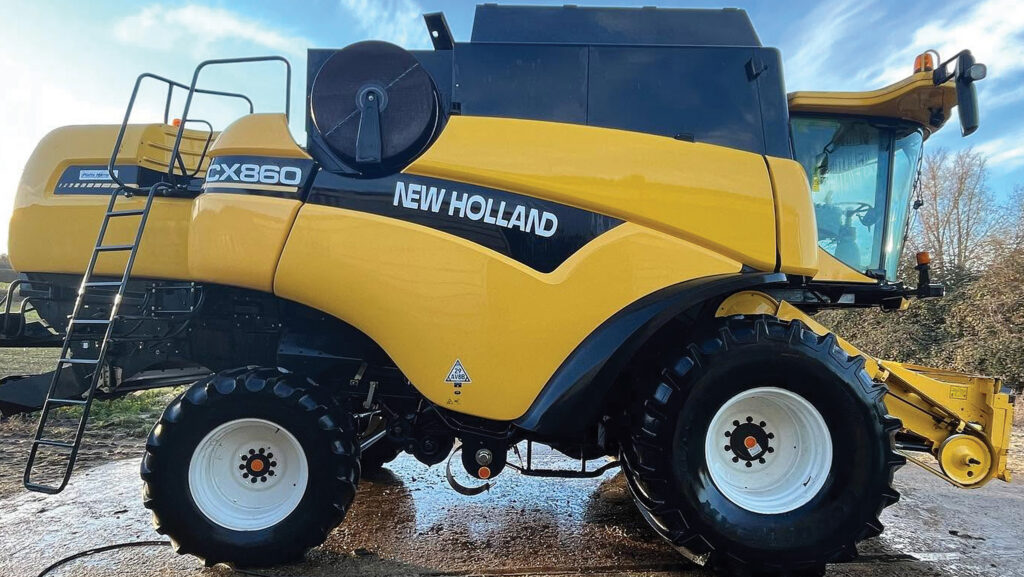
 Having cut his teeth at hire firm APH in the mid-1990s, Ben Painter knows a thing or two about CNH combines. Three decades on, he’s still in the game, keeping a raft of machines in fine mechanical fettle from his base in Wisbech, Cambridgeshire.
These days, rotary New Holland CRs and Case IH Axial Flows dominate his workload, most of which were built between 2003 and 2021.
He does still look after a few New Holland CX straw walker models, as well as one John Deere 975 from the late 1970s. But the number of traditional machines dwindles every year.
“Most farms have decided to go much bigger than they technically need to get the crop in quickly and in good condition – after all, who wants to dry grain if they don’t have to?” he says.
Ben Painter © James Andrews
See also: Ultimate guide to buying a combine 2026
As well as carrying out annual servicing and maintenance, Ben undertakes emergency mid-season repairs. Generally, these are limited to his regular customers, but he will help out others if he has time.
On top of this, he buys and sells combines and balers, both in the UK and for export, sells replacement track units – prices start at £4,660 per track – and carries out appraisals for those considering buying a used machine.
With harvest wrapped up for many, we asked him to give us some tips for winter storage, maintenance and repairs to help get ahead for next season.
What is the best way to prep a combine for storage?
Most people do this these days, but it’s far better to thoroughly blow a combine down before storage than blast it with a pressure washer.
You don’t want water sitting in bearings and pulleys all winter causing corrosion. Save the proper sluicing down for the start of the next season so there is plenty of time for water to get pushed out.
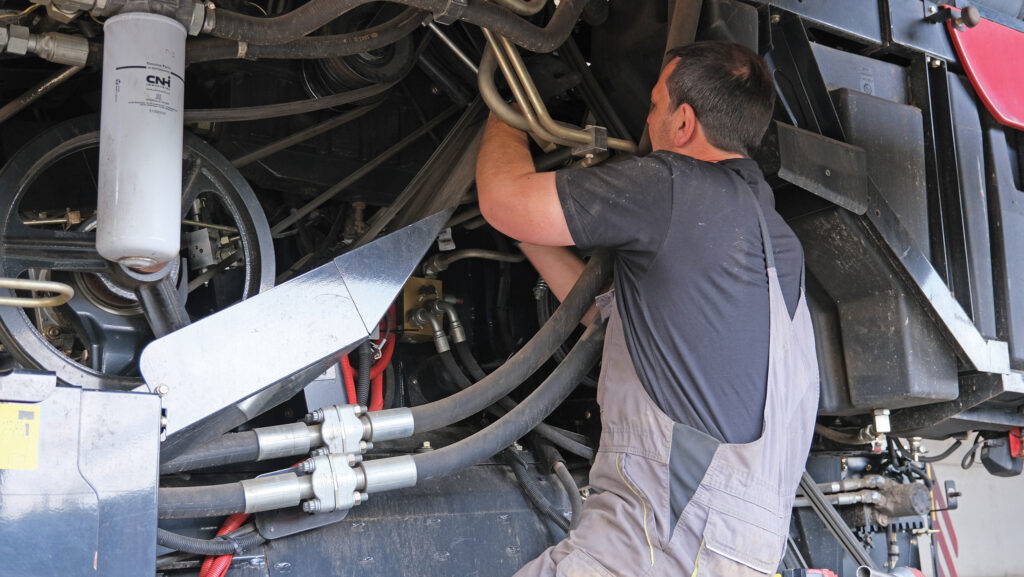
For those who do prefer to give it a proper wash before it’s put away, it is worth slackening the belts so they don’t stick to the pulleys. Regardless of how it is cleaned, it’s worth spraying any bare metal, such as the header reel and elevator, with oil or a rust inhibitor.
Slackening belts and chains © James Andrews
How do you stop rodents causing damage?
First of all, try to keep the combine in a shed that is as rodent proof as possible and put plenty of bait around. After that, do a bit of research into the areas they like to get into. You can then remove the relevant panels to make these less inviting.
On New Holland and Case suspended-track units they like to get in behind the side cover and nibble the wiring, which can cost thousands to repair.
Removing the covers tends to prevent the problem as it lets more light in. Opening all cross augers and elevators will make the combine less attractive, too.
The area behind the cab on New Holland CR/CX and Case IH Axial Flow models built up to 2015 is also a magnet for rodents. If they get in here, they’ll go to town on the wiring for the air conditioning system, so take care to clean it out as best you can.
Suspended track-side cover © James Andrews
How do you keep on top of repairs?
It is a good idea to keep a log of all the niggles you notice during the season so they can be addressed over the winter. If you don’t, a lot will have been forgotten by the time it’s next pulled out of the shed.
I would also make a note of how urgent they are. Less serious problems might not need to be addressed until the following season, which can help spread the cost of repairs.
I do this will all my customers’ combines so they don’t get a socking great bill one year. Not all dealers take this approach – I had one person come to me after they had a £21,000 invoice for a single service.
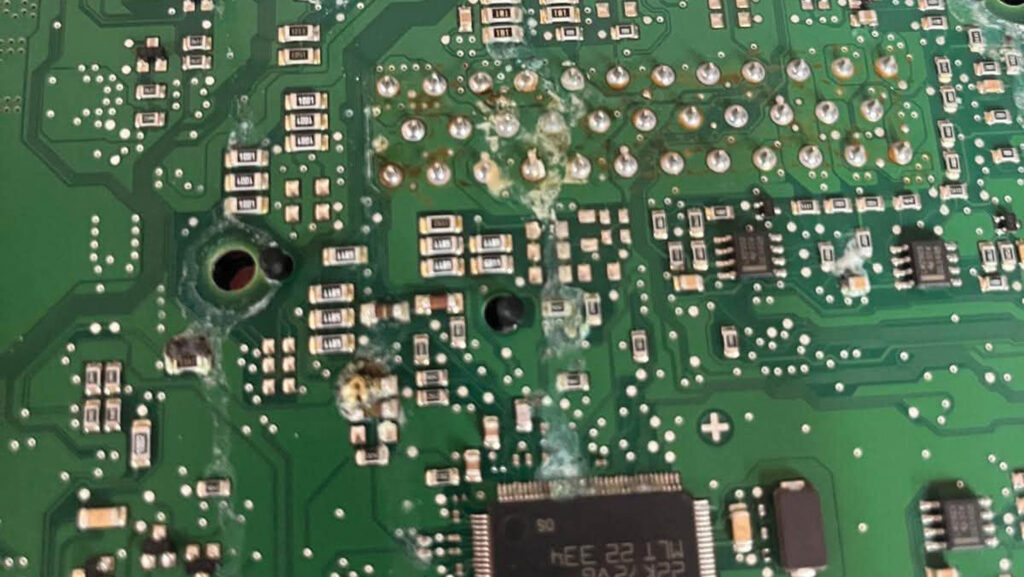
Faulty Adblue dosing unit © James Andrews
What is covered in a standard annual service?
The first job is to slacken all the idlers and assess the condition of belts, chains and bearings. It might sound time-consuming, but it doesn’t take as long as you’d think and it’s the only way of doing it properly.
While I’m at it, I check to see if there is any slop in the chains. If there is noticeable movement in the pins, I’ll replace it before it causes premature wear of the sprockets.
Oiling of chains is down to personal preference. In theory, it should make them last longer, but the oil attracts dirt, so some would argue it does more harm than good. Smaller chains will benefit from lubrication the most, as they have smaller pins that wear out faster.
All machines get an annual engine oil and filter change and a cabin filter, with the hardest-worked getting a hydraulic filter. The latter should be fine for a couple of seasons on combines that do lower hours, as it’s a sealed system.
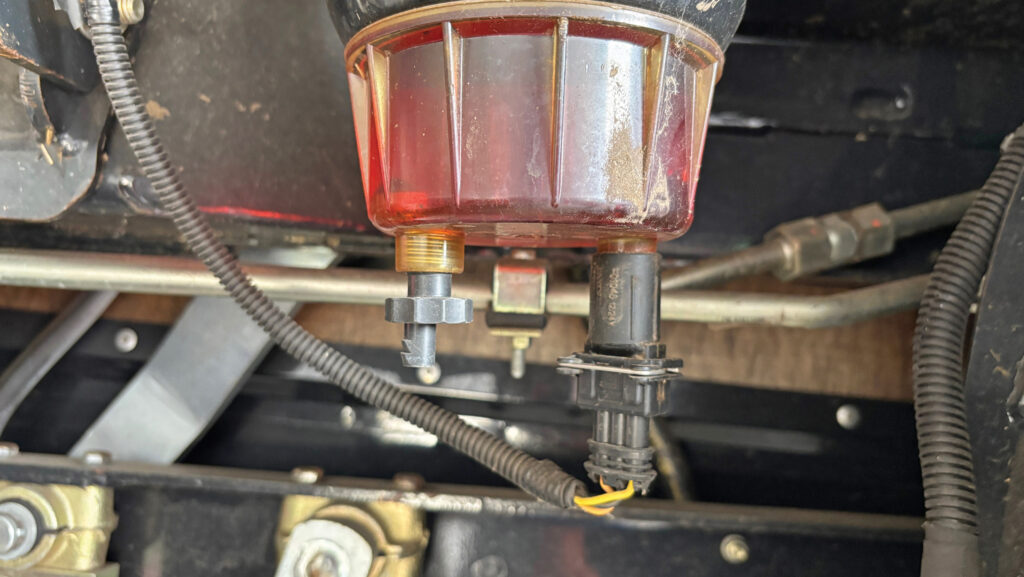
Fuel sensor © James Andrews
I change engine air filters every couple of years too, unless it’s a machine that does a silly number of hours. They can cost several hundred pounds, so this helps keep costs down. I’d recommend blowing them out every day, though.
People often overlook this, but it’s important to replace any blunt knife sections or worn double fingers. Failing to do so will put strain on the knife arm and knife head, both of which will eventually break. I’ve had a couple of failures this season as a result.
For a comprehensive annual service, my customers usually end up paying between £2,000 and £6,000. The exact price varies depending on the size of machine, workload and replacement parts required.
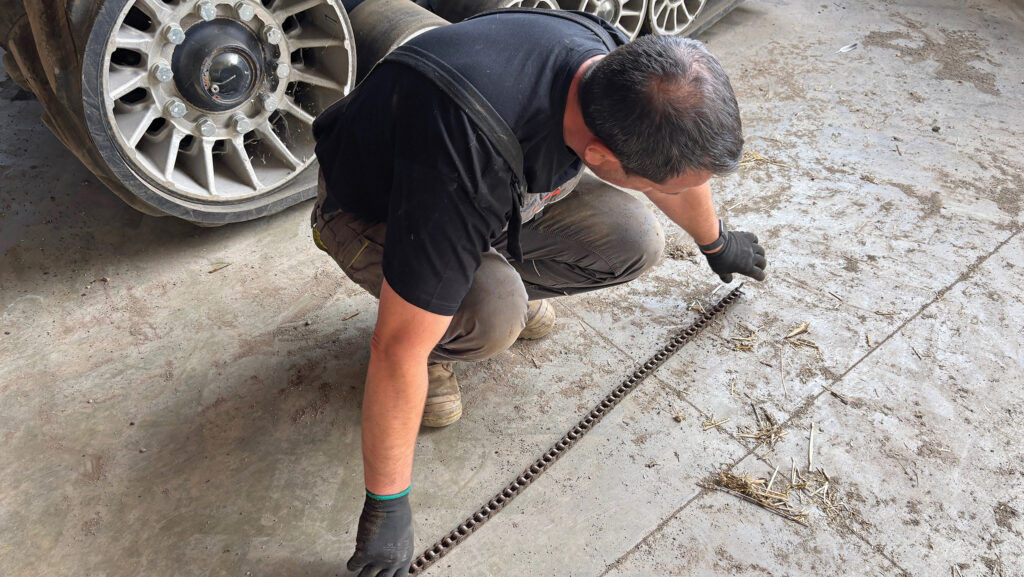
Checking chain wear © James Andrews
Any tips for looking after track units?
One of the worst things for combine tracks is running them up a curb, particularly if it’s only half the track. Do this a few times and it can stretch the internal wires on one side and put them out of balance.
When they get bad, they’ll run so out of line that they catch on the combine’s bodywork and expose the edges of the rollers on the outside. Drive lugs will also rub on the idlers, causing them to overheat, crack and eventually break up.
To avoid this, stop the combine when driving on the road every 20 minutes or so to let the tracks cool down. This is good practice even when the alignment is fine, particularly in hot weather.
It’s also important to change the oil in the idlers. Refresh every year if doing lots of road work, but every couple of years is fine if you’re in a ring fence. The correct oil is SAE50W for SmartTrax units and SAE30W for those with Terraglide suspension.
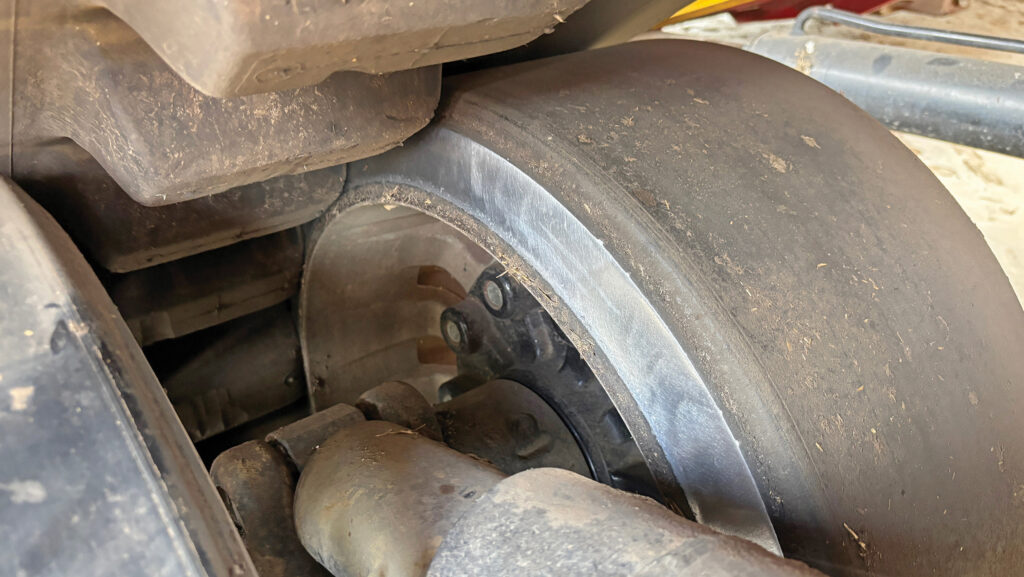
Track alignment © James Andrews
What to watch out for on CRs?
If a combine has spent any time outside, or it gets pressure washed, there is a risk that water can run into the unloading auger gearbox.
Left unchecked, this will eventually stuff the internals, requiring a £300 rebuild or £600 if the main shaft is damaged. It is therefore sensible to drain the oil every year and refill with EP80/90. The rotor gearbox uses the same oil and that should also be changed annually.
On models that are more than 10 years old, it’s worth monitoring the condition of the shaker shoe bushes. Play can start to develop, which will eventually rattle the sieves to bits. Front grain pan seals can go as well, the telltale sign being leaking grain on the front axle.
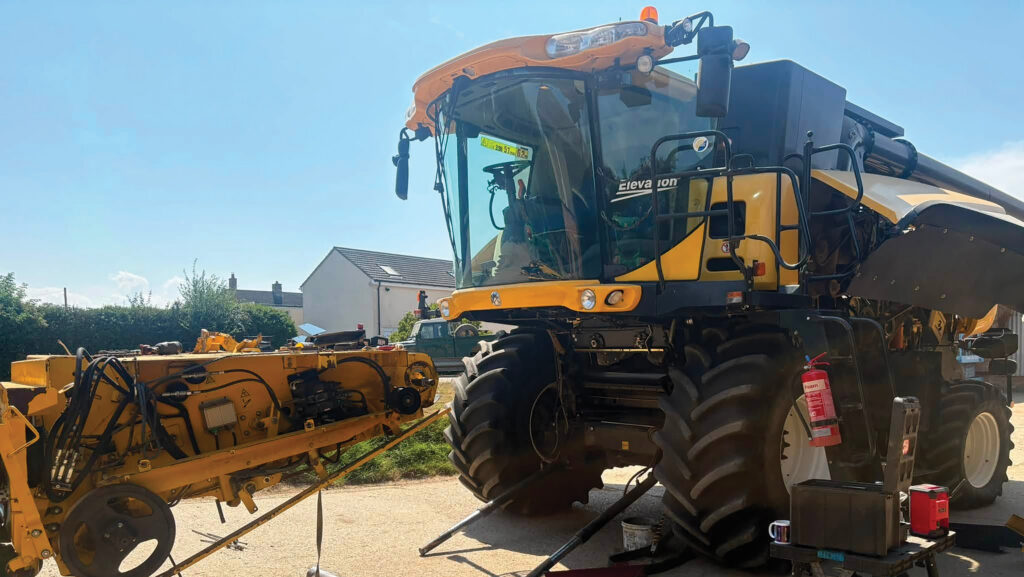
Top shaft and bearing © James Andrews
And CX models?
Like the CRs, watch out for shaker shoe bearings on machines that are more than a decade old. Another thing to keep tabs on is sticking variator pulleys on the drum speed, as the grease doesn’t go all the way back.
To avoid this, slow the drum right down and then push up to full speed to move the grease around.
Models built from 2010 to 2015 are prone to stub axle failure – you can tell when they are about to go, as they will pop the cap off.
Replacements cost about £900 and they’re worth doing as the wheel will eventually fall off. CRs of this era suffer the same problem.
How about Axial Flow machines?
These combines have the same unloading auger gearbox as a New Holland CR, so it’s best to give them an annual oil change.
They also need the oil changing in the rotor gearbox which, on most models, is universal transmission oil. However, the 9250 has a different unit that needs to be run on 75/90 – put the wrong stuff in and it will overheat.
The radiator door on recent Axial Flows is another thing to be careful with. If it’s opened too far it can crack the copper pipe on the air conditioning radiator. It’s a pricey mistake, as the whole radiator assembly will need to be replaced at a cost of about £2,800.
A modification was introduced to these combines that make it possible to grease the top shaft in the front elevator. Make sure to lubricate this as the cost to repair it is £6,000 to £7,000.
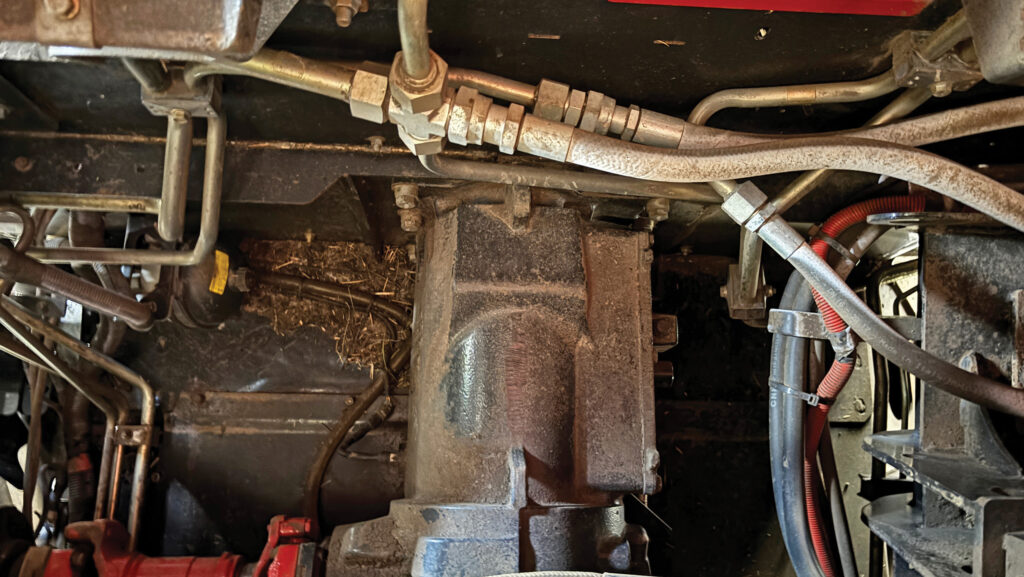
Axial Flow 9250 rotor gearbox © James Andrews
Best cost-saving part?
On CNH machines from 2014 onwards it’s fairly common for fuel sensors to fail. The genuine part costs about £130, but look online and you can get the same one for about £15.
Any in-season breakdowns?
I’ve had a couple of front elevator top shafts go – one on an Axial Flow and another on a New Holland CR. They are quite different designs though.
When the Case one fails you lose drive, while the New Holland version causes one of the chains to go slack, usually accompanied by an error code on the screen.
As I mentioned earlier, the Case issue can be prevented by greasing the shaft, providing your combine has the modification.
I also came across a faulty AdBlue dosing unit on a New Holland CR which, due to a shared canbus wire, caused the header and chaff spreader to stop working.
The battery was also getting drained when it was parked up. It took a bit of diagnosing, but a replacement dosing unit solved all its problems.
A couple of people have had software glitches on New Holland combines fitted with grain cameras, which have been caused by starting up too quickly. Thankfully, these have been solved by waiting for the system to boot up properly before firing the engine.