How workshop manager keeps 76 vehicles and 30 tractors running
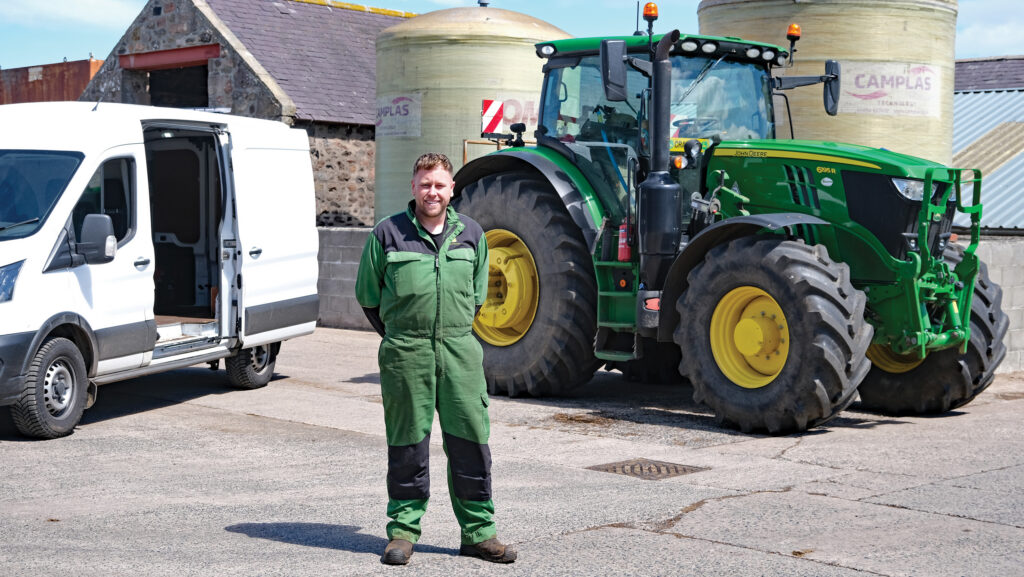 Aaron Scott © James Andrews
 If you think you’ve got a lot of machinery to maintain, try stepping into Aaron Scott’s shoes.
As workshop manager on the 12,140ha Lilburn Estate in Northumberland, he is charged with keeping 30 tractors, two combines, one forager and a raft of other kit in good mechanical order.
See also: Workshop Legends: Warwickshire College lecturer Tym Morgan
This includes 39 vehicles (pickups, 4x4s and vans), 23 quad bikes, 14 all-terrain vehicles and 19 other pieces of self-propelled kit, ranging from telehandlers and diggers to timber forwarders and mulchers.
On top of that, there are implements to service and estate infrastructure to mend, as well as the manufacturing of custom kit for the livestock and arable teams.
That is some workload, particularly as there’s only a team of three on the tools. We asked Aaron how they handle it.
How do you manage the workload?
Since I started working here four years ago, I have been building a large spreadsheet that has the service schedule and maintenance notes for every machine, implement and trailer on the estate.
This helps us plan out the work throughout the year so it doesn’t bunch up too badly at busy times.
That being said, every day feels like peak season here, as there is always so much going on. Thankfully, some of the newer machines are under warranty and have service agreements, so dealers will look after them. But most of the work falls to us.
All quad bike, pickup, van and 4×4 maintenance is handled by one man – Anthony Darrie. He is well set up, with a quad bike ramp and a two-post lift in his corner of the workshop, which makes the job as efficient as it can be.
The rest is handled by me and Ian Gillies, who has been working here for 25 years and was workshop manager before me. He is due to retire soon and we will be on the hunt for someone to replace him.
We’ve also got a ramp, a pit and a good selection of tools, which are well organised so we’re not wasting time hunting around for them.
Finally, we keep the workload down by running the most reliable equipment we can.
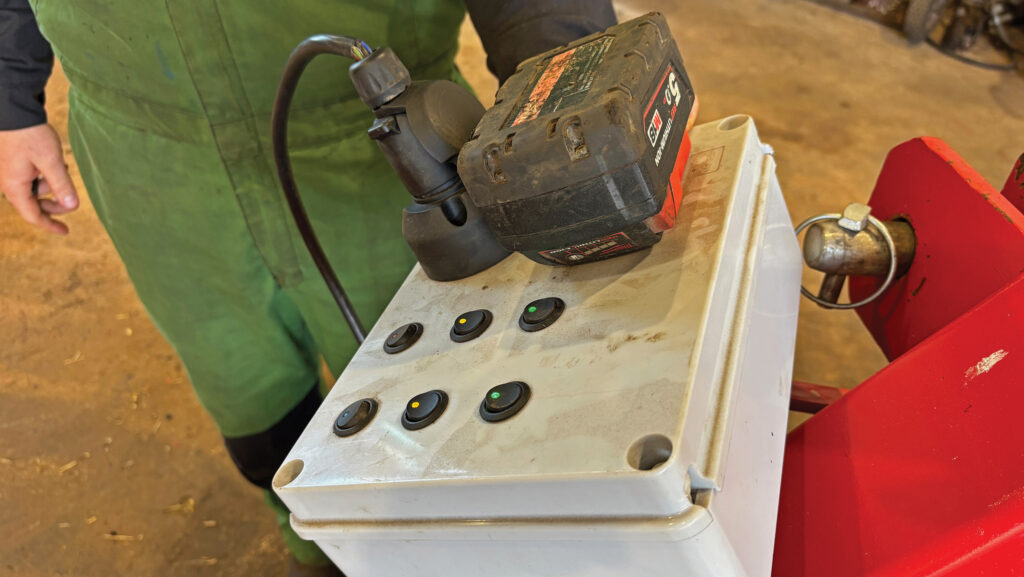
Trailer light tester box © James Andrews
Which are the best ATVs?
Quad bikes get worked incredibly hard here. Some clock more than 1,000 hours a year and will have done more than 30,000 miles by the time we come to trade them in after four years.
The estate has tried all sorts over the years, but Hondas are consistently the best and we’re almost exclusively running these now. They’re all the same model too – TRX 520 FM6 with a manual foot-shift transmission.
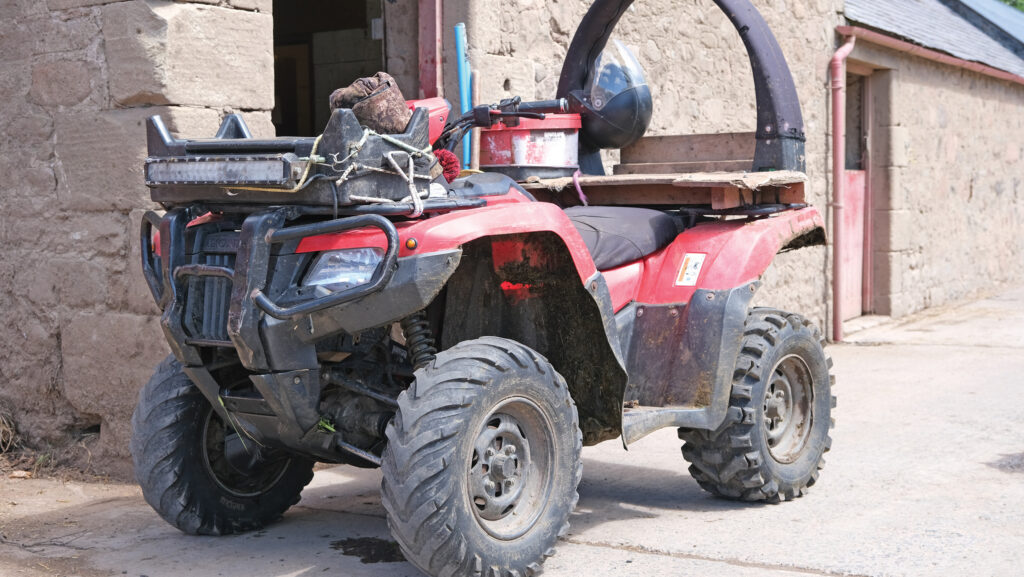
Honda 520 © James Andrews
Most have independent rear suspension, which tracks the ground well and makes the bikes very stable on the hills. There is the odd fixed-axle version, but those are best kept on lower, flatter ground.
The 520s are pretty bombproof and give us very few problems. The only work we tend to do on them other than regular maintenance is wishbone pins and bushes and the occasional clutch on high-hour ones.
They hold their value as well – we’ll get £2,000-£3,300 for four-year-old trade-ins that will have cost the estate about £10,000 when new.
How about tractors?
All bar two of the tractors are John Deeres, which we buy from our local dealer, Sheriffs. Bigger arable models are usually purchased with a five-year/5,000-hour warranty, and we have six that are covered at the moment.
That takes the total number of tractors we’re servicing down to 24, which are a real mix of sizes and ages. The oldest is a 2850 and the one that has done the most work is a 2019 6215R on 11,885 hours – that’ll be moved on soon.
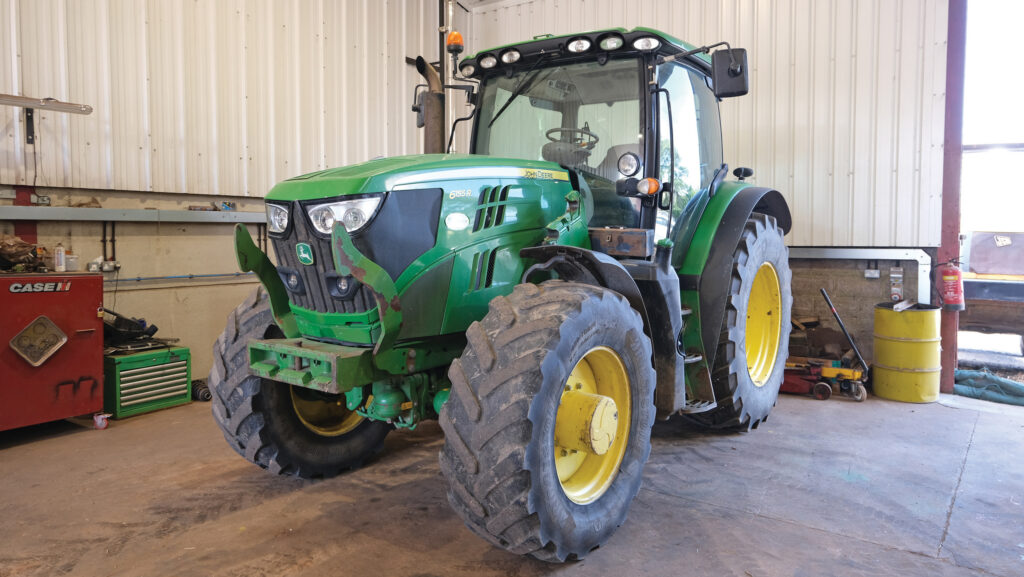
John Deere 6155R © James Andrews
Major problems are pretty rare, but we did recently have to do the forward/reverse shuttle packs on a 6155R when it got to about 7,500 hours.
It’s the first failure we’ve had on that transmission, and was likely caused by the fact that this tractor is constantly shunting back and forth with a diet feeder on the back.
Cracked manifold studs are another common fault on the bigger 6Rs, but we haven’t had any problems since fitting upgraded versions.
One of the reasons we run John Deeres is that we get such good back-up from Sheriffs. Parts availability is excellent too, the only exception being the big 9420T twin-track crawler.
There’s very little UK stock for that model, so we have to wait for some items to get shipped in from the US. It’s a brilliant tractor, though, and sounds great when it’s working hard pulling the 6m Vaderstad Topdown.
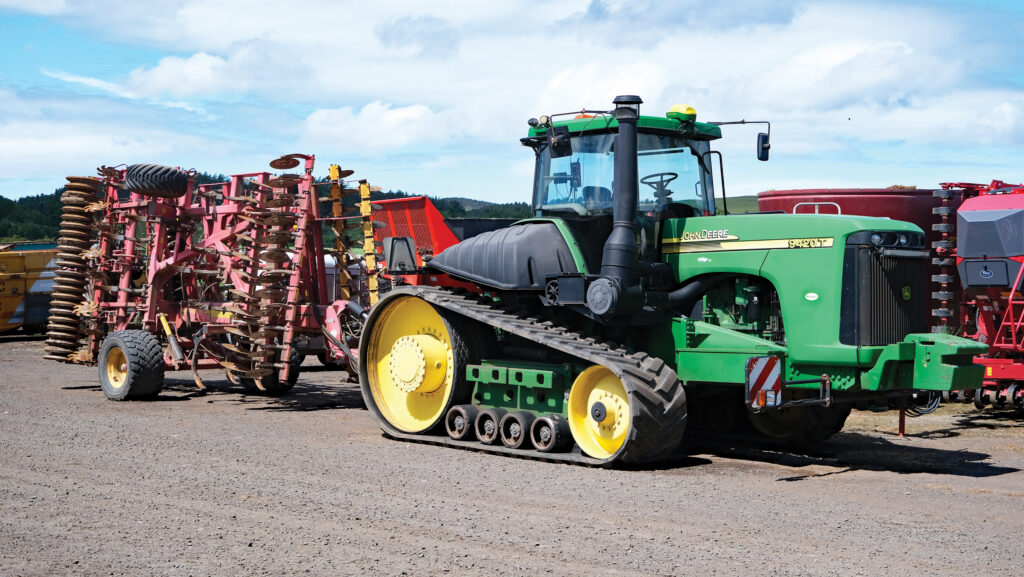
John Deere 9420T © James Andrews
The only non-green tractors are a Valtra N123 with a forestry cage that tows a Ponzi forwarder and a New Holland T6 155. Both have been good so far.
And pickups?
We get on best with the Toyota Hilux – the estate has 16 of them in total. They’re a mix of ages, from virtually new to 11 years old with 160,000 miles on the clock.
All of them have been good, but we do get some AdBlue and diesel particulate filter issues on the newer ones as they spend a lot of time working at low revs and doing short journeys.
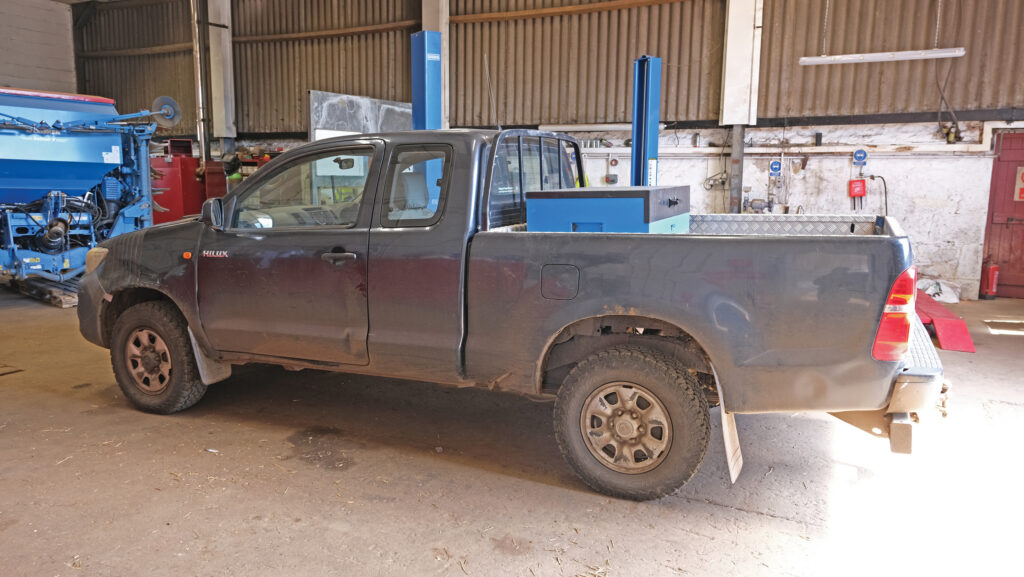
Toyota Hilux © James Andrews
Remarkably, we haven’t had any trouble with chassis rot, even though they’re often bathed in mud and muck. All of ours have been inspected by Toyota and only one was recommended for rust treatment.
Do you stock many spares?
There used to be a lot of parts on the shelf, but our local dealers keep stock of nearly everything we need, so we tend to get them in as and when we need them.
The only item we do buy in bulk is oil, which we get in 1,000-litre IBCs – one for engines and one for the back end. We shop around a bit but, surprisingly, John Deere is often the cheapest. I think the last lot came in at about £4.30/litre.
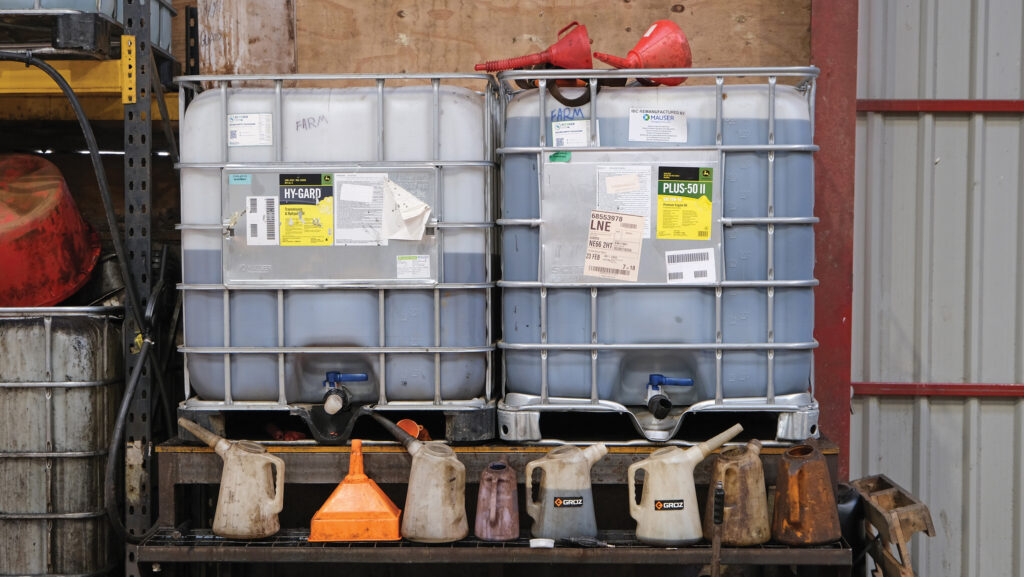
Bulk oil © James Andrews
Most frequent workshop visitors?
We seem to be constantly rebuilding the Kuhn Primor 15070 straw bedding machines. In fact, we’ve got the bed out of one right now.
They could be stronger in certain areas, but the main problem is that they get worked so hard. Each of them processes about 60 bales a day, three days a week, so they get some stick.
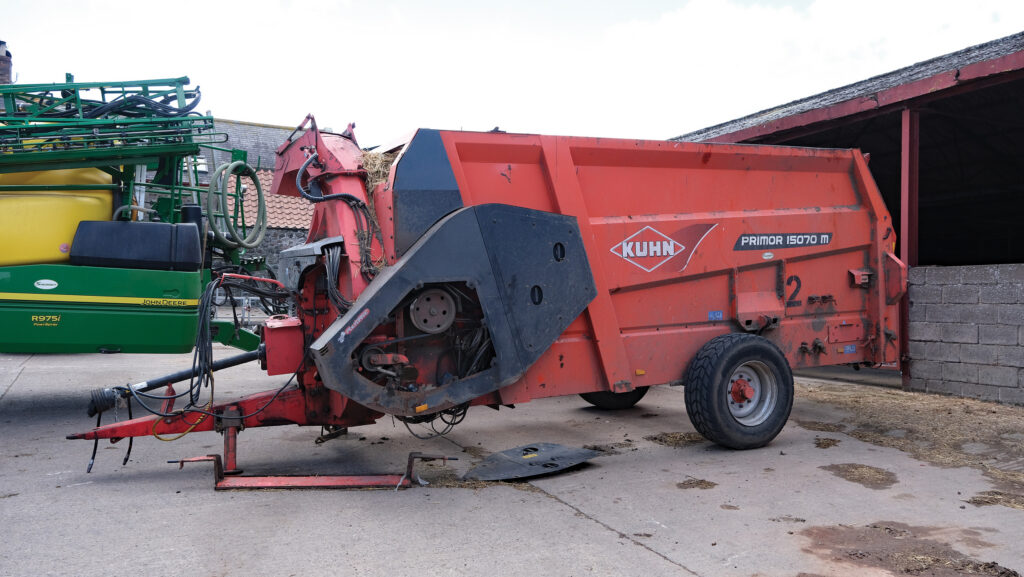
Kuhn Primor 15070 © James Andrews
Belts snap, blades blunt quickly and the bed chains go slack, which can cause them to jump a tooth on the drive sprocket.
If this happens, the shock can break the brackets holding the floor bars which, in turn, can go through the chopping rotor. We could do with a backup, really, as there is a fair amount of pressure to get them up and running again quickly.
Favourite workshop tools?
These days, we would be lost without the diagnostics kits. One is a Texa unit, which allows us to read codes and do some calibrations on most of the agricultural equipment.
Occasionally, a machine won’t play ball and we have to get a dealer to help, but it works most of the time. We’ve also just got an Autel kit that works on most of the pickups, vans and cars.
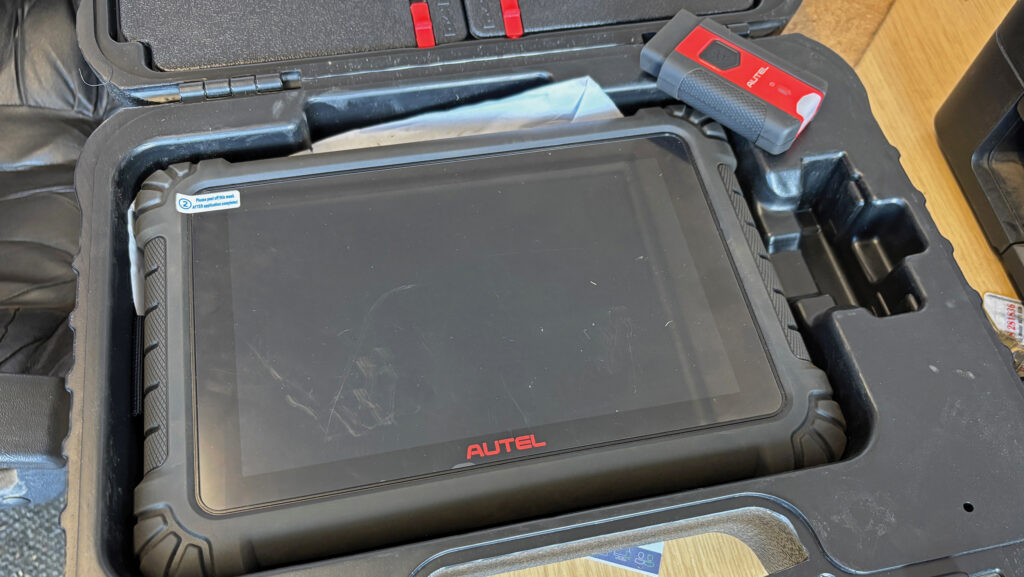
Autel diagnosics © James Andrews
On the power tool front, I’m a big fan of my 5in Milwaukee low-profile angle grinder. It’s just as powerful as the regular 4.5in model but can get into so many more places.
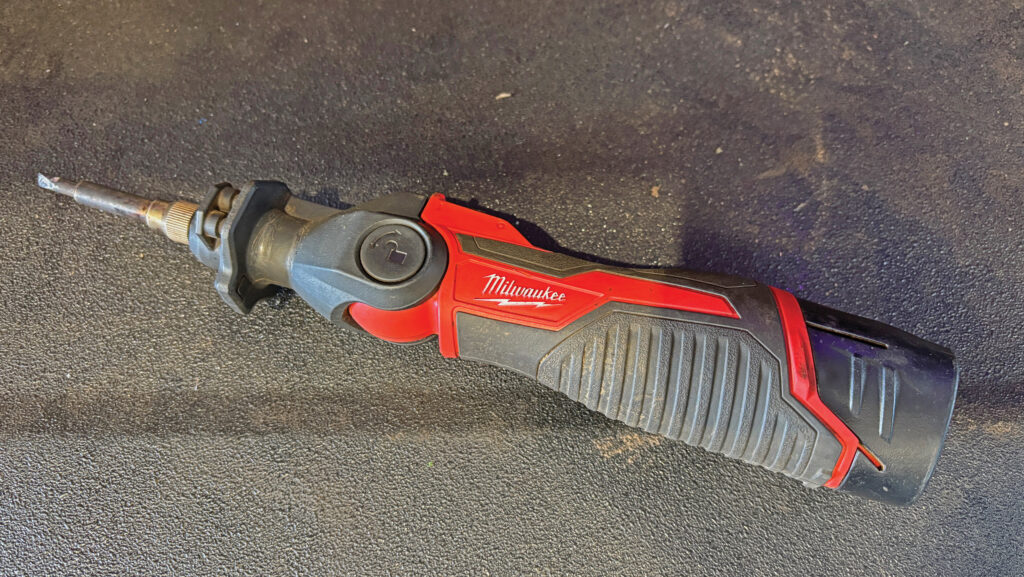
12V soldering iron © James Andrews
The 12V soldering iron is also brilliant and makes it easy to join wires properly – I try to avoid mechanical connectors if I can. Before I started here, I had Snap-on power tools. But I realised the Milwaukee ones are better and cheaper, so I made the switch.
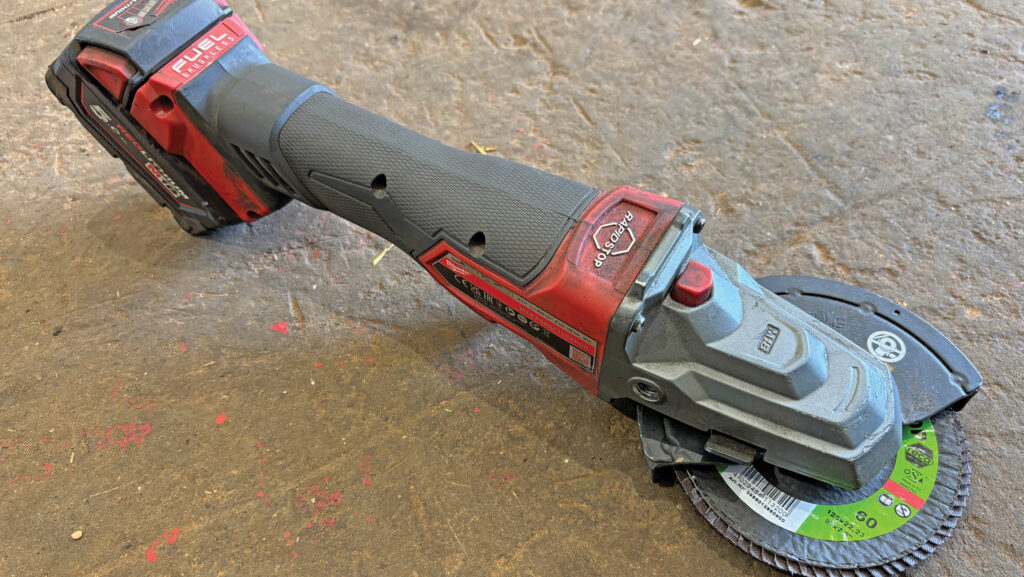
Low-profile angle grinder © James Andrews
Another handy gadget when I’m out and about is the Mosa petrol stick welder – it sits in the back of the van and I can lift it out with one hand and take it anywhere.
It makes it so easy to fix a cattle grid, gate or feed barrier. I also made a trailer tester box that runs off an 18V Milwaukee battery. It avoids having to drag a vehicle into the workshop every time I want to check the lights are working.
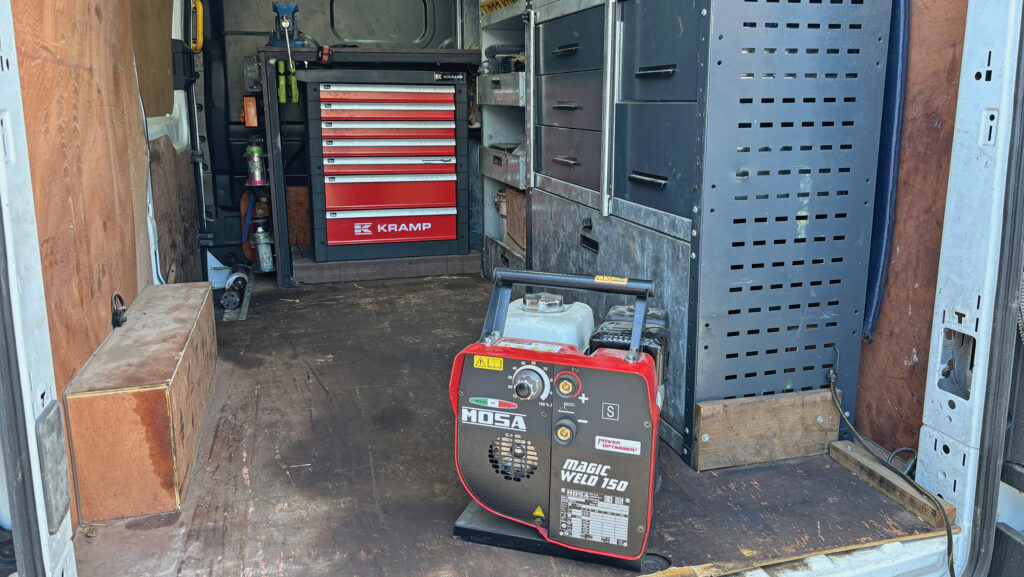
Van with Mosa welder © James Andrews
What van are your running?
I’ve got a four-wheel-drive Transit L2H2 that has got so much more space for carrying tools than a pickup. There’s a small workbench in there with a vice attached, so I can work a lot more efficiently.
It isn’t quite as good as a Hilux off-road, but it will go most of the places I need it to, providing I lock it into four-wheel drive before driving into a field.
If I forget and leave it in the automatic setting, it can stall the engine when the system engages, particularly if there is a bowser or trailer on the back. The wet-belt engine is less of a selling point, although I haven’t had any problems with it yet.
Most overpriced spare parts?
I recently got quoted £1,000 for a 1.5m-long, 60mm shaft to go in one of the Kuhn Primor bedding machines. So, I contacted a friend of mine who works for an engineering firm and he is making me one for about £250, including cutting all the relevant keyways.
Tractor service kits are also getting ridiculous – they’re almost £1,000 for some of the John Deeres now.
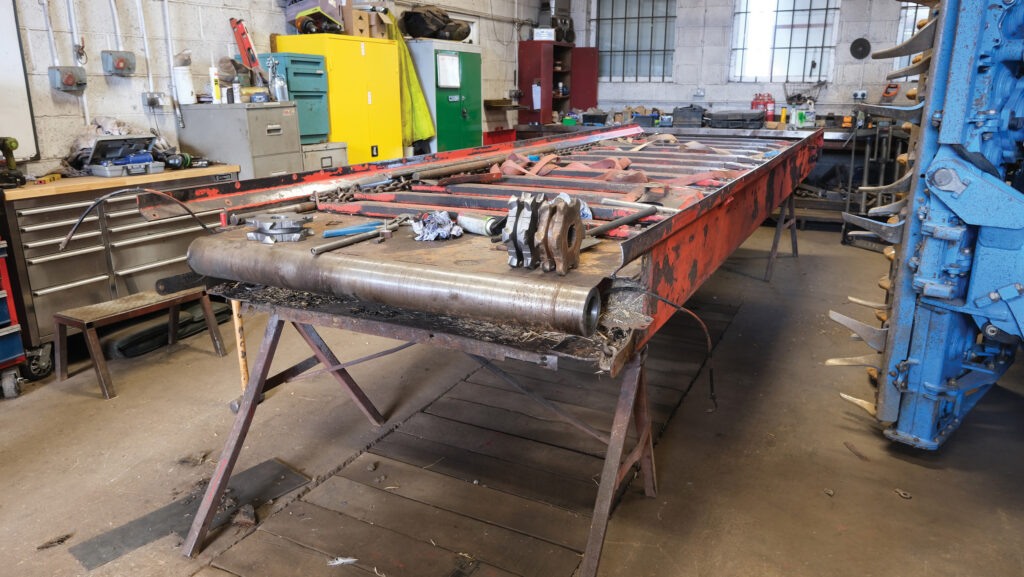
Kuhn Primor bed repairs © James Andrews
Do you make any equipment?
There isn’t a huge amount of time for building custom equipment, but I love doing it. My best invention is probably the trailed calf catching crate.
This has a swinging drawbar, a bit like an old square baler, which allows it to tuck behind the quad on the road, but sit out to the side when in the field.
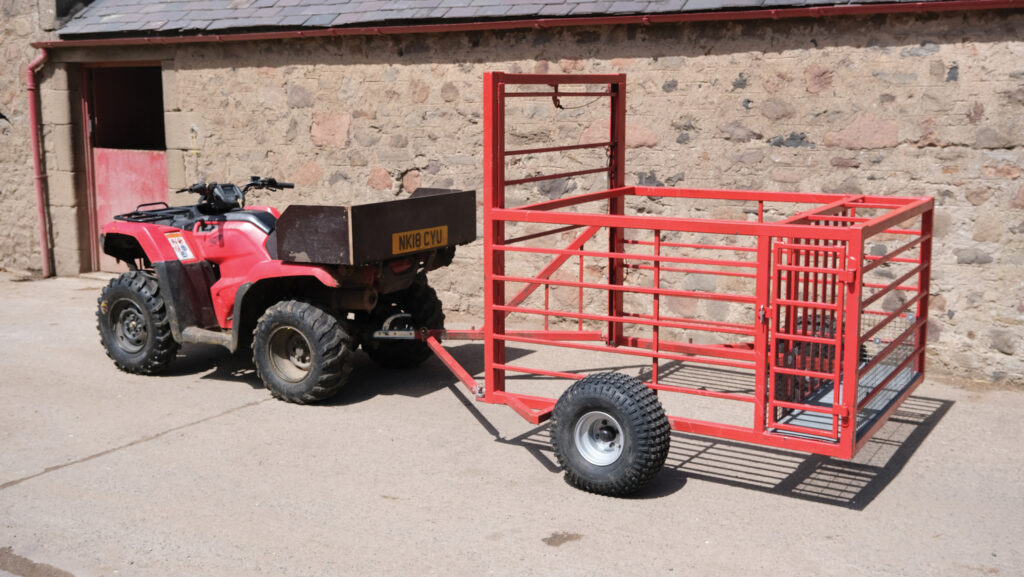
Calf catching
crate © James Andrews
With the guillotine front gate lifted, the driver runs alongside the animal until it’s inside the crate. They then pull a cord, causing the gate to drop down, trapping it inside.
I also made a second compartment at the rear, which is accessed by a swinging gate and has a floor so that the calf can be transported to a different location.
Once there, it can be released through a separate door, meaning it doesn’t have to go back out through the main crate. The system works a treat and mothers seem very relaxed when it’s being used.
The construction is pretty simple, with the framework and gates made out of 50mm and 20mm box section. There are plastic guides in the gate runners to reduce rattling and rubber stops at the bottom to reduce the bang when it comes crashing down.
I also offset the wheels, to make it more balanced in the work position. This has the added benefit of making it more stable when being towed at speed.
I’ve had a few requests to make them for other people, but I just don’t have the time. However, I’ve given the plans to a local engineer – Mike Hope of Wooler – who’s hoping to begin building them to order.
Another recent project was a swath roller, which has six wrap holders and loads of lights so that cars can see it clearly when it’s nudging out into the road.
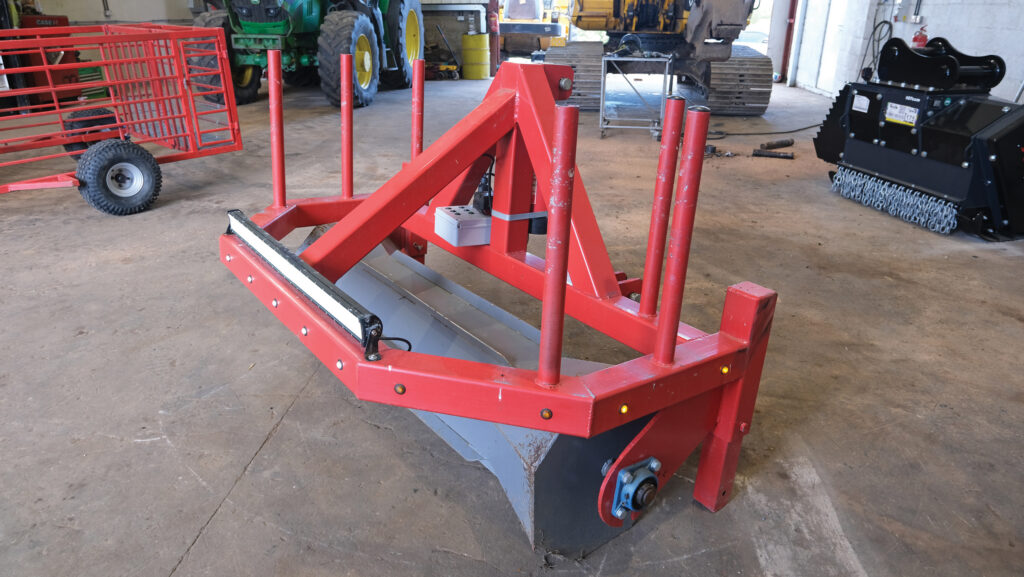
Swath roller © James Andrews
And I’ve just made some custom quick-hitch brackets for an excavator-mounted Prinoth stump mulching head. This will get used for forestry work on the estate, running along the big self-propelled machine.
The two have plenty of work to do as there’s still mess left over from Storm Arwen in 2021, which took down no end of trees.
What’s next for the workshop?
The estate is after a better tool for managing heather, as the current flails and rotary toppers it uses tend to leave the cuttings in clumps. So, we’ve got an old Taarup Double Chop trailed flail topper that we are going to modify to do the job.
The theory is that it will finely mince the clippings and blow them into the air so they give an even dusting over the ground.
We got a rough one to test the concept, so it’ll need to have a few holes repaired and some heavy-duty hammer to replace the grass flails. Finally, we’ll fit some wider wheels to make it more stable on the banks.