Inventions Comp 2026: Creations to ease livestock handling
This year’s Farmers Weekly Inventions Competition included more than a dozen entries designed to make life easier for herdspeople.
We look at some of the best ideas.
See also: Novel home-made trommel separator handles sand-laden slurry
Joseph Dickinson’s cattle handling and bowser trailer
© Joseph Dickinson
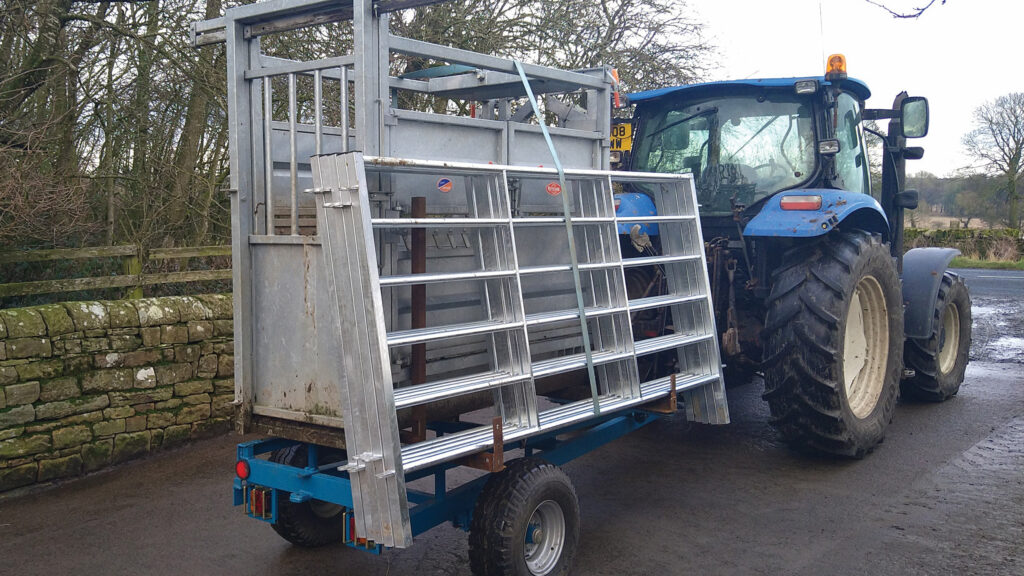
In need of an efficient method of transporting cattle handling equipment, self-employed farm worker Joseph Dickinson from Northumberland built a custom trailer.
Costs were kept to a minimum as he was able to make the entire outfit out of steel he already had.
The only notable expenses were a pair of new stub axles, rims and tyres sourced online for £170, plus new lights and paint, bringing the total outlay to £220.
On top of the channel and box section chassis he fabricated a removable frame that securely holds a cattle crush and up to seven hurdles.
For when the handling kit isn’t required, he made another frame to hold an IBC so that it provides a water supply for his herd of Blue Grey cattle that graze on land within a forest.
To prevent them damaging it when it’s parked up, he fitted a removable lighting cable and light guards.
Matt Haines’ non-return parlour gate
© Matt Haines
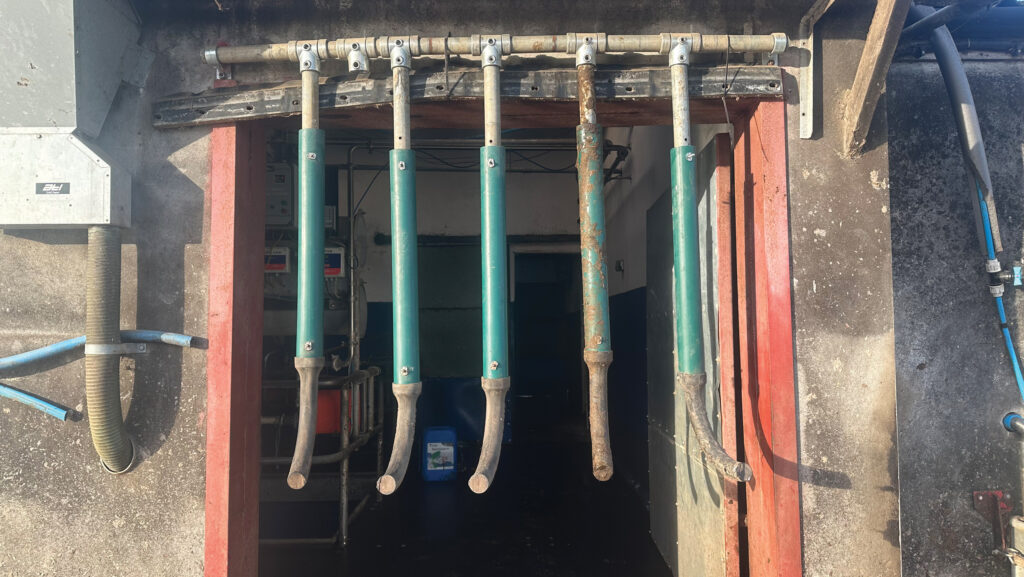
Crowd control has improved at Matt Haines’ Somerset dairy farm following the fitment of a low-cost parlour exit gate.
A series of dangling arms discourage cows from dithering on departure and prevent re-entry, which has reduced milking delays and helped minimise the risk of congestion and slips.
The steel tubes hang vertically from a fixed overhead rail and move freely outwards as the animal passes through before falling back into position against a rubber lining that keeps noise to a minimum.
This makes the setup far cheaper and simpler than a powered system and, thanks to the use of readily available fittings, it’s durable, easy to adapt to different parlour layouts and a doddle to repair.
Dai Evershed’s ammonia monitor
© Dai Evershed
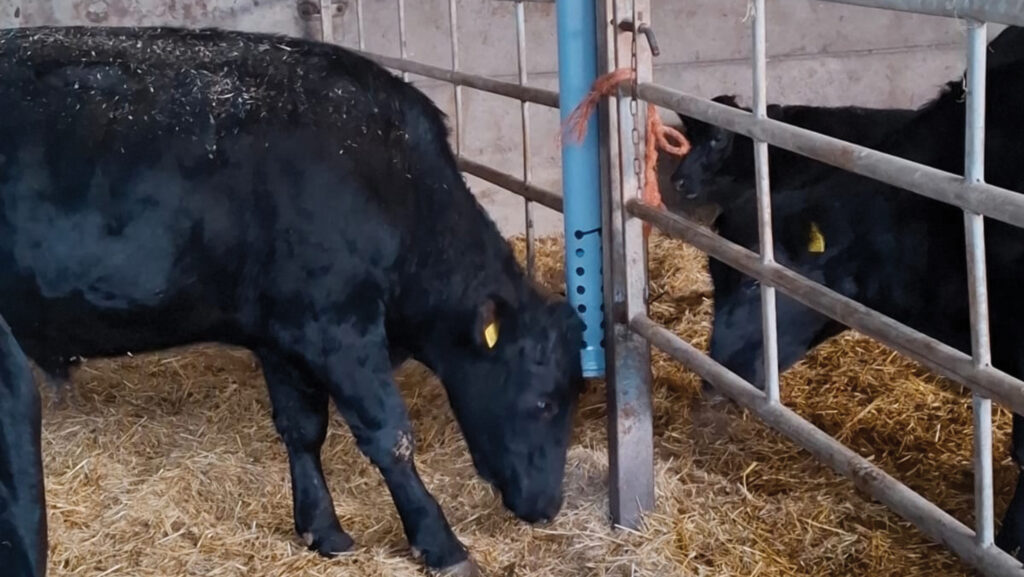
Rather shell out £1,500 on an ammonia monitor for his cattle sheds, Dai Evershed decided to make one, with a little help from colleagues Jason Brook and Mark Needham.
By connecting an industrial grade NH3 sensor to a transmitter and then programming them to talk to one another, they were able to do the same job for £230.
Both components are housed in a length of plastic downspout mounted in the shed with holes drilled to let the gasses through.
As for the data it collects, this is beamed back to the office via a free public LoRaWan network where it can be clearly displayed in tables or graphs.
Though he’s a farmer first and foremost, Dai also carries out work for Aberystwyth University and its Institute of Biological, Environmental and Rural Sciences, which provided some assistance for the project.
Stevie Houston’s telehandler muck scraper
© Stevie Houston
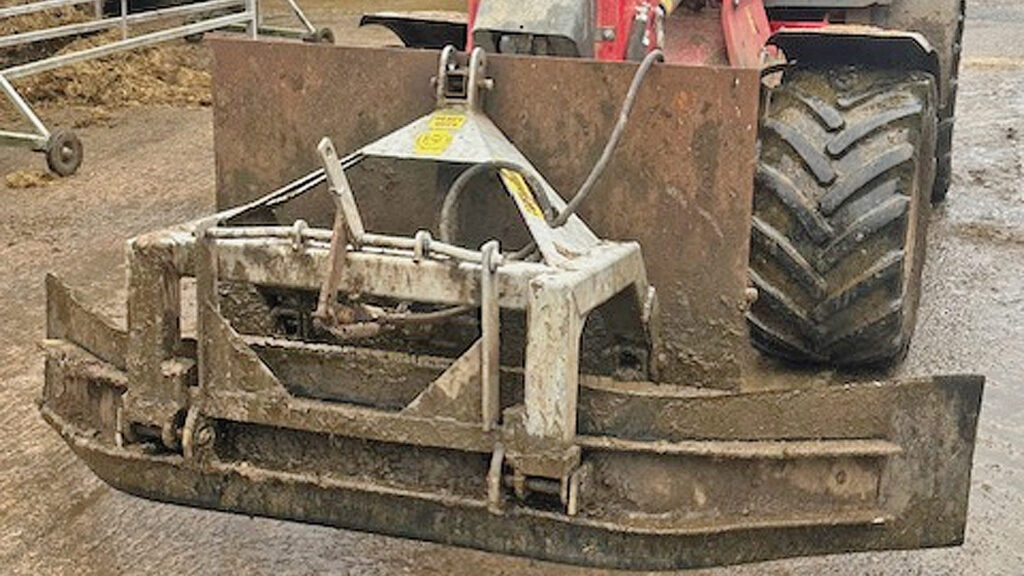
When he needed a muck scraper to go on the front of his Weidemann compact pivot-steer telehandler, Stevie Houston decided to save some cash and adapt what he already had.
The process of converting the Fleming turnover model – originally used behind an MF 135 on his farm in County Antrim – from tractor to loader use involved welding on a backplate with a set of brackets and modifying the latch mechanism.
As the original rope setup was unsuitable, he handed the duties to a small single-acting hydraulic ram from a set of trailer brakes, along with a strong spring and some steel brackets.
Stevie rigged this up so that extension of the ram unlocks the scraper, while depressurising it secures it in its new position.
Lastly, he swapped the standard rubber blade on the scraper for an extra-thick one to better withstand the added downward pressure.
Robin Down’s automatic bag weigher
© Robin Down
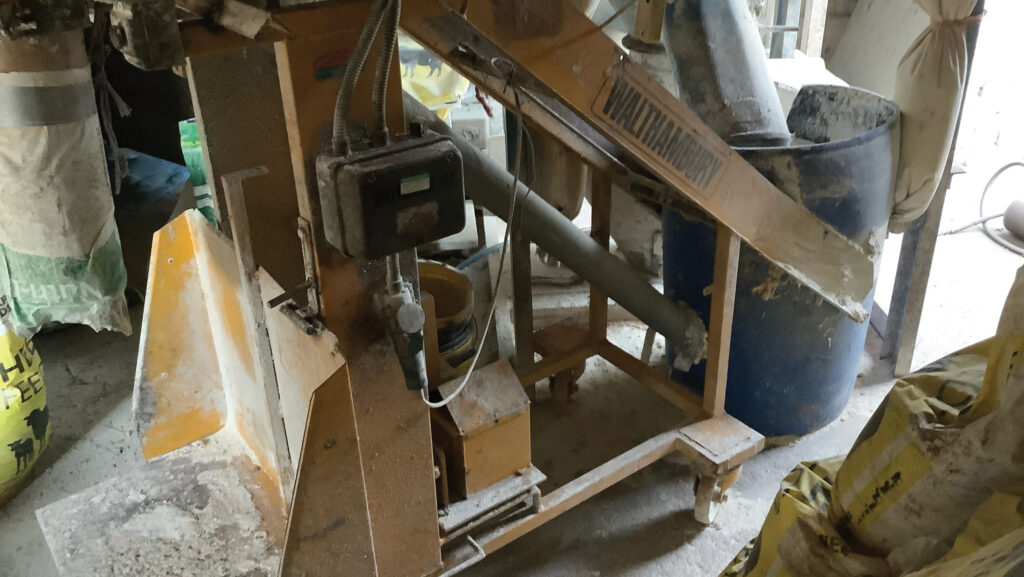
Eager to find a speedy yet accurate method of bagging up animal feeds, Robin Down from Feniton, Devon, set about modifying an old Walthambury potato weigher.
First on his agenda was stripping away the original belts and motors, leaving just the electrics and weighing mechanism in place.
He then added an auger, fed from a collecting tub positioned under his feed hopper, which was fashioned out of a blue plastic tub.
Bag filling is now largely automated – operators simply pull a lever to raise the loading tray and engage the motor.
The device has dramatically improved crushed grain and mineral feeding accuracy of the Sherwood Farm’s livestock, which is spread over many small fields and buildings, as staff know precisely how much is in each bag.
John Goodfellow’s bedding machine knife
© John Goodfellow
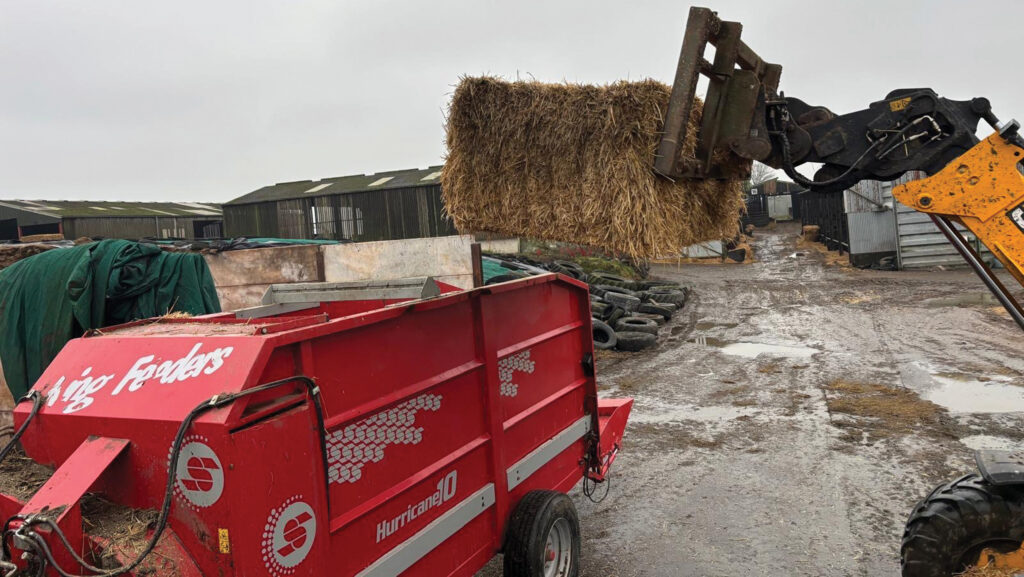
John Goodfellow fitted his King and Kuhn bedding machines with integrated knives, putting an end to the tedious task of removing strings.
These sit at the top of the tub, neatly opening the bales as they are lowered in with the telehandler.
The Northumberland farmer says they work a treat, particularly when the knots are positioned on top as the strings will ping to the back of the machine where they can be easily pulled out.
He reckons the knives save about one minute per bale, which equates to about an hour a week.
Robert Honeybun’s mobile cattle crush
© Robert Honeybun
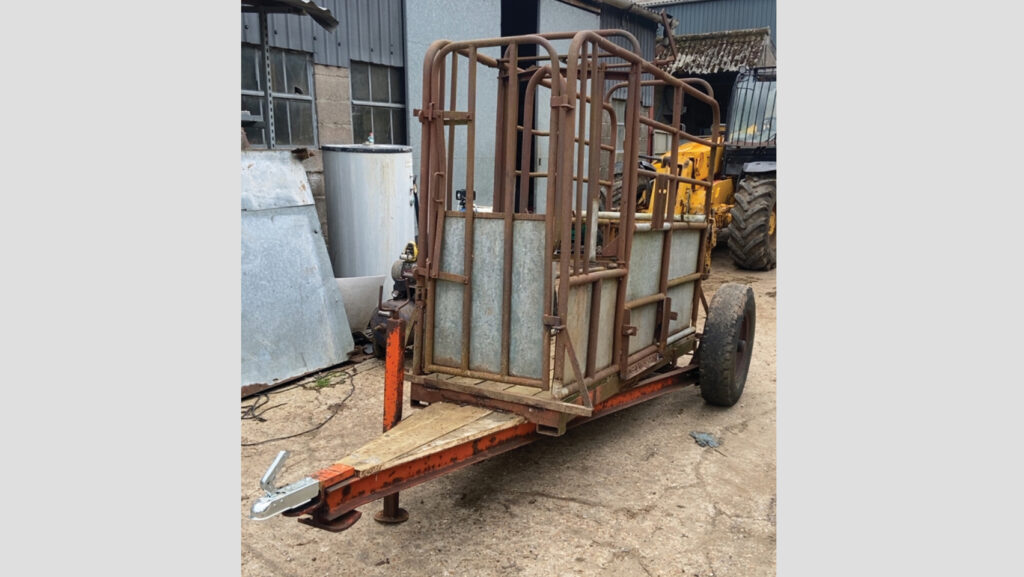
Plenty of expenses were spared in Robert Honeybun’s mission to build a budget mobile cattle crush.
This marriage of battle-worn farm implements sees an old crush grafted to the triangular chassis of a Howard spreader.
His first tasks were to lower the axle to ease cattle access and make a frame with a timber floor onto which the crush was welded. The jack at the front has a pin that can be removed to get it out of the way of the door.
As he’s only just started rearing cattle in Maiden Newton, Dorset, and doesn’t yet have a tractor, he tows the crush to site with a 4×4.
Tom Lamb’s water pipe clearer
© Tom Lamb
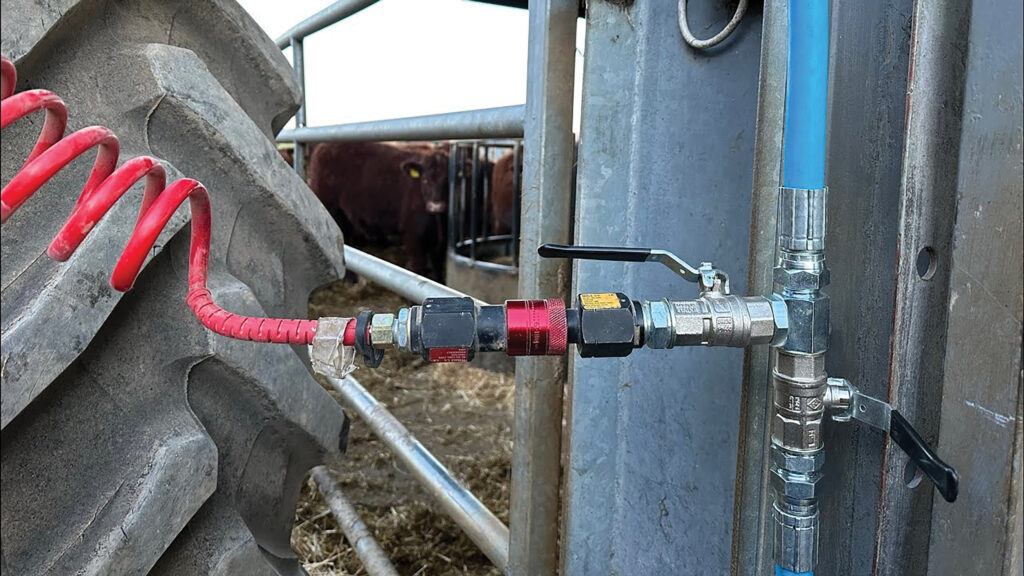
Frozen pipes are no longer a winter headache for Tom Lamb, thanks to a nifty draining device.
It comprises two taps, one to turn off the flow from the mains, and a second that opens an air supply from the back of his tractor.
This jettisons the water into a trough or out of a tap, leaving the pipe empty overnight. Come morning, he simply heads out to open the mains supply again.
His gadget cost just £30 to assemble and can be fitted to any size pipe in any location, saving the aggro of unfreezing pipes after a cold night and leaving the kettle free for brews.
Ken Hopkins’ sheep drinkers
© Ken Hopkins
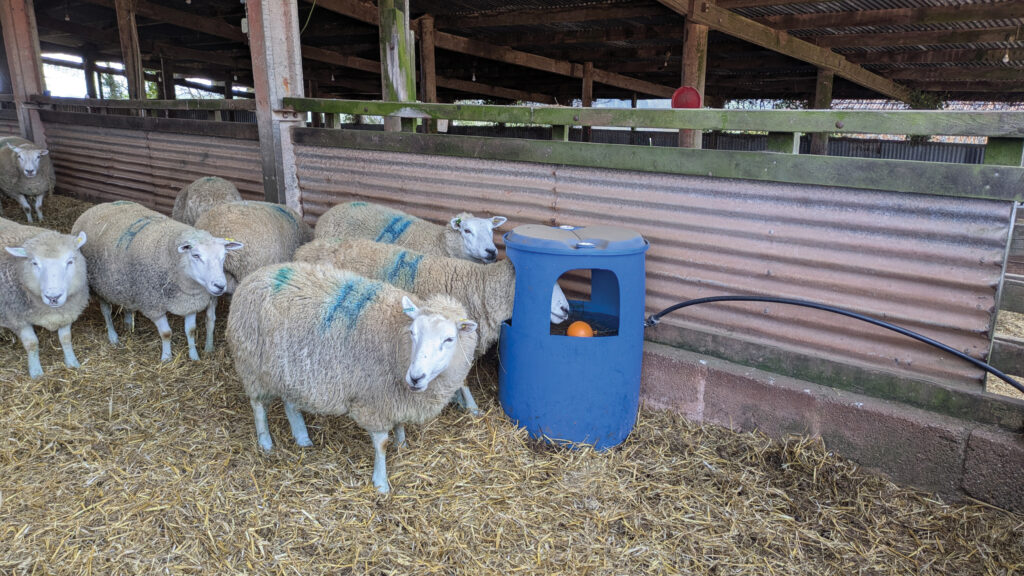
Drinkers don’t get simpler, cheaper, or quicker to make than those hydrating Ken Hopkins’ flock.
It took him just 20 minutes to cut three D-shaped openings in the upper half of a 200-litre plastic drum and fit a ball valve to keep them topped up without overflowing.
He says the creation has significantly reduced instances of fouled water and, handily, it can be moved while still full by simply looping a rope through the existing holes in the top of the barrel.
Steve Taylor’s gate fastener
© Steve Taylor
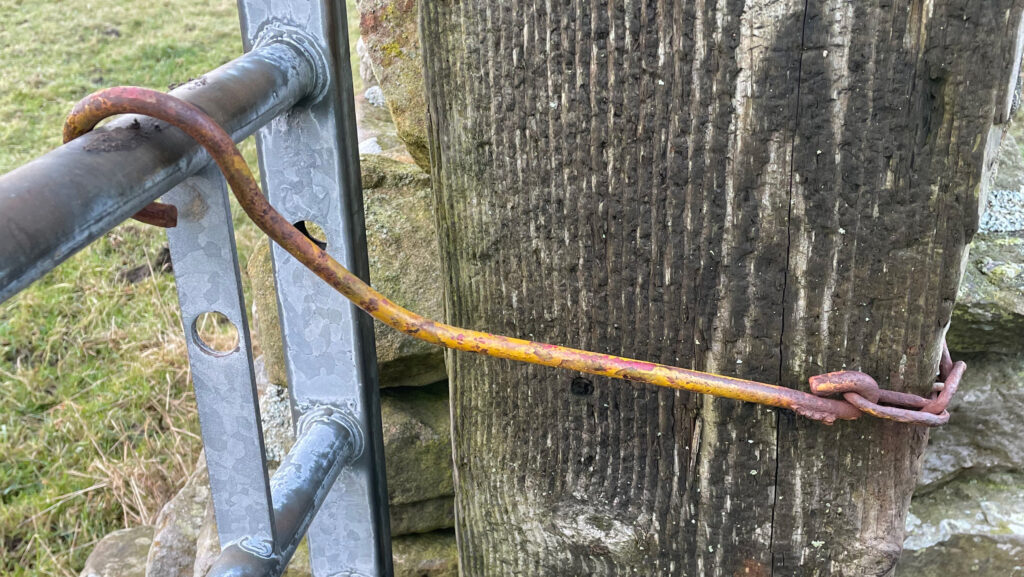
The latest addition to Steve Taylor’s “101 uses for a broken haybob tine” chronicle is the gate fastener.
Said tines are heated up in the workshop, bent into shape in the vice, and either attached to a chain at one end or coach bolted directly to the post.
The dimensions can be altered to fit any bar on any gate, he says, and, thanks to its ease of use, the low-tech recycling project has proved a hit with dog walkers around his upland hill farm in the Forest of Bowland, Lancashire.
Scott Smith’s sheep trough holders
© Scott Smith
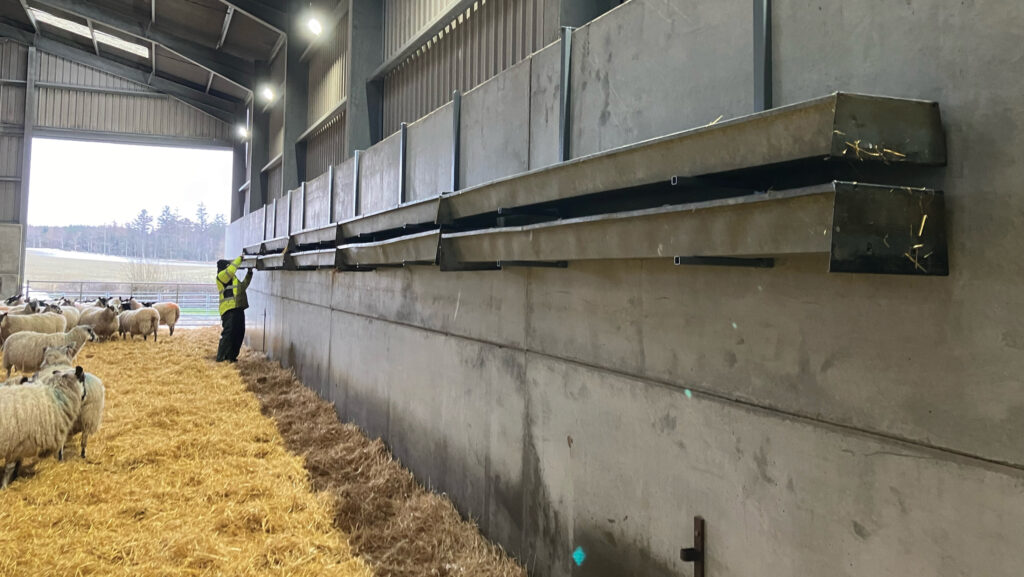
To prevent sheep trampling over feed troughs and risking injury, Scott Smith from Aberdeenshire crafted some neat brackets to store them when not in use.
These are fabricated from box-section steel, have space to accommodate two rows and hang neatly off the concrete shed sides.
Oliver Gilbert’s quad bike bollard
© Oliver Gilbert’s quad bike bollard
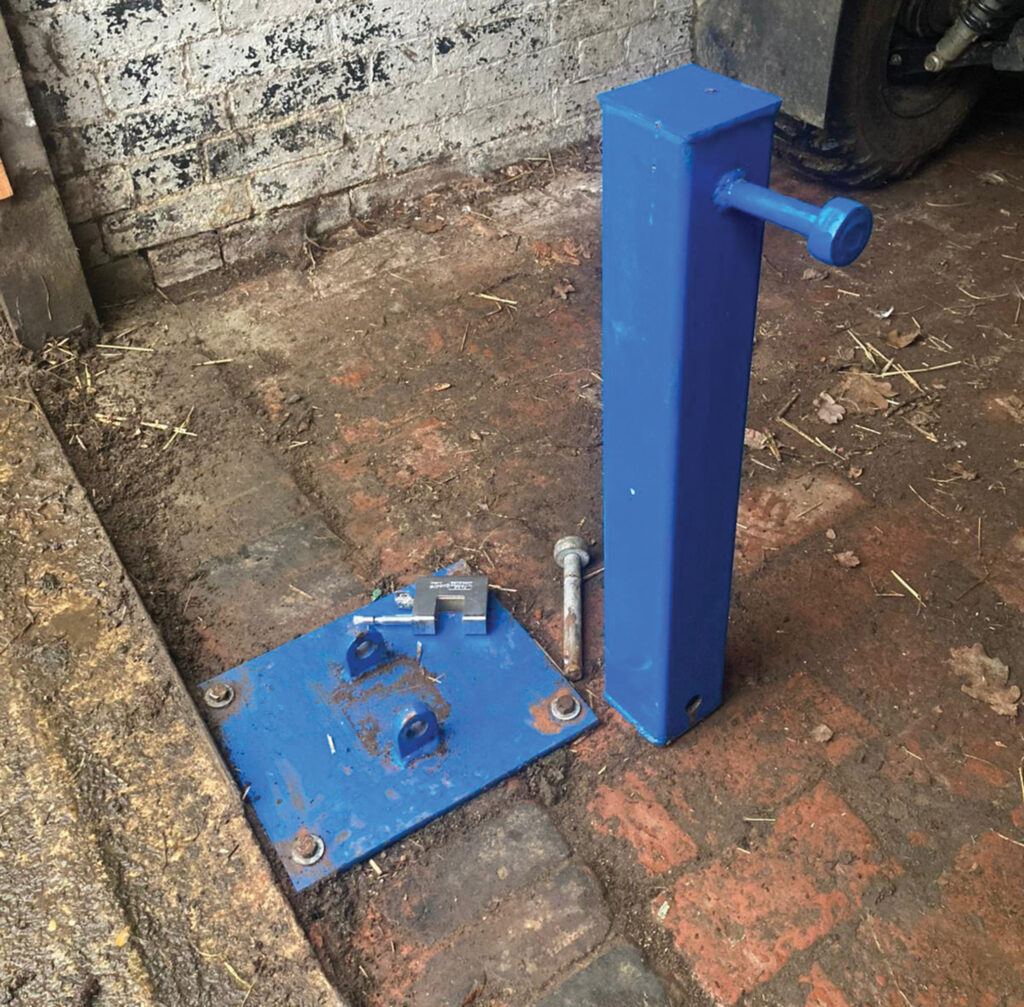
Keen to make his quad bike harder to pinch, Oliver Gilbert built a robust removable bollard that sits in the entrance of his storage shed.
The simple design comprises a base plate that’s bolted to the ground and central box-section pillar that’s secured using a pin and padlock.
Guy Prudom’s water trough syphon
© Guy Prudom
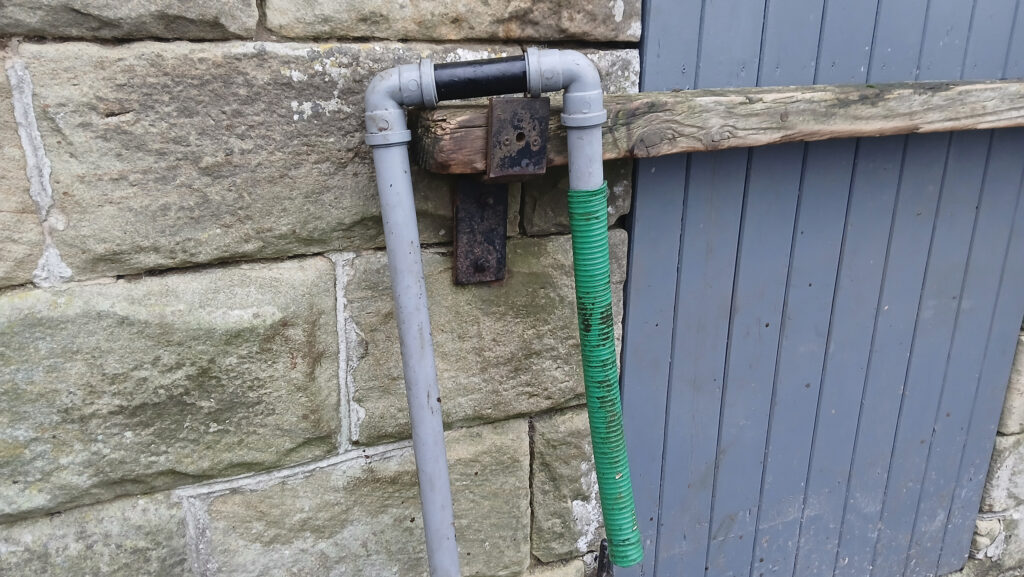
Thoroughly cheesed off by the sight of dirty water in troughs and its potential impact on livestock, Guy Prudom came up with a simple means of emptying it.
His syphon is made from spare 2in pipe, which he submerses before holding his hand over one end to maintain suction and sliding it over the trough edge.
This empties the water quicker than opening a bung and requires less effort than resorting to a bucket, meaning he can move cattle or check fence lines while he waits.