Tips for building the perfect mobile farm workshop
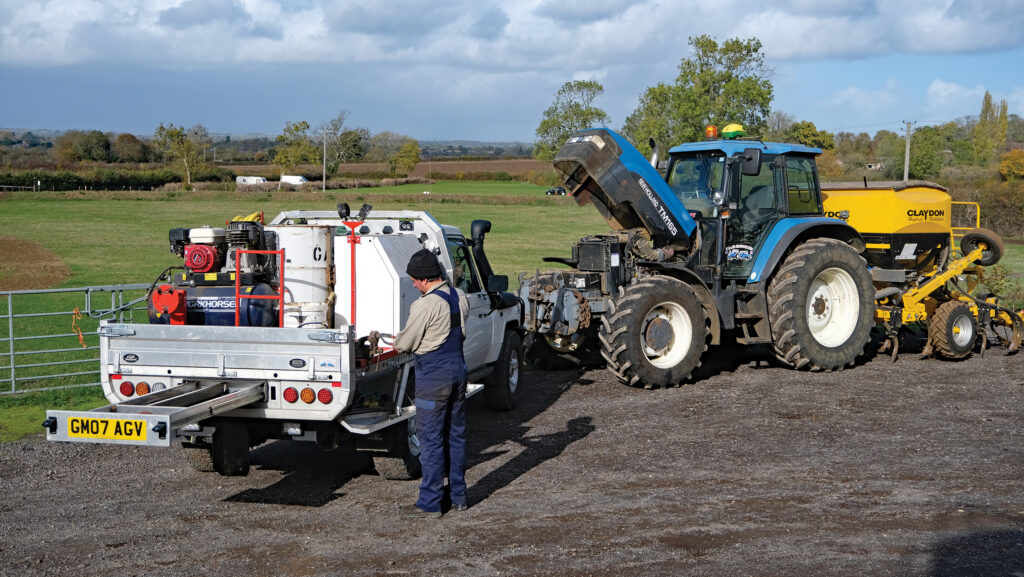 Tool storage, fuel and a fire-fighting kit have been slotted into this neat pickup tray back © James Andrews
Machinery rarely breaks down outside the workshop door, so it makes sense for the tools to do the travelling. We take a look at six nifty mobile setups.
See also: Top tips for upping the quality of farm workshop projects
IR Cradock and Sons, Wiltshire – Field service unit
Armed with tools, a fuel bowser and fire tender, IR Cradock and Sons’ field service unit has got most machinery needs covered.
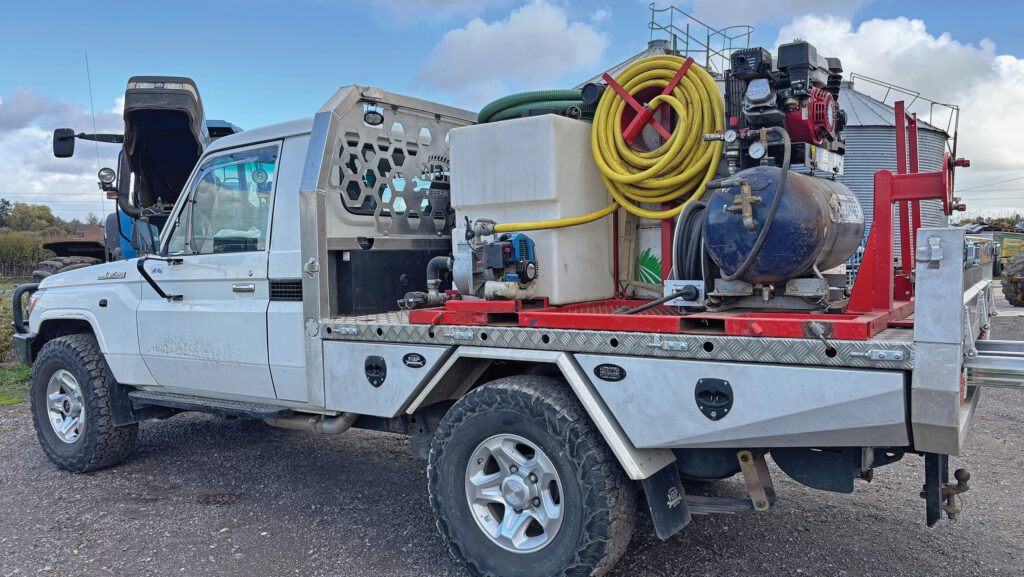
The multifunction rig, which was put together by Ashley Cradock, is built on a single frame with pallet tine slots.
This makes it easy to lift onto the Wiltshire farm’s imported Toyota Land Cruiser 70-series pickup whenever it’s required and tucked back in the shed when it isn’t.
© James Andrews
Once dropped into place, it is quickly secured to the truck’s custom tray back using hooks that locate into holes down the side.
The rear of the assembly is home to a vice and a Faic petrol-powered Workhorse compressor, along with a deck-mounted reel to keep the hose tidy. In front of these, Ashley added a large tool and equipment locker, a 205-litre diesel drum with pump and the fire-fighting unit.
This was created by marrying a 350-litre water tank to a 250 litre/min, two-stroke Hyundai pump and a 25m reel of hose.
Finally, there’s a telescopic mast with two adjustable LED lamps for lighting up the workstation and surrounding area.
Bespoke trayback
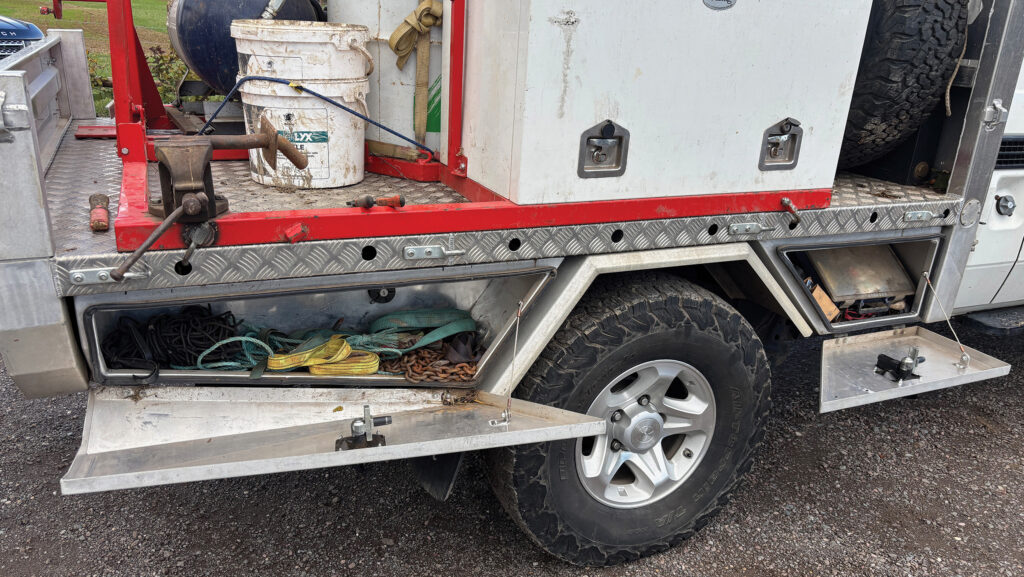
There’s plenty of extra tool storage in the Land Cruiser’s tray back, which was created by Ashley’s brother Benjy. He builds these to order in his workshop on the farm and sells them under the brand NBF Bespoke.
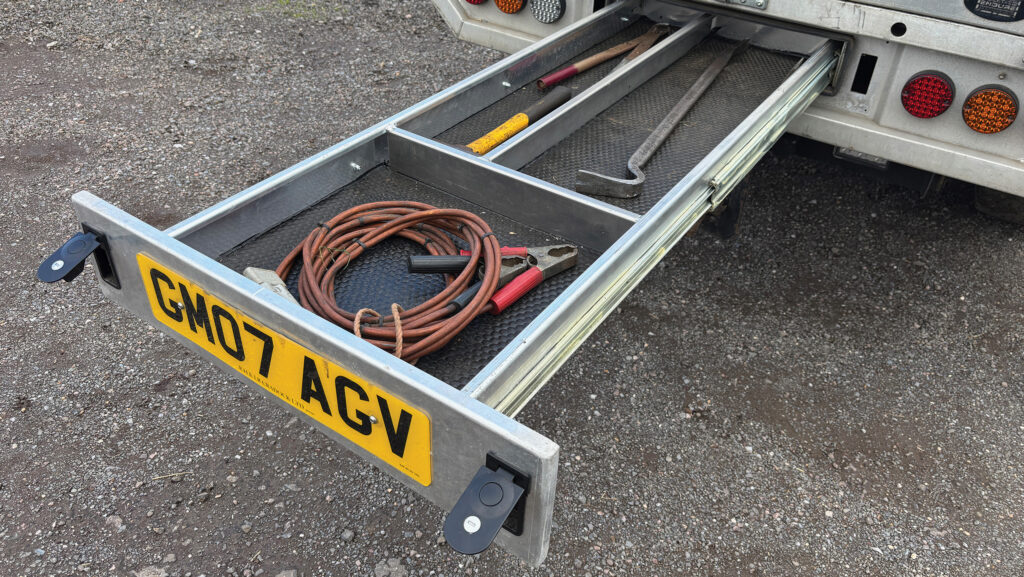
For the farm truck, he fitted front and rear under-tray lockers on each side, as well as a 1,500mm “trundle drawer” which is hidden behind the rear numberplate and glides out on runners.
All storage areas are waterproof and lockable to keep gear dry and secure.
© James Andrews
© James Andrews
When the service rig is removed, drop sides and a tailgate can be fitted to keep loose items contained.
There’s also a chunky headboard that protects the back of the Land Cruiser’s cab and allows long items of cargo to be carried.
For those keen to create a similar outfit, Benjy offers three standard styles of “ute traybacks” to suit Land Cruisers, modern single- and double-cab pickups and smaller classic models.
In addition to the under-tray lockers, buyers can add small, medium or large upper cabinets, which can be decked out with shelves, storage boxes and rails for mounting assorted equipment.
It’s also possible to have a water tank incorporated into the headboard, a rear hoop and various on-board power systems. Prices start at £9,500, including fitting.
Anssi Mennala, Jamsa, Finland – 4×4 Mercedes Vito workshop and operations centre
© James Andrews
When Finnish arable farmer Anssi Mennala decided to mobilise his workshop, he went all out and added an office too.
This means he can carry out repairs, run his business and operate the farm’s high-capacity wood-fired grain drier from the side of a field.
The host vehicle is a 2020 four-wheel-drive Mercedes Vito combi van that started out life with the police.
It had been well used with 300,000km (186,000 miles) on the clock, but a comprehensive service record and attractive €11,000 (£11,980) price-tag meant he was willing to give it a go.
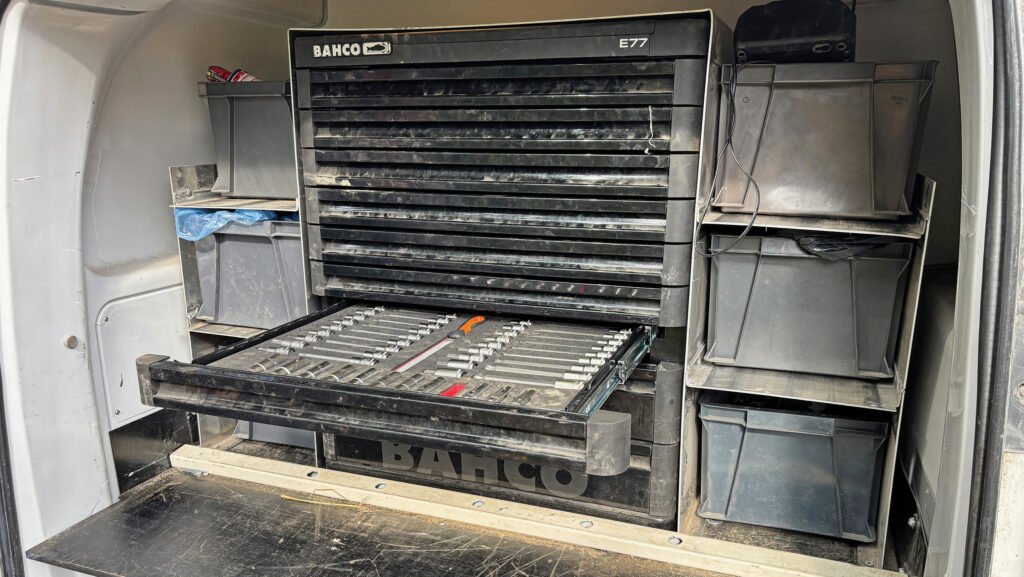
For the van’s workshop role, he decked out the rear compartment with a workbench, shelving and a large Bahco toolbox in the centre.
Rather than fit permanent tool and spare parts storage, Anssi created slots for removable boxes that makes it quick to change the contents depending on the job he’s doing.
© James Andrews
The ones that aren’t in use can then be stacked neatly in the main workshop until they’re required.
In a similar vein, Milwaukee Packout boxes keep power tools well organised and speedy to swap around.
Thanks to a large inverter, he’s got 230V power for running equipment and topping up power tool batteries. He can charge five Makita 18V packs in one go, using a multi-charger that’s mounted on a bracket he made with his 3D printer.
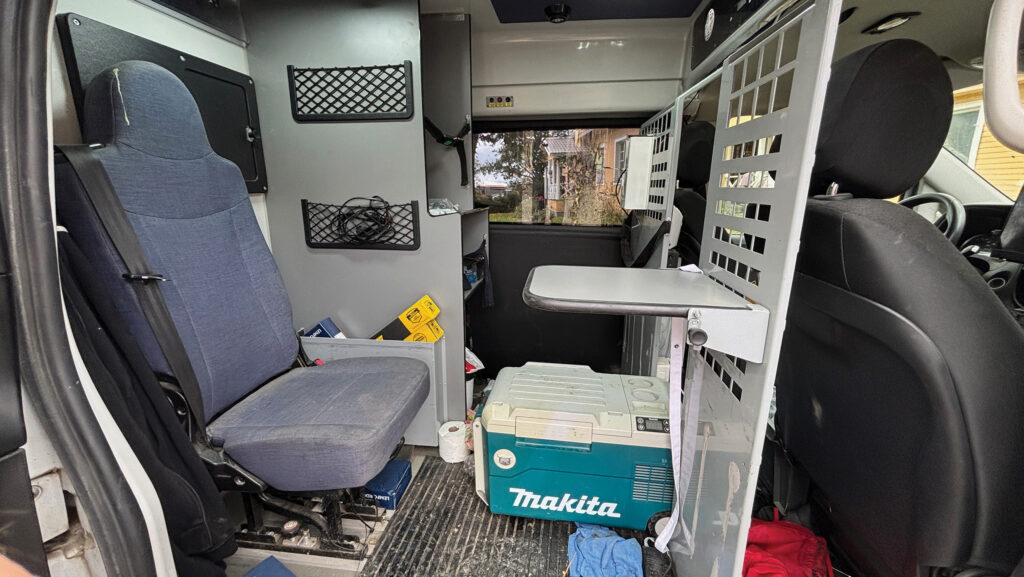
The mid “office” section van is home to a seat, fold-out table, extra shelves and a mini fridge, providing a sheltered place to work.
It’s also home to the inverter (a 700W Victron Energy Multiplus), a 5G router and a compact Lenovo computer.
The latter is controlled from a touchscreen display that can be used when perched at the table or, thanks to another 3D-printed bracket mounted on the dashboard, from either of the front seats.
The primary reason for having this is so that he can control his Antti BioHeater grain dryer, but it allows him to do most office jobs remotely.
Valtra’s Connect system is usually fired up on it too, so that he can keep tabs on his tractors and check when they need fuel or a service.
There’s been no scrimping on lighting either, with a raft of flashing beacons to make it visible when escorting wide machinery and a bank of exterior floodlights. All of these are controlled from a touchpad that’s screwed to the dashboard.
Four-wheel-drive Vito vans like Anssi’s aren’t sold in the UK, but a similarly sized alternative is the VW Transporter 4Motion.
Aaron Scott, Northumberland – Ford Transit mobile workshop van
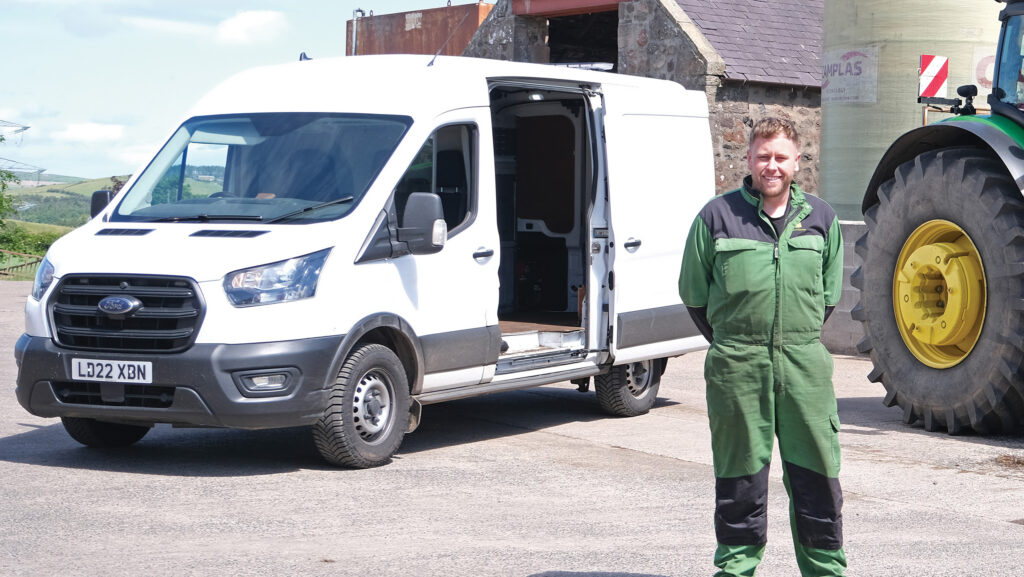
Aaron Scott © James Andrews
A Ford Transit L2H2 is the mobile tool-carrier of choice for Aaron Scott, workshop manager on the Lilburn Estate in Northumberland.
It’s considerably larger than the ubiquitous Transit Custom, meaning there’s ample space for tools, spare parts and a decent workbench with a vice. And, thanks to a switchable four-wheel-drive system, it can happily venture off the beaten track.
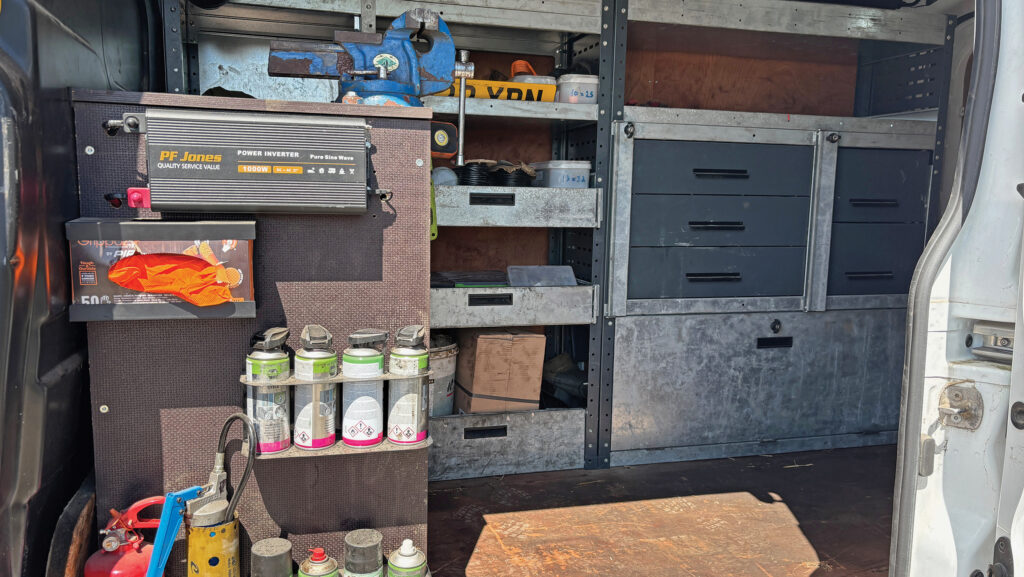
The right-hand side of the sizeable cargo area is home to a drawer and shelving unit and he’s tucked a generously-proportioned toolbox under the front-mounted work bench.
© James Andrews
There’s also sufficient floor area for him to work inside, giving some welcome shelter when patching up broken kit on a windy hillside.
Cans of lubricant and paint are stowed neatly by the side door, along with a grease gun, fire extinguisher and a box of nitrile gloves.
The van is rigged up for 240V power thanks to a 1000W PF Jones inverter, which gives the option of running corded power tools and allows batteries to be charged on the move.
This doesn’t provide enough oomph to run high-powered gear, so he carries a Mosa Magic Weld150 petrol-powered arc welder with him.
Eastern Counties Straw, Hertfordshire – Field service trailer
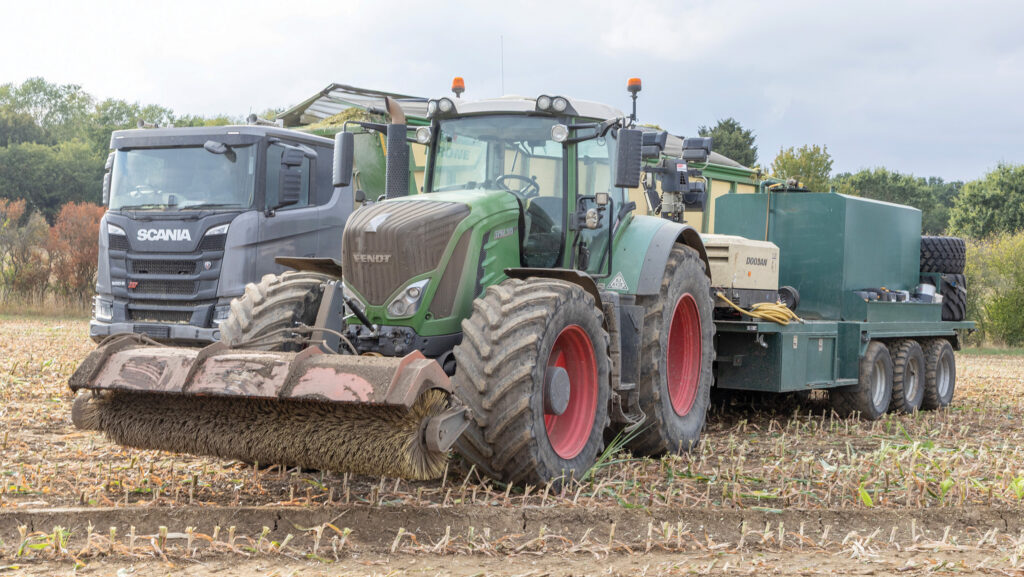
© Geoff Andrews
When Joe Williams and his team knuckle into the silage campaign, they need a way of keeping their three choppers and associated kit running sweetly. This is where their custom-built field service trailer comes in.
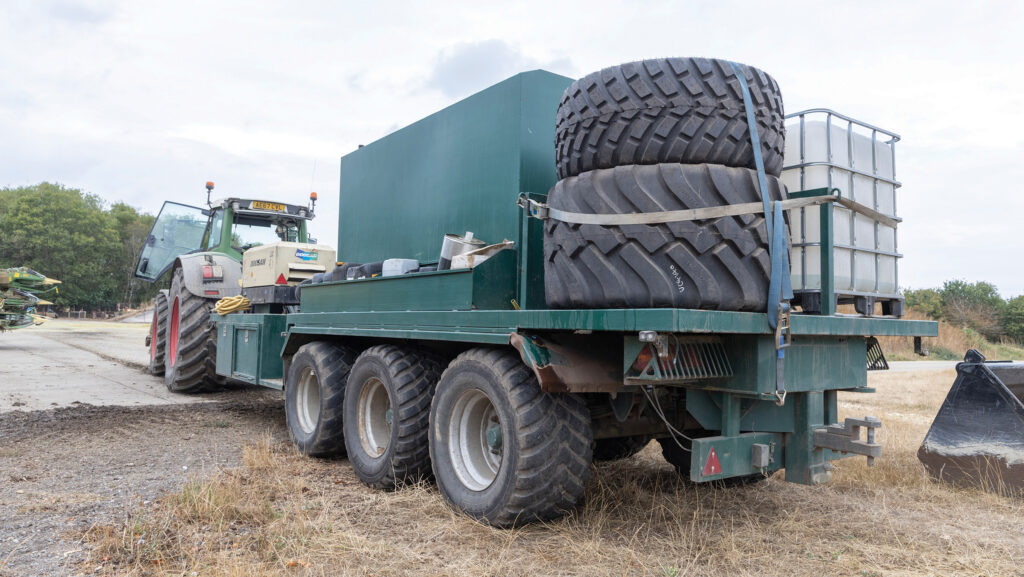
The starting point for the build was an old tri-axle spud box trailer, which they stripped back to the chassis rails before adding their in-field essentials.
A sizeable portion of deck is home to a 6,000-litre diesel tank, with storage for grease and oils on the side.
There’s also room to strap down two IBCs – one for AdBlue and another for clean water, which can be hooked up to a pressure washer.
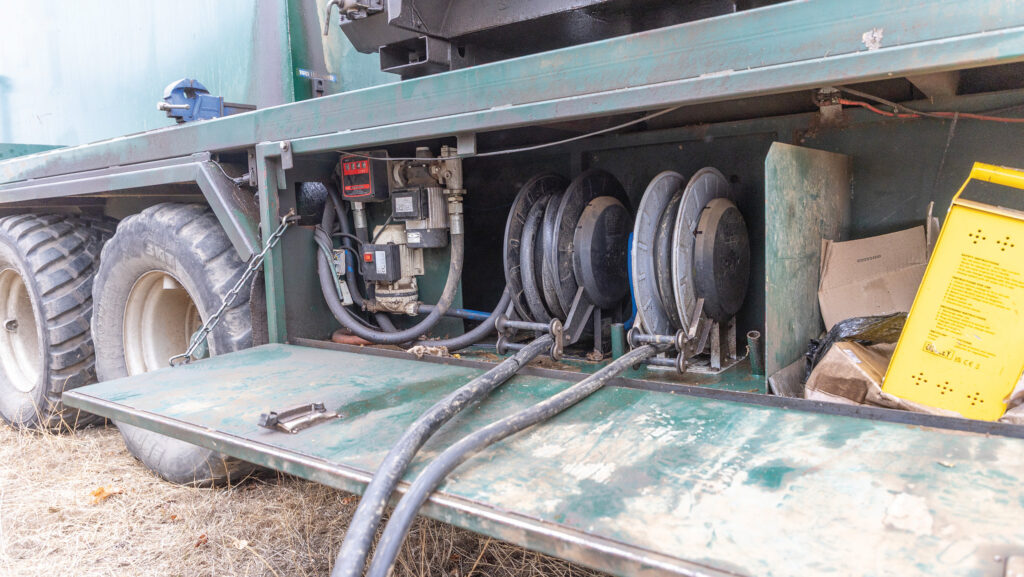
Power to run 12V diesel and AdBlue pumps, as well as 240V equipment, comes from a Doosan generator that has its own tower lighting rig and compressor.
© Geoff Ashcroft
© Geoff Ashcroft
This illuminates the trailer and surrounding area, as well as providing plenty of air for blowing off equipment and inflating tyres.
In addition, Joe fitted two lockers for storing tools, a vice, a corner to carry wheels and, to make sure the team is well fed, an integrated gas barbeque.
Typically, the trailer is pulled by a Fendt 939, which is teamed with a sweeper brush to keep roads clean.
The unit appears to have most in-field maintenance tasks covered, but Joe is keen to have more work space and storage for spare parts.
To achieve this, he’s converting an HGV fridge trailer into an accommodation and mobile workshop unit.
The front section will have sleeping quarters and the rear will be home to the workshop. This will have a sheltered area and will be powered by a three-phase generator that’s capable of running large welders and a plasma cutter.
There will also be ample space for storing spare parts, which he intends to carry in removable stillages. When stocks are depleted, or they want to switch to a different job, these can be quickly swapped over using a loader.
Front weight toolboxes
© James Andrews
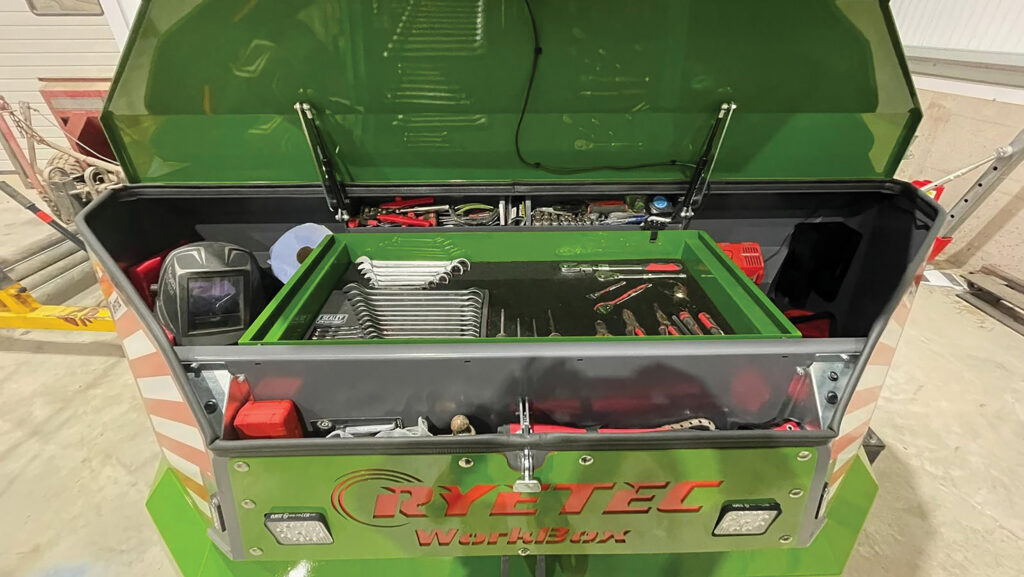
A simple way of taking the workshop to the field is to buy or make a unit that hooks to a tractor’s front linkage.
Yorkshire firm Ryetec has plenty of form in this arena, building front weight and storage boxes with a prodigious number of options.
Buyers can add tool drawers, folding or fixed vices, mounting points for grease guns and an inverter that delivers 240V. It’s even possible to fit a hydraulic-driven pressure washer, a fuel bowser with a 12V pump and hose, or a night heater for drying clothing.
In addition to the workshop and servicing kit, buyers can spec a spade holder, wrap carriers, slug pelleter mountings and a centre marking pole. Finishing touches include custom paintwork, lights and logos, including illuminated LED versions.
Prices start at £4,075 for a standard Weightbox weighing from 750 to 1,500kg, or a Workbox that swaps the ballast for tool trays. There’s also a compact range of boxes that start at £3,250.