‘Dad’s Army’ of farmers share combine for cheaper harvesting
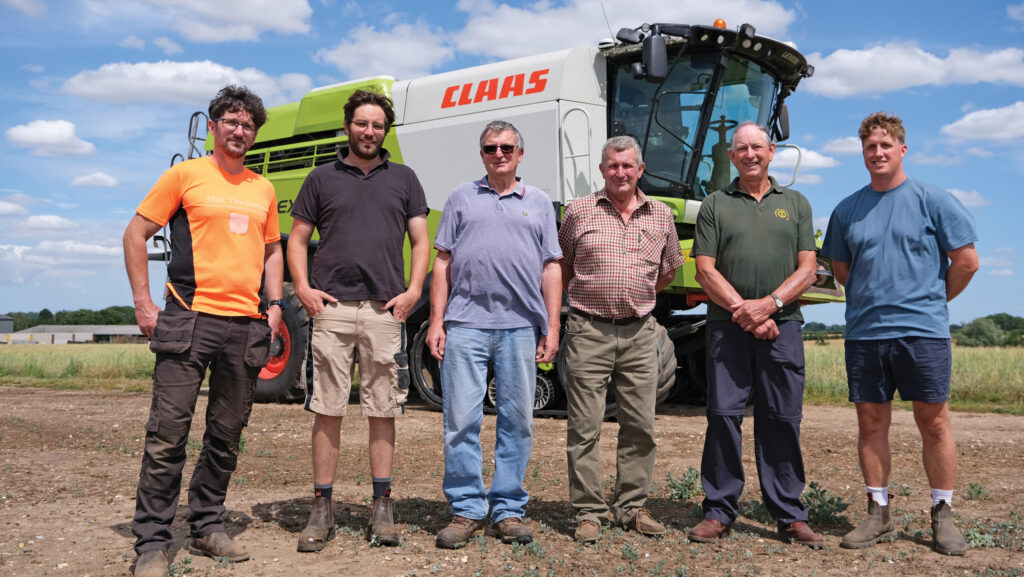 From left: Drew Southgate, Neil Hall, Stewart Southgate, Peter Hall, David Garrod and Chris Howes © James Andrews
 For decades, Park Farm, Peels Farm and Church Farm handled their own harvesting operations. Machinery was more affordable, the workforce larger and time pressure less intense.
But with the balance shifting, these three farming neighbours in Rockland St Peter and Caston, Norfolk, decided to pool their resources.
See also: Cumbrian contractor cuts costs with revamped retro tractors
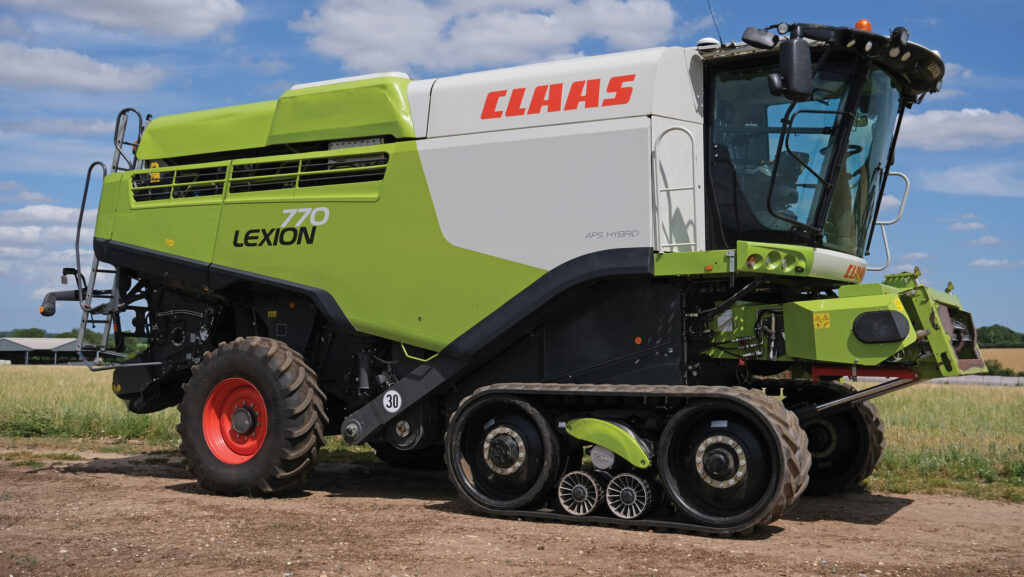
This led to the purchase of a Claas Lexion 770 TT, which makes light work of their collective 445ha of arable cropping.
In turn, its three pension-age drivers – Stuart Southgate (74), David Garrod (75) and Peter Hall (68) – are able to get the job done without pushing themselves too hard.
After Peter suffered a heart attack last year and Stuart developed chronic asthma, this has become all the more important.
Another benefit of the abundant capacity is that it eliminates any concerns about which farm is harvested first. In fact, they now treat the harvest as one, rather than three individual operations.
“We can cut the entire spring barley area in about four easy days, so no one has to worry about being left until last,” says David.
The speed at which they’re able to cut, combined with low annual rainfall, means grain moisture is of little concern either.
“We’ve got a couple of old mobile dryers between us, but we’ve got no intention of using them – I think the last time one of us had to was in 2008,” says Peter.
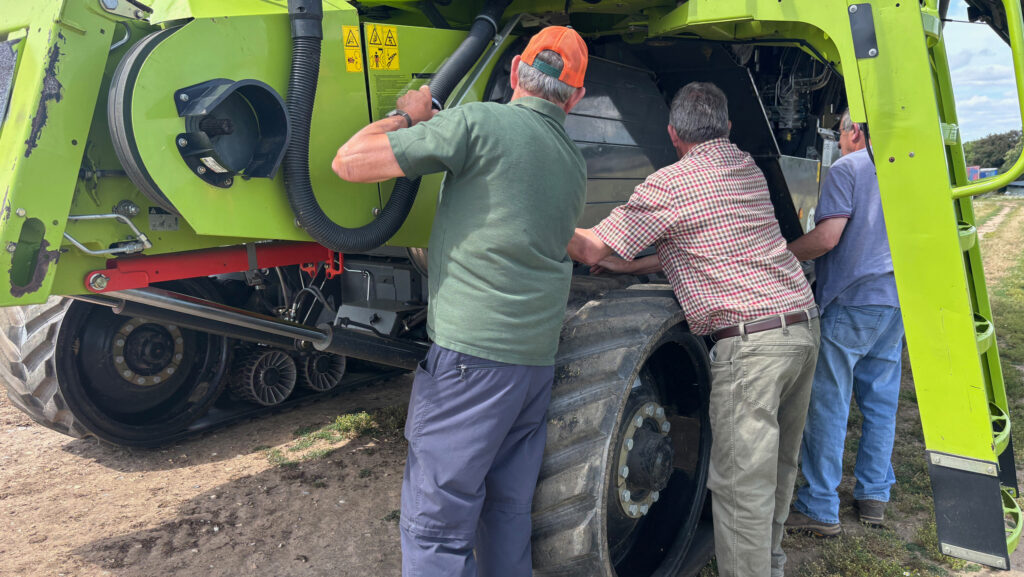
David, Peter and Stewart on maintenance duties © James Andrews
To keep their hand in, each member of the trio drives the combine on their own farm, while the other two handle grain carting duties.
With 16t trailers at their disposal and minimal travelling time, they have little trouble keeping up.
“We don’t have to put in long days – 11am starts and 8pm finishes are pretty standard – and we’ve got the time to enjoy it again,” says Stuart.
“It’s brought back some of that old harvest camaraderie that we’ve lost since machinery has got bigger and fewer people are working on farms.”
Daily chores such as greasing and blowing down are shared out too, so that no single person has to shoulder the burden. Having the “Dad’s Army” crew handling most of the harvest operation has freed up the younger generation to concentrate on the more backbreaking task of looking after livestock.
Stuart and son Drew (Park Farm) have 2,000 pigs, David and nephew-in-law Chris Howe (Peels Farm) have 20,000 pigs, while Peter and sons Neil and Brendon (Church Farm) have 400 beef cattle.
In addition, the jointly owned harvester has freed up enough manpower to run balers directly behind and lug the bales straight back to store.
Starting small
The sharing of harvest equipment dates back to 2015 when Park Farm and Peels Farm clubbed together to buy a five-walker Claas Lexion 540.
They ran it successfully for eight seasons and when the time came to replace it, the Halls at Church Farm were keen to join in too.
This required a serious jump in output and, to make sure they were well covered, they decided to invest in a large hybrid machine.
Brand new ones were a bit too steep, so they settled on a 2019 Lexion 770 with five harvests under its belt, which set them back £240,000.
“To start with, I thought that a 40ft header would be far too big and clumsy, but its surprisingly easy to manage, particularly with autosteer,” says David.
© James Andrews
As it was simpler for ownership and insurance to sit with one business, Park Farm took the machine on.
Drew did all the paperwork and manages the machine day-to-day, but the purchase price was split three ways according to the area each farm needs to cut.
This meant Park Farm and Peels Farm each footed 30% of the bill, with Church Farm covering the remaining 40%.
Insurance, maintenance and repair bills are also divvied up in the same proportions and they take it in turns to store the machine over winter.
That said, there is a bit of give and take depending on who’s got the most space.
When it comes to fuel, the policy is that it arrives and leaves each farm full of diesel.
“This can be slightly annoying when we make a move part way through the day, as we don’t have a bowser,” says Peter.
As a result, they have to drop the header off, drive back to the relevant yard to fill and hook back up.
“The thought of it is the worst bit and, in reality, it doesn’t take that much time out of our day.”
Making it work
The secret to the success of this arrangement is that everyone gets on well and has a similar mindset.
And because all three farms have relatively low weed pressure, there are no concerns over contamination.
However, to protect all parties in case anything does go wrong, they have a formal joint venture agreement.
This was drawn up by Ceres Rural at a cost of about £2,000 and clearly outlines the conditions of their arrangement so that there’s no ambiguity.
“Hopefully, we’ll never need to use it, but it’s reassuring to know that it’s there if we ever do,” says Drew.
For more run-of-the-mill, day-to-day communication, a WhatsApp group ensures that everyone knows what’s going on.
“Two-way radios are great too, so everyone knows where trailers, balers and other equipment is located,” says Drew.
“The combining trio also regularly use them to chat about the current harvest and ones that have gone by – it’s been great to bring them together in an industry that can be very isolating and lonely.”
Maintenance and repairs
Each season, the combine gets a thorough service from local dealer Cranworth Farm Services, which is split three ways in the usual proportions.
Normally, this is a straightforward process, however, this season they had the added expense of straightening the drum and fitting a new concave.
This wasn’t down to their own driving, but that of the previous owner who’d had a penchant for gobbling big stones.
“We thought Manns had gone through the machine and given it a clean bill of health, so we were pretty miffed that this hadn’t been spotted,” says Drew.
“The lorry driver that delivered it also crumpled some of the bodywork on a tree and we’re still waiting for a replacement panel.”
The bill for the drum repairs and new concave will likely run to more than £10,000 which, again will be shared among them.
Before this unforeseen expense, they’d planned to keep the combine for five years and trade it in for a newer model.
However, to get their money’s worth out of the new parts, they’re now considering hanging onto it for a little longer.
Other shared equipment
The success of combine sharing has encouraged the three farms to buy other machinery collectively.
This is particularly beneficial for equipment that’s used too infrequently for them to justify buying individually.
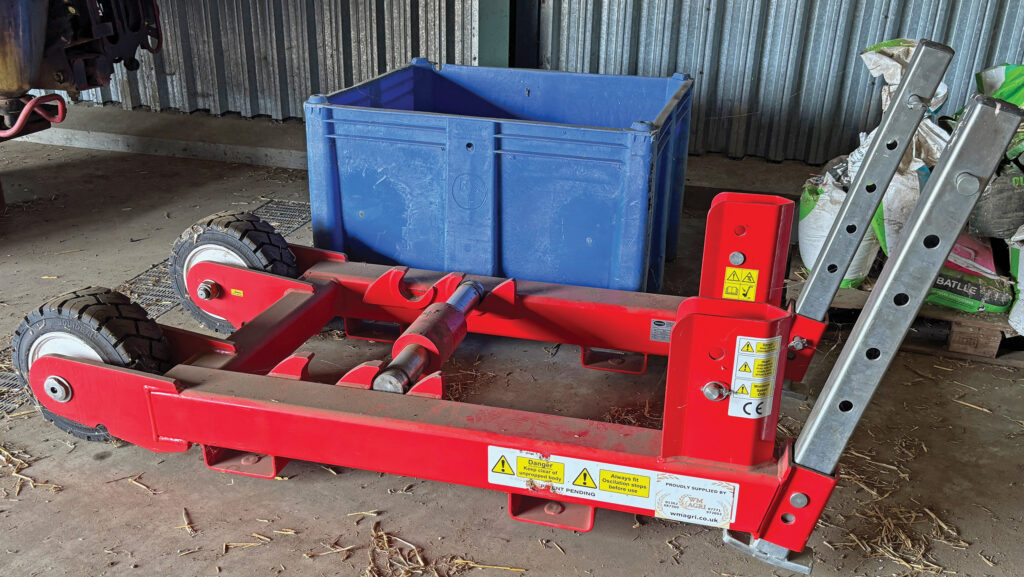
Recent examples include an S-S Engineering drain jetter and a Trakjak, which makes it much quicker and safer when swapping tractor wheels.
Not all parties have to get in on the deal if they don’t want to, so it’s a very flexible arrangement.
For example, Peels Farm and Park Farm share a set of Bednar discs and Cousins rolls, while Church Farm runs its own cultivation kit.
© James Andrews
Drew also does some contract work for the other farms, such as big square baling and drilling.
“Neil will probably end up driving the drill at some point, so I’ll be sending him a contracting bill and he’ll send me one for labour,” he says.
“We all try and help each other out and it’s a great way of future proofing our businesses.”
Dad’s Army’s tips for successful combine sharing
- Make sure you all get on and trust one another
- Have relatively clean or equally dirty crops
- Buy the biggest machine you can
- Get a proper agreement drawn up…
…and hope you never need to look at it.