

Oxbo’s AutoHarvest puts cameras in control of crop quality
 © Adam Clarke
 A harvester operator can watch the crop coming in, keep an eye on the sample or check what’s being left behind.
Doing all three continuously, while steering, unloading and turning on headlands, is a much tougher ask.
That’s the challenge Oxbo – and no doubt some of its competitors – is seeking to overcome with its camera-based AutoHarvest system.
See also: High-tech potato-grading line ups profits for Cornish grower
The Dutch company’s technology, which assesses performance and adjusts the machine automatically, has already reached customers running berry harvesters, and vining peas are now offering a proving ground for other applications.
The concept is straightforward: identify what’s passing through or escaping from the machine, compare it with an acceptable threshold and alter settings if performance slips.
However, putting that into practice in the sometimes hostile environment around a mechanical crop harvester’s working components is easier said than done.
Five sets of eyes
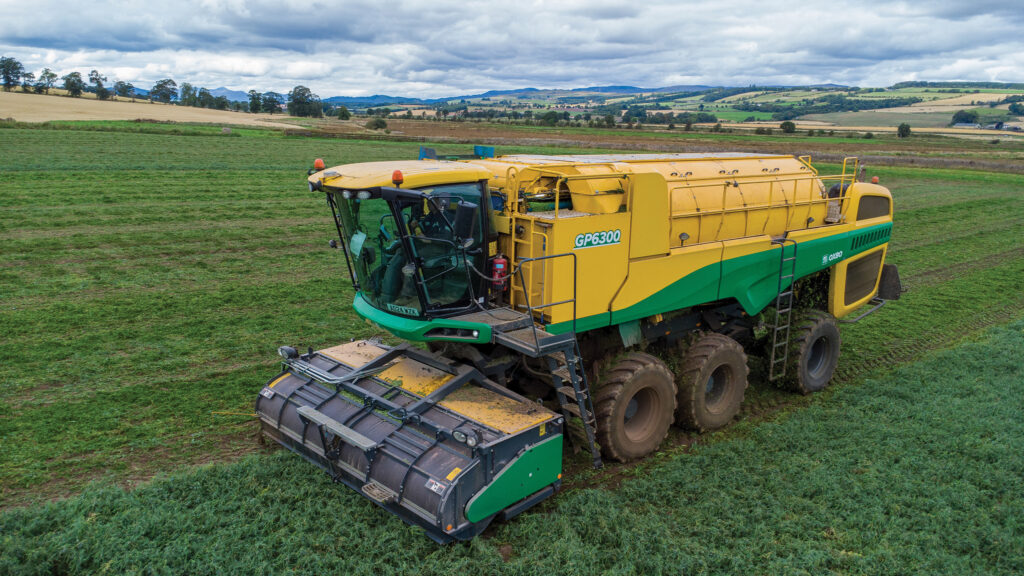
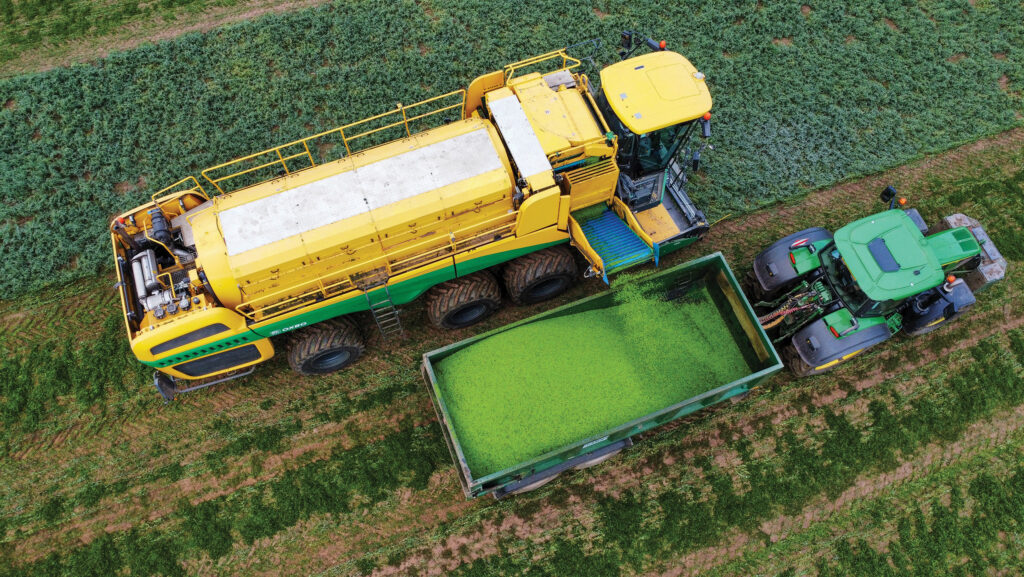
Farmers Weekly recently visited a prototype Oxbo pea harvester working in Perthshire.
The viner – badged and based on the company’s GP6300 launched in 2025 – is part of a project aimed at consolidating three Oxbo models built in separate factories into one platform.
The new concept uses a scrubber (or friction) threshing system instead of the impact-style version common to previous iterations.
© Adam Clarke
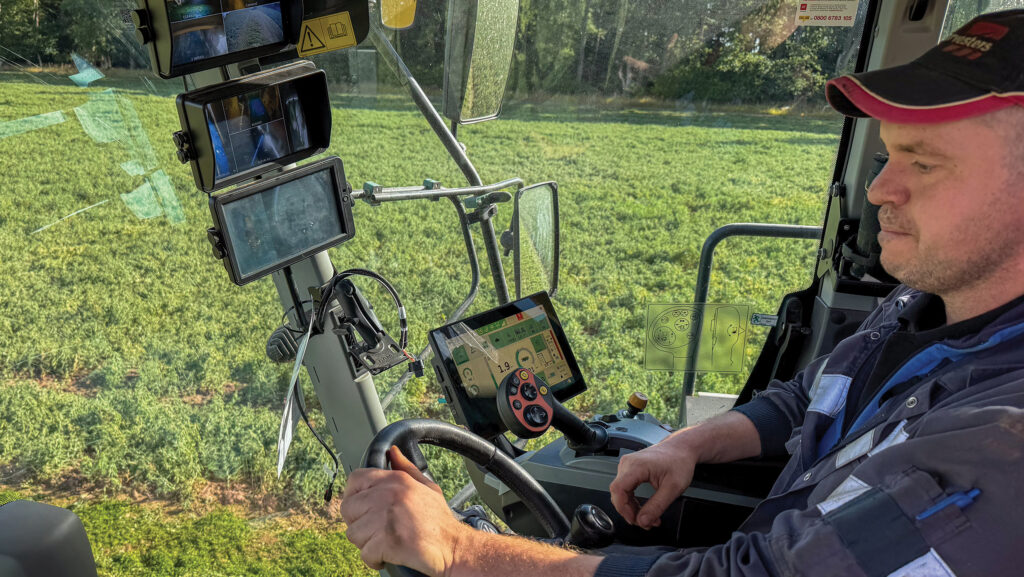
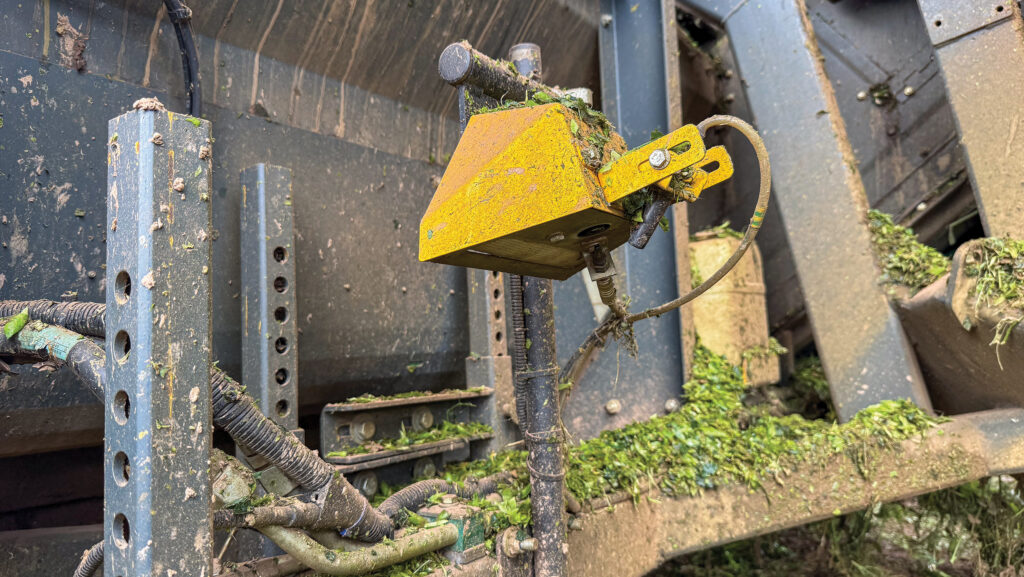
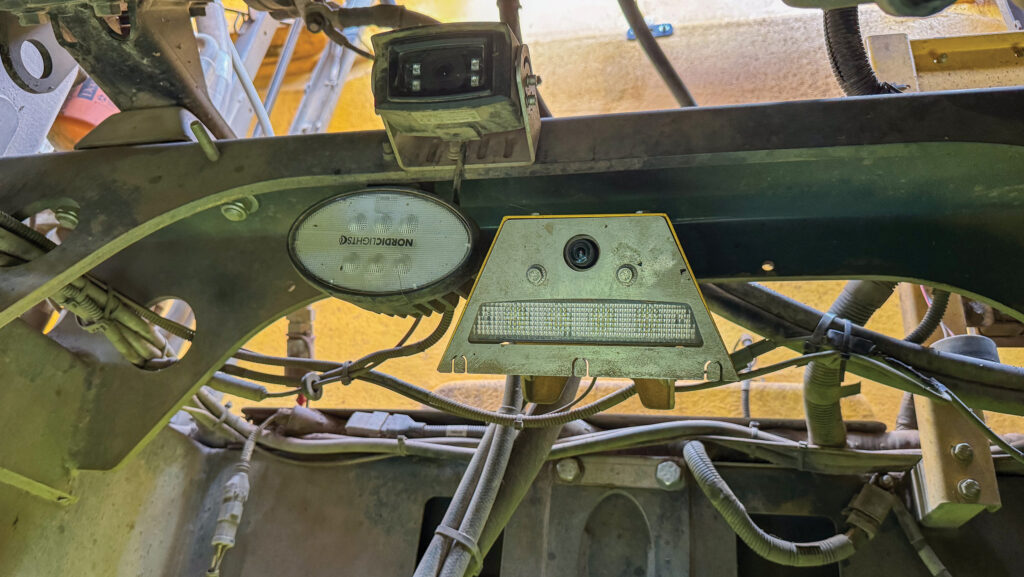
As well as revamping some fundamentals, it has been armed with five AutoHarvest cameras, dotted around key working areas to assess losses and crop quality.
Three of the cameras watch the lower part of the machine: behind the picking head, at the rear discharge and on the left-hand cleaning apron.
They are identifying peas amongst discarded material, or peas and pods left behind by the picking head. Two more cameras look at the crop before and after cleaning, the latter as peas enter the hopper.
Identifying damage
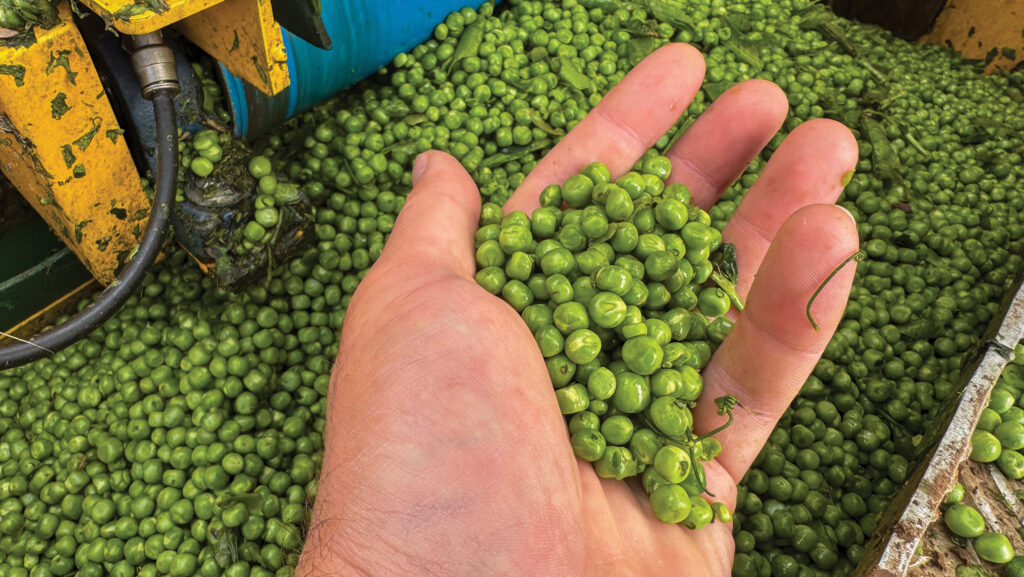
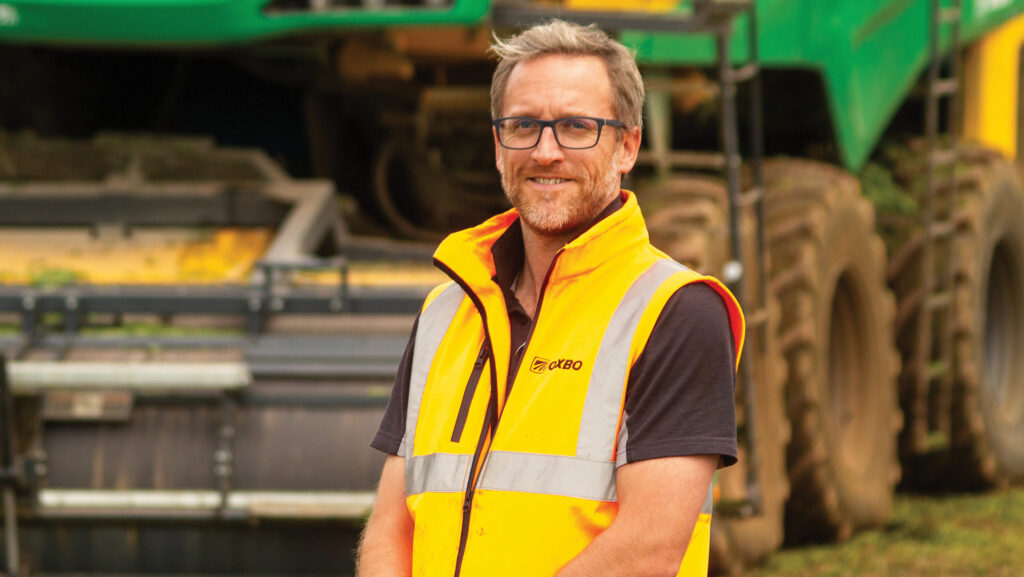
These digital eyes assess unwanted material and the final camera also identifies damaged peas, explains Oxbo’s UK sales manager, Mark Croal.
“The model is trained to identify the difference between a whole pea, a half pea and a split pea,” he says.
The cameras take pictures every few seconds. These are then analysed by an image-recognition model to provide information that the control system uses to decide whether an adjustment is required.
© Adam Clarke
For example, too many split peas could prompt a reduction in threshing aggression, but backing off too far could leave more crop escaping from the rear, creating another problem to solve.
“The ambition is to manage that balance continuously, rather than rely entirely on an operator spotting a change and finding time to respond,” adds Mark.
Research foundations
A collaboration with Wageningen University & Research, through the NxtGen Hightech funding programme, helped Oxbo investigate what was, at the time, relatively unfamiliar technology.
The work covered camera selection, recognition models and practical questions such as whether software licences suitable for research would also permit commercial use.
© Adam Clarke
Researchers could explore approaches, then help build a proof of concept. Oxbo’s role was to turn promising results into a usable field product, according to the firm’s systems engineer Sabine Havermans.
Oxbo has since taken development forward independently, drawing on experience gathered across several crops.
“That’s when we started to train the models, and every year we search for particular situations in the field that make the model even better,” she says.
Keeping control simple
One early ambition was to create a mathematical model of the entire pea harvester, predicting the result of changing individual settings.
However, field conditions made that difficult, as the same crop and settings could produce a completely different result depending on whether it was wet or dry.
Instead, the current approach uses a feedback loop, so, if the cameras identify unacceptable performance, the system works through settings known to influence it.
© Adam Clarke
“The challenge is improving one aspect of performance without compromising another. We’ve kept the approach deliberately simple so it can respond to changing conditions in the field,” says Sabine.
Changing several things together would make it harder to establish what had worked.
“If you start adjusting everything at the same time, you have no clue what is actually happening anymore,” she adds.
For now, AutoHarvest’s intelligence lies in recognising the material and assessing the outcome, rather than predicting every response in advance.
Future versions could potentially anticipate adjustments using experience from previous passes, but Sabine believes the relatively simple approach has been important in the progress so far.
Tough conditions
Camera durability – basically getting equipment to survive a harvesting season – proved challenging, even before considering whether it could identify crop reliably.
The recognition models also need continued attention as unfamiliar situations emerge.
Two development machines have worked in Belgium, the Netherlands, Sweden, England and Scotland.
Moving into another region could introduce material or conditions absent from the training images.
© Adam Clarke
For this reason, Sabine expects Oxbo to retain training machines to improve the models, rather than treat their development as finished once a product is released.
There is a human challenge, too. Some operators question whether automation can match their judgement; others worry about being replaced.
“We can never be as good as an experienced operator that is super-alert, but that sharpness wanes and not all have the know how to harvest peas.”
Potato potential
Potatoes have become a growing part of Oxbo’s UK business, and the firm sees great potential in bringing the technology to its fleet of spud lifters.
Mark says initial development is underway and focused on monitoring. This means finding the most useful camera positions and establishing what the equipment can see before progressing to automatic control.
Mark Croal © Adam Clarke
Web speeds and working-table angles are among the possible adjustments he suggests could be automated, but these remain potential opportunities rather than confirmed commercial functions.
Sabine is cautious about suggesting when this technology may arrive. What Oxbo can transfer is its experience of cameras, positioning, recognition models and the development so far in berries and peas.
Peas are small, travel quickly and can disappear amongst considerable amounts of discarded material, yet the cameras can still identify damage and losses.
Lifting a potato crop out of the ground will bring different challenges, particularly in distinguishing tubers from soil and dealing with crop that is heavily coated. But she is reluctant to assume those difficulties will be insurmountable.
Proving the payback
Pricing and the sales model for Auto Harvest remain undecided, although Mark envisages an upfront purchase and a possible annual subscription to support updates and further development.
Whatever the cost, evidence of a financial return will be essential, particularly as all harvesting machinery becomes increasingly expensive.
For peas, Sabine says Oxbo has promising observations and theoretical expectations on increased efficiency, but not yet the complete supporting data.
The berry application is further ahead though, with harvesters able to increase speed when conditions permit and slow when performance deteriorates, increasing efficiency.
This offers an advantage over maintaining a fixed speed chosen to protect quality, which remains the norm. “It means the machine can have a much higher throughput,” she says.
More development ahead
Mark expects pre-series pea machines continuing to work with selected customers through 2027 before a full commercial launch the following year, although this could be subject to change.
Seasonality also complicates and slows the development work, as engineers need crops to test their changes.
In recent seasons, the team has travelled to New Zealand for pea harvesting to extend opportunities.
Green beans are another crop harvesting target, particularly for detecting picking losses, adds Mark.
“We are aware of the potential and wherever we can see value for us and our customers, that’s where we’ll be focusing our efforts.”