

Slick Tabula telematics simplifies multi-brand fleet management
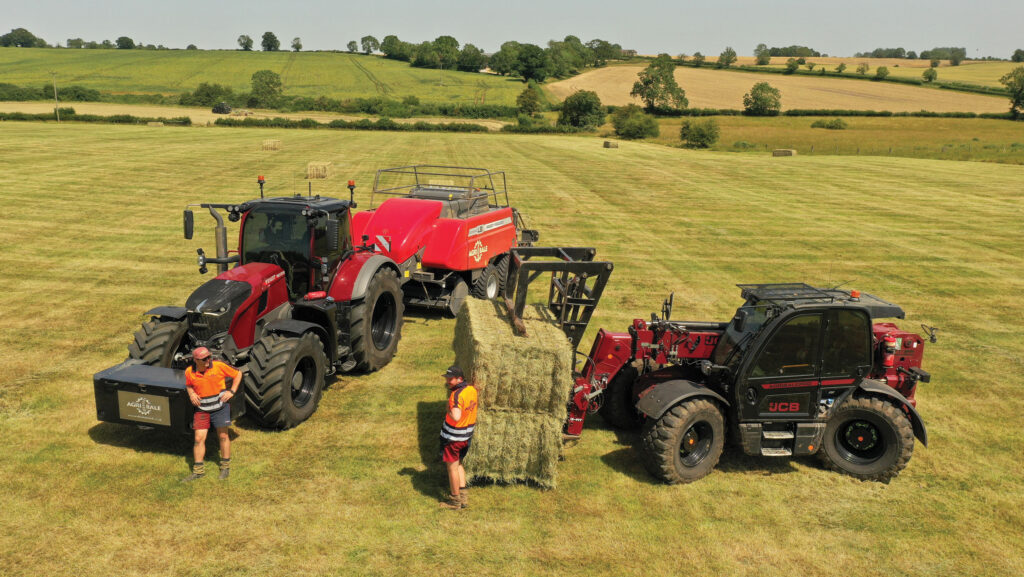 © AgriBale
 As the birds chirp each harvest morning, and a posse of bleary-eyed Kiwis tuck into their cornflakes, Doug Price fires up his real-life version of Farming Simulator.
And by the time they’ve kicked off their Crocs and slipped on their work boots, AgriBale’s seasonaires have been spoon-fed every detail of the day’s work.
The 65,000t/year straw baling operation runs with the slickness of a Swiss timepiece thanks to Tabula – a brand-agnostic telematics system designed for job management, map sharing and task tracking.
Rookies are served up a pre-work machinery checklist, road routes and field access points, gate lock codes and bale stack locations, all prepared and overseen from the firm’s air-conditioned nerve centre near Peterborough.
See also: £700,000 centrifuge helps make solid fertiliser from digestate
In effect, the software contains Doug’s brain in digitally downloaded form, giving his army of antipodean greenhorns years of knowledge at the touch of a tablet screen and leaving them with the routine task of driving to prescribed bale packing and stacking instructions.
Some will view this hand holding as a de-skilling exercise that eliminates much need for common sense. But, for Doug, it allows his business to run with the efficiency of an F1 pit crew.
© AgriBale
“We have 26 seasonal staff from abroad who don’t have a clue about the geography or topography – and they don’t need to have that knowledge,” he says.
“Being able to tell them every detail of where they’re going, what they’re doing, and how they do it means we can run the jobs with military precision and, crucially, without wasting time on the phone.”
He went whole-hog on the system in June last year, installing 28 Tabula tablets over a frantic two weeks on the eve of the baling campaign.
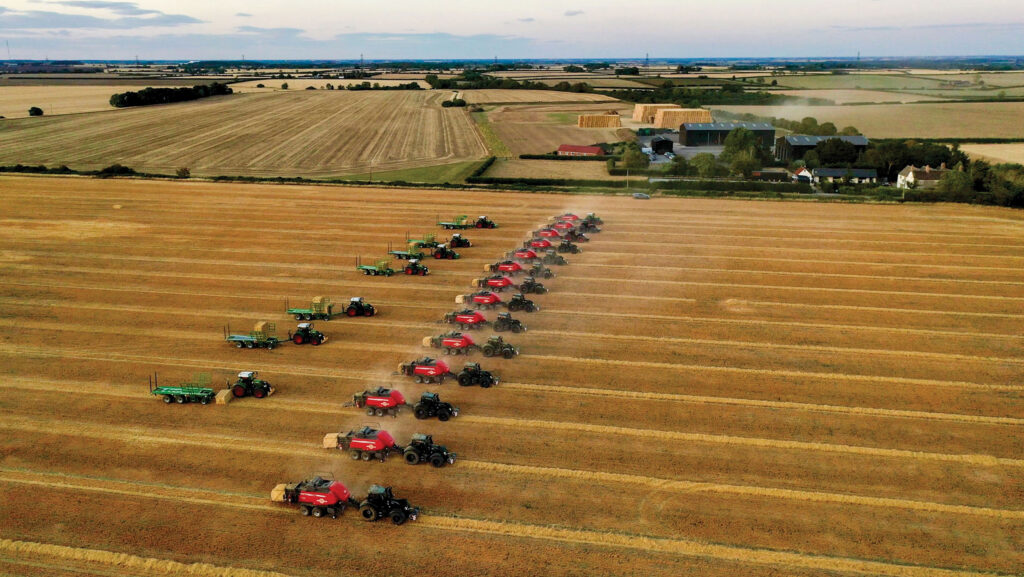
The entire fleet is catered for: 10 Fendt 724s and 13 Valtra T235s that are hired in each summer, as well as the four JCB telehandlers and AgriBale’s own Fendt 728 and 936. All roam the A1 corridor from Grantham to Bedford and Northampton to Holbeach through July and August.
About the business
Doug Price’s AgriBale business purchases 65,000t of straw in the swath, which is baled for Brigg, Snetterton, Ely and Sleaford power stations.
Alongside this, he heads up baler dealer Big Bale North and Goole-based Northern Straw, the latter running a 12-wagon fleet that hauls another 135,000t of straw annually.
Why get it?
Doug was a disciple of the pen and paper when he took on AgriBale in 2017, running operations with his “little black book”, A-Z map and phone from the mobile office – his Land Rover.
This analogue system became unworkable by 2021; the fleet having ballooned from nine Massey Ferguson 2234 and 2244 balers to 16 and three Heath Super Chasers to eight.
So, he went digital. And, with 18 Agco tractors hired from Chandlers, the firm’s Connect telematics platform became his primary means of planning and managing jobs.
But it had limitations and still relied on him WhatsApping the 26-strong team several times a day with location pins and map screenshots annotated with gate codes.
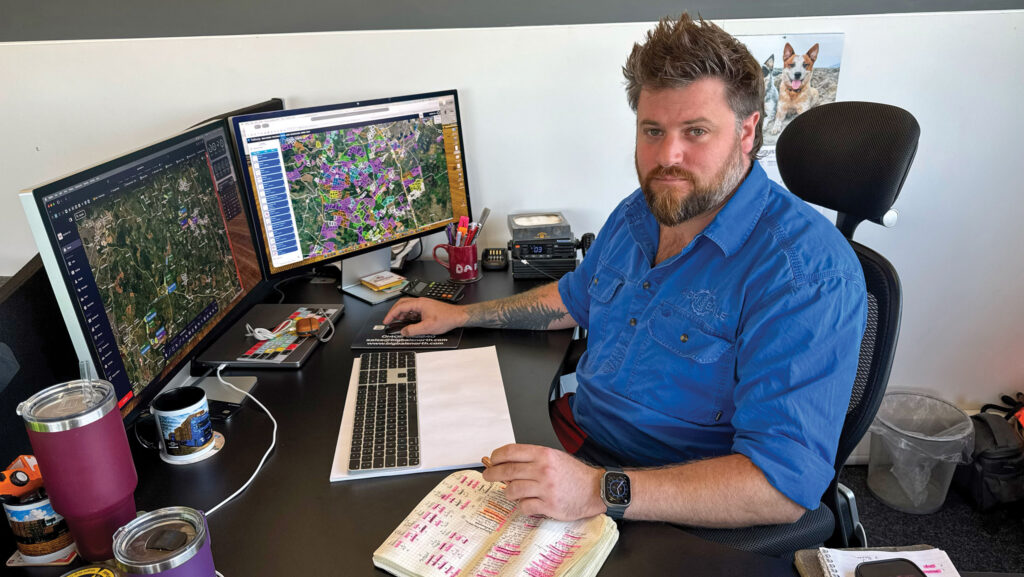
Doug Price © MAG/Oliver Mark
“It worked well enough and was reasonably efficient, but I had to be on the end of the phone all day and couldn’t afford to be tied up on lengthy calls to customers, otherwise staff would be sat idle,” says Doug.
“That downtime is expensive when you’ve got so many machines to keep running.”
The tipping point came when he looked to buy five tractors for a new anaerobic digester venture. A 65kph transmission was deemed critical, which left him with a lean shortlist of JCB Fastrac 4220 at £220,000 or Fendt 728 at £270,000.
And his reliance on Agco’s Connect telematics package effectively made the decision for him – one that would cost an extra quarter of a million pounds.
“Initially, it was either pay handsomely for Fendts and stick with Agco Connect or buy Fastracs and put up with Live Link telematics, and I wasn’t keen on the latter,” he says.
“It might be a good system for dealerships but it’s inadequate for contractors.”
Then came Tabula – a combined hardware and software system developed in New Zealand, originally for proof-of-placement documentation on fertiliser spreading trucks.
It has since been rolled out to all manner of industries, from fire control helicopters in Western Australia to mosquito spraying in Florida.
Doug was recommended it by a member of staff in 2019 and subsequently had demos with fellow contractors during his annual recruitment pilgrimage to New Zealand.
“Tabula was the dream for a while, but it was too expensive to justify – until I started pricing up the pros and cons,” he says.
How does it work?
© MAG/Oliver Mark
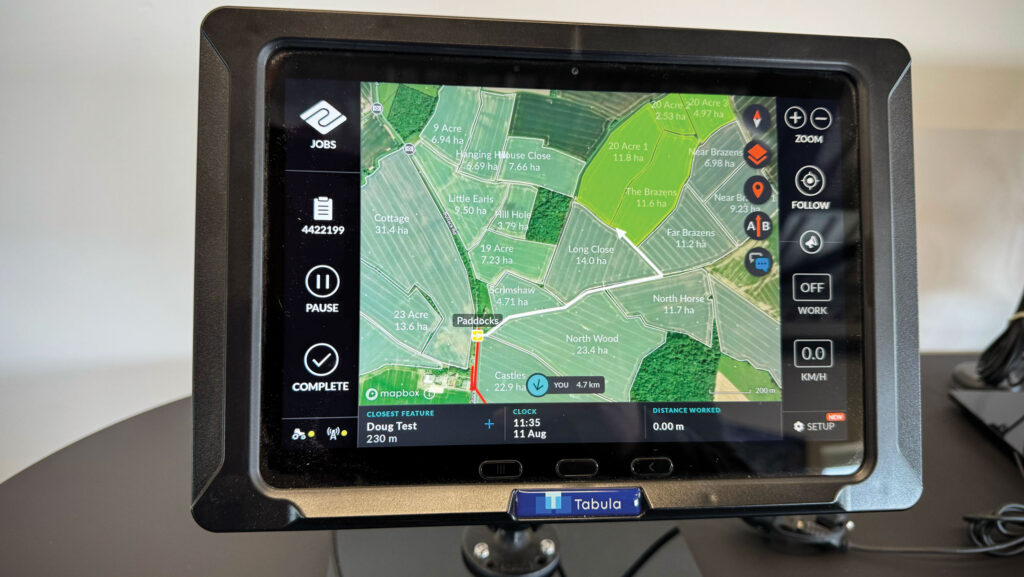
The system comprises three elements – a smartphone app, in-cab tablets and a web-based management platform. Doug operates like a flight controller at AgriBale HQ, creating tasks, assigning them and monitoring their progress.
The tablets receive job information and, in return, share live location data accurate to 1sq m. This, he points out, is significantly sharper than the best-case 10sq m of an alternative phone app-based system.
Each of these monitors is connected to a tractor pto or linkage work switch that engages and disengages the mapped snail trail of work.
There’s also an SOS toggle which, for Doug, means fire. Flicking it will notify management and any units within 1km, allowing emergency services to be summoned without communication hold-ups.
The third element is a phone app, through which staff log their timesheets and are notified of upcoming tasks to peruse pre-work.
What can it do?
The workings of this do-it-all system are easiest explained from the employees’ side. Once in the yard, they clock in on the app, then follow a machine-specific pre-start check via a QR code. Any issues are logged with the workshop team.
Then it’s time to fire up the tablet and load the first task. This will include sat nav guidance to direct them to the field entry point, then on to the specific field or stack location.
Doug, operating a step ahead, will have customised the routes already, adding narrow lane or low bridge alerts, diversions around road closures, gate codes and speed limits past “hostile properties” – those with grumpy or sensitive inhabitants. Such is the detail that staff seldom call for help or advice.
Other critical information on the maps includes power lines – uploaded from a National Grid shape file – and steep slopes.
Fields are numbered in the order they should be worked and the system will collate the coverage of two units operating in the same block.
© AgriBale
For those on telehandler or chaser duty, tasks will specify where to stack bales, in which direction and how wide. There’s also a WhatsApp-style instant messaging function through the tablet, allowing team members to share information in small groups.
Meanwhile, in the office, Doug follows their progress. Once a job is completed, the “steering wheel attendants” simply submit the bale count – the rest of the information (crop type, field size and so on) on the sheet having been pre-populated.
This is downloaded into Excel and can also be linked to Xero accounting software, though AgriBale favours cross-checking work prior to invoicing.
The app is also used for maintenance and repair tasks. Issues are logged and assigned to the spanner spinners, including serial numbers, notes and pictures of broken parts.
Any other features coming?
Since splashing out on the system, Doug has become the firm’s UK representative and has been busy working with engineers to add new ag-specific features.
One is the incorporation of the balers’ moisture meters, giving him access to live and average readings.
“It means I can decide when to start and stop,” he explains. “Every year, I have some staff that want to finish early – in which case the crop is apparently too damp – and others that are keen to push on until 3am, almost irrespective of conditions.”
He also plans to integrate isobus, primarily to eliminate errors by automatically adding bale counts to job sheets, and is experimenting with dash cams that give him a live view from the cab.
A personal space intrusion, maybe, but one that could potentially reduce his insurance premium.
How much does it cost?
Tablets are priced at £2,500 each, and the data subscription for each is £60/month. This makes it significantly more expensive than the £8-10/month of Ag-drive.
“But you’re getting a lot more,” says Doug. “Rather than expecting staff to use their phone and data, it includes the tablet, sim, sat nav and instant messaging all in one package.”
He also points to the potential savings. “An hour’s efficiency gain for each team member each day – not getting lost on the way to a job or waiting for a gate code – adds up to £1,680. Multiply that by six weeks and it’s getting on for £80,000, which effectively pays for the system,” he says.
“Plus, it can be used for out-of-season work such as hedgecutting or gritting.”