First impressions: Tougher boom for Manitou MLT 630-115V
 © James Andrews
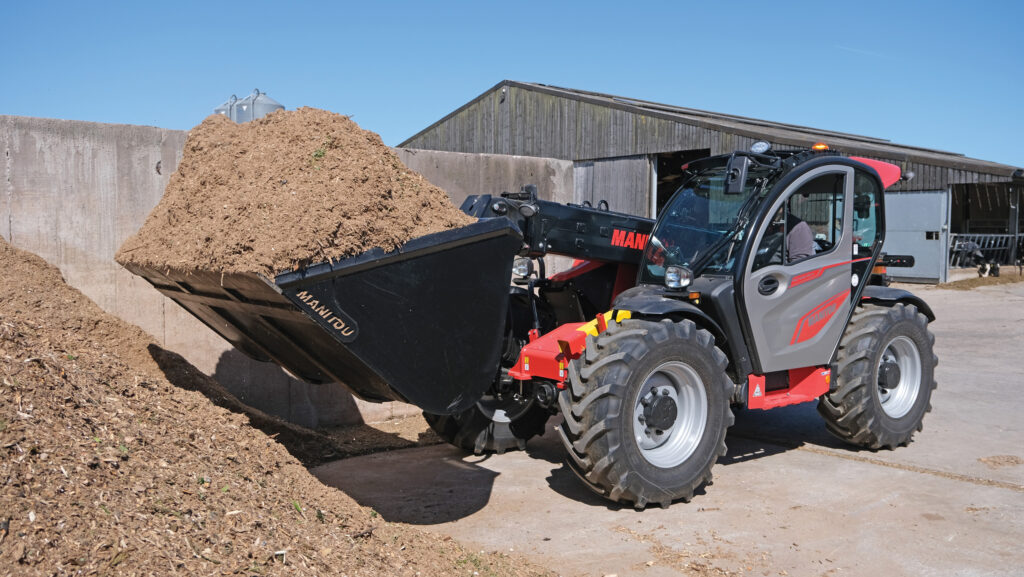
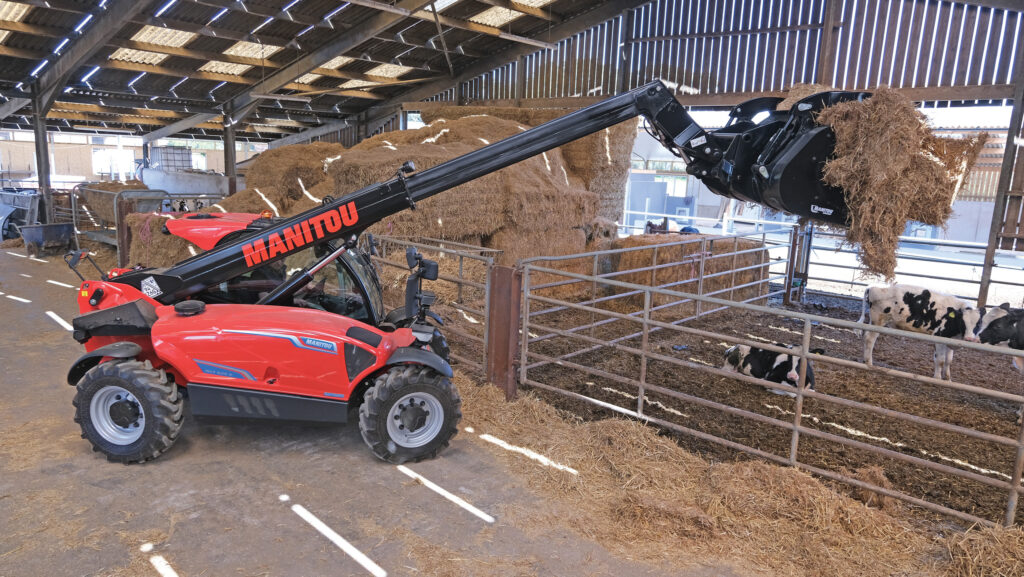
 It might not look that different, but a host of nifty design tweaks can be found lurking under the familiar skin of Manitou’s MLT 630 115.
These so-called “evolution” upgrades are the most significant this handler and its fellow NewAg siblings have received since their launch in 2017.
Not only do they promise to toughen up previous weak spots, but they also claim to improve efficiency and reduce the maintenance burden.
See also: First impressions: Powershift ditched for JCB’s TM280S telehandler
Biggest of the structural changes is the adoption of the firm’s Atlas boom, which has filtered down from larger XL models.
Formed from a length of octagonal steel with a cast head junction, it’s considerably stiffer than the outgoing version.
Lifting stats haven’t changed – the 630 is still rated to 3t and has a 6.1m reach – though it does make the machine more stable, particularly when pushing heavy loads up to full height.
Those in the market for beefier NewAg models do see a mild performance hike, though, with the MLT 738 and 742 getting 100kg boosts in capacity over their 737 and 741 predecessors.
Reducing wear
Another perk of the Atlas boom is a new automatic isolator for the compensator ram charged with keeping the carriage level.
On the previous version, shaking of the bucket would push oil back to this ram, putting extra strain on the pins and bushes.
Unless the machine was treated to a fastidious maintenance regime, this could lead to premature wear.
The new setup eliminates the problem by automatically isolating the hydraulic circuit when it isn’t actively being used.
© James Andrews
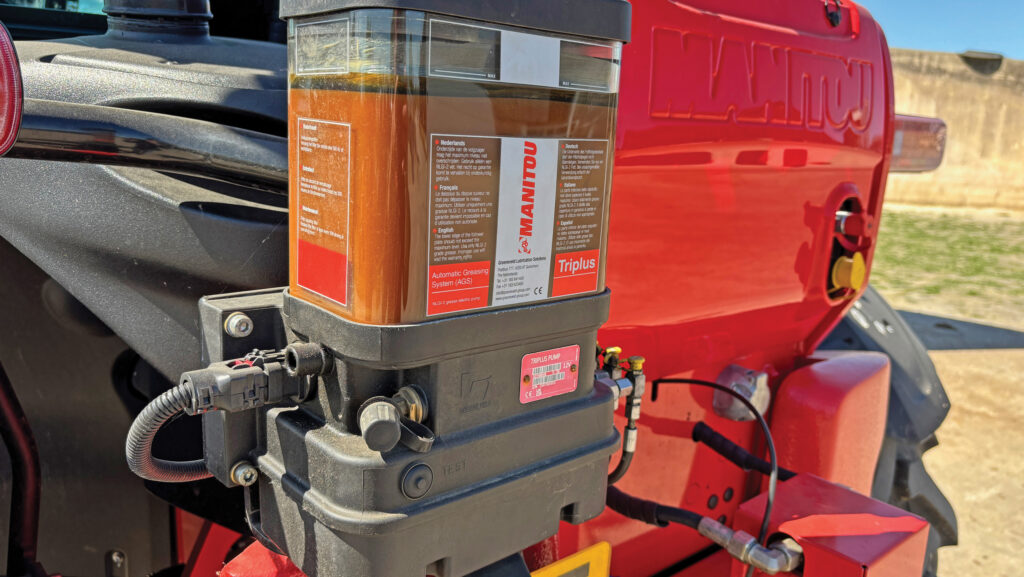
On top of this, Manitou has overhauled the auto-greasing system so that it covers virtually every lubrication point.
The only ones left to pump manually are the prop-shaft UJs, which operators need to grovel underneath every 500 hours.
It’s a marked improvement over the old setup that just covered the lower half of the chassis. And, for hard-worked machines, where there’s little time to pause for maintenance, it’s a genuinely attractive option.
The way it integrates into the screen is neat, too. From here, drivers are able to set the intervals at which the system kicks into action, as well as keeping tabs on the grease tank level.
Clearly, the setup requires a lot of extra pipework, but designers have managed to tuck it neatly out of harm’s way.
Manitou MLT 630-115V specs
- Max lift capacity 3t
- Max lift height 6.16m
- Engine Four-cylinder, 3.6-litre Deutz
- Power/ torque 116hp/460Nm
- Transmission M Vario hydrostatic
- Elite spec price £92,032
- Platinum spec price £98,649
Cutting depreciation
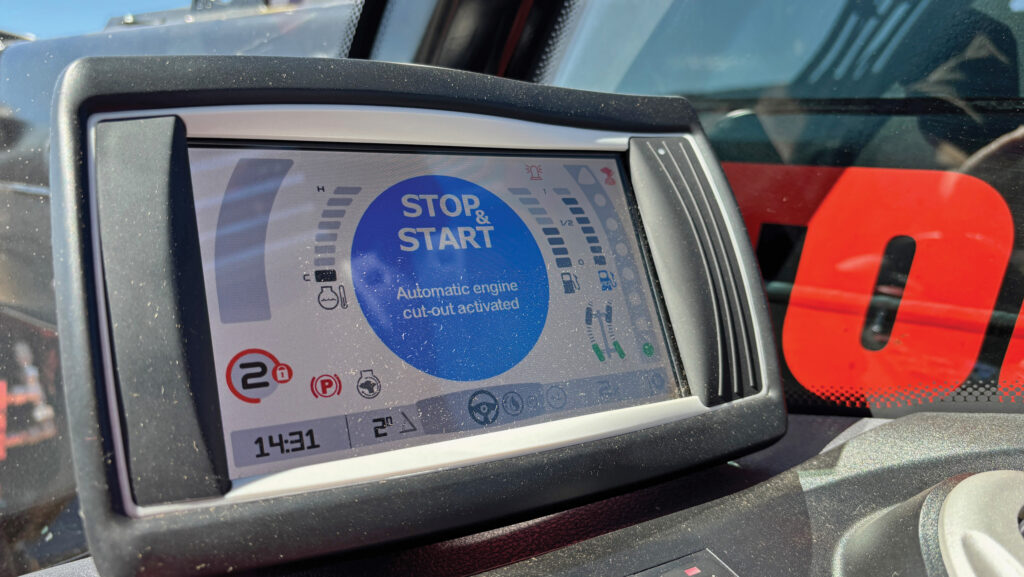
In a bid to reduce the depreciation caused by needlessly clocking up hours, Manitou has introduced an automatic start-stop system.
This will kill the engine after a preset period of idling, which can be set from 1min to 30min.
© James Andrews
Crucially, the run screens stay active, so as soon as the accelerator pedal is pressed or the joystick nudged, the engine fires into life and work can resume immediately.
Manitou reckons about 15% of a machine’s hours are racked up when there’s no one on the seat. By this metric, clocking 1,000 hours a year would rack up 150 hours of wasted time.
Factoring in depreciation at £12 per hour, the start-stop system could yield potential savings of £1,800 annually.
On top of that, there’s a reduction in fuel and maintenance, as well as fewer DPF regens to put up with.
Smart functions
The 630 also benefits from a raft of smart functions that were previously limited to larger models.
These include automatic boom sequences, such a bucket shake, return to a preset position, and quick lift that pushes the boom out during lifting and pulls it back in when lowering.
Some seasoned operators may scoff at such shortcuts, but they can help take the tedium out of some boring repetitive tasks.
Of broader appeal is the new integrated counting function, which puts an end to the task of memorising how many buckets have been loaded or bales stacked.
Targets can be set too, so that drivers receive a pop-up alert when they’ve reached their preset number.
Most NewAg handlers are now fitted with this system as standard, although it isn’t available on the MLT 733 or 937.
Intelligent weighing
The firm’s new smart weigher takes this technology a stage further.
Larger NewAg XL models can already be fitted with this for a £3,637 fee and it will filter down to smaller machines such as the 630 in the next few months.
Using a series of hydraulic pressure sensors, the system accurately weighs each load and will keep an automatic tally of the total processed in a session.
Like the counting system, it can sound an alert when a target weight is reached, and it’s possible to store the totals in the screen.
Cleverer still is the built-in feed ration builder. Once the target weights of each product have been entered, it will give the operator a pick list and will let them know when they’ve grabbed the correct amount of each.
Some 44 ingredients are available to choose from and it’s possible to store 13 different rations in the memory.
Cabin upgrades
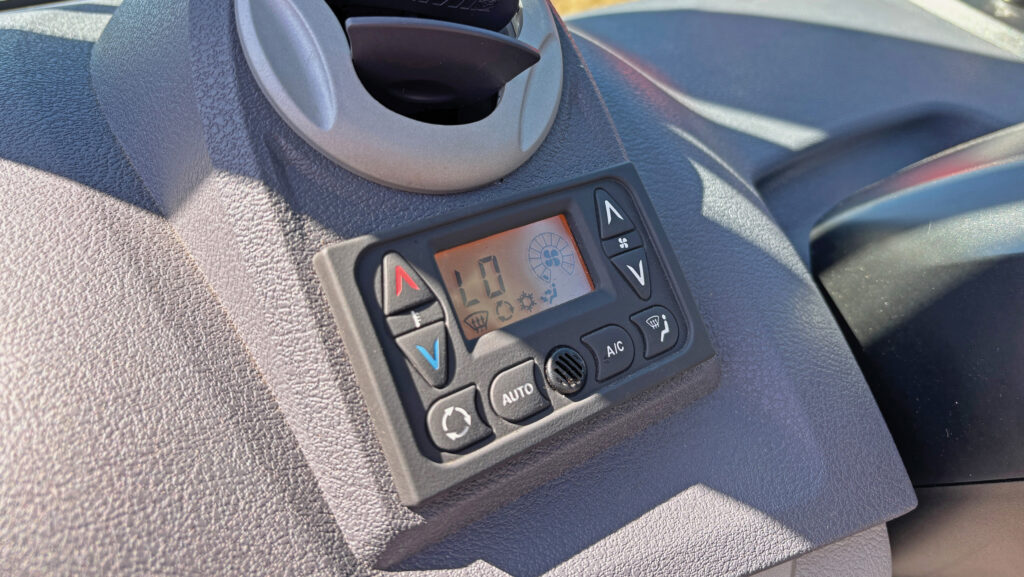
There are several upgrades in the cabin, including a more efficient ventilation system with touchpad controller.
Directional vents allow air to be channelled to the windscreen or the person in the seat and the old asthmatic fan has been replaced with a gutsy 12-speed unit.
© James Andrews
Other perks include a more comfortable floating armrest and a light in the footwell to make it easy to see the step in the dark.
Visibility is generally pretty good in MLT machines, but Manitou has tried to eliminate blind spots by offering a dual camera system.
One mounts on the right side of the machine, the other sits at the rear, and they both send their feeds to the in-cab display.
For those who want to see into trailers or diet feeders during loading, there’s also the option of a boom-mounted camera.

© James Andrews
Later this year, the firm will introduce a more sophisticated artificial intelligence system that will be able to detect if people are near the vehicle and sound an alarm.
This will have green, orange and red warnings depending on how close the person is and there will be a correspondingly urgent warning beeper.
Engine and transmission
There’s little change in the engine and drivetrain department.
The same four-cylinder, Deutz engine can be found under the side-mounted hood, which serves up 116hp and 460Nm of torque.
This is allied to a two-speed hydrostatic transmission on the V model featured here, but there is still the option of buying one with a four-speed torque converter box.
Top speed is 40kph and there’s a limited slip differential on the front axle to help find grip on loose or slippery surfaces.
Higher spec level
With so many extra high-tech options on the table, Manitou has introduced a new spec level above the Elite.
The Platinum grade comes with a fancier heated seat, three cameras, a raft of LED lights and auto-greasing fitted as standard.
Though this can be added to lesser trim levels, it comes with a £4,600 price tag.
MLT 625e electric hits UK farms
© James Andrews
Following its 2024 launch, Manitou’s first electric telehandler is officially on sale and making its way onto UK farms.
The MLT 625e offers the same lifting credentials as its diesel equivalent – 2.5t max lift, 5.9m max height – but does so without any combustion noise or fumes.
One large motor replaces the engine and hydrostatic transmission, and a second is charged with powering the hydraulic pump.
Manitou says the 35kWh of batteries mounted under the boom is sufficient for five hours of constant use.
A full recharge can be completed in four hours when connected to a three-phase power supply or 11 hours on a regular 220V socket.
This can be reduced to just one hour by installing one of the firm’s dedicated 30kW DC fast chargers.
Such technology doesn’t come cheap, with the MLT625e retailing at £109,701 – almost £33,000 more than the diesel.