The Claas machinery prototypes that never made it
A recent Claas tractor launch provided the rare opportunity for a nosey at the overspill from the German manufacturer’s museum collection.
Here, we round up a few of the oddities and prototypes.
See also: Return of Valtra’s bendy tractor
Debut jumbo tractor
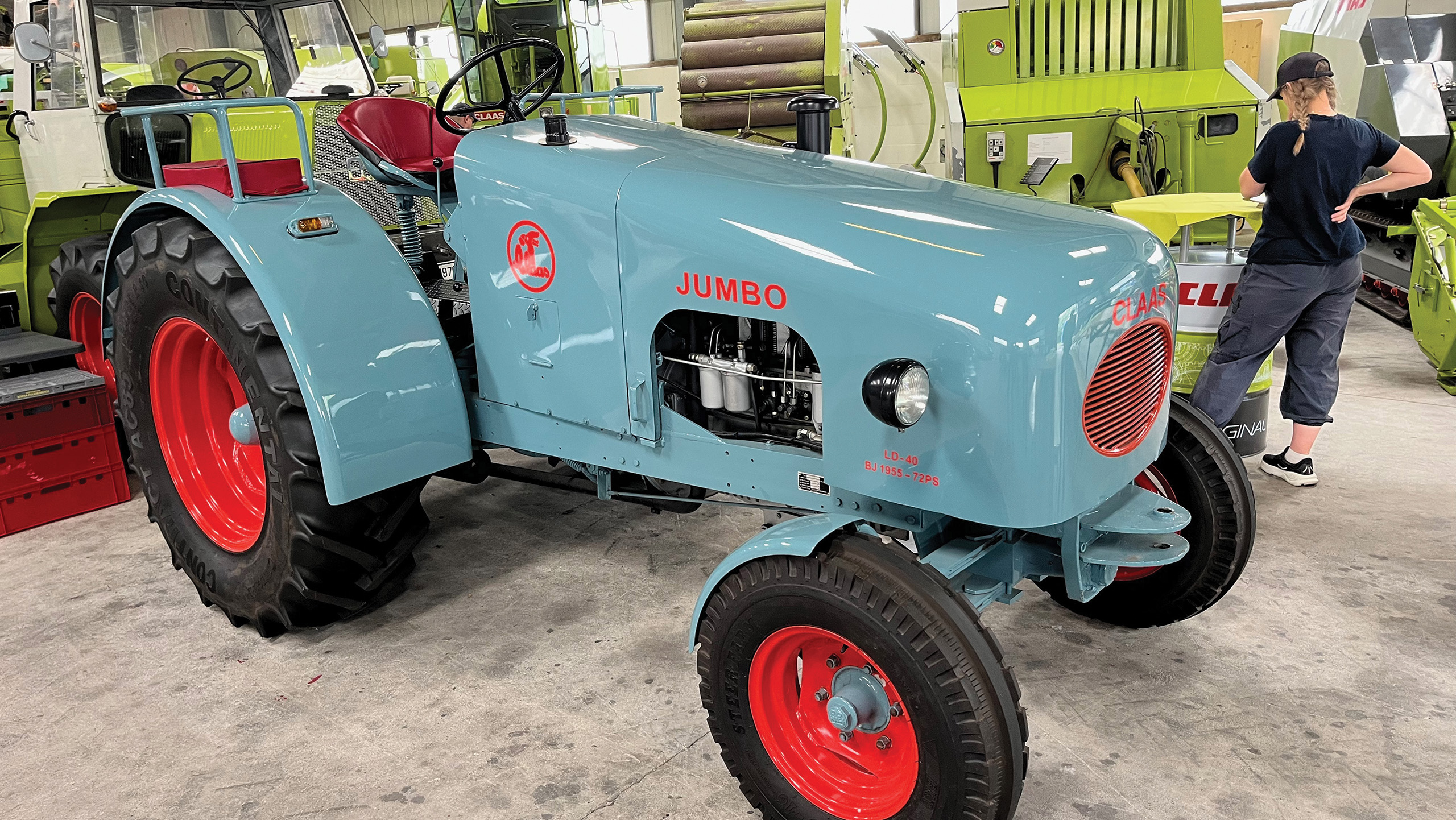
Jumbo tractor © Nick Fone
Claas may now have a full line-up of tractors, but it was only really known for its harvesting kit until its acquisition of Renault in 2003.
However, the company had made a few forays down the tractor route over the years, the first of which was the Jumbo.
Built in 1955, it was primarily a test platform for the firm’s home-built 4.76-litre LD40 engine, which featured in Claas combines such as the Matador.
With 72hp under the sleek, bullet-nosed bonnet, the Jumbo had more power than most other tractors of the time and could travel at speeds of up to 43kph.
Sadly, it never made it into production and this single prototype spent its life as a tug at the firm’s Harsewinkel factory.
Farmtrac tool carrier
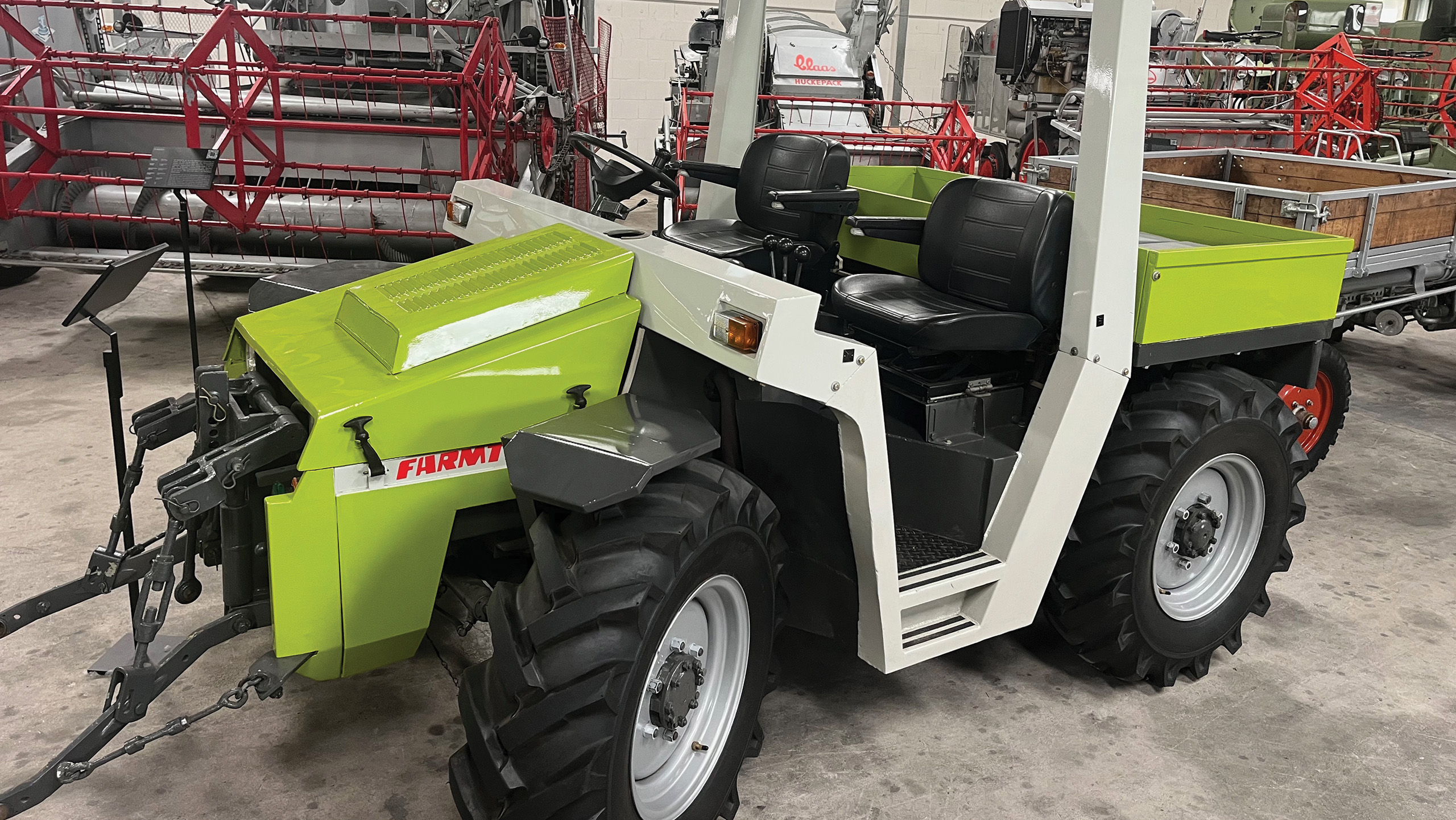
Farmtrac © Nick Fone
This unusual looking beast was developed in the 1980s specifically for working on mountainous terrain.
The Farmtrac was intended as a multi-function tool-carrier, with ptos and linkages fitted front and rear.
A 45hp Perkins engine powered a four-wheel-drive hydrostatic transmission that apparently enabled the little load lugger to clamber up inclines of 35deg and cross side-slopes of 25deg.
While many assume it was the forerunner to Claas’s early Xerion systems tractors, a number of its features were also incorporated into Unitrac rough-terrain forklifts built by the company from 1983 to 1990.
HSG joint venture
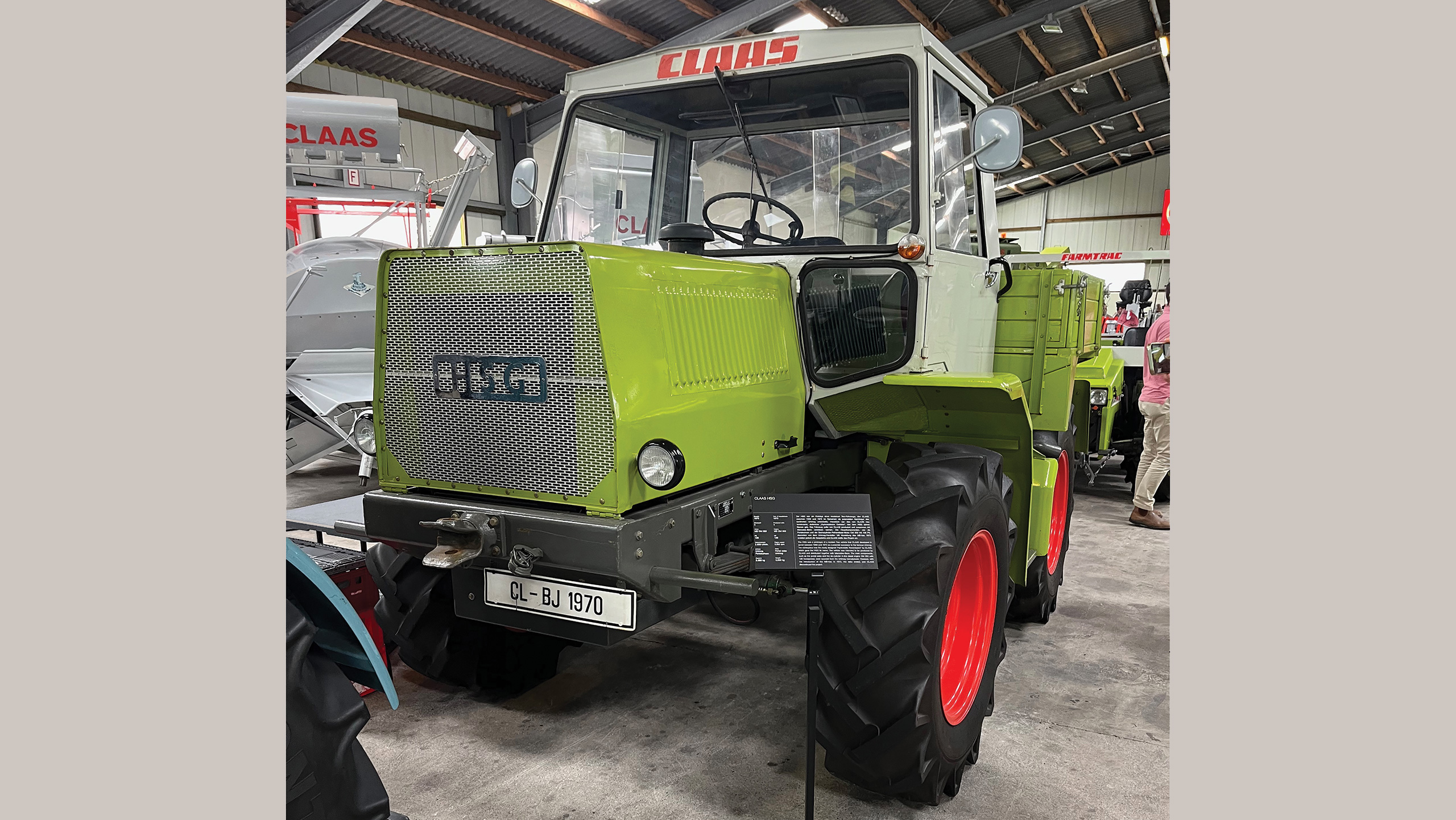
HSG © Nick Fone
Between 1968 and 1972, Claas and Mercedes-Benz were engaged in a secret joint venture to develop a successor to the Unimog of the time.
The result was this HSG – an equal-wheeled truck-tractor hybrid with a tipping load deck and cavernous cabin.
What set it apart was the use of a hydrostatic transmission developed by Claas, paired with portal axles and a six-cylinder, 126hp engine provided by Benz for the three prototypes.
The intention was for it to be built by the harvesting specialist and distributed through Merc’s dealer network, but, with the introduction of the MB Trac in 1972, those plans were shelved and the HSG was consigned to the history books.
Project 207 paved the way for modern-day Xerions
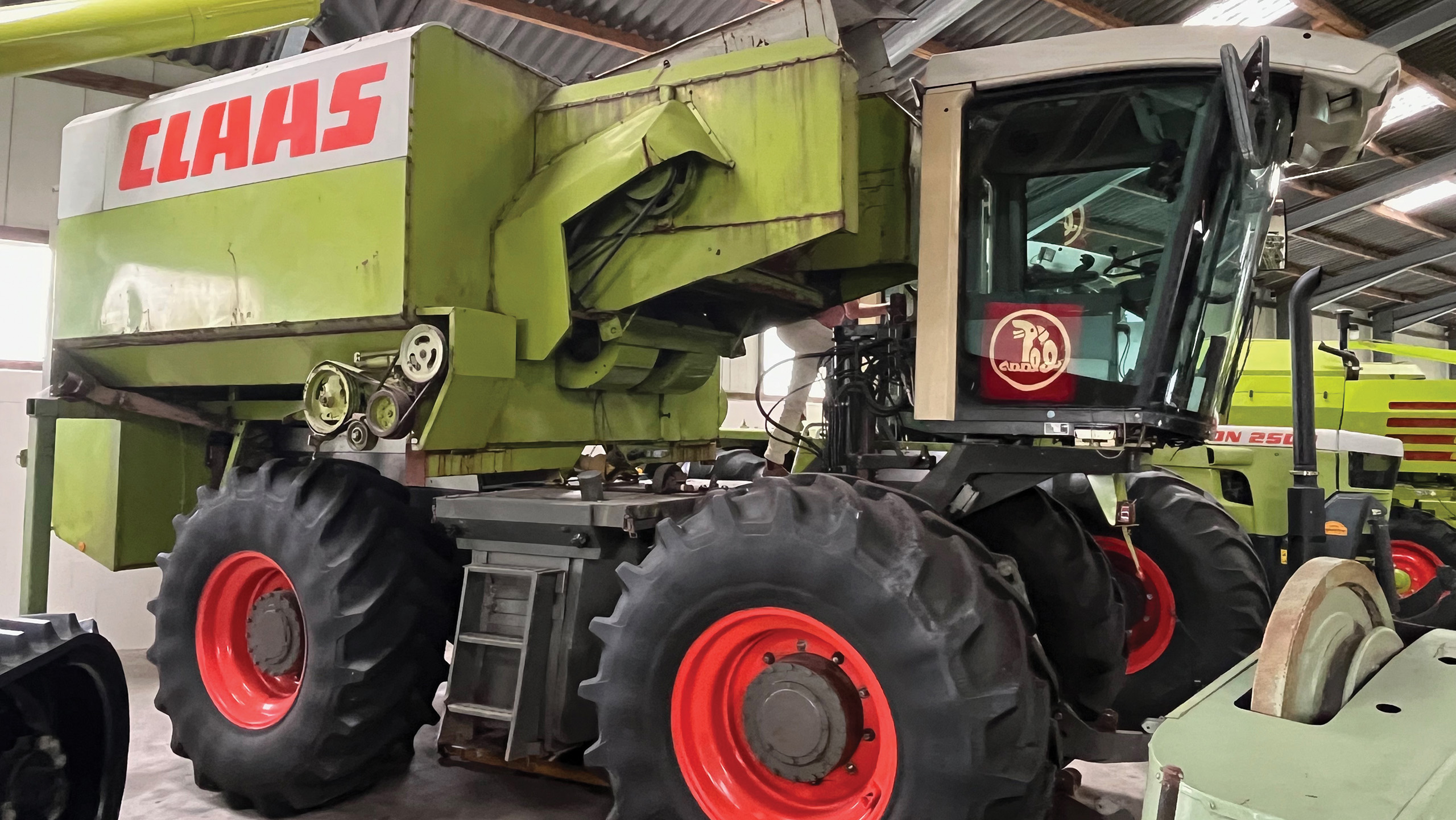
Claas Xerion 207 © Nick Fone
The HSG had started an itch that Helmut Claas needed to scratch, and his vision for a multi-purpose systems tractor saw “Project 207” get underway in the late 1970s.
But it wasn’t until 1993 that the first Xerion saw the light of day.
With a 200hp Mercedes motor under the hood, and Claas’ own home-built HM8 stepless CVT gearbox, it was ahead of its time.
A rotating cab that could be positioned in a number of different locations enabled all manner of implements to be fitted, from hemp harvesters and beet lifters to snow blowers and wood-chippers.
The “transformer” concept – a tractor capable of doing the job of virtually any self-propelled machine – struggled to get off the ground and the demountable combine harvester on this 207 prototype never made it to market.
Although it’s not uncommon to see Xerions fitted with saddle-back slurry tankers today, the reality is that modern models are generally put to work pulling cultivators.
Non-stop Rollant Rapid
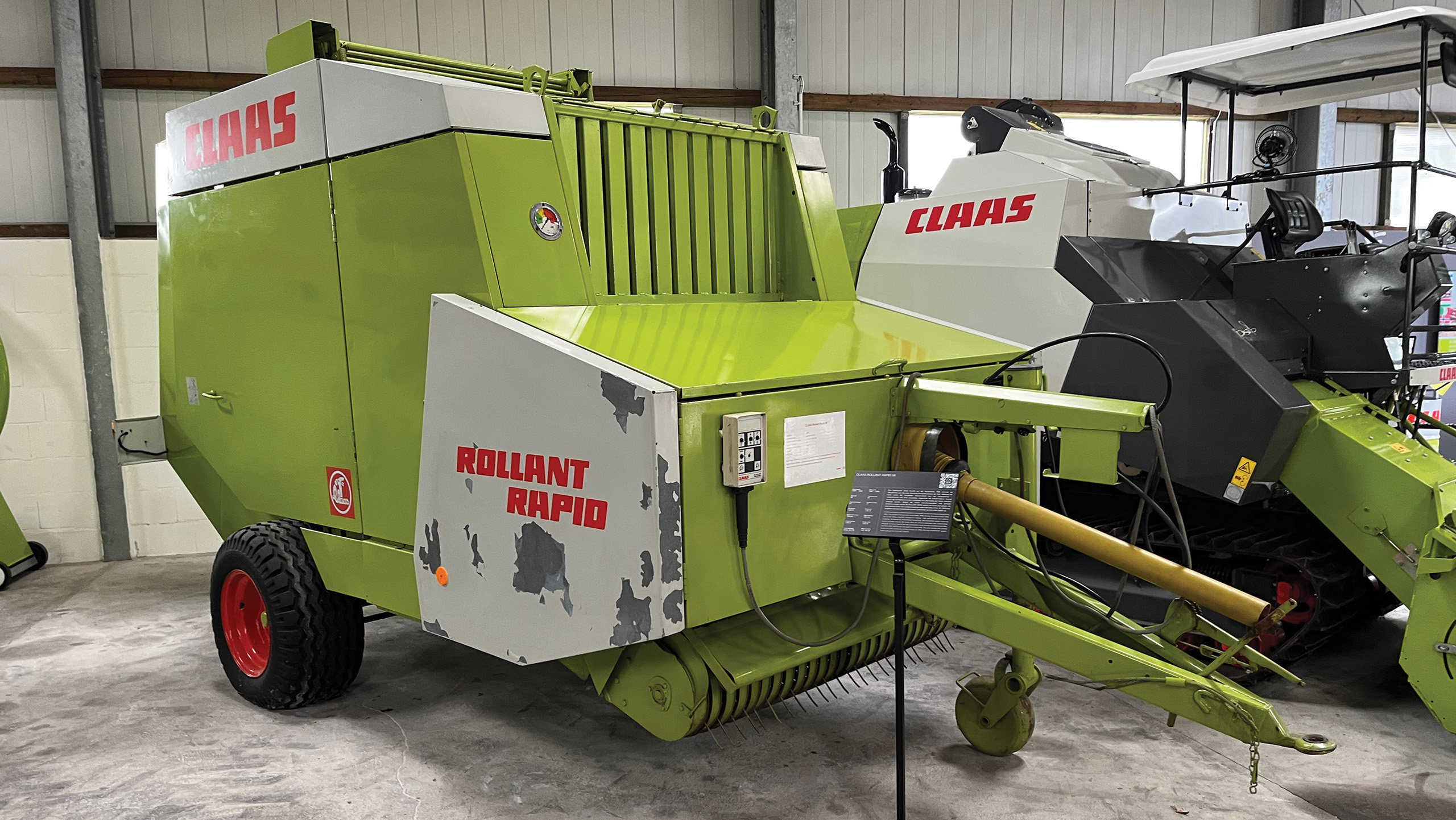
Rollant Rapid © Nick Fone
While Krone, Lely and Vicon have spent big money developing non-stop round balers in recent years, Claas presented its offering to the world at Agritechnica in 1985.
Tagged as the Rollant Rapid, its 17-roller chamber would pump out 1.5m (5ft) diameter bales without a pause.
However, there was a compromise in the density department – it simply couldn’t produce the bale weights of a conventional machine and production ceased after just 42 units were built.
Stretched caterpillar track units for Commandor 228 CS
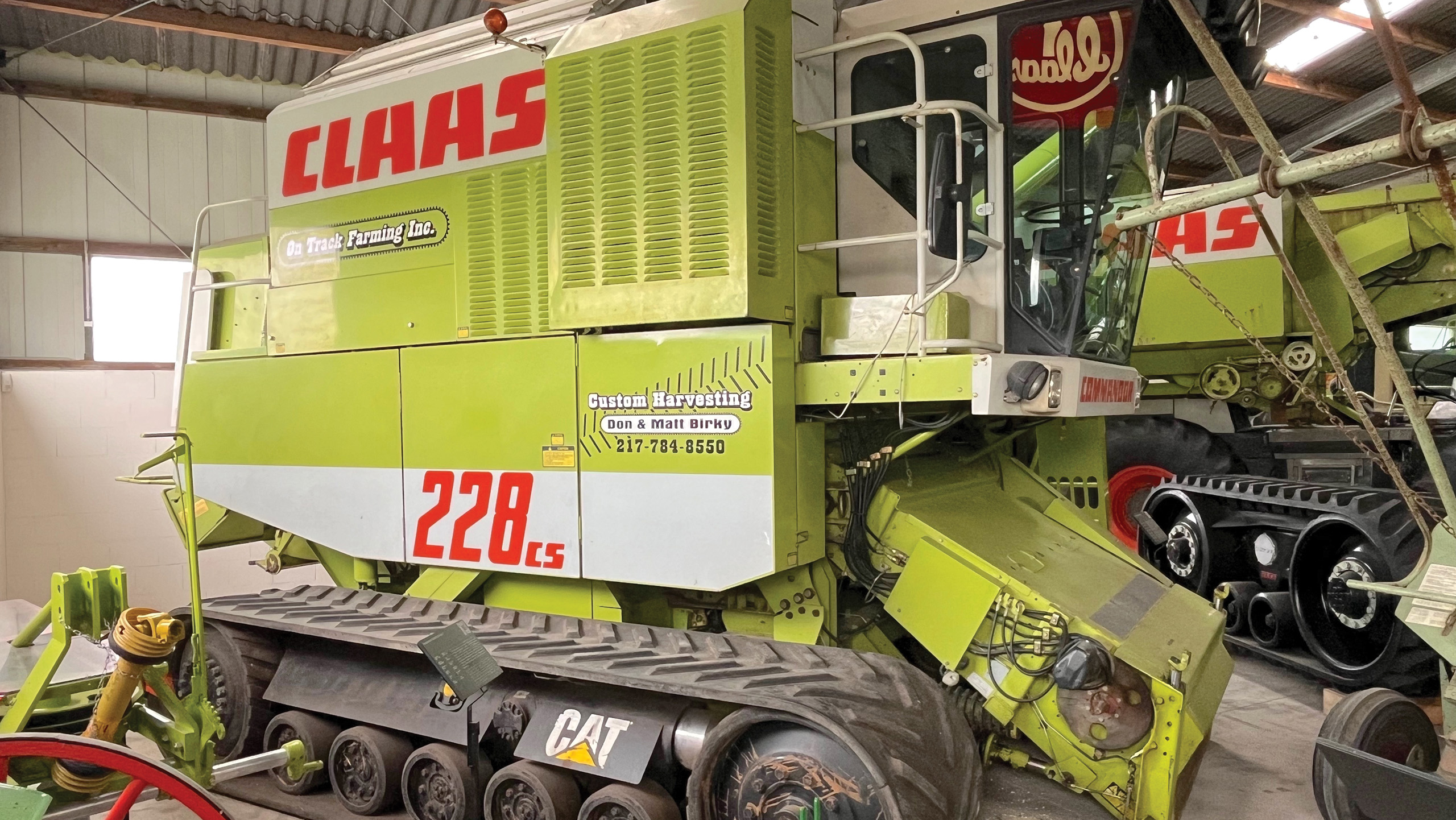
Claas Commandor CS228 © Nick Fone
With the Commandor CS, Claas threw the book out of the window, doing away with threshing-machine-style straw walkers and replacing the entire internal gubbins with eight cylinders and concaves mounted crossways.
Unveiled in 1984, in effect it was the maker’s first attempt at rotary separation.
A good number made their way across the North Sea to the UK but they’re a rare sight nowadays.
What makes the pictured machine unusual is that it was one of 16 built that were shod on tracks.
Dubbed Mobile Trac System (MTS), Claas borrowed the track carriage from Caterpillar, stretched it and grafted it on to the Commandor.
This particular machine was run by Illinois custom harvesting outfit On Track Farming, and it amassed a decent number of hours before returning to its birthplace in northern Germany.
In 1990, a Commandor 228 CS set a new world record, pumping out wheat at a rate of 44.8t/hour.
Revolutionary Jaguar SF80
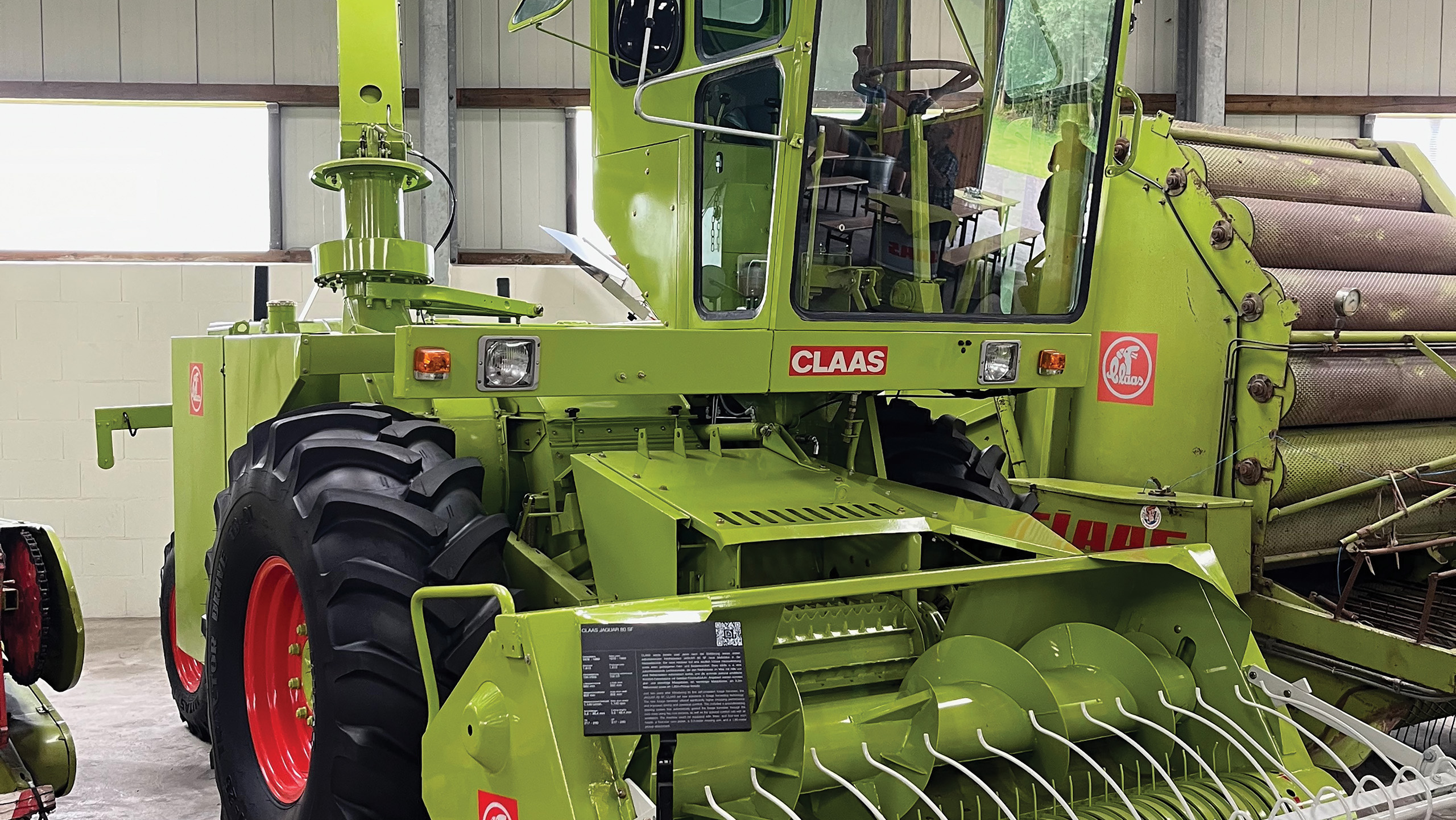
Claas Jaguar SF80 © Nick Fone
This immaculately restored SF80 Jaguar was one of 1,600 units built between 1976 and 1983.
With an air-cooled Deutz V8 under the hood, it pumped out almost 220hp – nearly double that of the modestly powered SF60 that had gone before.
It was a true game-changer and one of the few success stories featured here, providing contractors with the opportunity to fit a four-row torpedo maize header – a world first – and a corn cracker.
List price in 1981 was £22,000, compared with the firm’s current flagship, the 1,110hp Jaguar 1200, at £745,660.