Driver’s view: JCB Fastrac owner rates his pair of 6300s
 © James Andrews
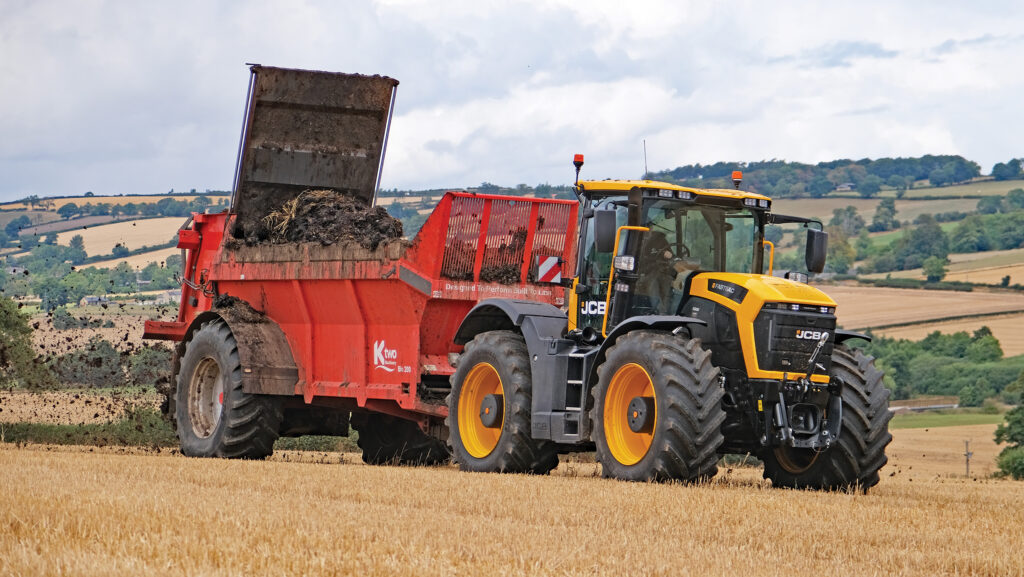
 Hauling heavyweight tankers, spreaders and trailers across England’s northernmost counties requires a tractor that’s as adept at clocking up hours on tarmac as it is in the field.
That is why Mark Tiplady of Tiplady Tanker Services has been gradually cutting down the number of conventional models in his fleet in favour of JCB Fastracs.
The latest additions are a pair of newly minted 6300s, armed with a 6.7-litre FPT six-cylinder engine allied to a ZF Eccom stepless transmission. Like smaller 4000-series models, they run equal-sized wheels.
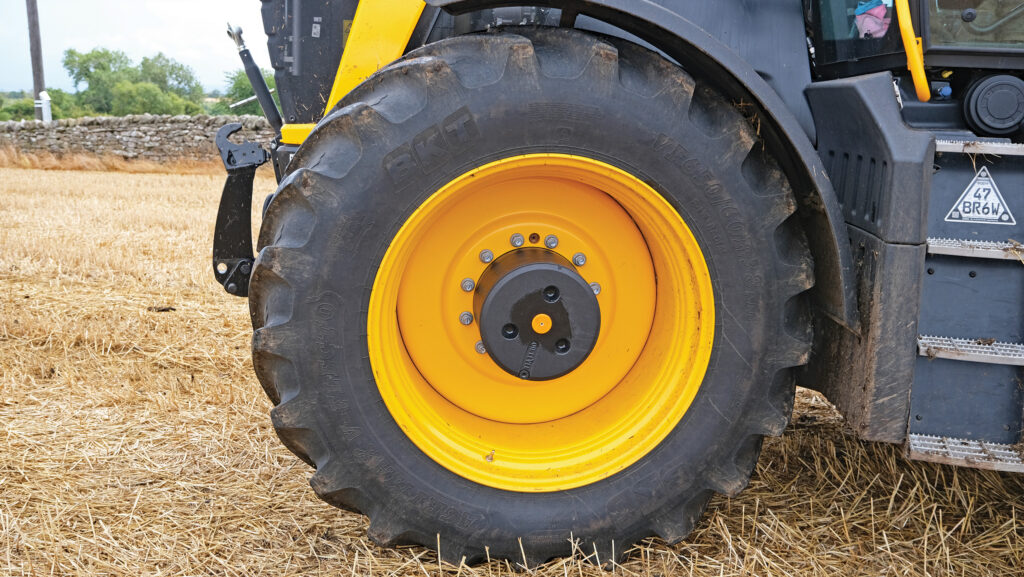
However, rim sizes have swelled to 38in to reduce rolling resistance and improve grip.
These credentials should make them well suited to towing Mark’s 20,000-litre Zunhammer and Kumm Technik tankers, 20t Ktwo muckspreaders and 16t silage trailers.
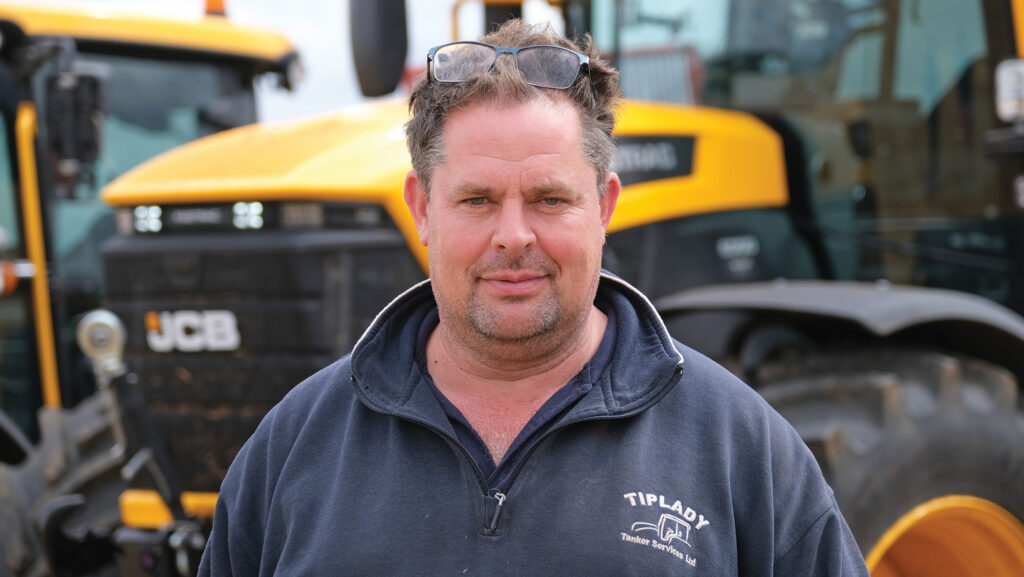
Mark Tiplady © James Andrews
See also: First impressions: Fresh Fendt 832 puts power to the ground
JCB Fastrac 6300
- Year 2026
- Engine 6.7-litre, six-cylinder FPT
- Max power 335hp
- Max torque 1,400Nm
- Transmission ZF Eccom four-stage CVT
- Max speed 66kph
- Rear lift 11,000kg
- Front lift 5,000kg
- Price paid £230,000
Q. Why JCB Fasctrac 6300s?
I got my first Fastrac back in 2008, which was a four-wheel-steer 2155. It was a brilliant haulage tractor, but its limitations in the field meant I eventually decided to move it on.
It was eight years before I had another. I really liked the look of the 4220 iCON and, having been offered a particularly keen deal, bought two of them. They were in a completely different league to the 2000-series, though there was still room for improvement.
We were often running them right on the power limit and the small wheels meant they would struggle for grip when pulling our tankers and spreaders in the wet. Having a static range change was another pain, as we would have to stop at the bottom of some steep hills and shift into low when we were towing particularly heavy loads.
When the 6000-series was announced, it looked like it would solve all these problems. So, as soon as the demonstrators were out, we headed to the JCB quarry to give them a go.
I hopped in a 6300 with a loaded 15t trailer in tow and it shot off like there was nothing on the back. It barely backed off on the hills either, so I knew it would suit us well.
The turning circle was our only real concern, but having spun it around a few times, we concluded it wasn’t that much clumsier than a 4220.
To get them for June, we needed to place an order by Christmas. I was set on getting two tractors and decided that the smaller 6260 would be ample.
However, 6300s were the only option at the time, so I did a deal on two of those instead – £230,000 apiece. The initial plan was to trade in both 4220s, but at the last minute I decided to keep one and send a John Deere 7290R off instead.
As a result, half of my tractors are now Fastracs.
© James Andrews
Q. What extras did you opt for?
I kept them fairly simple so that costs didn’t spiral out of control. They’re on 650/60 R38 tyres rather than 710s, and we decided against central tyre inflation.
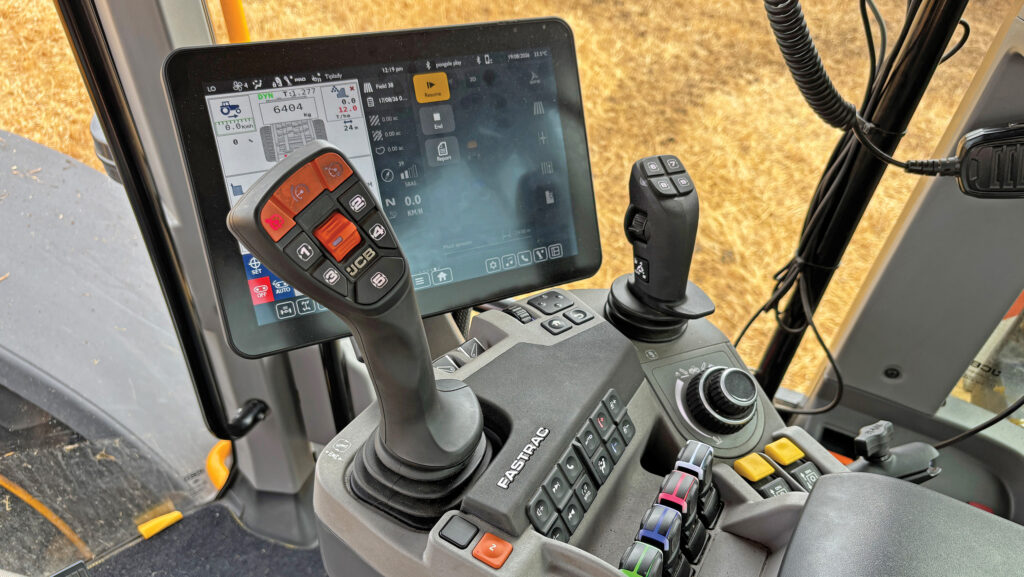
I hear JCB has had teething problems with that system, so we might have dodged a bullet there. One thing we did take a punt on was the in-house guidance system. It is better than previous versions, but not a patch on what John Deere offers.
© James Andrews
There are some neat features, though. We’ve played around with the “dog walk” function, which allows the tractor to crab up the field so the wheels aren’t running in the same tracks.
There hasn’t been much call for it in the dry, but it could come in handy when the ground gets softer.
LiveLink is also useful for keeping tabs on where each tractor is working, although it isn’t as slick as it could be. In theory, it should automate servicing so the dealer contacts us when work needs to be done, but we always end up having to make the call.
Q. How have they performed?
Having so much power on tap means they are well on top of all the work we give them. And the combination of the extra weight and bigger wheels means they don’t get pushed around by the kit on the back.
Ground conditions have been firm since we got them, but they’ll no doubt grip better than a 4220 when it’s wet – they might finally be a match for a conventional tractor. We haven’t got a deck weight yet, but that’s something we can look into if we need to find a bit more traction.
The brakes are another massive improvement, as the dual calipers on the 4000-series could squeal like a stuck pig. The 6300’s single calipers haven’t let out a squeak and they seem to have a bit of extra bite too.
Another bonus is that it is much quicker to change the pads. And I’m a fan of the new auto handbrake, which means you can just hop on the seat, rev up and go.
The software is also slicker, particularly the start-stop function, which means you don’t have to wait ages for the screens to boot up. Add in the fact that the monitor will waken as soon as the door is opened, and there is much less time spent twiddling your thumbs.
© James Andrews
We haven’t had to do any hard resets either. On the 4220s, this involves getting out of the cab, turning off the isolator, waiting patiently and then switching it back on hoping that it will have sorted itself out.
The rear hitch camera is worth a mention as well. It’s tucked out of sight, but it’s in the perfect position and makes it a doddle to hook up a trailer.
It’s early days to get a gauge on reliability, as the first tractor arrived in June and has clocked just over 700 hours, with the second working 400 since it got here in July. We’ve had a few problems with sensors and software, though our dealer, JG Paxton, has sorted them fairly easily.
The most recent is a niggle with the front axle suspension that means it won’t level out properly. We’re currently getting around this by flicking the system into manual, adjusting it and then switching back to auto. It then seems to work normally for a few hours.
Q. What could be improved?
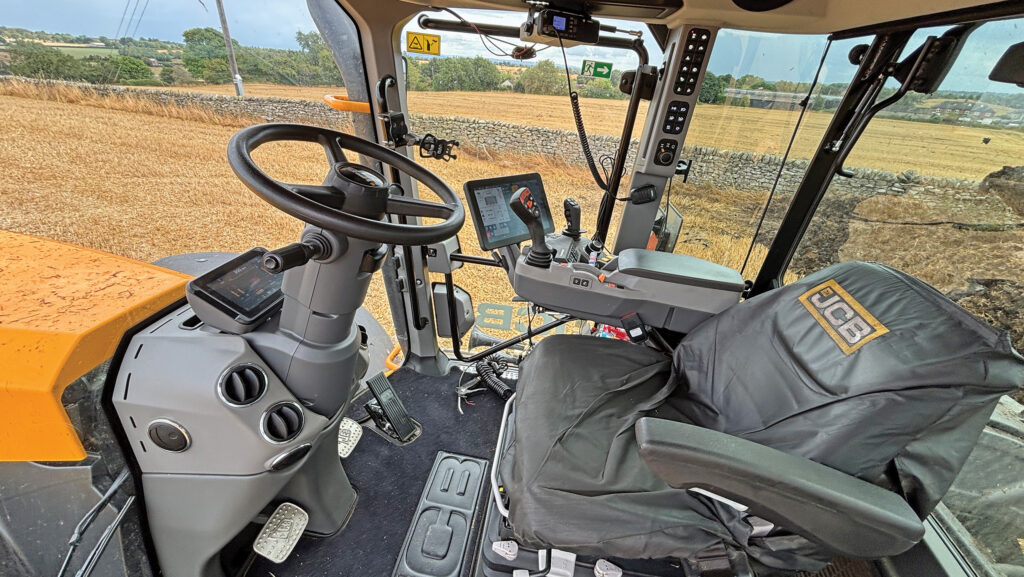
Even though the cab is big and comfortable, it lacks decent storage and the control layout isn’t as good as a John Deere or Fendt.
Designers haven’t managed to prevent wheel spray splattering the glass either, which means we’re forever having to clean it. We’re still waiting for the front camera to be set up, although it’s not that difficult to pick up implements without it.
© James Andrews
There are a couple of other things I’m wary of, one of which is the paint finish. I’ve got several JCB machines and all of them look far shabbier than they should because the paint has flaked off and rust has come through.
It’s been a problem for years and it needs addressing. Maybe these tractors will be better, but I’m not holding out much hope.
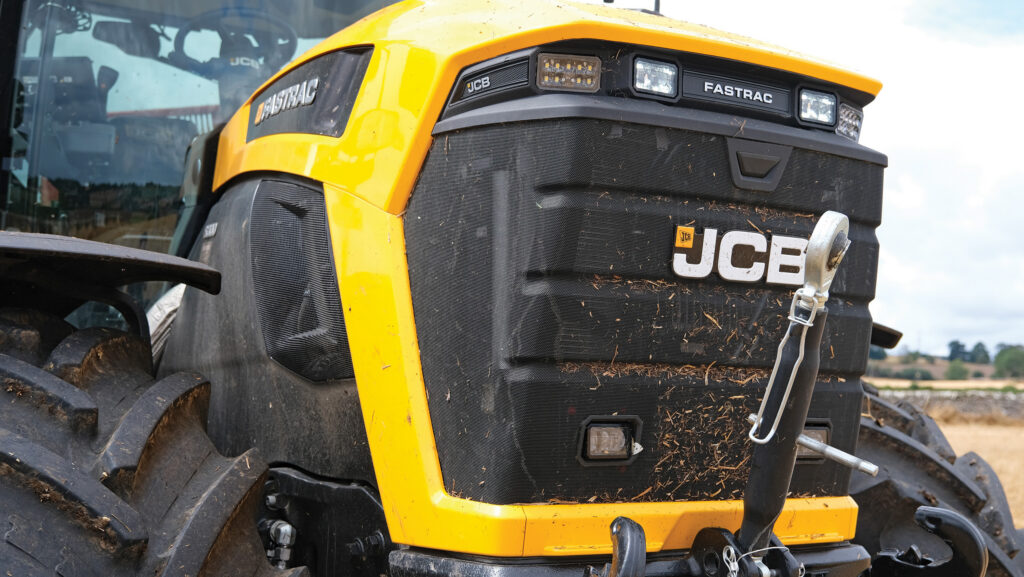
The other is the 6.7-litre FPT engine. One of the lads who works for us has a New Holland T7.315HD with the same block and it overheated on cylinder number six, burning a hole in the piston.
He got a new engine under warranty and it’s running well now, but it has made me a bit twitchy. JCB has fitted a completely different cooling system, so hopefully I don’t need to worry.
FPT engine © James Andrews
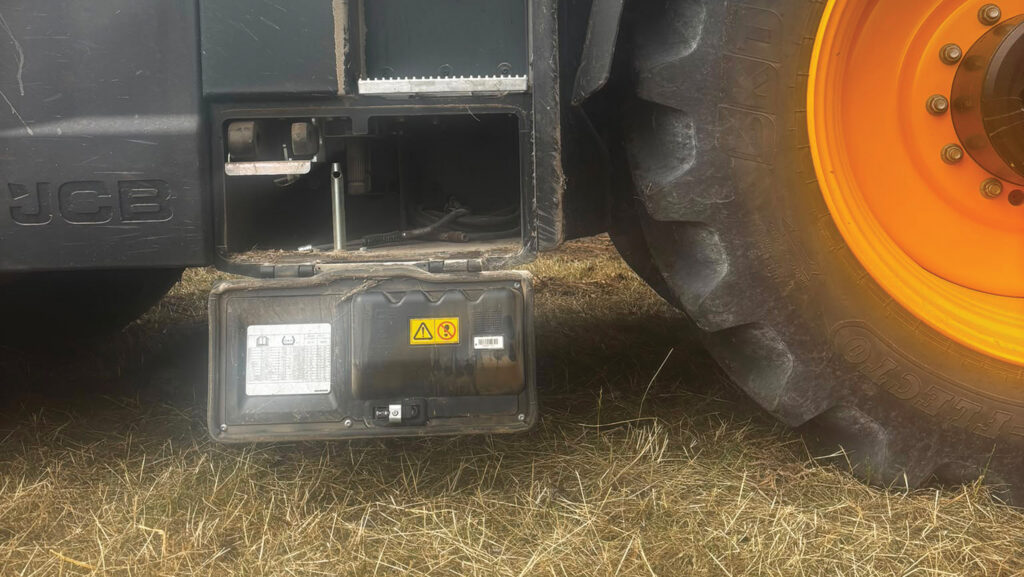
The only other thing worth mentioning is the toolbox lid. I think it should open horizontally rather than vertically, as there would be less risk of ripping it off if you drive away with it left open.
© James Andrews
Likes and gripes
Likes
- Loads of power
- No static range change in transmission
- Large-diameter wheels
- Single-caliper brakes
Gripes
- Windows get sprayed with dirt
- Software not as slick as rivals
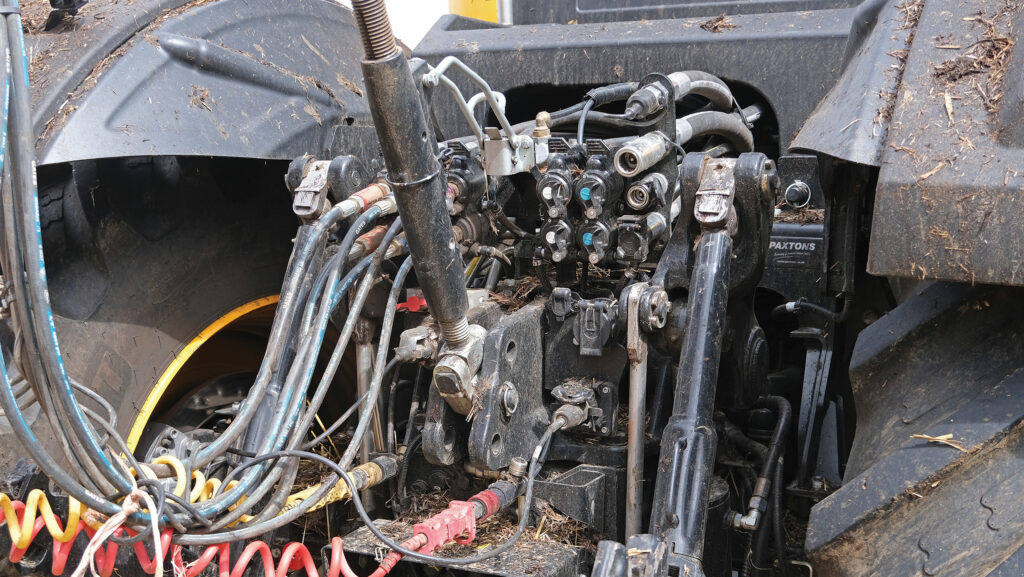
- Untidy hydraulic pipework
- Vulnerable toolbox lid