First impressions: Sharper handling for latest John Deere 6R
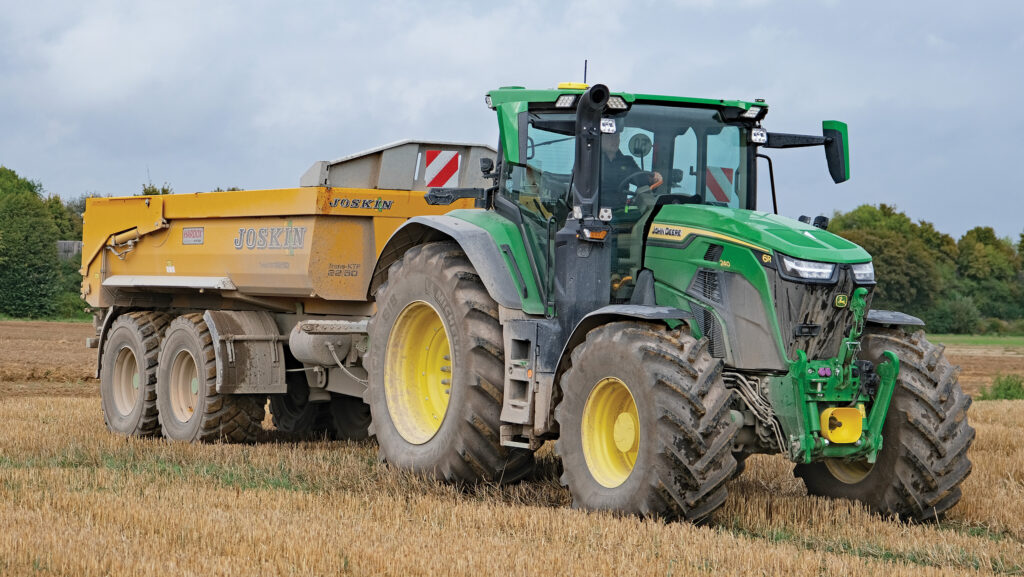 © James Andrews
 When a tractor range is one of Europe’s bestsellers, the last thing you want to do is upset the formula. Get too radical with any redesigns and there is a serious risk of spooking the loyalists.
So, here we are with the 2027 large- and extra-large-frame John Deere 6Rs – the latest in a storied line of mid-sized tractors that can be traced back to the early 1990s.
The core recipe is unchanged, but they have been spiced up with a trick new powershift transmission, a reworked cab, slicker suspension and a raft of technological tweaks.
See also: On test: Time-proven John Deere 6M 155 finally gets 50kph
Model numbers have been shuffled around too, resulting in a new rangetopper for the large frame size.
This 6R 240 puts out a hefty 291hp with boost, giving it a 32hp hold over the former top dog, the 6R 215.
It’s tipped to be one of the most popular of the bunch and may even tempt a few buyers to drop down a chassis size.
There’s more power for the upper echelon too, with the 6R 260 getting 10hp of extra rated power than the 6R 250 it replaces.
What’s this new transmission?
It is called e19 and, as the name suggests, it’s a 19-speed powershift.
New it might be, but Deere’s engineers have managed to create it by harnessing technology they’ve had in the locker for decades.
At its core is the ultra-reliable, if slightly old-school PowrQuad semi-powershift.
This transmission was introduced on the first 6000-series tractors in the early 1990s and is hardier than Donald Trump’s legal team.
To drag it into the 21st century, a double-clutch arrangement has been sandwiched between the powershift clutch packs and range box to give it slick incremental shifts with no torque interruption.
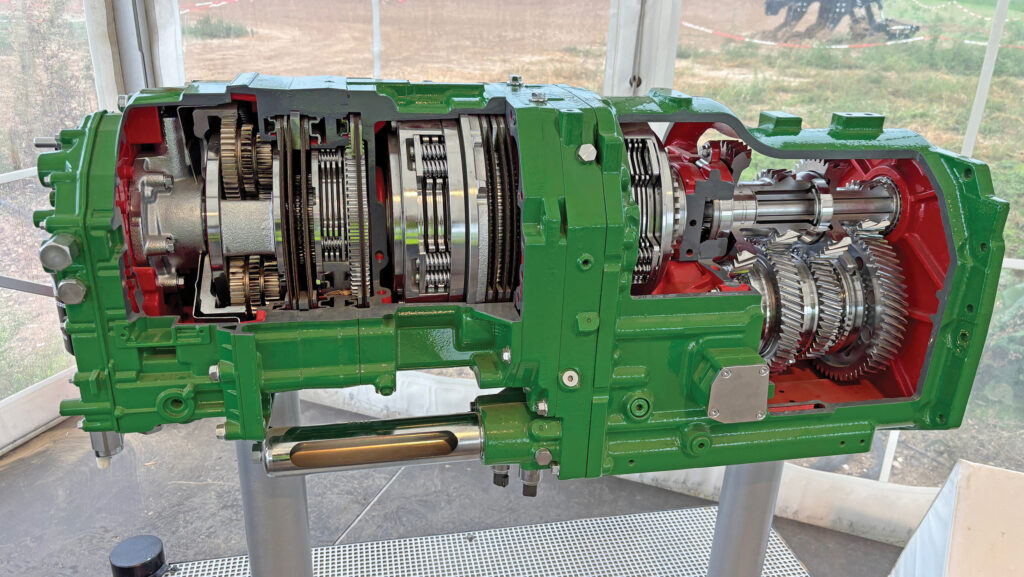
© James Andrews
Changes can be performed manually or automatically, with the latter getting the assistance of sophisticated load and tilt sensors.
These allow it to drop cogs before the engine starts to labour, which should be particularly useful when tackling a hill with a heavy load behind.
An auto clutch allows the tractor to stop and start by pressing the brake pedal alone and delivers the added benefit of making it virtually impossible to stall.
Try starting off in too high a gear and it will dip the clutch, select a more sensible ratio and tell the driver they’re a plonker.
Unlike traditional powershifts, it doesn’t have to notch through each gear in sequence.
This so-called skip-shifting allows it to jump multiple ratios so that the desired gears are selected as quickly as possible.
Such is Deere’s confidence in the e19 that it will be offered throughout the range, except on the AutoPowr-only 6R 240.
One downside of its introduction is that the AutoQuad semi-powershift has been axed from the large-frame tractors. In truth, this won’t be a big loss, as CVT now dominates at this horsepower. However, it raises the question of what the maker will do when these modifications are rolled out to the smaller 6Rs.
Is it better on the road?
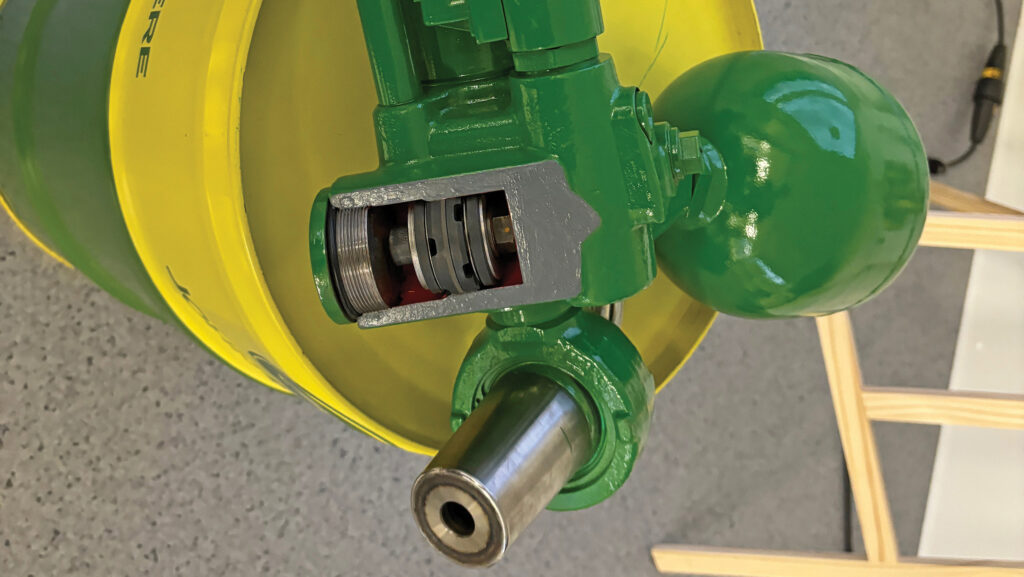
Efforts have been made to sharpen up the 6R’s road handling with a new “sport package pro”, and it does seem to work. The centrepiece is a revised TLS Pro front axle with adaptive dampers that have been titivated by suspension gurus Koni.
These are able to adjust the flow of oil through the internals according to speed, load and the bumpiness of the surface, tailoring the ride to each situation.
Set-and-forget operatives have the luxury of leaving the system to its own devices, while avid tinkerers are able to meddle to their hearts’ content.
The workspace gets plusher damping, too, with lower-friction hydraulic suspension cylinders that attempt to inject Rolls Royce-style suppleness to the ride.
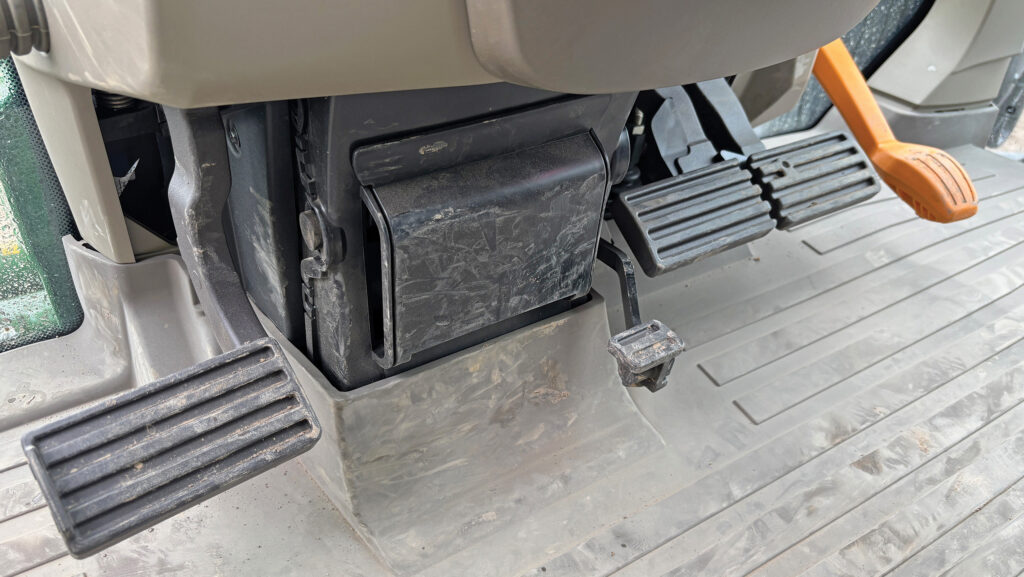
Other enhancements include more responsive steering and redesigned pedals that can be used without lifting heels off the floor.
Top speed is still pegged at 50kph, though they’ll run to about 55kph in reality. This is lower than some key rivals such as larger 700-series Fendts and JCB Fastracs.
© James Andrews
How much has the cab changed?
For the first time since the 6R’s launch in 2011, there is a brand-new cab frame.
The old one was a decent size, but by adding curves to the C-pillars and rear window, designers have managed to conjure up even more space.
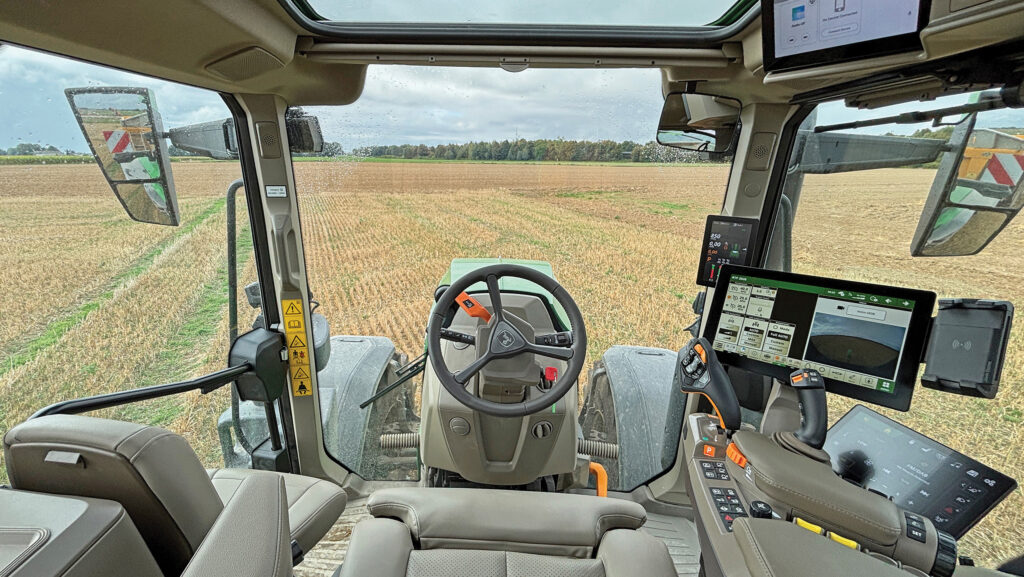
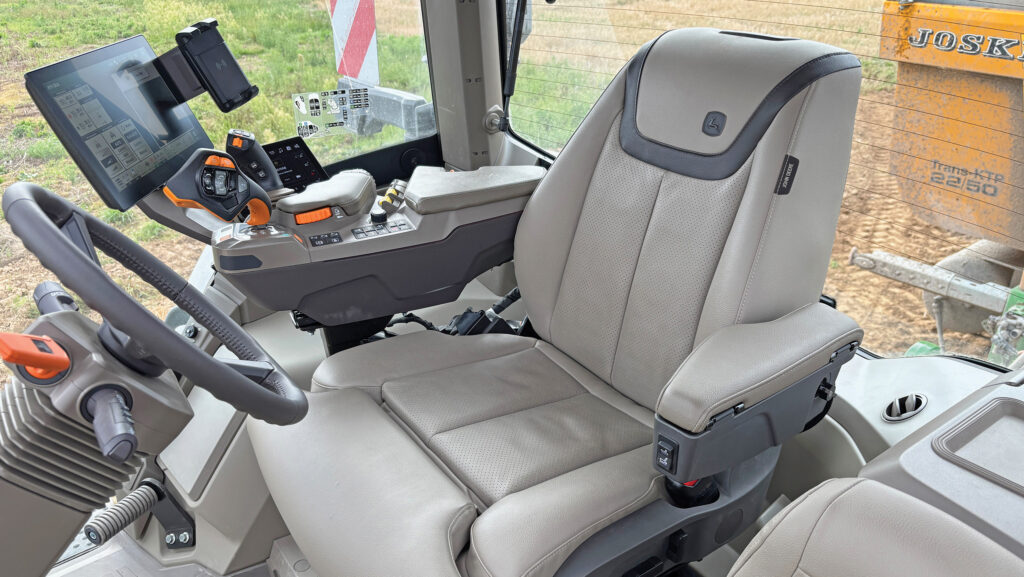
In turn, this has been filled with lots of stuff. There is a large compressor-cooled fridge on the left, a fancier CommandArm and four screens – yep, four.
One is the main G5 display, which handles guidance, isobus, hydraulic settings and lots more besides.
Joining this on the armrest is another “convenience display” that tackles more menial tasks such as seat adjustments, cab settings and climate control.
© James Andrews
There is another on the front cab pillar that acts as a dashboard, and the final one is tucked up in the cab roof to control audio, as well as running Apple Car Play or Android Auto.
Despite all this pixel area, those who want to have a full screen dedicated to guidance/tractor settings and another for isobus implements will need to draft in a fifth.
This slave G5 isn’t that expensive (about £1,000 or so), but it adds yet more clutter to an already busy workspace.
Ears get an easier time of it, with extra sound deadening material and relocated steering and braking components dropping the levels to a serene 66dBA.
There is now Category 4 filtration that can be activated for spraying and the ventilation fans have been fettled so that they make less of a racket at full chat.
© James Andrews
Other perks include a smartphone holder with wireless charging, a 6.1 surround-sound system with subwoofer and four USB-C charging ports.
Even the operator’s perch has got fancier, with the option of a top-spec Vision seat, as found in the maker’s high-spec combines.
It brings in heating, cooling, massage and memory functions. There is even a fan to keep the driver’s neck cool.
Finally, there is a system that pre-boots the display as soon as the door opens. This cuts the usual delay of the electronics waking up, making it quicker to get moving.
Initially, there will only be the option of a five-pillar cab, with a smaller door and separate window on the left side. However, for those who prefer a large single door, this will likely become an option.
© James Andrews
New 6R models
Large frame
- 6R 180 – 229hp
- 6R 200 – 249hp
- 6R 220 – 259hp
- 6R 240 – 291hp
Extra-large frame
- 6R 230 – 281hp
- 6R 260 – 305hp
* Figures are max power with boost
What about central tyre inflation?
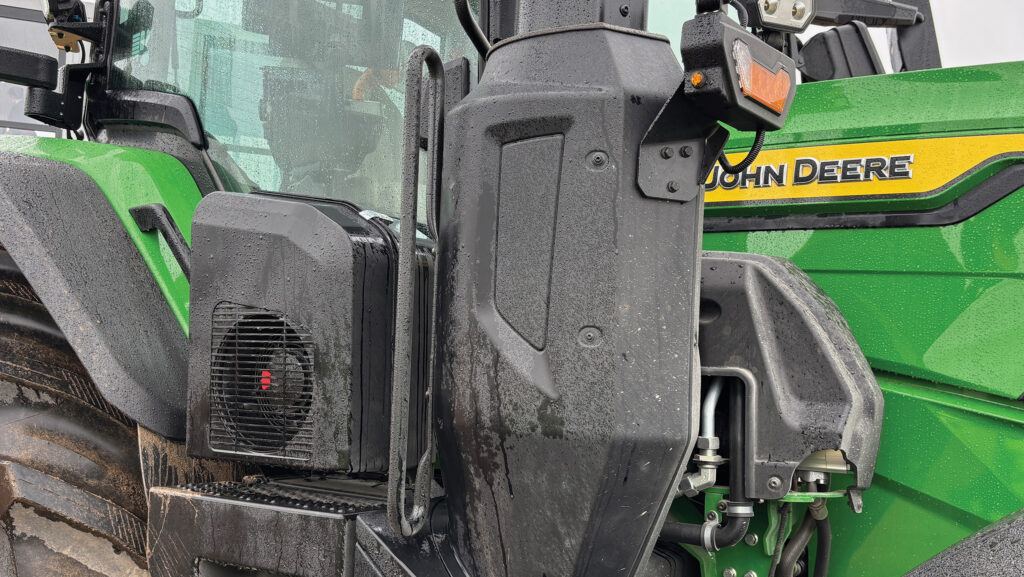
For the first time, the 6R has a proper in-house central tyre inflation system that doesn’t have pipes looped over the fenders.
This single-line setup has its own dedicated 700-litre/min hydraulic-driven compressor and air cooler that result in speedy inflation times.
It’s able to inject 1 bar of pressure in four-and-a-half minutes, making it easier for drivers to run the ideal pressures both in the field and on the road.
Having the compressor and air cooler bolted on the right side of the tractor makes it look clumsier than some competitor’s systems.
But if it performs as advertised, owners will likely forgive the extra machinery.
© James Andrews
Any technology updates?
In the past, it has been possible to spec a 6R without the guidance gubbins included, but it’s now baked into the design. All models now have a Starfire 7500 receiver integrated into the cab roof, a G5 display and JDLink modem as standard.
That doesn’t mean buyers get to use it for free, though. Instead, they have to fork out for unlock codes, which start at about £1,800 for basic guidance and run to about £3,500 with all capabilities unleashed.
This seems a bit mean given the prices these tractors are likely to command, but in reality, it won’t make a big difference to the overall deal.
Verdict
For existing 6R fans, these updates are only likely to add to the appeal.
The ride is comfortable, the cab is better appointed than ever and the new e19 transmission neatly fills the void between the simple AutoQuad and pricier AutoPowr CVT.
Having some additional firepower in the large frame size is another boon for those who don’t want to jump up a chassis size.
Road performance has been a core focus, but whether the handling updates are enough to tempt buyers away from more hardcore tarmac warriors remains to be seen.
6R model specs |
||
|
|
Biggest large-frame model |
Biggest extra-large-frame model |
|
|
6R 240 |
6R 260 |
|
Engine |
6.8-litre John Deere PowerTech |
|
|
Rated power |
240hp |
260hp |
|
Max power with boost |
291hp |
305hp |
|
Max torque |
1,124Nm |
1,217Nm |
|
Power-to-weight ratio |
30.5kg/hp |
32kg/hp |
|
Transmission |
AutoPowr |
AutoPowr or e19 powershift |
|
Rear lift |
9,550kg |
10,400kg |
|
Weight |
8,900kg |
9,850kg |
|
Wheelbase |
2.8m |
2.9m |
|
Hydraulics |
155 or 210 litres/min |
210 litres/min |