

First look: Revamped Valtra T-series gets 10-speed powershift
 © James Andrews
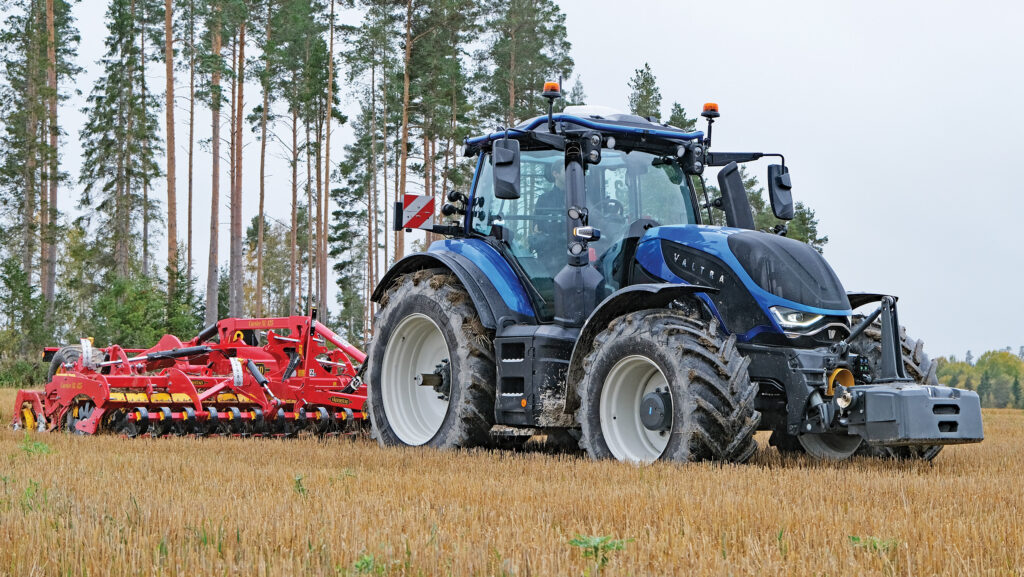
 The Finns like to do things their own way. So, despite Valtra’s new T6 being peppered with shared Agco parts, there is a healthy dose of Suolahti engineering in the mix – not least a new 10-speed powershift that, for now, is unique to these 170-245hp six-pots.
The cab is still built in-house too, and though some of the hardware is shared with Massey Ferguson, the software is homegrown. Then there’s the Unlimited Studio to consider: Valtra’s house of temptation, where buyers are presented with near-limitless options for pimping their ride and emptying their wallet.
The question is, does this blend of collaborative engineering and Nordic individuality make for a winning formula?
Engine upgrade
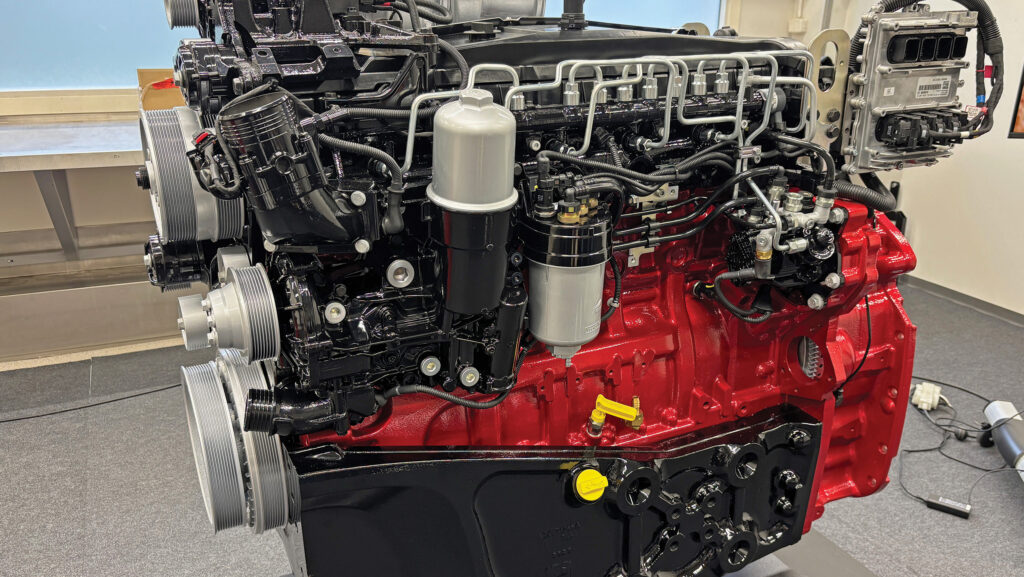
Well, the engine is a promising start. Fendt has surrendered its monopoly on the 7.5-litre Core75 power plant, which now makes its way into the T6, as well as Massey Ferguson’s updated 7S Mark 2.
It is lower revving than its predecessor, delivering maximum torque at a sedate 1,000-1,500rpm. And, thanks to a 40% torque rise, decent reserves are available when it suddenly comes under load. In the case of the flagship T236, 1,184Nm is served up in tandem with 245 horses. Both figures are higher than the former T255 range-topper, though this tractor could muster 271hp with boost.
Valtra T236 spec
- Engine 7.5-litre, six-cylinder Agco Power
- Max power 245hp
- Max torque 1,184Nm
- Transmission CVT, 10-speed powershift or five-speed powershift
- Rear lift 9.5t
- Front lift 4t
- Turning radius 4.9m
- Wheelbase 2,950mm
- Hydraulics 200 litres/min
See also: 11 new Valtra S376 tractors – JSE’s buying decision revealed
Fuel use is reckoned to be 5% leaner and it manages to meet emissions regulations without having an EGR pumping grotty exhaust gases back through the cylinders. A bigger cooling pack has also been introduced, and a reversing fan can be added to help keep the screens debris-free.
Another perk is its rear-mounted timing gear. This has allowed the front of the tractor to be nipped in so the wheels can turn tighter. So, even though the wheelbase is a lengthy 2,950mm, the turning radius is a dainty 4.9m – a full 35cm less than than the old T5.
© James Andrews
What about transmissions?
Few will be sad to see the back of the old Direct gearbox, which could never really claim to be fully stepless. In its place comes Agco’s stalwart ML 180, which has been fitted in countless Fendt and Massey Ferguson models over the years, plus outsiders such as the JCB Fastrac.
The static range change required when switching from field to road mode is a tad retro, but it’s a solid performer. And yes, it can go wrong if treated harshly or run to high hours, but reconditioned units don’t cost the earth.
Owners of larger Valtra Qs will already be au fait with the setup, as these tractors run the heavier-duty ML 260, which operates in the same way.
For those who would rather have cogs than hydrostats, the Valtra-built 10-speed powershift will fit the bill. This gets closer to the performance of a CVT than the maker’s previous five-speeder, with snappy automatic shifting, electronic power management and a hill-hold mode that automatically applies and releases the brakes.
Both of these transmissions have a top speed of 57kph. However, while the CVT requires the engine to rev at 1,950rpm, the powershift gets there with just 1,820rpm. If the traditionalists are starting to panic, it’s not all change; the old four-range, five-speed powershift will remain on the options list for now.
© James Andrews
Valtra T6 models
- T146 – 170hp/815Nm
- T156 – 185hp/879Nm
- T176 – 200hp/949Nm
- T196 – 215hp/1,019Nm
- T216 – 230hp/1,095Nm
- T236 – 245hp/1,184Nm
How about the cab?
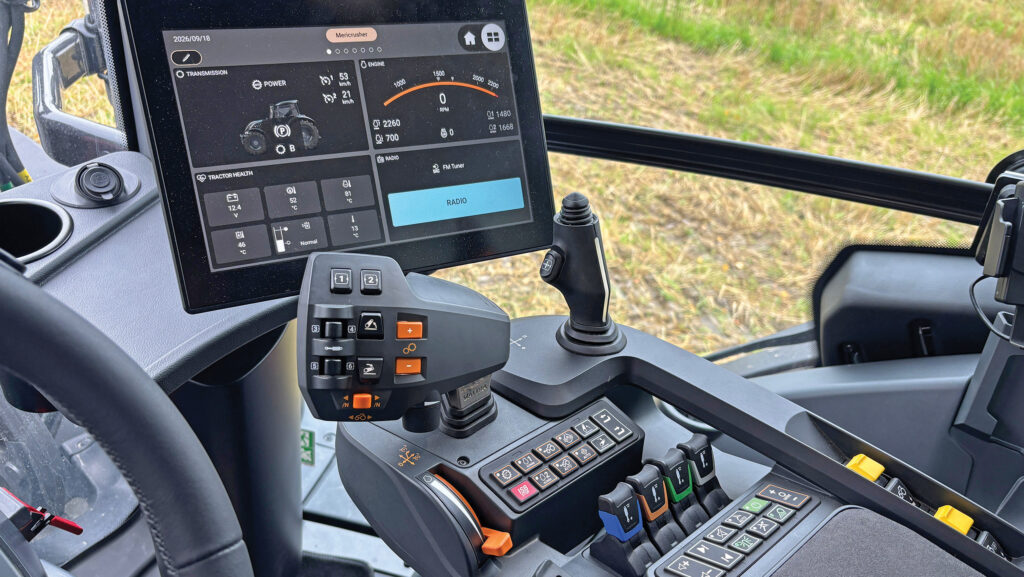
The frame is the same, as are some of the core controls, but there are plenty of updates to mention. Among them, the 12in screen, which takes centre stage on the SmartTouch Gen2 armrest. This is 33% larger than its predecessor and, thanks to a separate control unit, has 10 times the processing power.
As a result, engineers have been able to give operators many more functions to play with: 16 separate viewing areas, personalised profiles for people and implements, and more sophisticated guidance. There’s even a QR code system for helping navigate to individual fields.
© James Andrews
Oh, and there are no more excuses for shirking on the greasing, as the screen is programmed to dish out timely reminders. It will also integrate with PTx Farm Engage cloud software, which allows information to be downloaded, viewed remotely and shared with other platforms.
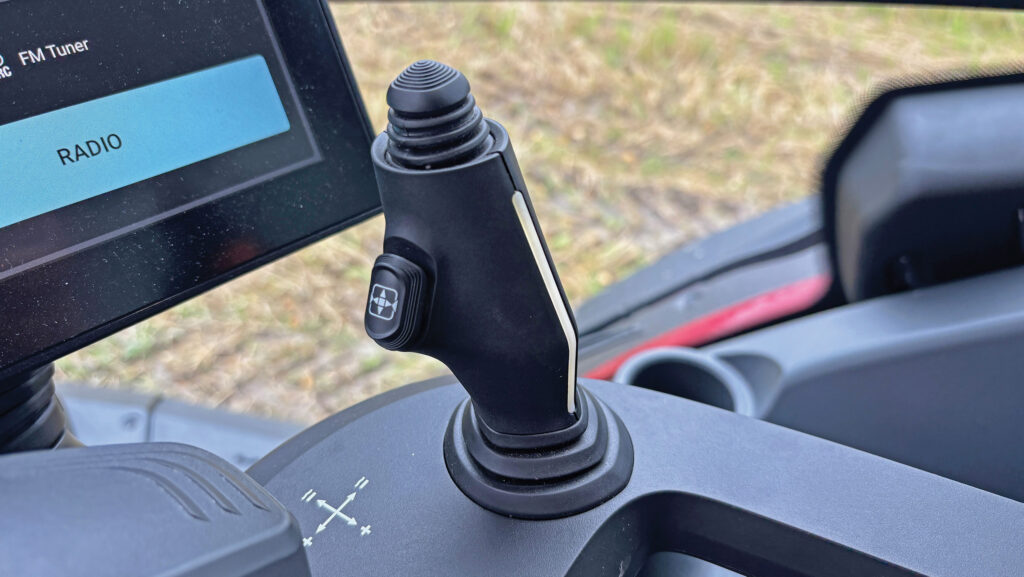
Most physical controls are unchanged, but the secondary hydraulic joystick has been overhauled with a raft of extra programmable buttons. These can either be set to control tractor functions or isobus implements.
© James Andrews
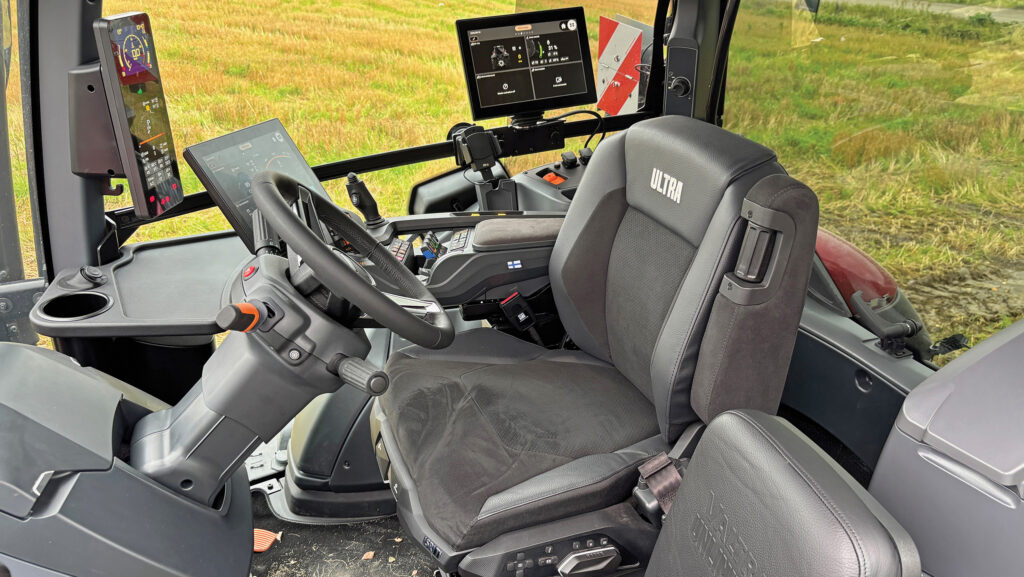
For a simpler driving experience, there’s the Active Gen 2 armrest. This is available on both CVT and powershift tractors and makes do without a screen or multi-function driver lever.
Instead, settings are viewed on the A-pillar display and there’s a simple thumb lever for operating the transmission. It does come with the programmable hydraulic joystick though, which can be set up as the driver wishes.
Should anyone want to go higher-tech in the future, there are mounting points for a SmartTouch Extend screen.
Interior finishes have been ratcheted up a notch, with a new top-spec “ultra package”. Standard features include a plush Isri seat with memory and massage functions, an Alcantara headlining, a wireless phone charger and a 12-litre coolbox that can double up as a food warmer when required.
Delve into the ever-expanding Unlimited studio and you can add everything bar the kitchen sink. There’s even a built-in coffee maker on the latest options list.
More importantly, the cab can now be ordered with category 4 filtration from the factory, giving sprayer operators proper protection.
This setup comes with an easy-to-remove carbon filter, so that the active ingredient isn’t wasted on regular duties. Handily, there is an automatic counter that gives drivers a nudge when it’s due to be replaced.
© James Andrews
What else has changed?
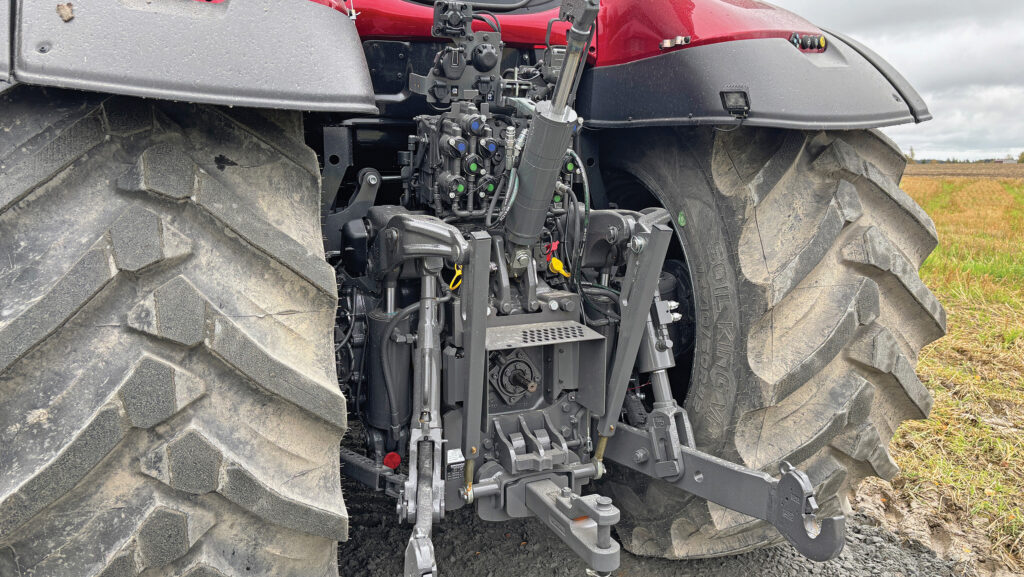
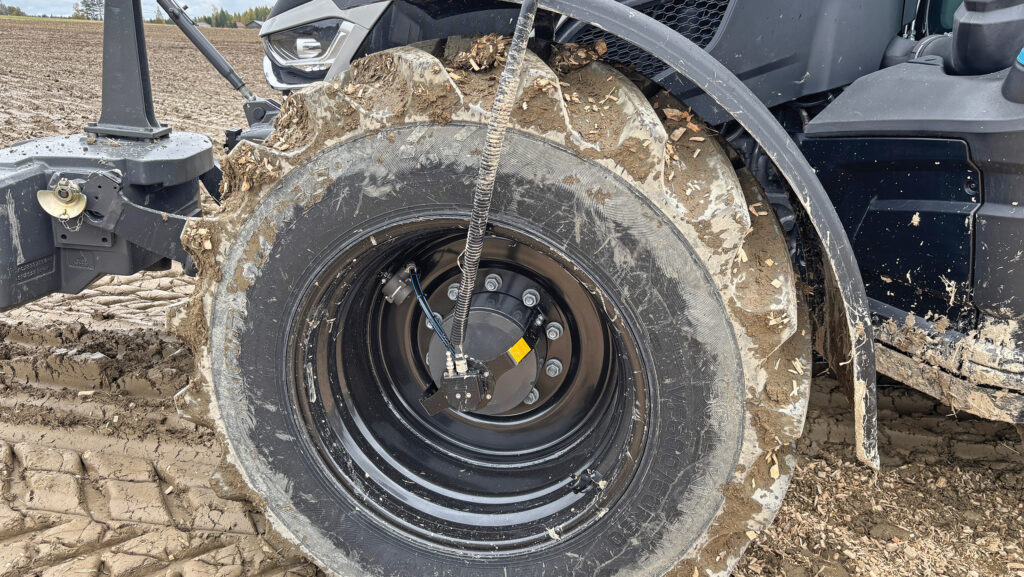
Updated pneumatic suspension has been drafted in for the front axle and cab, and factory-fitted central tyre inflation is now on the menu. As Valtra is unable to cramp Fendt’s style, this is an untidy pipework-over-the-fenders affair. If this is a deal breaker, it’s probably worth upgrading to green and red livery.
There are a couple of clever systems on offer, though. One is ground speed hydraulics, which, as the name suggests, alters oil flow according to how fast the tractor is moving. It could prove useful for automatically adjusting drill fans, muckspreader bed chains or forage wagon floors.
Another is a smart front linkage that delivers similar levels of control to a rear setup. This includes the ability to set a position and alter the draught relief pressure in the terminal. In theory, it should help achieve more even ground pressure when working with front-mounted cultivators and presses.
The final feature that’s worth a mention is Tractor Implement Management. This arrival means implements are able to take charge of the tractor and alter speed according to their needs.
© James Andrews
Farmers Weekly verdict
By giving the T-series a gutsier engine and slicker transmissions, Valtra has significantly strengthened its hand. In performance terms, there’s now very little to separate a CVT T6 from Massey Ferguson’s new 7S Mark 2.
Deciding which to plump for will largely come down to the buyer’s preferred dealer and which cab they like best.
Valtra definitely loses when it comes to internal space, but the jazzy trim options make it a more exciting place to sit.
The Finns also score with their abundance of options. Having the ML 180 CVT, two powershifts, and a bounty of custom options means there should be a tractor to suit most buyers.