What’s in Your Shed? visits a Cornish family dairy farm
 © Andrew Faulkner
 Salty sea air and cow slurry make for a challenging machine environment, as Farmers Weekly discovers on a shed tour at Chris Knowles’s Trink Farm, near St Ives, Cornwall.
Farm facts
Trink Farm, St Ives, Cornwall
- Farm size 263ha
- Soil type Light sandy soil over granite
- Cropping 202ha of grass, 61ha of moorland
- Stock 280 Jersey cross Friesian milkers plus 120 followers. Beef calves sold at three weeks. Cows milked once a day
- Staff Chris Knowles, wife Rachel and daughters Maddy and Naomi. Other full-time farm staff are Lawrence Pullen and Ben Hill. Three part-time on milk wholesale/retail enterprise
See also: Cornish contractor diversifies with slurry bag hire service
How did you get started?
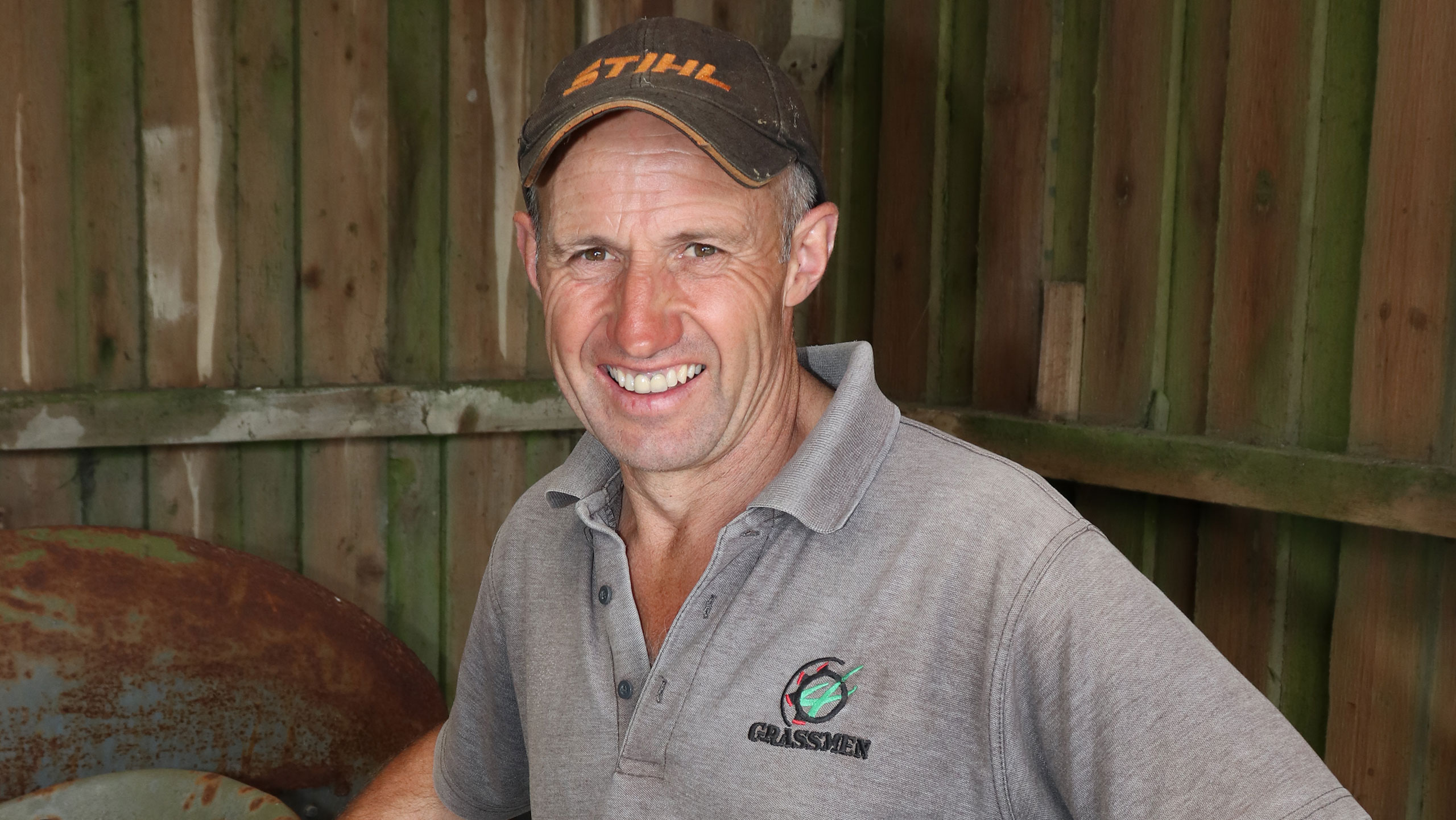
Mine is the classic farming family story.
My grandfather came to Trink Farm in 1962, my father grew up here and spent his whole life on this farm, and, barring anything unforeseen, it looks like I’m heading in the same direction.
I’ve rarely been out of Cornwall… and very happy to keep it that way.
Chris Knowles © Andrew Faulkner
Admittedly, I did manage a three-year HND at Seale-Hayne.
But I took some persuading to cross the River Tamar into Devon, and, without some gentle pressure from father, I probably wouldn’t have made it to the bridge.
I’ve been back home in Cornwall since leaving college in 1991 and have no regrets.
Over the past 35 years there has been a huge amount of change. In the early 90s my father was running a contract silaging outfit, and, by his own admission, the dairy side of the business was pretty much freewheeling.
It soon became clear that we needed a rethink, because the contracting enterprise wasn’t making any money.
© Andrew Faulkner
Today, our Jersey cross Friesian cows are the farm’s main focus. The herd currently numbers 280, with 90% of our milk going to Arla Foods.
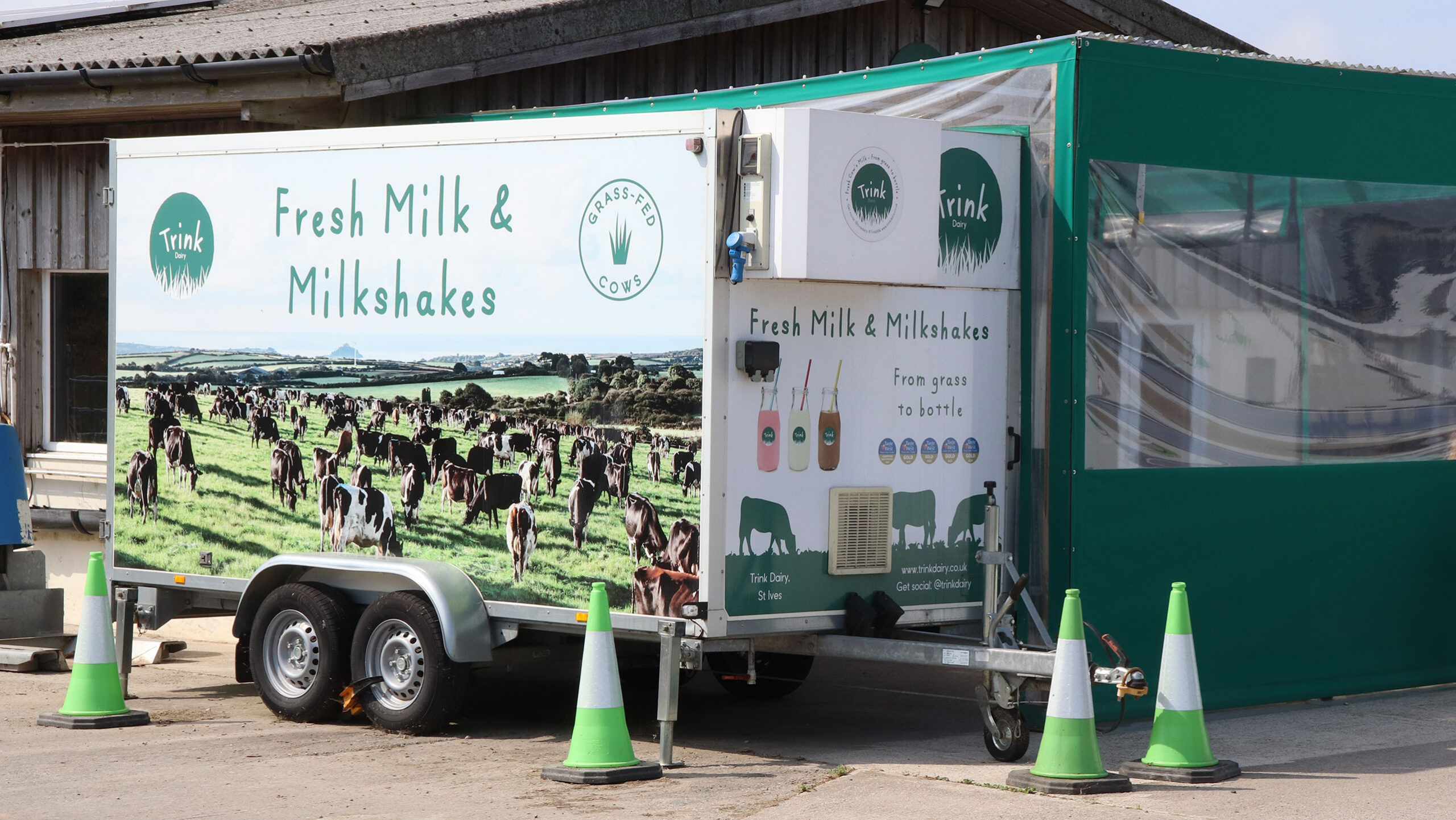
The remaining 10% is either sold through a couple of local wholesalers or retailed direct, either as liquid, yoghurt or flavoured milkshakes, to customers via our on-farm vending machine.
My wife Rachel and oldest daughter Maddy manage the added-value side of the operation, while youngest daughter Naomi, carries out most of the tractor work. Middle daughter Tamsin, is working away from home, but may well return in the future.
On the machinery side, we mix doing the field operations ourselves, running our own or shared kit, with employing contractors for jobs such as baling – all our silage is baled – and umbilical work.
I enjoy having our own kit and, perhaps unusually for a dairy farmer, I’m interested in it.
Yet I’m very conscious of the financial drag of owning too much, hence the strategic use of contractors.
The reality is that, despite our best efforts and intentions, machines here do have a hard time.
The damp, salty sea air isn’t kind to paintwork, and, add in the effects of working with muck, slurry and granite outcrops… well, let’s say it’s a challenging environment for any piece of kit.
© Andrew Faulkner
How brand loyal are you?
Reasonably. I’ve run predominantly Massey Ferguson tractors, right back to a 390T that I had in the 1990s. But that’s not to say we’ll always stay red.
Next time we’ll look at some other brands, including Deere and Case, although a big part of the decision will be down to the money.
When we priced up a Deere back in 2020, it was £20,000 more to change, so we stuck with Massey, because I wasn’t convinced we’d see the premium back.
Also, Naomi’s preference will be a factor, as she’s the main operator.
On other kit, the fleet is relatively mixed.
My default position has been to go to Beares in Truro and see what its options are for a specific problem. The firm has been very supportive over the years.
© Andrew Faulkner
Favourite dealer?
I’m more dealer loyal than brand loyal. As mentioned, Beares is a particular favourite.
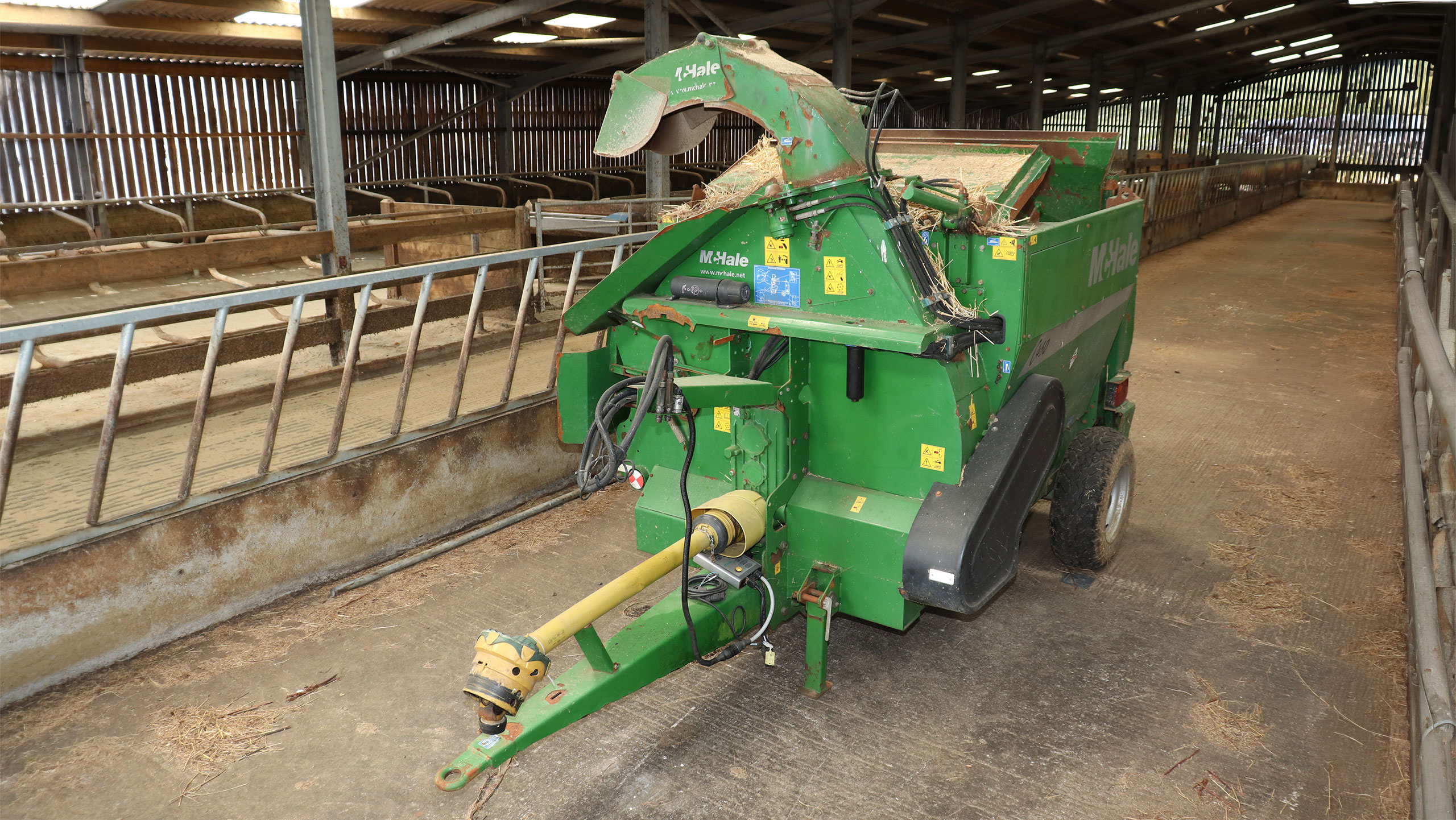
Its brands tend to feature prominently in our yard – Kuhn fertiliser spreader, Shelbourne Reynolds sand spreader, McHale mower and bedder, McConnel hedger and Conor tanker. I trust the firm’s advice and generally take it.
Another favourite is Rundle & Co at Penryn for the Masseys, although its yard is a 45-minute drive away – and often more during holiday season.
We used to have Symons Agricultural just down the road in Hayle, but it’s long gone.
Sadly, as in other parts of the country, we’re having to travel further for dealer coverage.
© Andrew Faulkner
Favourite piece of kit?
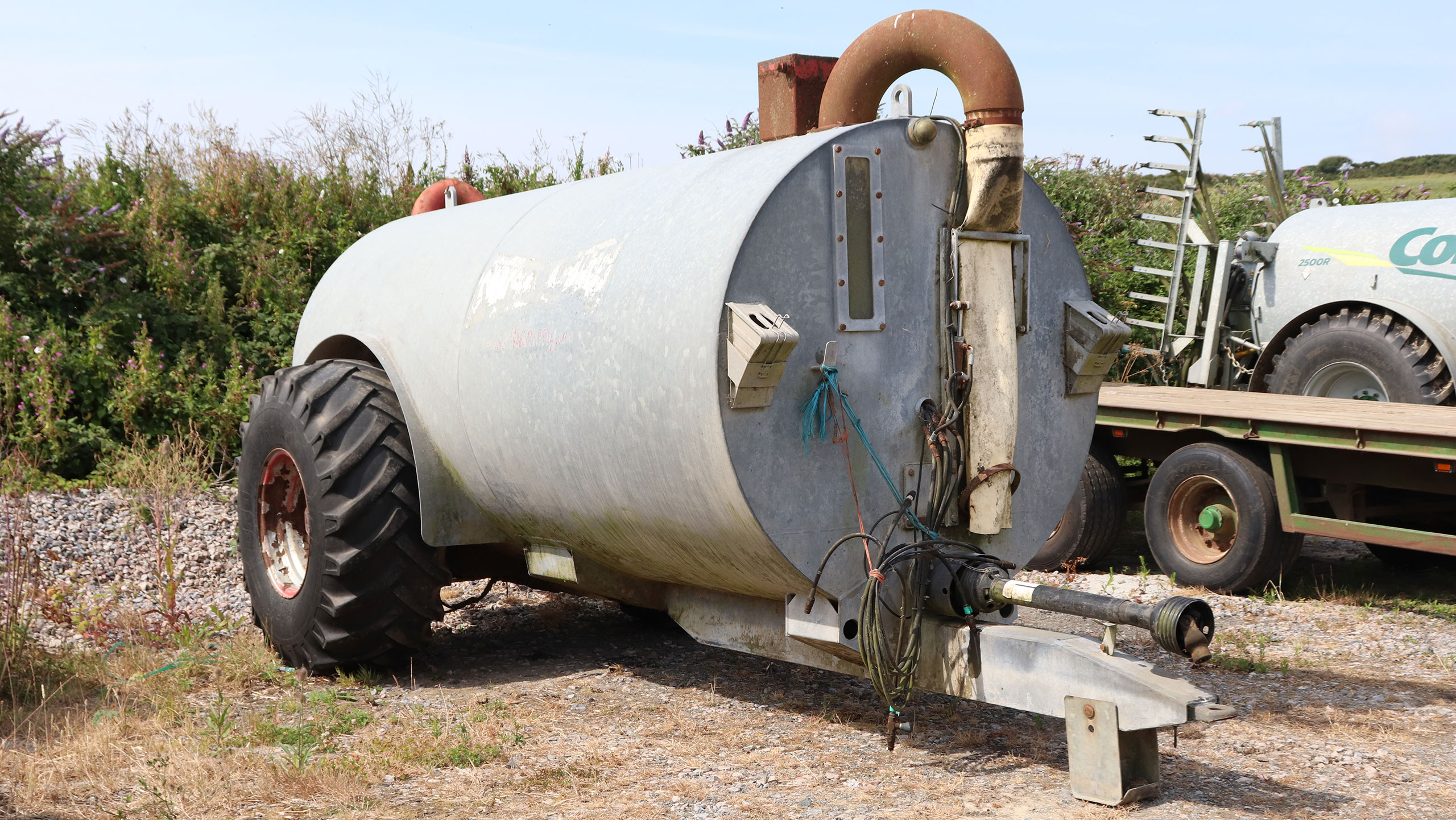
Probably a surprising choice for many, but I love our 2,250-gal Slurry Guzzler, largely for its simplicity.
There’s not much to go wrong – just a tank, a mechanically driven impeller and a hydraulic gate – and it will handle pretty much any material, including sand.
The downside is that you have to reverse all the way into the lagoon to load, which means you inevitably leave a trail of slurry on your way out, so we’ve come up with routes to minimise the impact.
We’ve run Guzzlers since way back in the 1990s, progressively increasing their capacity.
Our current model arrived in 2014 for £17,000, and we’re going to have make it last as, sadly, they’re no longer in production.
Our other tanker, a Conor with the trailing shoe, does a great job when it’s working but there are too many sensors on it.
For example, we’ve had several issues with the sensor that confirms whether the boom is properly located in its work position. It’s downtime that we could do without.
Least favourite?
When we went to all round-baled silage in 2018, we thought the McHale Bale Splitter loader attachment would be ideal – simply drive down the feed passage and split the bale.
The two halves would fall apart to either side, up against their respective feed fences.
Great theory. And it works when the knife is super-sharp and the bales are low in dry matter. Otherwise, the knife creases rather than cuts.
Let’s just say it’s been a long time since we last used it. So £1,300 not well spent.
© Andrew Faulkner
Latest purchase?
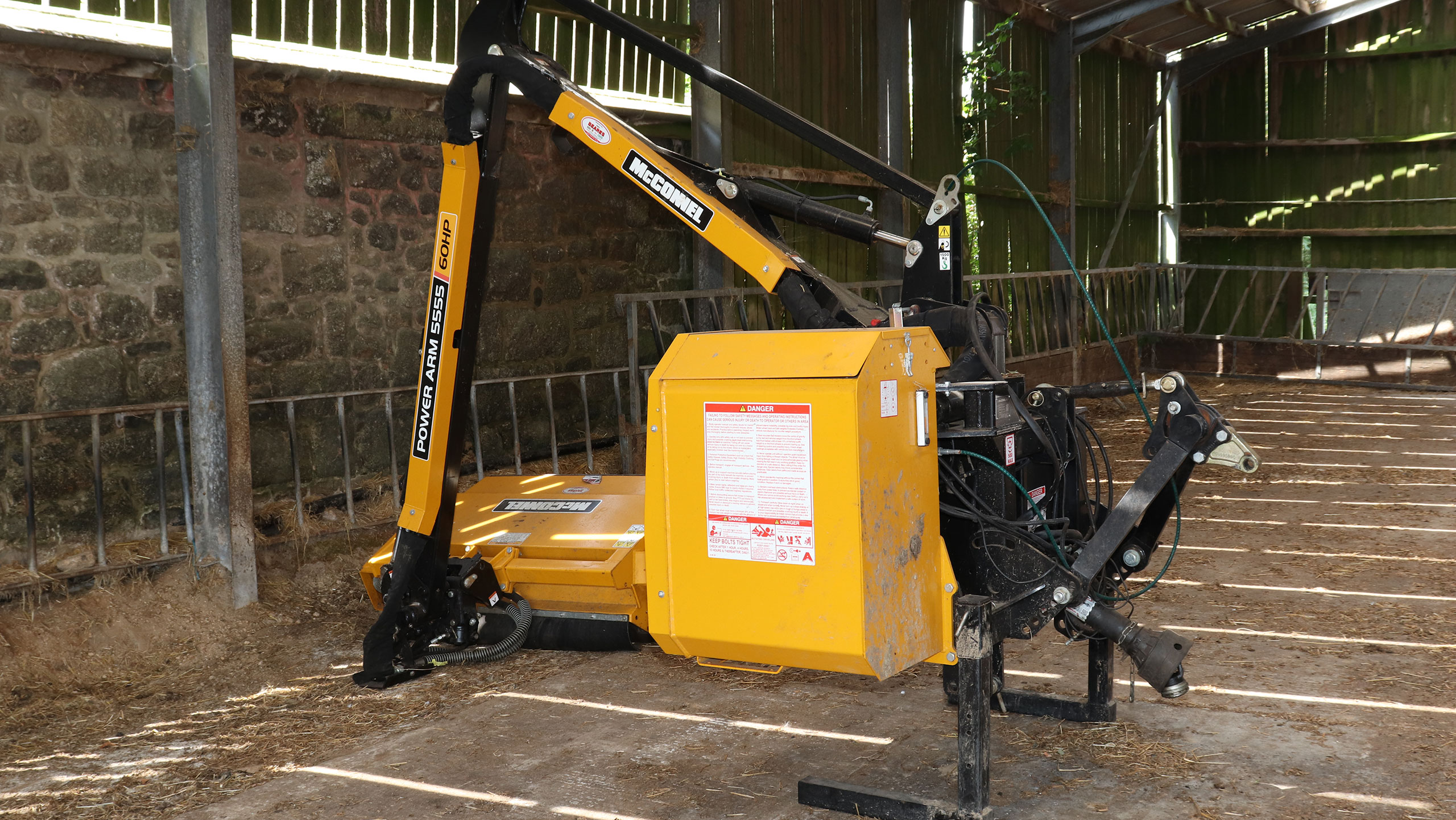
Naomi convinced me to part with £22,500 for a McConnel PA5555 hedger last year, and it’s been a big success.
We can now cut our hedges when it suits us, which means September and October rather than November and December when the cows are back indoors.
Another major plus is the hedger’s Orbiter head kit. This effectively enables us to trim within the width of the tractor – a “must” in our narrow Cornish lanes, in which you struggle to fit a tractor, let alone a flail head out to the side.
© Andrew Faulkner
Oldest machine still at work?
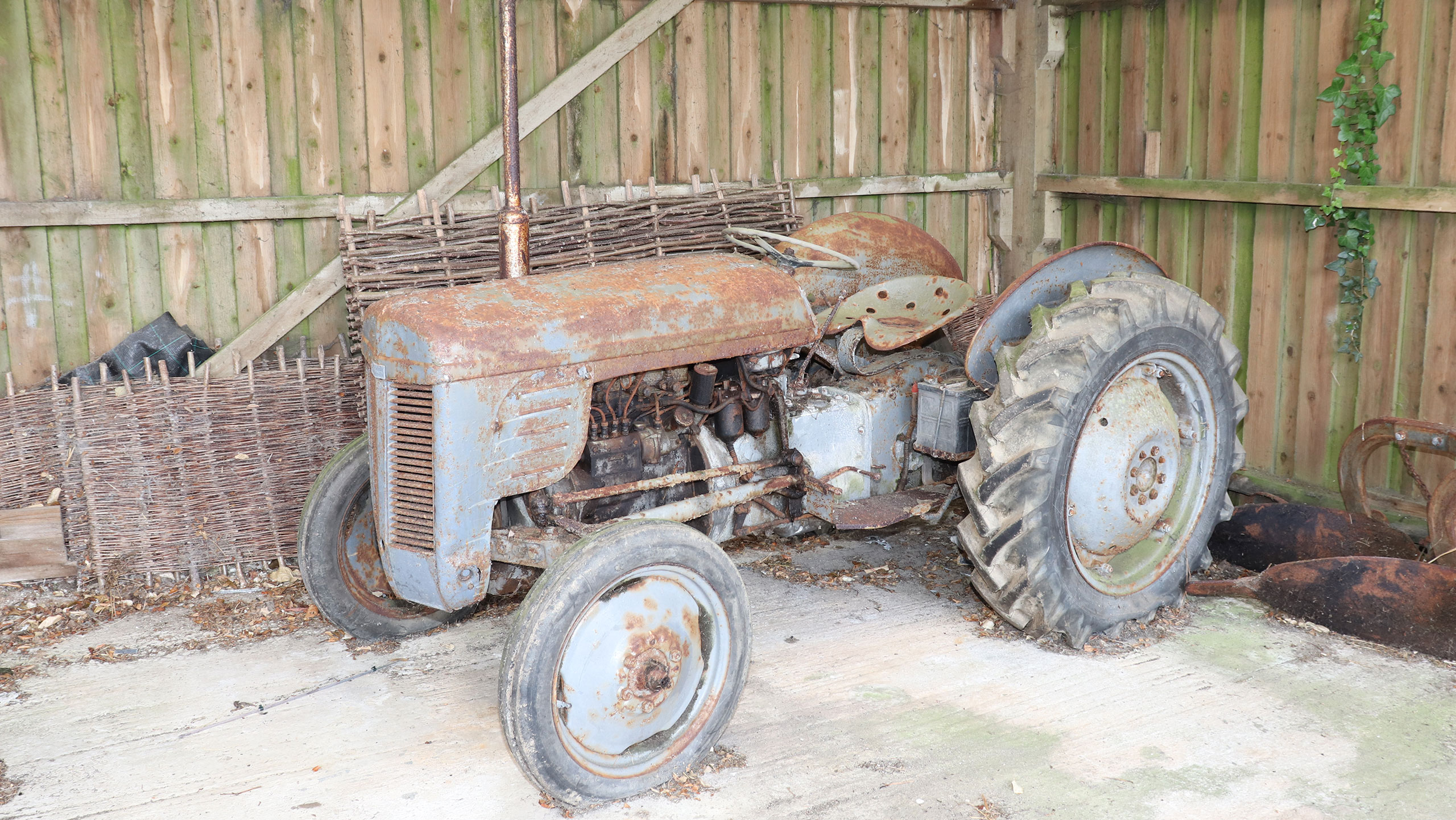
Other than me, it’d be grandfather’s 1950s Ferguson TE20, though it’s now in need of some serious renovation.
Back in the day, this little tractor would have pulled a 3t silage trailer and two-furrow plough, and both father and I learned to drive on it. She won’t be scrapped, that’s for sure.
How long do you keep your kit?
It varies, depending on the type of machine and its workload.
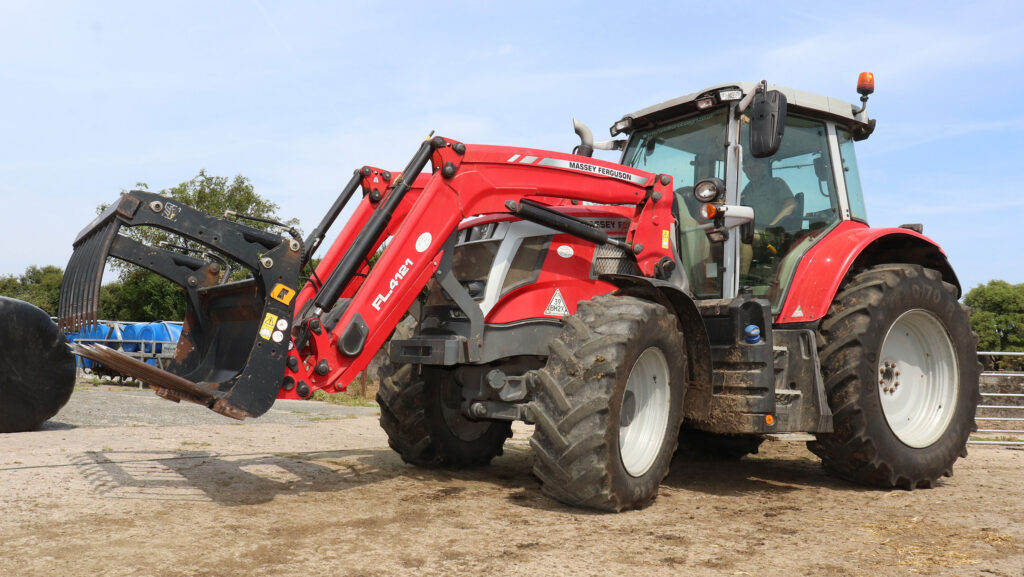
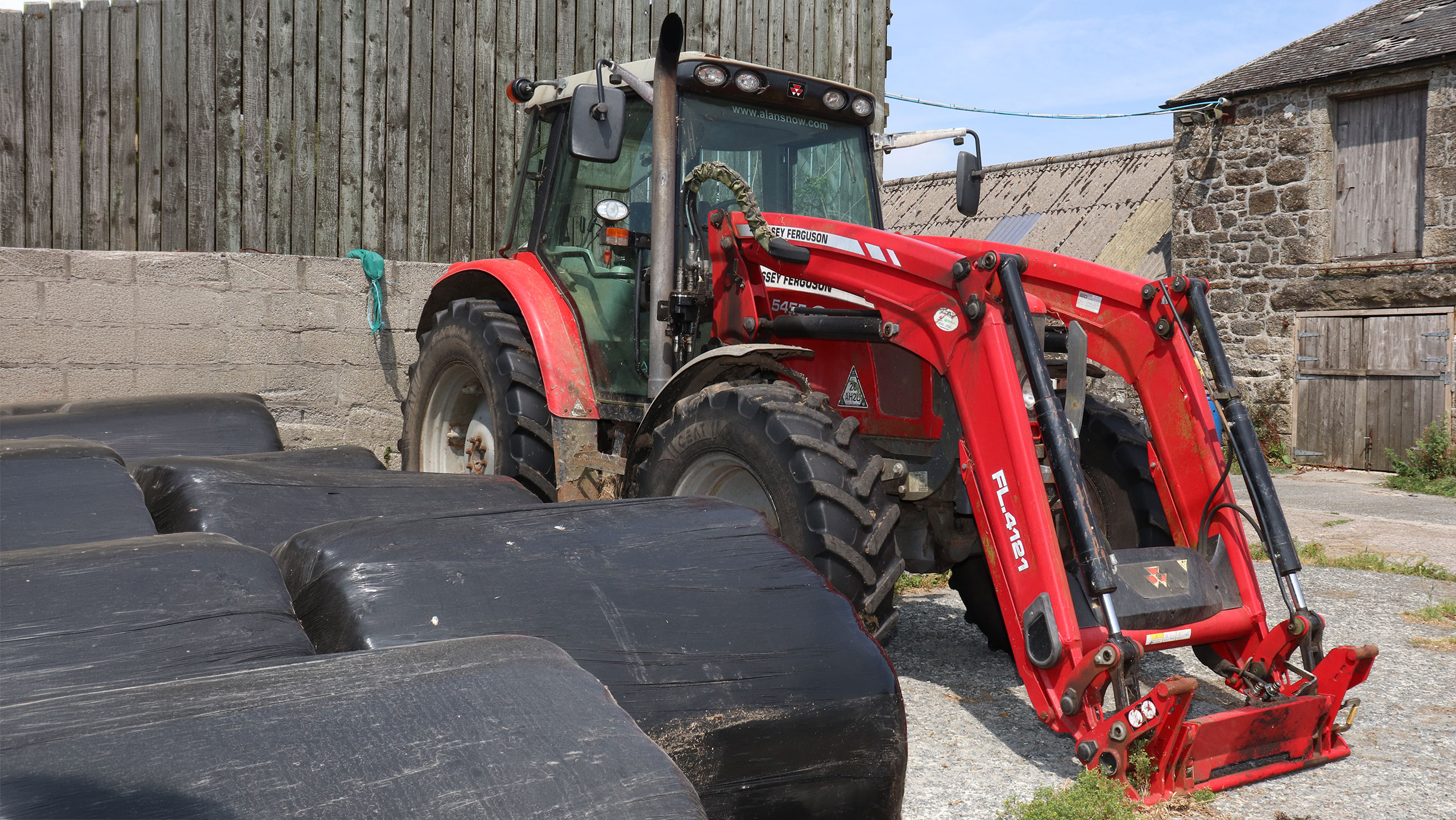
The main tractor is typically changed at five years/6,000 hours, so the current 6S135 is due to go next year, whereas the back-up tractor, the 5455, will be run on until it starts to give trouble.
We bought the 63-plate 5455 from Rundles for £28,000 back in 2021, when it had 3,500 hours on the clock.
Now it’s showing 7,800 hours, so it isn’t doing many fewer hours than the 6S.
Being a four-cylinder, it’s more compact than the 6S and handier around the buildings.
The dilemma will come when we do decide to upgrade the 5455, as to whether we go for a telehandler.
For now, I’m happy to stick with the two loader tractors.
They give us more flexibility on field work, and we’ve managed without a specialist handler till now.
Next on your wish list?
There are several: a telehandler (unlikely), a six-rotor tedder (more likely) and a new livestock trailer (a dead cert).
The existing Ifor Williams is looking distinctly tired, so I plan to upgrade to a 14ft triple axle with a removable livestock body.
‘Removable’ suits us, as we often need a flatbed.
The only potential issue is that you’re restricted on choice of running gear, as the wheels clearly need to fit under the livestock body.
Most embarrassing mistake?
It was many years ago, thankfully. We got a trailed silage harvester stuck with a loaded 7t Teagle trailer on behind.
The obvious solution was to drop off the trailer. Which we did.
However, we didn’t factor in the slope, so the now decoupled trailer headed off, under its own steam, down the hill, through a hedge and finally landed after an 8ft drop into the lane below.
Fortunately, no-one was hurt, other than our backs after having to manually dig out most of the trailer’s contents before it could be rescued. Not our finest hour. Or four.
Punchiest repair bill?
In 2020 a car had gone into a hedge over winter and managed to shove a boulder out in the field. We didn’t know it was there, until we went mowing in the spring.
Mower beds and granite don’t really mix, and Cornish Mutual ended up writing off the machine – a Krone Easycut 320. That was when we upgraded to the current Easycut 320.
Most expensive spare part?
Around £300 for a tractor wing mirror unit or £60 for just the glass seems like ridiculous money, especially when we average a mirror unit and three glasses every year.
The nearside one generally cops it on these narrow lanes, as you’re forced into the hedge to let oncoming traffic squeeze past.
Best invention?
More modification than invention, we doubled the lift height of a pump truck, from 1ft to 2ft, to enable us to lift milk vats into the vending machine.
It’s much handier for the job than using a tractor and loader, our previous system.
The original pump truck came from an online sale of ex-Plymouth Dockyard kit. I paid £250 for it.
What couldn’t you live without in the workshop?
We have something better than a workshop: it’s self-employed engineer Ross Haylett and his van.
Completely self-taught, Ross has been coming to us for years and does everything – spanner work, welding, fabricating, electronics.
He’s an excellent solution finder, and we’d be lost without him.
Favourite and least favourite jobs?
Top job is mowing, either pre-mowing ahead of grazing or for hay/silage.
You can see exactly what you’ve done, it’s generally in good weather, and there’s not much to go wrong – other than smacking into granite outcrops, of course.
In direct contrast, I’m not fond of anything to do with the vacuum tanker: from struggling to secure pipes in the pit, to climbing into the back of it to dig out sand. Cramped, hot, smelly. Not pleasant.
© Andrew Faulkner
What’s your everyday transport?
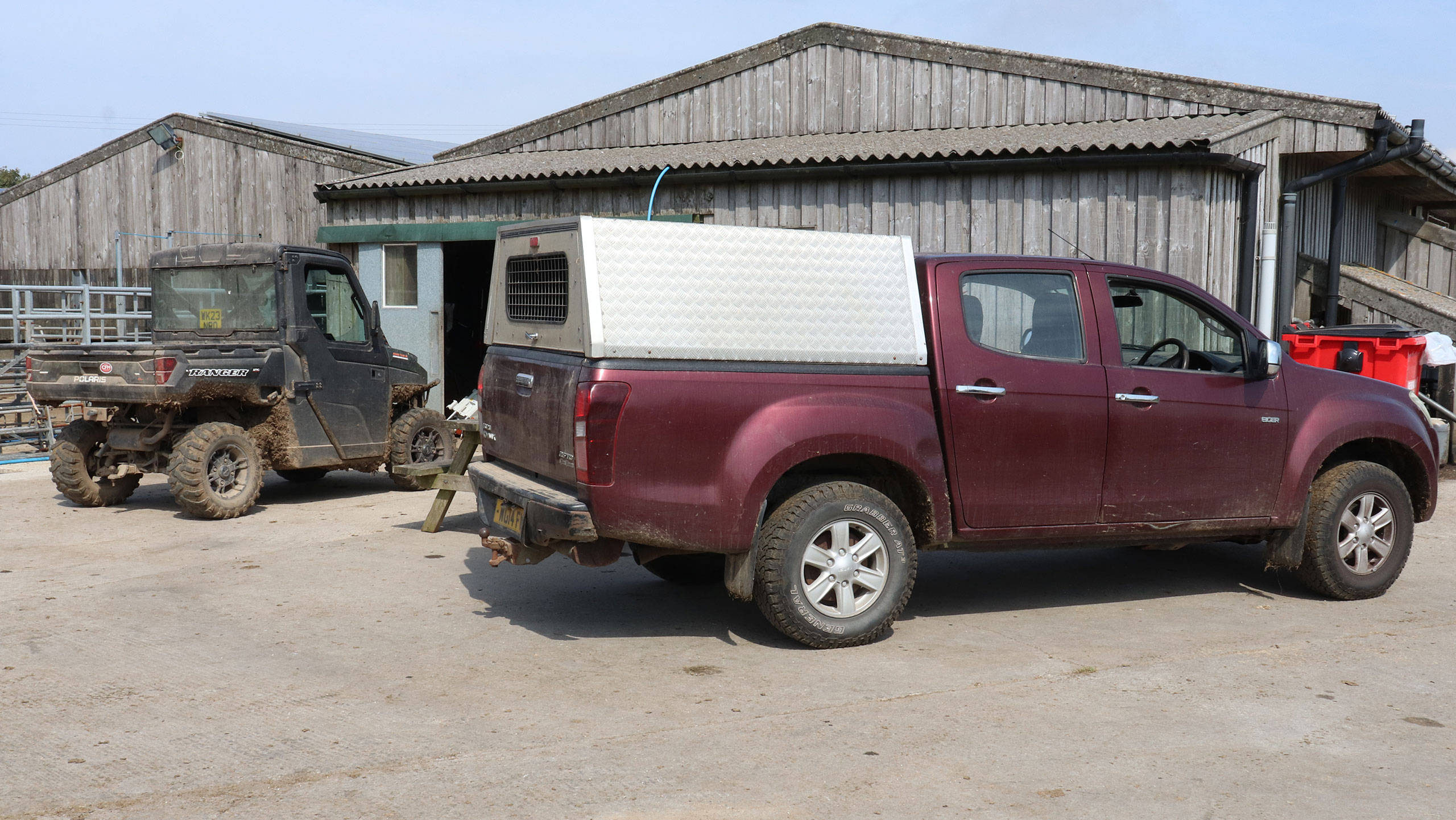
Transport duties are shared between a 14-plate Isuzu D-Max Eiger double-cab and 23-plate Polaris Ranger diesel.
Both are given a fairly hard time, and neither of them enjoy the combination of sea air and slurry. Bodywork is suffering.
We’ll keep the pickup until it dies, but tend to change the UTV every six to seven years.
Next time we may go for something like a Chinese-built CF Moto petrol, as the more mainstream models are getting so pricey.
We paid £20,000 for the Ranger three years ago; in another three years I’d probably have to spend £30k-plus.
Best tractor you’ve had?
Probably the 4WD MF 390T that I bought a couple of years after leaving college.
We paid £20,000 for it in 1993, kept it for 20 years and eventually sold it for £9,000. I wish I’d hung onto it, as it would be worth way more than £9,000 today.
No electronics, no AdBlue, all mechanical – the tractor was pretty much bombproof. In 14,000 hours, all we did was a few UJs and clutches, largely down to the loader work.
And the worst?
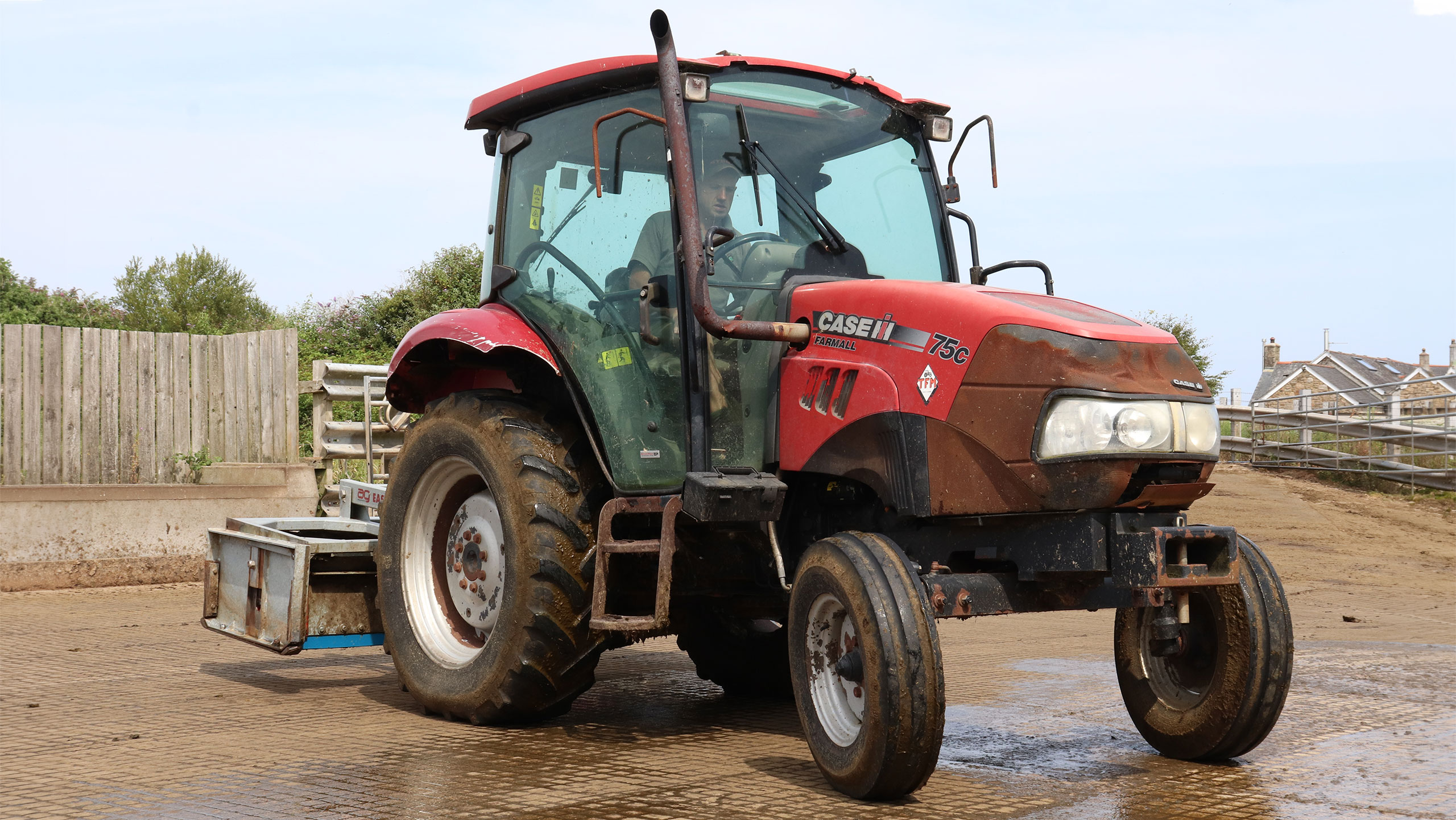
A 55hp New Holland TD 5.65 scraper tractor that we bought new in 2015 for £17,000 and sold three years later.
It had a manual shuttle with completely the wrong geometry; it was so stiff that it wouldn’t change gear. Nobody could get on with it, and we were glad to see it gone.
We spent £25,000 on its replacement, the current Case IH 75C with a hydraulic shuttle, and that’s been much better
© Andrew Faulkner
Biggest bargain?
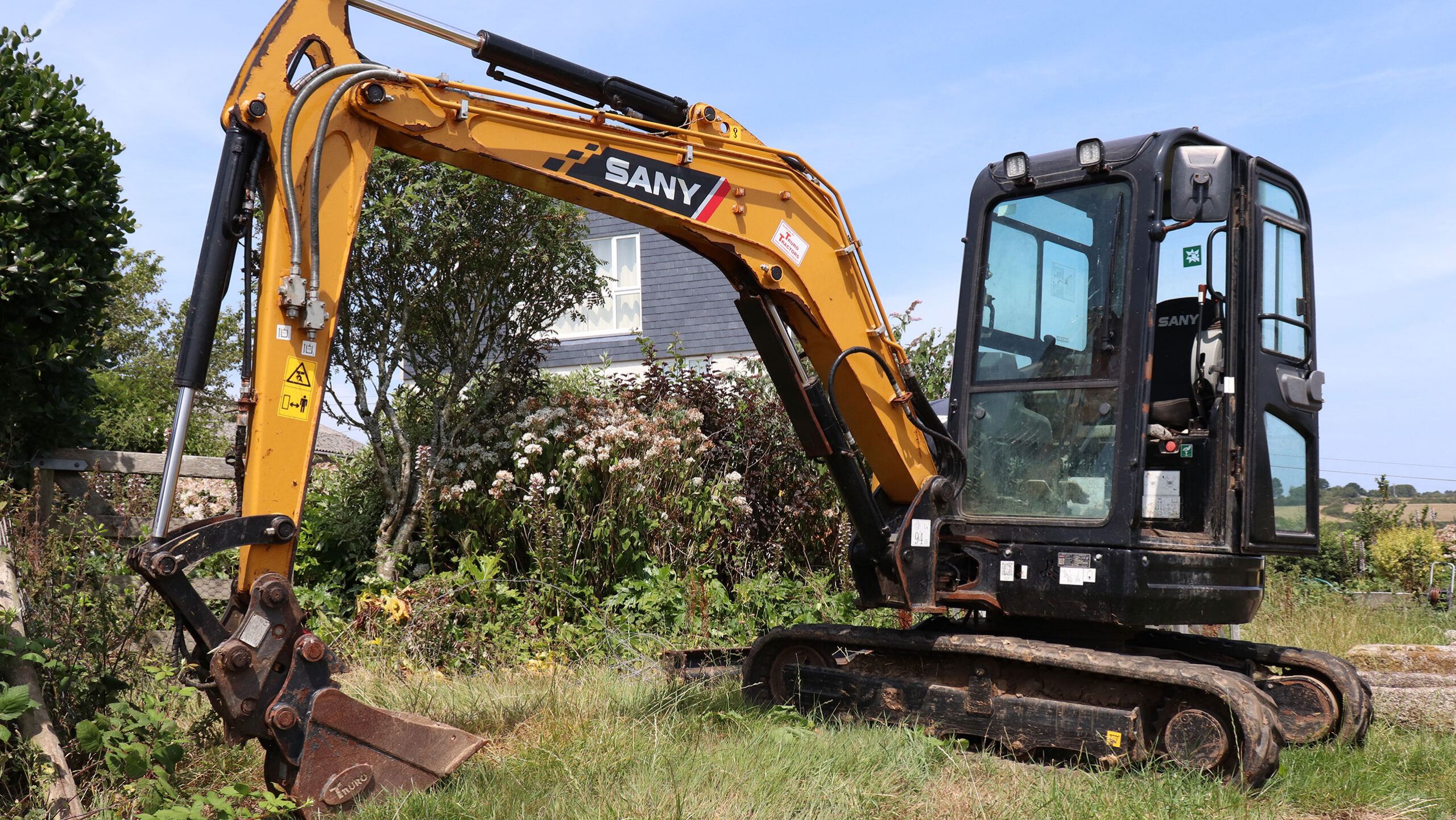
You could argue it was the old MF 390T already mentioned, but I’m plumping for our three-year-old 3.8t Sany digger.
Complete with three buckets, we bought it new for £27,000 from Truro Tractors. Which, compared with some of the more mainstream makes, really is a bargain.
Our only gripe is with the Chinese paintwork – not great in our salty climate.
Uses? All sorts, from building projects and track maintenance to pulling dung out of buildings and even hoisting up a cow stuck in a cubicle.
Best and worst pieces of technology?
We love the Trimble GPS guidance system, which makes a big difference to jobs such as fertiliser spreading, even on our scale, with 10m bout widths and an average field size of just 1.5ha.
Least favourite? I loathe technology for technology’s sake.
Too many sensors on a machine are a particular bone.
At their worst, they almost seem designed to prevent productivity.
Kit list
© Andrew Faulkner
- Tractors Massey Ferguson 6S.135 with FL41-21 loader, 5455 with FL41-21 loader, Case IH 75c
- Fertiliser spreader 12m Kuhn MDS20.2
- Sprayer 12m/1,000-litre Hardi (shared)
- Mowers 3m McHale ProGlide R310 disc, 3.16m Krone Easycut R320 disc
- Tedder Four-rotor Krone KW 552T (shared)
- Slurry tankers 10,000-litre Slurry Guzzler, 11,000-litre Conor with 7.5m trailing shoe
- Bedder/feeder McHale C460 trailed, Shelbourne Reynolds sand spreader (shared)
- Trailers Staines low loader and bale trailers, Herbst dump trailer (all shared)
- Excavator 3.8t Sany SY35U midi digger