What’s in Your Shed? visits a Somerset mixed farm
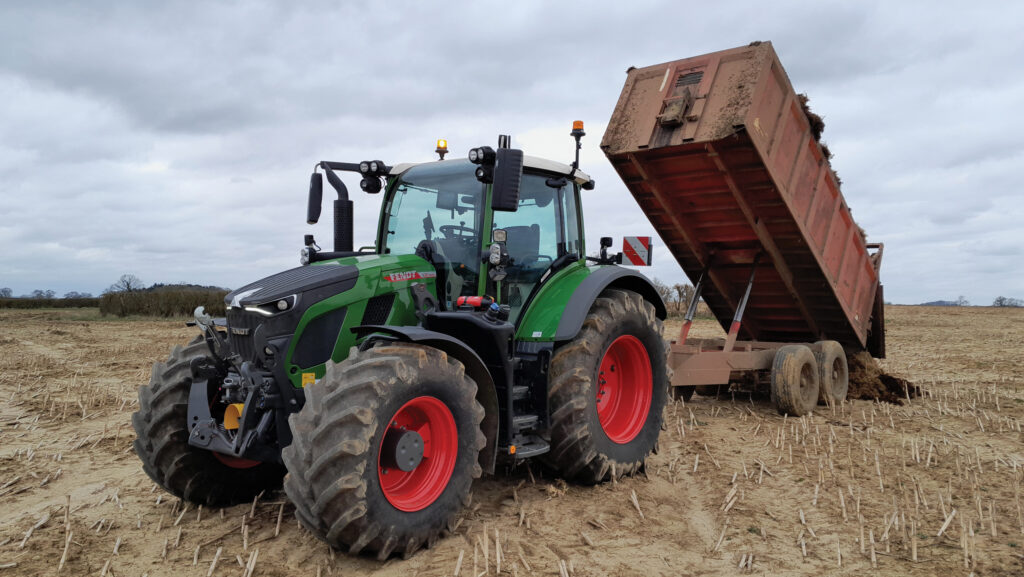 25-plate Fendt 620 © Jane Benney
 A mix of owned and shared equipment resides at Graham Weeks’ farm near Bath.
Manager Patrick Benney guides Farmers Weekly around the 310ha business’s machinery sheds
See also: On test: Fendt’s four-cylinder, 224hp 620 – small engine, big power
Farm facts
- Farm size 310ha
- Soil types Mixed – from stone brash to clay
- Cropping Winter wheat (105ha), winter barley (45ha), winter oilseed rape (55ha), maize (41ha); remainder in grass
- Livestock 70 breeding sows (Large White) plus about 500 fattening progeny; bed and breakfast 70 in-calf dairy heifers over winter
- Staff One full-time plus two part-time
How did you get started?
I was brought up in St Just-in-Roseland, Cornwall, and, if it had been up to father, I’d have followed him into the Cornish boat building industry.
Disappointingly for him, though, my eyes were always more focused on the surrounding fields than out to sea.
After taking on weekend farm jobs through my school days, I eventually graduated from Seale-Hayne College in Devon with an HND in 1986.
Post graduation, I worked on several mixed farms around the country before ending up here at Manor Farm, Laverton, in 1991, initially as a one-day-a-week relief tractor driver.
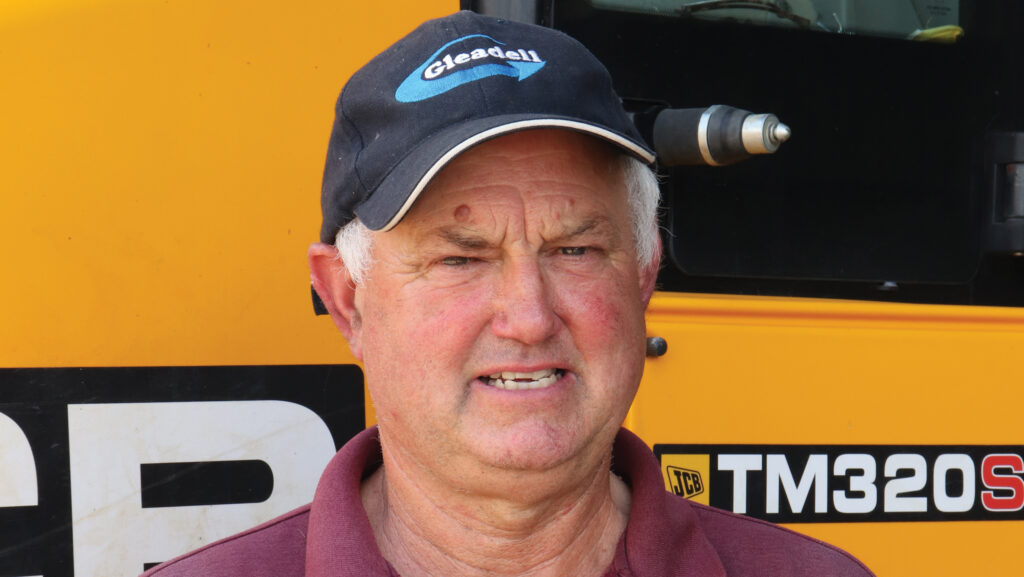
Patrick Benney © Andrew Faulkner
Four years later, I was offered full-time employment by the business’s owner, Graham Weeks, and, since then, my responsibilities have steadily increased.
As with the rest of farming, the operation here has changed dramatically over the past 36 years.
Just 10 years ago, we were milking 130 cows plus followers, running 200 breeding sows through to finishing and employing five staff, whereas today the cows have gone, sow numbers have been cut to 70 and we’re down to one full-time and two part-time staff.
We also have a “bed and breakfast” arrangement with a local dairy farm, whereby we house and feed 70 in-calf dairy heifers through the winter.
On the arable side, fundamental to today’s operation is the sharing of three key machines – a drill, sprayer and tedder – with a neighbour.
It’s a longstanding relationship that works well for both of us, all down to good communication.
To be blunt, it’s the only way we can justify operating modern, up-to-date kit on our acreage.
How brand loyal are you?
Very, especially on tractors. Since I’ve been here, we’ve generally run one main arable tractor, and it’s always been a Fendt. We’re now on our eleventh.
There was a 312 on the farm when I started in the mid-1990s, and latterly the policy has been to renew every three years before the warranty expires.
The tractors are comfortable to drive, Fendt has always helped us out whenever we’ve had a problem, and Graham likes the brand’s strong residuals.
The story is much the same for telehandlers. We’ve tried a Manitou in the past but have had JCB pivot-steers for several years now.
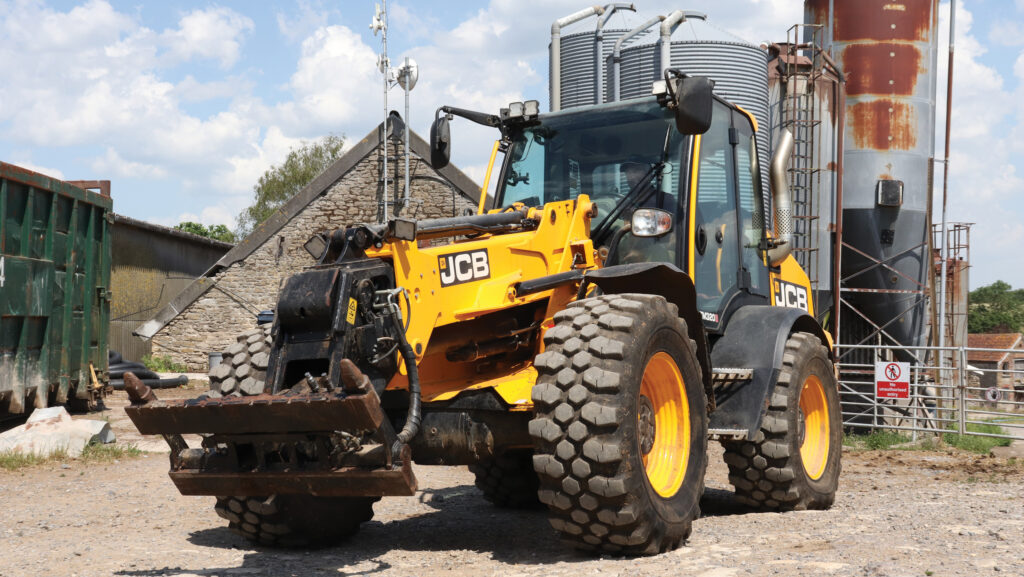
JCB TM320S © Andrew Faulkner
As with the tractor, we keep the handlers in warranty. The current 23-plate TM320S has just had its standard two-year warranty extended for a further 12 months.
Favourite dealer?
Our top two are Redlynch at Bruton for Fendt and Reco JCB at Gurney Slade for JCB. They’re both excellent.
I get on particularly well with the Redlynch sales director, Mark Peters, who I’ve known since he was a service technician at Vaughan Agri.
The Redlynch workshop is also first rate, and, for GPS, their precision farming specialist, Gavin Harris, is top drawer. He’s been out here on several occasions to sort settings issues.
Also worth a mention is Claas Western at Frome, which is only four miles from the farm.
They’re pretty much our “go to” for anything other than Fendt and JCB. We’ve been dealing with them for about 35 years, since the days when they were Vaughan Agri, and we can’t fault them. All the staff have been there for ages – always a reassuring sign.
Favourite piece of kit?
After a rocky start, my current favourite is the shared Horsch mounted sprayer.
To begin with I thought we’d made a huge mistake, switching from a Kellands Agribuggy self-propelled.
We suffered from several teething problems with the Horsch – booms not levelling and hitting the ground, faulty valves, leaks – to the extent that Claas Western ended up replacing the rear unit.
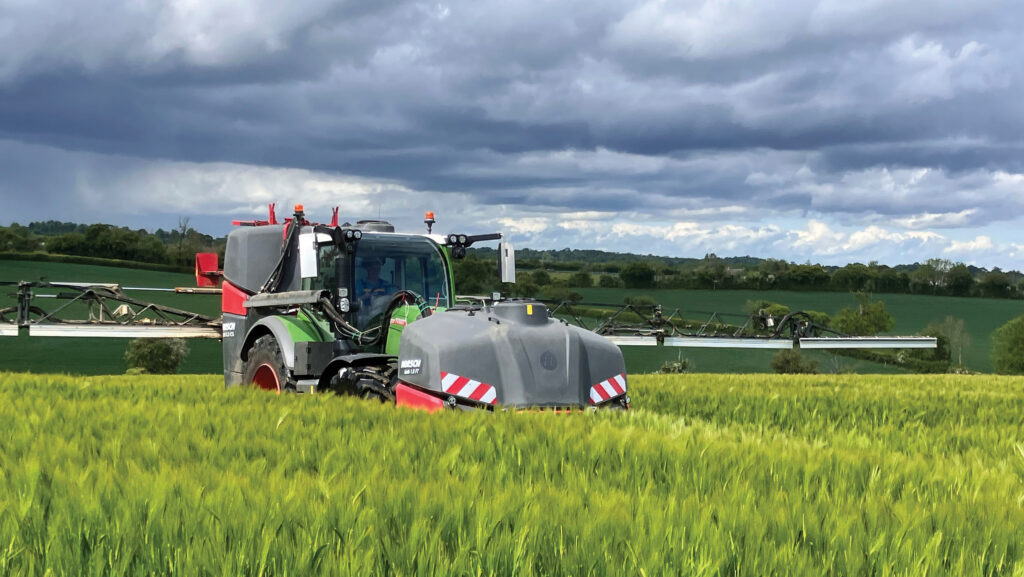
Horsch sprayer © Andrew Faulkner
Since then it’s been fantastic, other than the odd glitch.
The combination is just so easy to operate. We only fill at the back, it’s quick to change from spraying to liquid fertilising, and the boom levelling works a treat.
Yet, for me, the stand-out feature is how rapid it is to mount the outfit on or off the tractor: 10-15mins tops, as both tanks have A-frames, and the tanks’ transfer pipes stay connected even when the sprayer is parked up.
Financially, the switch to a mounted model also made sense.
The A280 Agribuggy was bought new in 2016 for £100,000, but, when we were weighing up the replacement options in 2021, that price had doubled to £200,000 and we were only offered £65,000 for the A280 as a trade-in.
At £105,000 for the Horsch combination, it was a no-brainer.
Comfort wise, there’s no comparison between sitting in the Fendt 620 and the Agribuggy.
And every time I start to feel grumpy about hitching the Horsch on and off, which isn’t often, I just think of that £100,000 saving.
And your least favourite?
Now that the Horsch sprayer is behaving, I don’t really have a least favourite.
Previously it would have been the 16-plate Agribuggy, which suffered from a long list of engine, transmission and electrical issues.
To its credit, Kellands did its utmost to support us, even replacing the entire skid unit at one point, but over the years we lost a lot of spraying days.
Latest purchase?
The Fendt 620 in 2025, which replaced a three-year-old 724.
Again, as with the Horsch sprayer, I had initial reservations, moving from a six-cylinder to a four-, yet the smaller 620 has done everything we’ve asked of it.
On the deal, we looked at several options: retaining the old 724 and extending its warranty; going for a new 724 Gen 7, which would have meant a big hike in finance payments; or going for a Gen 6 724.
Ultimately, we plumped for the extra technology on the smaller 620, a newly introduced model at the time.
The payments are slightly more than for the old 724, but then the outgoing tractor was due a major service.
Cost of extending the 724’s warranty wouldn’t have been cheap, either.
Of the new tech on the 620, the single-range Vario transmission is a big improvement – I was always forgetting to change range on the old 724 – and I love the VarioGrip central tyre inflation.
After a visit from Trelleborg, I now have settings for every implement, and I’ve been amazed at how much difference it makes both in the field and on the road.
For example, when spraying I run the rears at 20psi on the road and then drop to 17 in the field. That extra 3psi transforms the on-road ride and stability.
Oldest machine still at work?
It’s probably a close contest between the older of the two scraper tractors – an MF 35 and the 1970 Alvan Blanch mixer. Both have served us well.
The mixer still processes about 4t of pig feed a week, admittedly down from a peak of about 25t/week, while the 35 is only now called on a couple of times a week.
How long do you keep your machines?
Ever since the £10,000 Fendt transmission bill about 20 years ago, our one loose rule is to avoid, where possible, running powered machines out of warranty.
Other kit is upgraded when it starts to give problems.
Next on your wish list?
We could do with a larger vacuum tanker to make the slurry job more efficient.
Current tanker is a 9,000-litre Ruscon, and ideally we’d go to 13,500-14,000 litres along with air brakes and flotation tyres. It’s in the budget, so we’ll see.
Most embarrassing mistake?
That’s an easy one – and still painful even 10 years later.
Not long after taking delivery of the already mentioned Agribuggy, I was travelling down one of our narrow lanes and confronted by a car driver who refused to reverse up. Sound familiar?
As usual, I was in a rush, so decided the least hassle would be for me to reverse back a bit further into another, albeit tighter, passing place.
Had I spotted the tree at the rear of this spot? Nope. Crunch.
The result was a crumpled sprayer back frame and ram, along with an eventual repair bill of £20,000.
I take a different view on reversing up for car drivers today.
Biggest repair bill?
The Agribuggy incident described above.
And there was a similarly large insurance claim even longer ago for a JCB TM200 pivot-steer that spontaneously burst into flames.
Luckily it wasn’t in a building at the time.
Most expensive spare part?
All parts seem expensive, yet often it’s the least consequential items that irk most – £8 for a Lechler fertiliser nozzle. It’s a bit of plastic with a few holes in it.
Best invention?
Not sure this qualifies, as we designed it rather than built it.
The loader-mounted big box ferries up to 18 weaned pigs half-a-mile from the breeding unit to the fattening shed and is called on most weeks.
It saves us having to hitch up a trailer, and it’s much handier for poking in and out of confined buildings.
What couldn’t you live without in the farm workshop?
Battery-powered DeWalt angle grinder, drill and impact wrench.
There are always repairs to carry out in the piggery, which used to mean trailing extension leads all over the sheds.
Not ideal when there are pigs about. Now we just grab the grinder, drill and a couple of batteries, and get on with the task.
Favourite and least favourite jobs?
Mowing, closely followed by drilling. Coming into a field of long grass and then dropping the crop into dead straight, neat rows is just immensely satisfying.
And the same goes for drilling; it represents the start of a new harvest year.
Least favourite? Emptying slurry from the fattening shed.
Or, more particularly, fishing around in 6ft of pig s**t, trying to locate the bungs that let the slurry flow out of the slatted shed and into the exterior pits for pumping.
We do the job five times a year, and I dread it. I’m not pleasant to be around on those days, either for the whiff or the mood.
What’s your everyday farm transport?
Current daily is a 14-plate Ford Ranger single-cab. We specifically bought it rather than a double-cab because we rarely need more than two seats and the additional bed space comes in very handy. There’s almost an extra metre in the back.
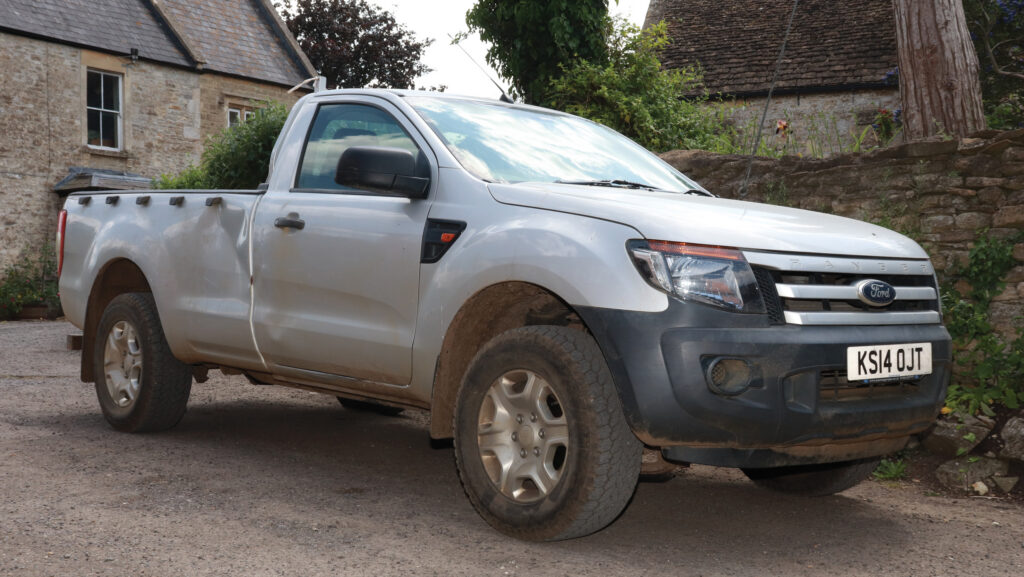
Ford Ranger single cab © Andrew Faulkner
It was £14,000 as an eight-year-old with 37,000 miles, and it’s been pretty much problem-free. One ECU, and that’s about it.
Best tractor you’ve had?
My favourite was the V-reg Fendt 515 pre-Vario that we had before the problematic 818.
It was technically advanced at the time, but was also reliable, comfortable and we spent nothing on it.
I loved the tractor. It only went because we needed more hp for the drill.
And the worst?
Ancient history, perhaps, but I was very glad to see the back of a two-wheel-drive 82hp Marshall 802, when it was replaced in 2007 by our current feeder tractor, an 84hp Claas Celtis 436.
Why the worst? Short wheelbase, front wheels often off the ground, uncomfortable ride, erratic starter, clutch eater.
And so it goes on. It caught fire twice – sadly surviving on both occasions.
Biggest machinery bargain?
Possibly because it’s such a contrast to the previous feeder tractor, my pick is the 19-year-old Claas Celtis 436.
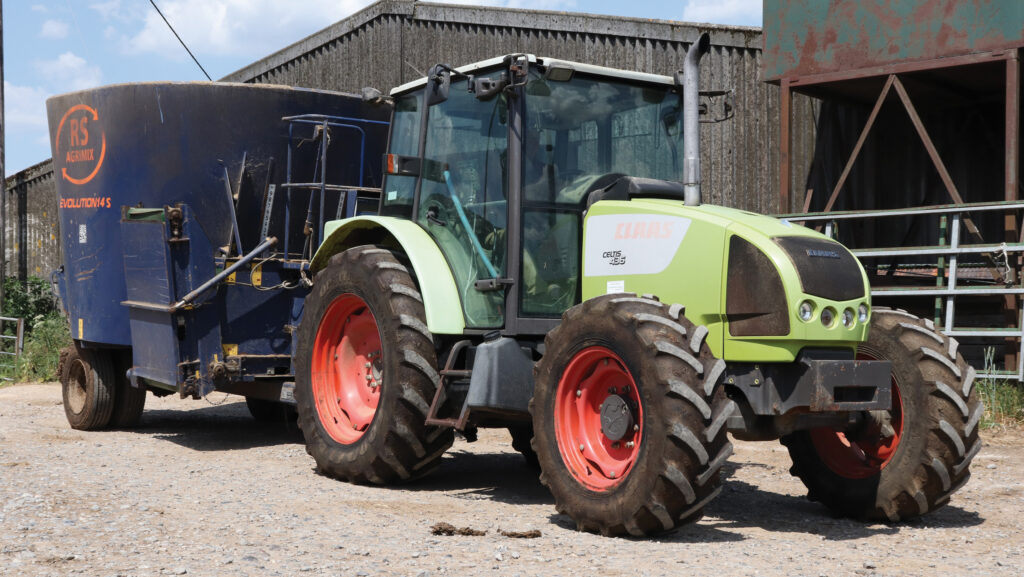
Claas Celtis 436 © Andrew Faulkner
Bought new in 2007, it’s now clocked 14,000 hours and we’ve spent almost nothing on it, bar a new clutch 1,000 hours ago.
Critically for a feeder tractor, it starts without fail.
Best and worst pieces of technology?
For us, the best bit of new tech is isobus.
Running just the one main tractor, it has to do everything so the ability to plug in one lead and operate the different implements through the two Fendt terminals is fantastic.
We have no other implement control boxes, and it makes swapping between the machines so much easier.
Not sure about the worst piece, other than frustration with the number of software updates required by modern kit.
Biggest current bugbear?
Government emphasis on rural diversification over domestic food production.
Farmers want to grow crops and rear stock to feed people. Surely, that’s what it’s all about.
The current lack of political direction is making it impossible to plan.
Kit list
- Tractors Fendt 620 Vario, Claas Celtis 436, MF35 and MF Highway 20F scraper tractors
- Telehandler JCB TM320S
- Sprayer and spreader Horsch 4,000-litre/24m mounted (50% share), Sulky DPX Expert for compound dressing
- Drills 4m Horsch Sprinter (50% share) and 3m Lemken Zirkon 10/Solitair 8 power harrow combi
- Cultivators Five-furrow Kverneland ED85, 5m Lemken Heliodor, 4m Lemken Kristall, 6m Opico harrow with seeder
- Grass Six-rotor Claas Volto tedder (50% share), 6m Claas Disco front/rear mounted mower conditioner. Contractor takes care of raking, baling and bulk silage with a forage wagon
- Muck/slurry 9,000-litre Ruscon vacuum tanker. Contractor spreads solid muck
- Trailers 16t Richard Weston, 12t Ken Wootton and two Marshall bale trailers
- Other 14cu m RS Agri tub mixer, Spread-A-Bale bale spreader and 2.6m Maschio Giraffa topper