

What’s in Your Shed? visits Hawkstone Choir’s Andy Fussell
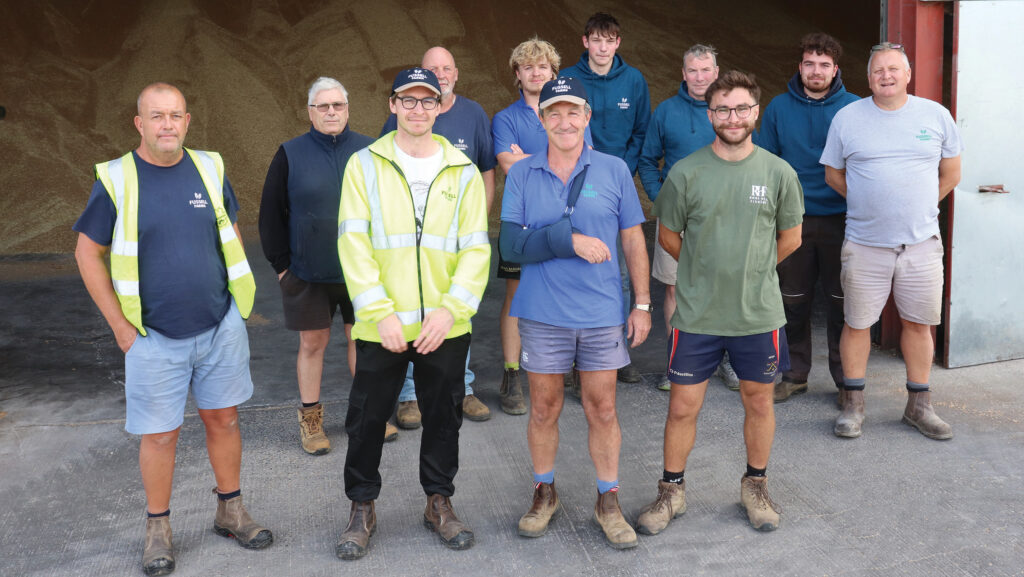 © Andrew Faulkner
Farmer, contractor, haulier, miller, building materials supplier – the multifaceted Andy Fussell runs a similarly diverse fleet of equipment. Oh, and he’s a member of the Hawkstone Farmers Choir, too.
We visit the Somerset-based operation.
See also: What’s in Your Shed? visits Worcestershire farm and haulier
Farm facts
Fussell Farms, Rode, Somerset
- Farm size: 300ha
- Soil type: From greensand to brash to heavy boulder clay
- Cropping: 140ha wheat, 40ha maize, 80ha triticale, 40ha oilseed rape
- Contracting: Grain storage, milling and blending; combining (280ha), big baling (10,000 bales) and spraying (1,200ha); haulage; and groundworks
- Other businesses: Rode Haulage, Frome Area Buildings Supplies, Fussels’ Fine Foods and Rode Hill Fishery
- Staff: Andy Fussell and sons Tom and Ben, plus two others. Contracting business adds another nine
How did you get started?
Andy: On my return home from six months’ post-college travel, my father shoved the farm cheque book across the kitchen table, accompanied by the words: “if you’re back here for good, you’d better get on with it.”
At 23 years old, it was quite a show of faith… but a daunting prospect. Back then, in the late 1980s, we were only farming about 110ha of crops with limited grain storage.
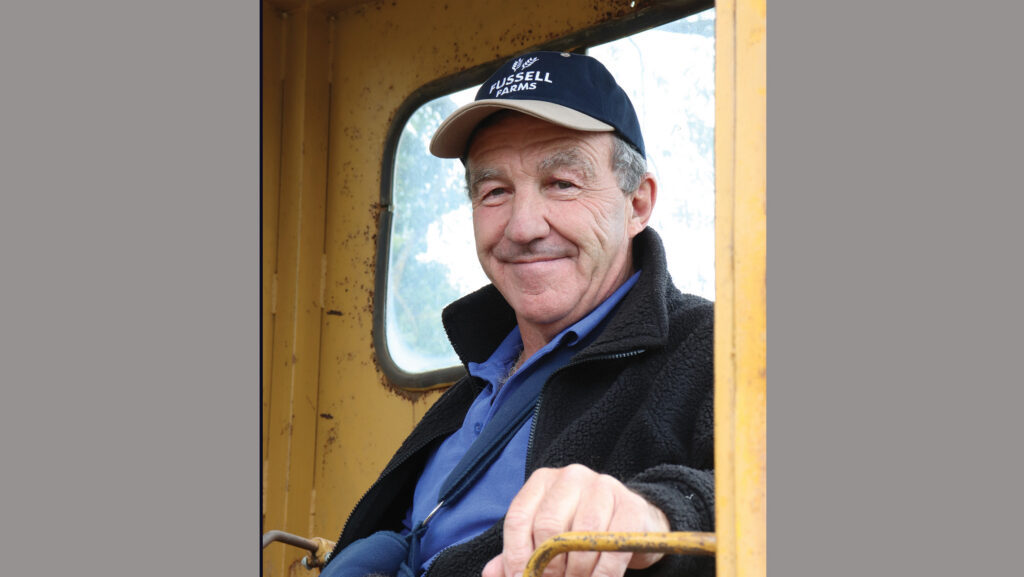
© Andrew Faulkner
In addition to wanting to expand and resolve our own storage situation, I could see there was an opportunity to store and dry crops for other farmers in the area.
With this in mind, I embarked on a 15-year project of increasing our storage capacity, up to about 10,000t by 2007.
Along the way, I got into haulage – we run two of our own trucks and I’m also a director of Rode Haulage (five trucks plus 20 subbies) – installed a drying/cleaning plant and set up Frome Area Building Supplies and Fussels’ Fine Foods; the latter is an enterprise for the processing and marketing of rapeseed oil products.
By 2007 we’d outgrown our original 1.3ha site on the edge of Rode village. So, after a five-year struggle with the planning system, we eventually obtained permission for 44 houses, which enabled us to build a new 3.6ha facility for all the businesses about 500m down the road.
Today, we’re up to 20,000t of crop storage, including a dryer, cleaner and mill. We also have two blending plants for producing dry/wet blends and making soda wheat, all for the livestock sector.
On the farming side, we’ve increased the arable area to about 300ha – owned, rented and contract farmed land – and, on top of that, we’re also contract combining, baling and spraying for third parties.
Making all this possible, I’m fortunate to have a great team of farming/contracting staff, many of whom have been with me for many years, headed up by foreman/manager Shaun Courage.
We’re passionate about encouraging people into the industry, and this is reflected in our team’s mix of youth and experience, the younger guys learning off the older ones.
© Andrew Faulkner
How brand loyal are you?
I thought I was brand loyal, but now I’m not so sure. For a long time we operated Claas combines, Fendt tractors and JCB handlers – both shovels and telescopics – and I was happy enough with all three.
However, I reckon that Fendt is now in danger of pricing itself out of the market, with residuals struggling to match the eye-watering initial premium.
And I’m getting seriously ticked off with JCB reliability, in particular on one of the Fastracs, which seems to spend more time in limp mode than actually working.
Of the existing brands, I’m most loyal to Claas. I’ve operated their combines for 20-30 years, and I love them.
© Andrew Faulkner
Favourite dealer?
We’ve got a few. Claas Western is only two miles down the road and is my go-to for combines, grass kit, Horsch and Richard Western. They’re excellent.
Of the smaller dealers, I get on well with JW Agri Services in Bath on Krone gear. And, at the other end of the scale, we’ve been really pleased with the back-up from multi-site Volvo construction equipment dealer SMT.
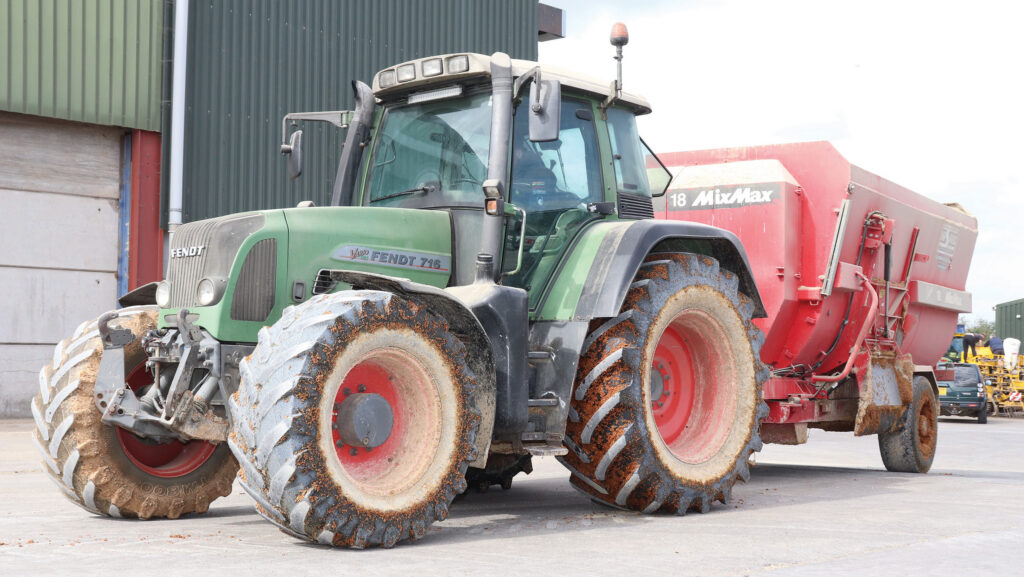
Similarly, David Trott, the workshop manager at Redlynch, is an absolute star and has been a big factor in keeping the 19-year-old Fendt 716 operational. David’s knowledge and advice have saved us serious money over the years.
© Andrew Faulkner
Favourite piece of kit?
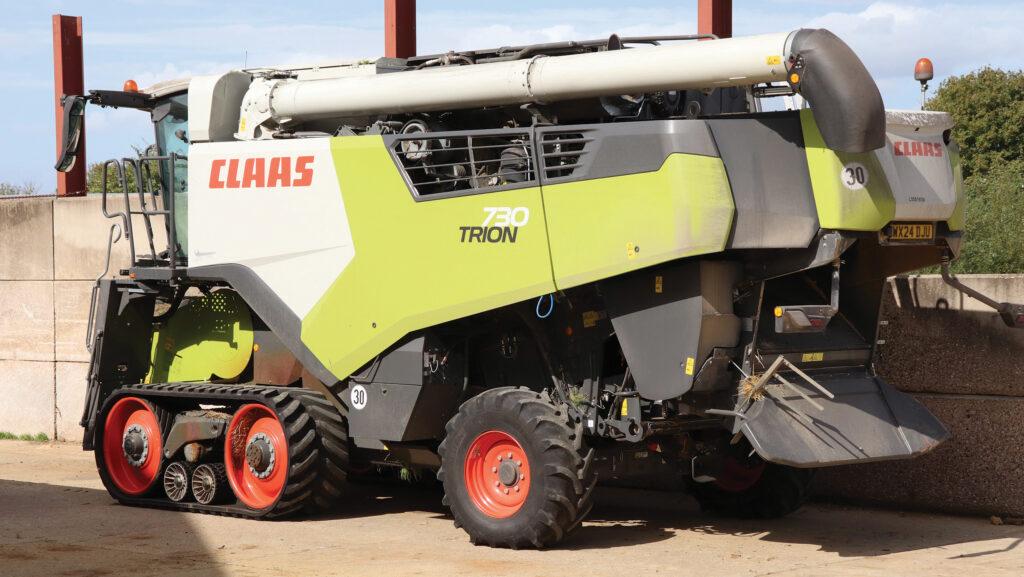
It’s the Claas Trion 730 TT. I love combining, always have. Admittedly, I fill in on other jobs when we’re short of bodies, but the combine… that’s my domain. We tend to change the harvester on a five-year cycle, and this current machine replaced a Lexion 630 straw-walker model in 2024.
I was nervous about switching to the Trion’s single-rotor design, because straw quality is important to us, yet it hasn’t been an issue.
We don’t reckon the Trion is smashing up the straw any more than the 630, and in a decent crop of wheat we’re now trotting along at 3-4kph with a 9.1m header; previously we were at 2-3kph with a 7.6m header.
And your least favourite?
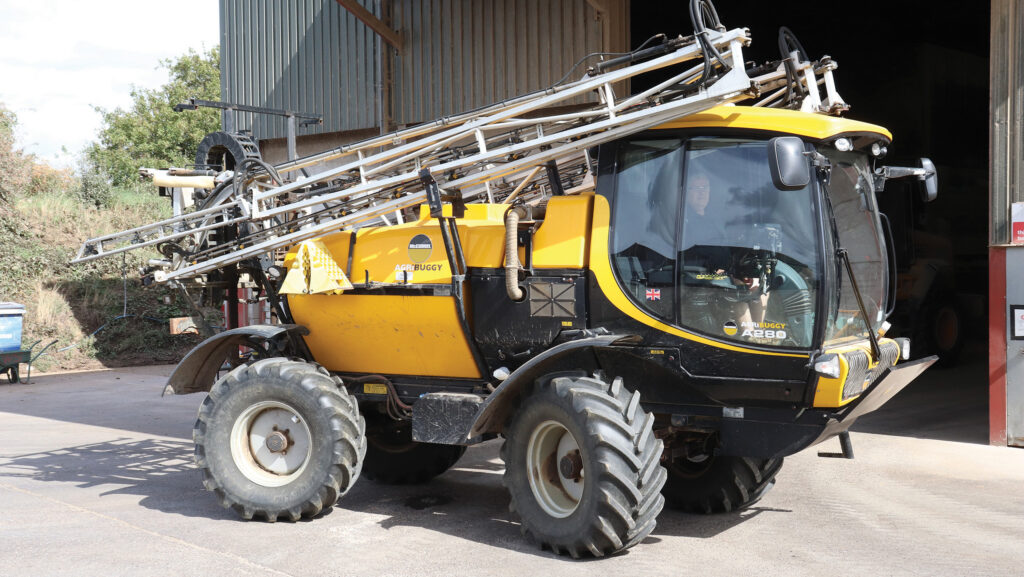
This tends to be whatever is currently misbehaving the most. Today it’s a toss-up between one of the 19-plate JCB Fastracs and the Agribuggy self-propelled sprayer.
I’ve already mentioned the limp-mode 19-plate Fastrac, which we’re still struggling to get sorted, while the same-age Buggy is equally frustrating.
We’ve run Buggies for about 25 years and, as with the Fastrac, really love the concept. The sprayers are light, manoeuvrable, relatively quick on the road and easy to use, so they suit our soils and operation.
It’s just that they seem to have become progressively unreliable. We’ve been through a couple of belt boxes on the current Buggy at £6,000 a pop. It’s operating at the moment, albeit with the guidance not working as it should.
© Andrew Faulkner
Latest purchase?
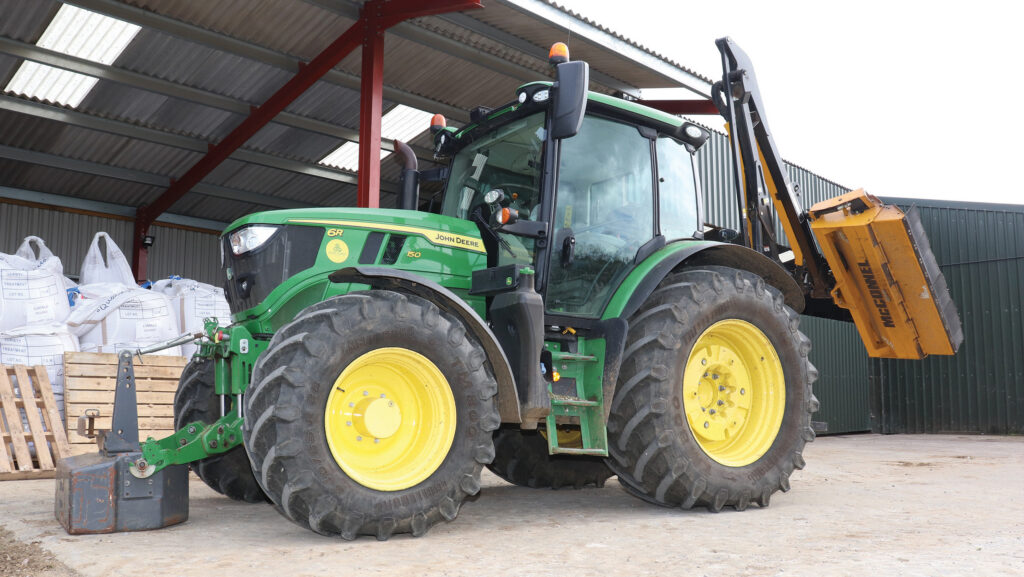
In 2025 we had a big year on tractors, with the arrival of the two Deeres – an ex-demo 25-plate 6R 215 and used 23-plate 6R 150 – both from Hunt Forest.
The 215 was a particularly good deal. Replacing a 13-plate Fendt 720 on 10,500 hours, the Deere ended up being about £40,000 cheaper than a new Fendt 724. Granted, it wasn’t totally like-for-like, but I was never going to get that saving back.
As for the 3,000-hour 6R 150, this was part-exed against a 7,500-hour, 12-plate 6190R valued at £26,000.
Cost-to-change was £54,000. We were nervous about downsizing to a four-cylinder, but the little “pocket rocket” has been a revelation, handling the hedger, mechanical hoe, rolling and a heap of other duties.
So far, we’ve been impressed with both the Deeres. They’re as good as the Fendts on fuel, and we much prefer the Deere guidance system.
© Andrew Faulkner
Oldest machine still at work?
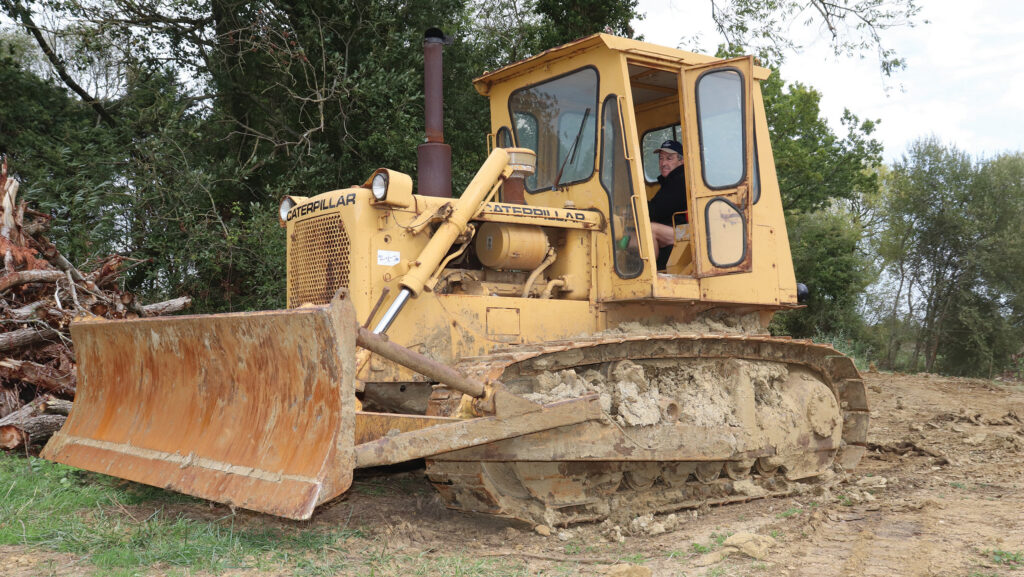
A 50-year-old Caterpillar D6C bulldozer, which I bought unseen for £20,000 from Lincs dealer Nelson Green. We’ve had it for three years, done nothing to it and it’s probably one of the most reliable starters on the place.
Money-wise, it stacks up, too. It would have cost £1,500/week to hire a dozer if I could get one, and we could probably sell the D6 today for what we paid for it.
How long do you keep your machines?
There is no fixed policy. In general, though, we keep the combine and baler in warranty, and these, along with the loading shovels, are the only items we buy new.
The combine and baler are changed every five years, whereas the shovels should be good for 15,000 hours so tend to be with us for around 10 years.
Most of the other machines are bought ex-demo or nearly new, as there are significant savings to be had. Each deal is treated on its merits at the time.
Next on your wish list?
To get rid of our troublesome Fastrac and Buggy. The irony is that, as mentioned earlier, we really like the concepts, so we may well end up looking for more up-to-date, and hopefully reliable, versions of both.
Most embarrassing mistake?
Several years ago, I was cutting spring beans for a customer, who warned me about an old tree stump in the middle of the field. He said it was obvious, which, to be fair, it was.
Anyway, usual story. I was on the phone, harvester in auto-steer, and… bang. Hit said stump. Thankfully, it wasn’t massively expensive to replace the knife and beat out the creased header underbelly, though we did lose a day’s combining.
Biggest repair bill?
Cumulatively, at £12,000, those two belt boxes on the Agribuggy are right up there.
Plus, about 10 years ago, our then Claas Quadrant big baler swallowed a rock that went through the machine, damaging the chamber, throwing the ram out of line and smashing the needles.
All in, the baler repair bill came to almost £20,000. Needless to say, it was an insurance job.
Most overpriced spare part?
It never ceases to amaze how much can be saved by shopping around. As just one example, we were quoted £344 for an Agribuggy wheel sensor. After searching online, we sourced an identical sensor for £161.
© Andrew Faulkner
Best invention?
Not really an invention, but again we saved a shedload by building our own low-disturbance subsoiler rather than buying off the shelf.
What started as a standard 2.5m McConnel Shakaerator was stretched to 3m and then fitted with Metcalfe low-disturbance legs.
We also added a hydraulically adjustable packer from an old power harrow. Overall cost of the rebuild was about £1,800 plus labour.
What couldn’t you live without in the workshop?
I could trot out the usual – power tools, vehicle ramps or the welder. Yet the reality is that self-employed engineer Sam Webb is by far our most valuable workshop asset.
He’ll fix anything, both on machines and in the mills, and he’s also Irtec qualified for servicing the trucks.
Over the years, Sam’s saved us thousands. Not so long ago, a loading shovel dented the tailgate of one of our bulkers, and we were told it would have to be replaced at a quoted cost of £8,500. Sam sorted it for £200-£300.
Favourite and least favourite jobs?
My favourite is combining. It gives me a great overview of which areas of the fields are performing well and not so well, the state of the hedges – in effect, what we need to focus on in the coming year.
Worst job is sitting behind a desk, on the phone and staring at two screens. Of course it’s a necessity, but I still resent the time it takes.
What’s your everyday transport?
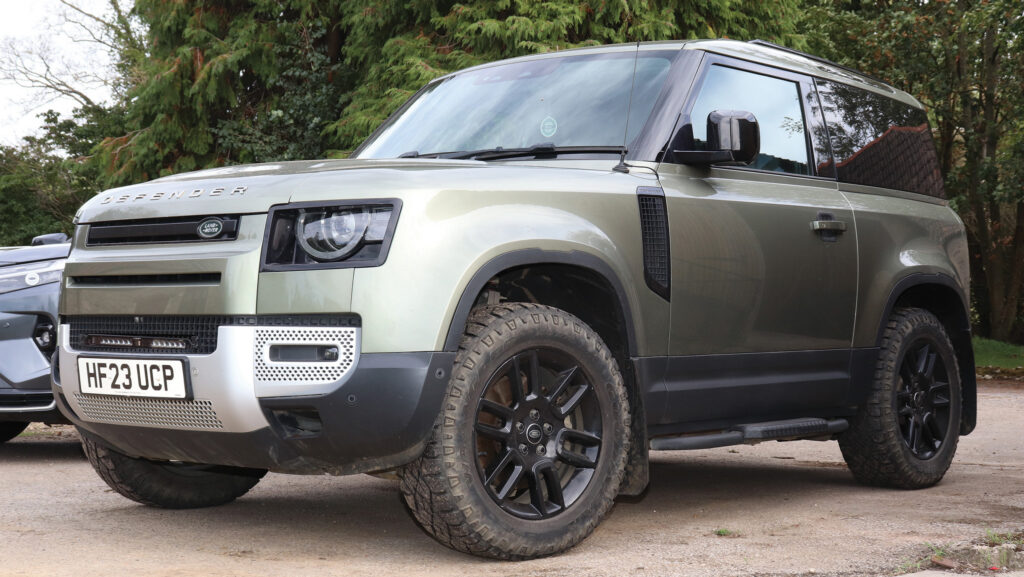
Over the years I’ve had more than 20 Land Rovers off WJ Joyce Engineers at Trowbridge, and I can’t fault them. Latterly I had Discovery 4s, while my current transport is a used 23-plate Defender 90 Hard Top. I bought it for £41,000 on 25,000 miles, and I love it.
© Andrew Faulkner
Best tractor you’ve had?
Our 2007-plate Fendt 716. We paid about £40,000 for it as an ex-demo in 2008 with 800 hours, and it’s now showing just shy of 19,000 hours. In 19 years it’s done one turbo, and that’s about it.
The best bit is that she’s still going, putting in six hours a day, five days a week, all year round, on the front of a HiSpec feeder making soda wheat. I reckon if we freshened up the paintwork, she’d still be worth around £25,000.
And the worst?
We had a couple of Claas Arion 650s about 10-15 years ago, and they were a nightmare – so much so that, despite being massive Claas combine fans, we’ve never even contemplated another Claas tractor since.
Turbos blew, dropped hydraulic pressure, multiple gearbox issues. There was always something wrong, and, worst of all, they were worth nothing when it came to getting rid. To be fair, that was more than 10 years ago, so it’s probably very different now.
Biggest bargain?
The 19-year-old Fendt 716 already mentioned. Or another contender is a 12t Richard Western trailer, which we bought new from Tincknells in 2007 for £7,000 and then sold 17 years later for the same money.
Based on that experience, I bought a couple of two-year-old Richard Western SF16 HS trailers at £20,000 apiece in 2023. At pretty much zero depreciation, hiring trailers doesn’t make sense in our view.
© Andrew Faulkner
Best and worst pieces of technology?
Where the mobile phone signal is deteriorating, our two-way digital radio system has been a godsend, both in terms of logistics and safety when remote working.
It cost us about £9,000 to upgrade from analogue to digital six years ago, and it has proved money well spent. The radio sets cost £350 each and are in every frontline vehicle and machine.
My pet hate is over-complication. Why do manufacturers provide two different buttons in two different cab locations with exactly the same function? It makes operator familiarization even more of a challenge than it needs to be.
© Andrew Faulkner
Kit list
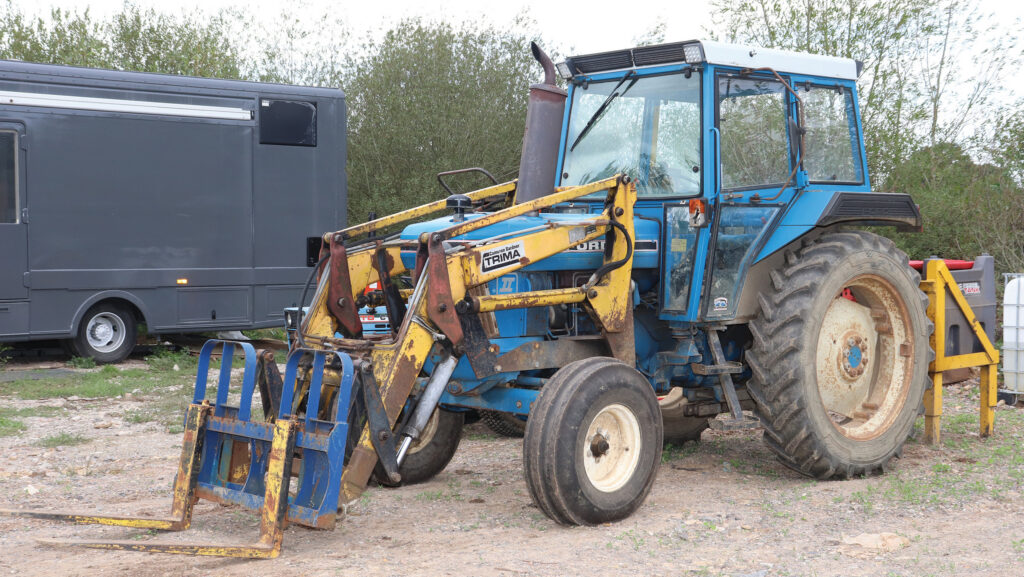
- Tractors: John Deere 6R 215 and 6R 150, Fendt 724 and 716, JCB Fastrac 4220 x2, and Ford 5610
- Combine: Claas Trion 730 TT with 9.1m header
- Sprayer: Agribuggy A280 (24m/2,700-litre)
- Loaders: JCB 536-60, 437 and 427, Volvo L70H
- Drills: 4.8m Claydon Hybrid, 3m Lemken Solitair power harrow drill
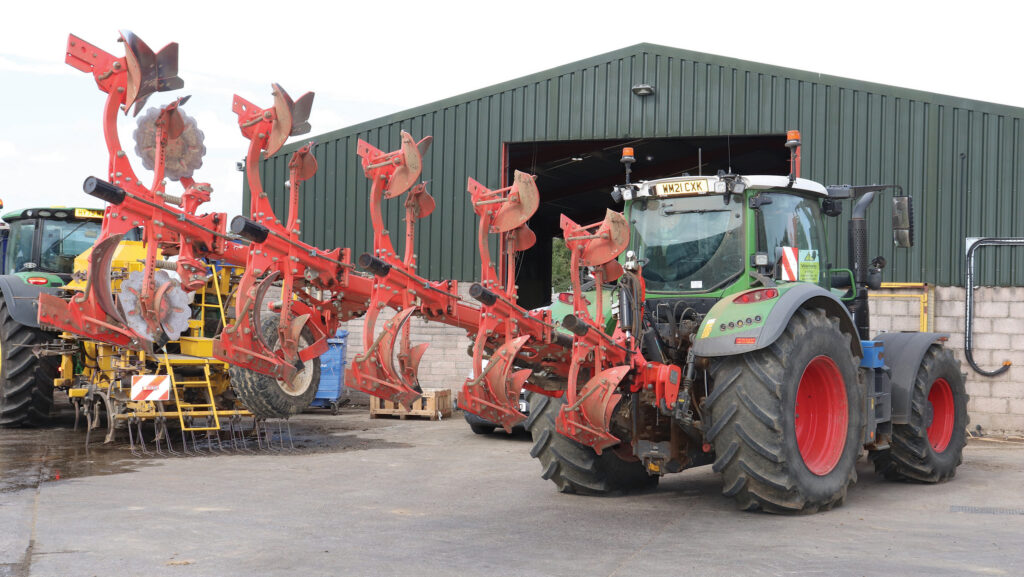
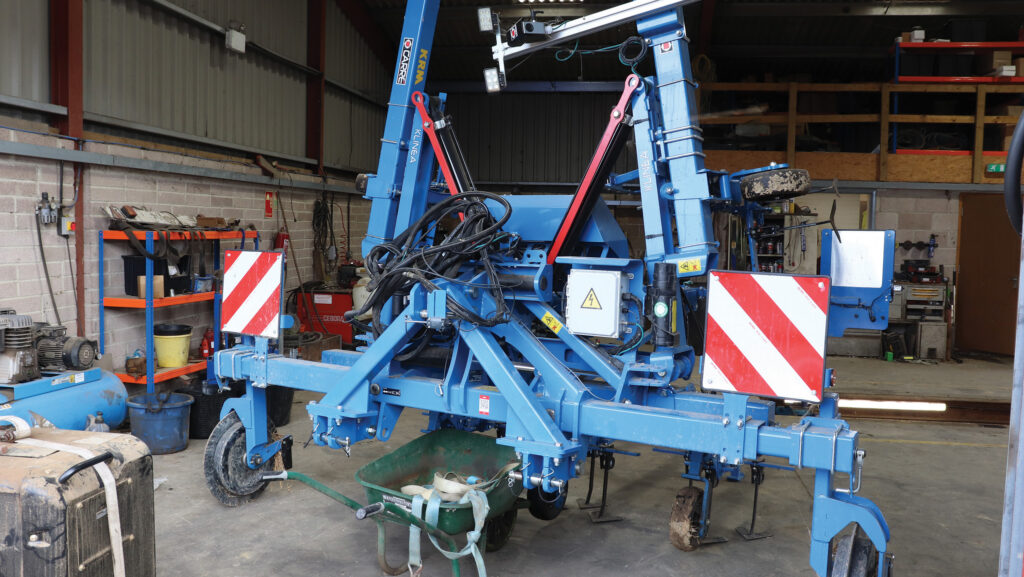
- Cultivators: 3m Horsch Joker, 5m Vaderstad Carrier, home-built low-disturbance subsoiler, Maschio five-furrow plough, Dowdeswell six-furrow plough, KRM Carre Klinea hoe
- Baler: Krone Big Pack 1270 MultiBale
- Grass: 3m Claas Disco, 7.2m Claas Liner, six-rotor Claas Volto
- Trailers: Richard Western 16t SF16 HS x2, Weaving Peecon hook lift, 32ft low loaders x2
- Others: 44t artic trucks x2, Cat D6C dozer, 8t Volvo ECR88D, 14.5t Hyundai digger, McConnel PA5755 hedgecutter