What’s in Your Shed? visits Worcestershire farm and haulier
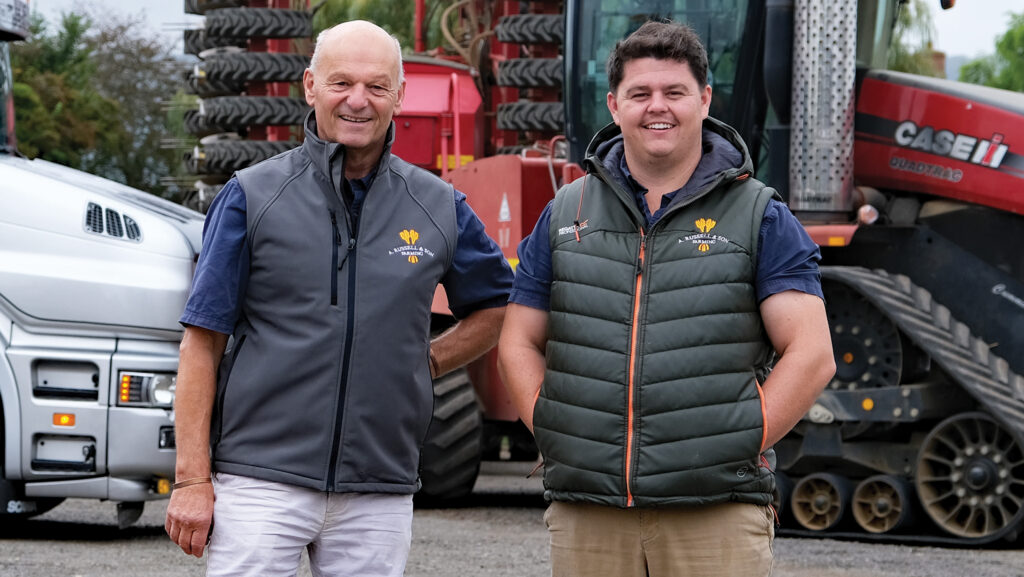 Mark and James Russell © James Andrews
 A pair of ageing Case IH Quadtracs and a clutch of customised V8 Scanias form the backbone of A Russell and Son’s machinery fleet. We quiz fifth-generation farmer and haulier James Russell.
See also: What’s in Your Shed? visits a Cornish family dairy farm
How brand loyal are you?
On the truck front, very. For decades, we have only run second-hand V8 Scanias, as they are reliable, hold their value well and sound great.
It’s a different story with farm machinery, as we chop and change brands according to which particular models suit us best.
Haulage keeps us pretty busy and is a business in its own right, so the farm work has to be done as efficiently as possible, while still being our main focus.
That’s why we have a pair of second-hand Case IH Quadtrac 535s. They’re cheap horsepower, as people are scared of the repair bills, but they’re not that expensive to run relative to how much ground they can cover.
We’ve also got a brilliant independent mechanic, Matt Jones, who helps keep them in good shape.
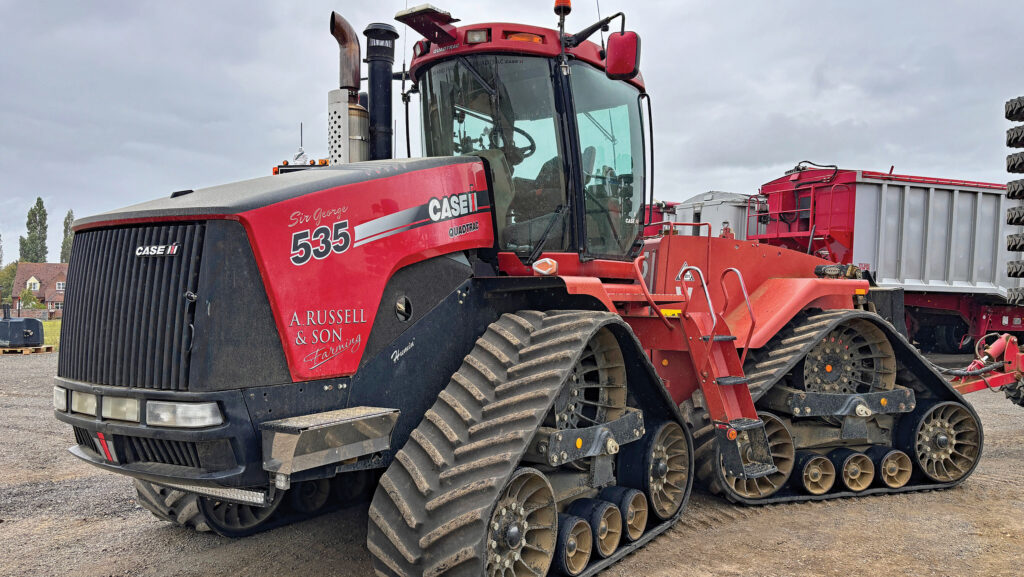
Case IH Quadtrac 535 © James Andrews
The other tractors are a fair old mix. We’ve got one other Case IH, which is a Puma 155, a New Holland T7.270, a John Deere 6920S and a JCB Fastrac 2135.
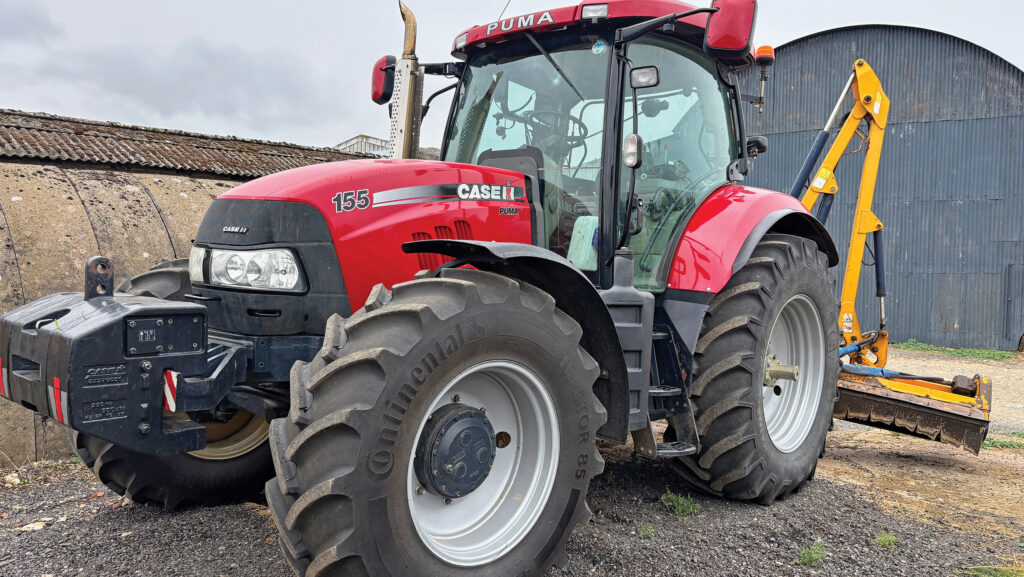
Case IH Puma 155 © James Andrews
Claas is our go-to for combines and we currently have a Lexion 760TT with 35ft header. Other self-propelled kit includes a Bateman RB26 sprayer and JCB TM320 pivot-steer telehandler.
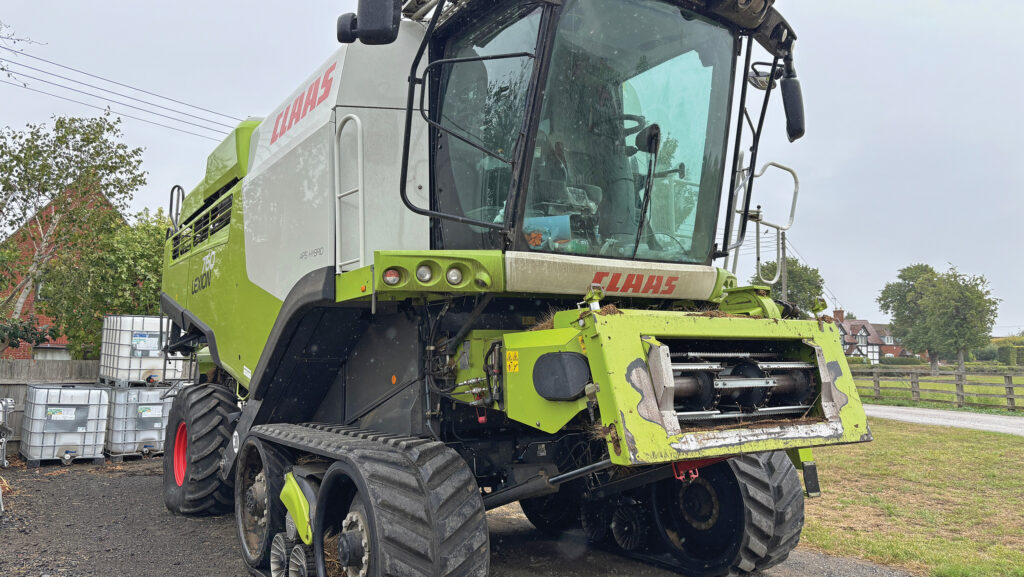
Claas Lexion 760 © James Andrews
On the implement front, we do have a bit of a soft spot for Horsch kit – it’s just so well engineered. Our stubble cultivations are handled by an 8m Terrano, a 12m Joker does the seed-bed prep and drilling is carried out with an 8m Sprinter.
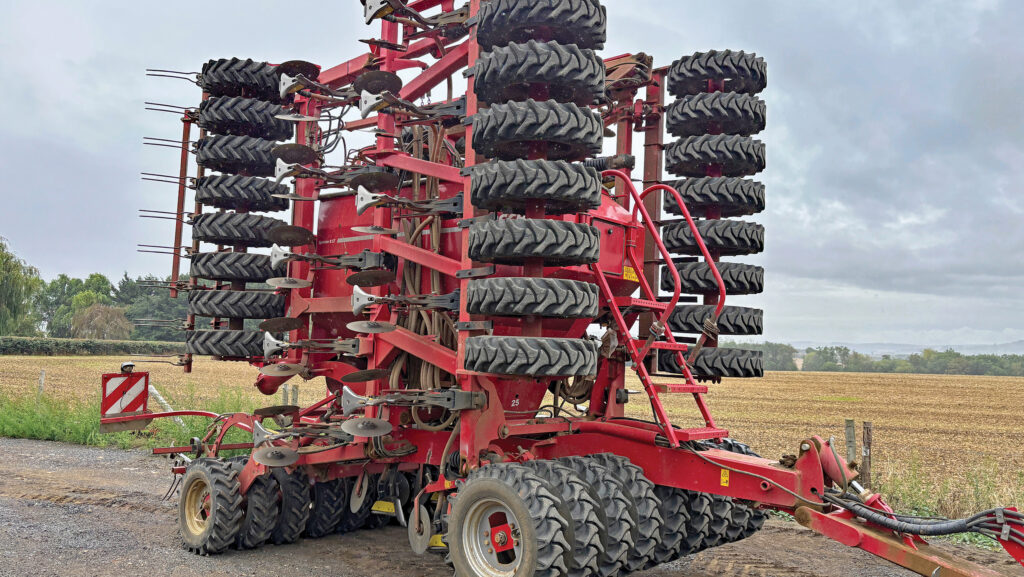
Horsch Sprinter © James Andrews
That said, a Sumo Trio is our tool of choice for heavy primary cultivation. It’s a 4.5m model running APM low-disturbance points with tungsten tiles to extend the lifespan.
We also hired a Vaderstad Topdown this season and were very impressed, so a 7m one might be on the cards.
Farm facts: A Russell & Son, Worcestershire
- Arable farming 750ha, 200ha of which is contract-farmed
- Cropping Winter wheat, winter barley, winter beans, winter milling rye, oilseed rape and linseed
- Haulage Six trucks pulling low-loaders, bulkers, curtain siders and tankers
- Farm staff James and his dad, Mark, plus one full-time staff member most of the year and two part-timers for harvest and drilling
- Haulage staff Four full-time drivers and one part-timer
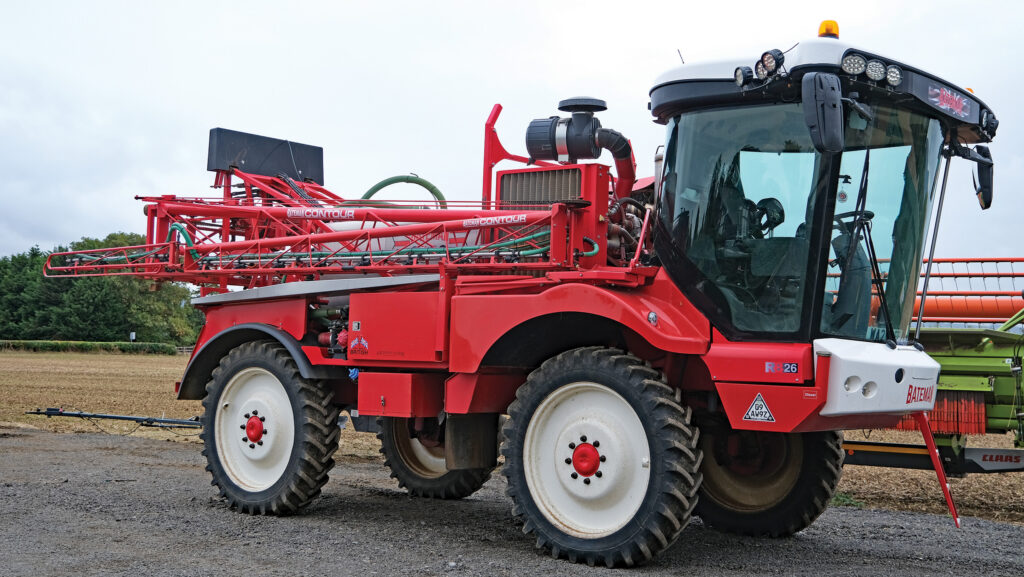
Bateman RB26 © James Andrews
Favourite dealer?
It’s got to be TH White at Toddington. It’s just five minutes down the road and nearly always has the parts or tools we need. Even though it’s a big concern these days, it still has a family dealership feel.
Another firm that deserves a mention is DMH Hydraulics Group at Childswickham. It’s got virtually every hydraulic fitting you can think of and we’ve saved a fortune getting hoses and parts from there rather than main dealers.
Their knowledge is next level and they’ve got us out of a pickle more than once.
Favourite piece of kit?
For the speed at which it allows us to cover the ground, it has to be the 12m Horsch Joker. It had belonged to Beeswax Farms and was in good condition, but the sheer size of it meant there was a limited market.
We only paid £45,000 for it and got £34,000 for our older 8m, so the cost to change was only £11,000.
We can happily rattle along at more than 10kph, which means we’re covering 12ha an hour. The Quadtrac handles it easily, so fuel use is no worse than the 8m, at 60-70 litres/hour.
The 8m Sprinter drill comes a close second. It’s simple, well built and versatile enough to work in a wide range of conditions. We ran it with Dutch Openers for a while, but didn’t like how wide the bands were – the crop would barely meet in the rows by harvest.
It’s now back on double-row Duetts which, despite being a bit harder to pull, give a much more uniform canopy.
And your least favourite?
Having said how much we like the Sprinter in the field, it’s a completely different story in transport mode. The high centre of gravity when folded means it’s perilously unstable. Hit the slightest bump and it will rock so violently that you’re convinced it’s going to topple over.
You’ve got to grit your teeth and bear it on the road, but whenever we’ve moving it on rough tracks, I’ll lower one of the wings to the ground to make it more stable, even if it means running on a crop we’ve already drilled.
Another tool we couldn’t get on with was a mounted Simba Flatliner, mainly because it was so poorly suited to the Quadtracs.
Having such a rigid implement on the back generated too much stress and every time the steering made a slight correction, the tractor would creak and groan. We moved it on after a year, but the damage was already done and we had a link arm snap in half the following season.
In the shed
- Tractors Case IH Quadtrac 535 x2 and Puma 155; New Holland T7.270; John Deere 6920S, JCB Fastrac 2135
- Combine Claas Lexion 760 TT with 35ft header
- Telehandler JCB TM320
- Sprayer Bateman RB26
- Fertiliser spreader Kuhn Axis M 40.2
- Cultivators 4.5m Sumo Trio, 8m Horsch Terrano, 12m Horsch Joker, Grange Heavy Duty Track Eradicator
- Drill 8m Horsch Sprinter ST
- Trucks Scania R500, R620, R650, R730, S730 and 144L 460 T Cab
- Other John Deere Gator, Cousins Cambridge rolls, Agribiz flat rolls
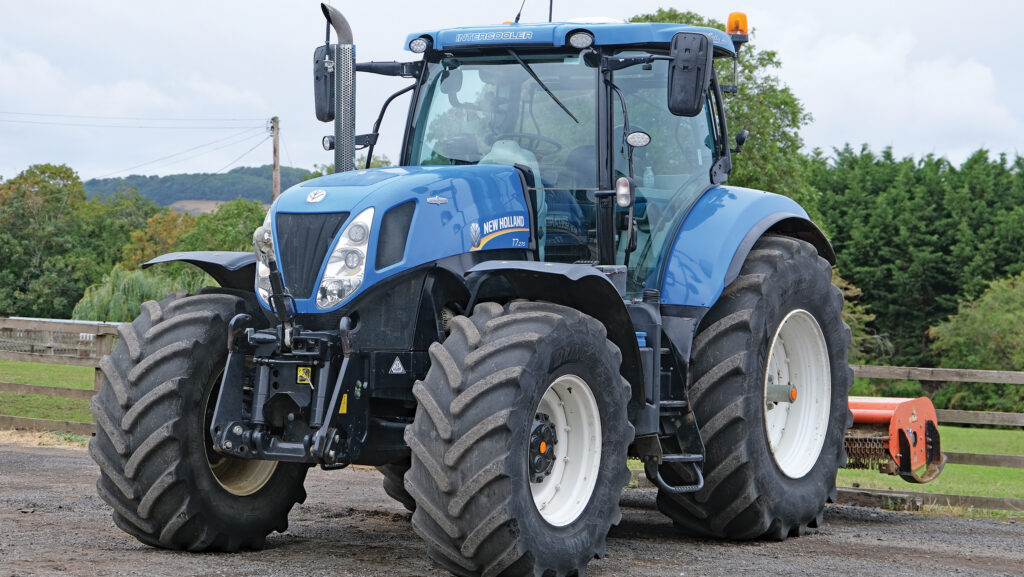
New Holland T7 © James Andrews
Latest purchase?
Wheelings are one of our pet hates when drilling, so we splashed out on a new Grange Wheel Track Eradicator for £12,400. It fits neatly between the tractor and drill and does a great job of lifting ground that has been padded down by the tracks.
The seed-bed is far more consistent across the full working width since we’ve started using it. Fuel use does increase when we’ve got the legs in, but only by about 5 litres/ha on lighter ground and 8 litres/ha on clay.
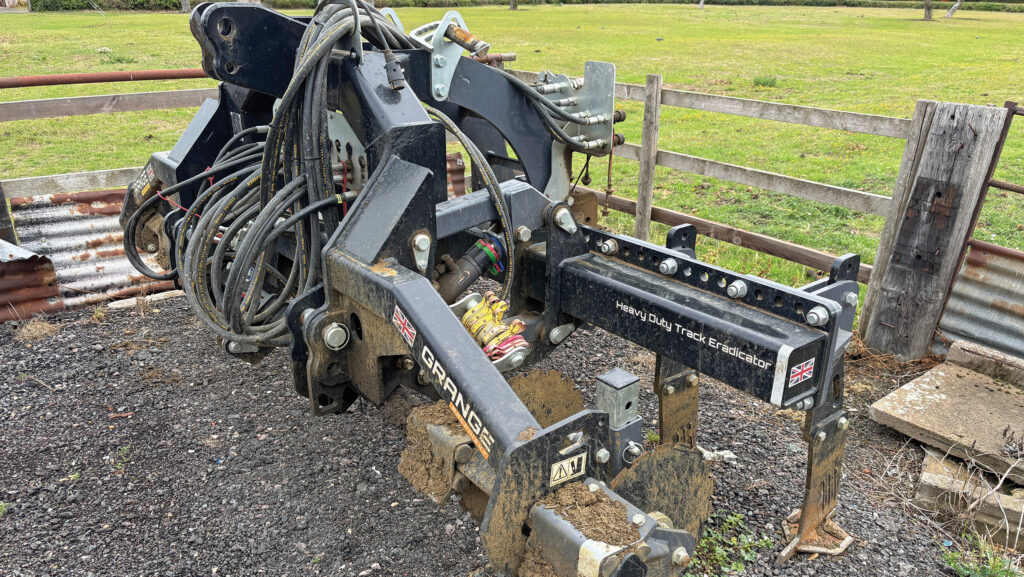
Grange Heavy Duty Track Eradicator © James Andrews
Oldest machine still at work?
That would be our 2001 V8 Scania T Cab which, despite being a bit of a show truck, still puts in a regular shift. We picked it up at a Cheffins sale eight years ago for £32,500 and it was a fairly plain-looking thing.
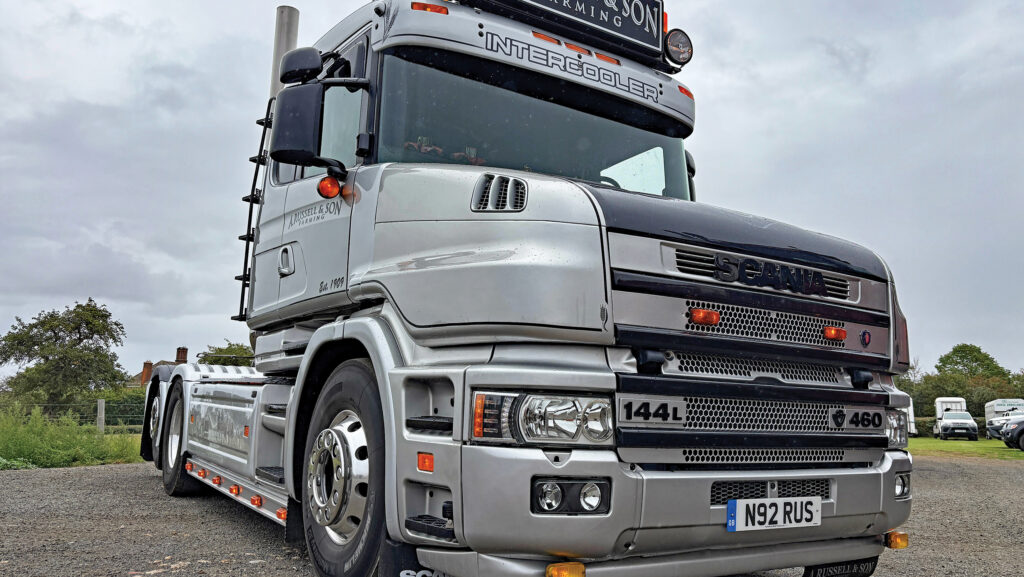
Scania T Cab © James Andrews
So, we sent it to Charlie at Mocho Fabrications, who fitted stainless steel stacks and overhauled the body work. The finishing touch was to get Matt Paint to airbrush a Hereford bull on the bonnet and farming scenes along the side skirts.
It’s left-hand drive, has a manual transmission and is the lowest-powered truck we have. But I love taking it for a spin after driving the more modern stuff, and it can still hold its own.
Our JCB Fastrac 2135 is a similar age and acts as the farm’s general dogsbody. It’ll cart the seed to the drill and fertiliser to the spreader, as well as towing the header. If it’s lucky, we’ll get it to muck in with a bit of haymaking, too.
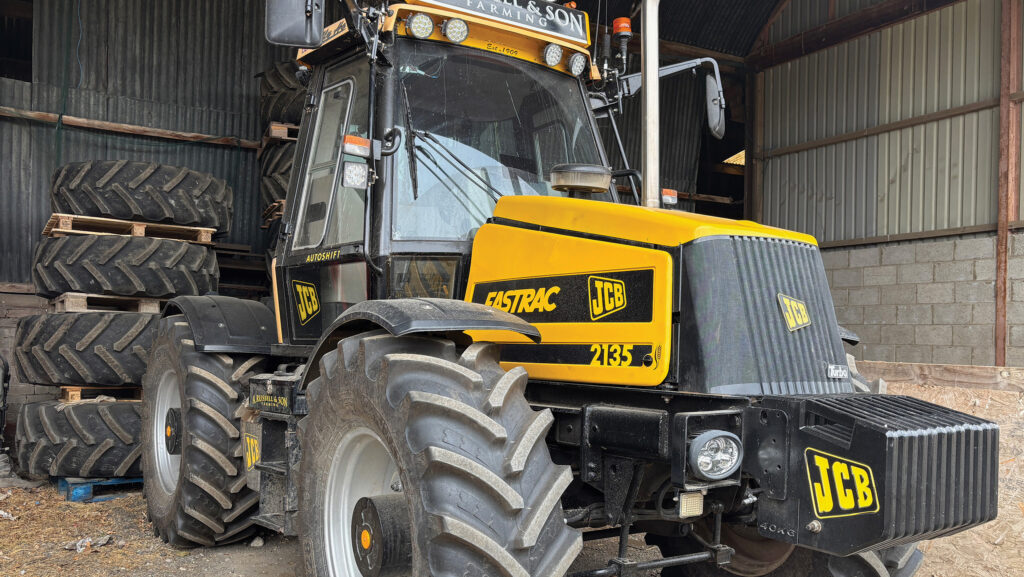
JCB Fastrac 2135 © James Andrews
How long do you keep your kit?
We definitely don’t change machinery based on age or the number of hours worked. Instead, we tend to move things on if there’s something else that takes our fancy.
A good example is a John Deere 8320 that we used to have for pulling the drill. We really liked it, but it was pushed to the limit on that job and another Quadtrac 535 had caught our eye. With a healthy trade-in value of £41,000, we decided to let it go and take the extra power.
Next on your wish list?
If money was no object, we’d have a John Deere 9RX 620 instead of one of the Quadtracs. They’re still far too expensive for us, though. I saw one advertised the other day for £280,000, which is miles out of our price bracket.
When a 17-year-old Quadtrac can do roughly the same job for a fraction of the cost, it’s hard to justify the extra outlay. But they are really nice to drive.
Most embarrassing mistake?
I said the Sprinter was unstable… Well, a few years ago, Dad did manage to tip it over and cause a huge amount of damage.
In fairness, there wasn’t much he could do about it. He was driving down an off-camber track which was slightly greasy and it started to slide.
No sooner had it slipped off the track than it was on its side. We got it upright and it didn’t look too bad to start with, but the chassis was twisted and the grain tank was bent.
The insurance company decided it was worth repairing, so shelled out £33,000 to have it put right. That’s why we tend to drop a wing down whenever the ground looks a bit uneven.
Biggest repair bill?
Our 2008 Quadtrac had to have a transmission overhaul, which cost about £12,000. It’s the one that does all the heavy cultivation work, so after 5,000 hours of hard graft, that’s not too bad.
Most overpriced spare part?
There’s no getting away from the fact that replacement Quadtrac tracks are pricey. We’ve tried the cheap Chinese ones, which were so awful we sent them back after a day. The drive lug spacings were all wrong, so they were ripping themselves apart.
Now we tend to buy Camoplast units through Eurotrack. They’re £7,000 each, but we soften the blow by buying them one at a time. Thankfully, we do very few road miles, so the new ones should last a long time. We also keep on top of idler maintenance by changing the oil every other year.
A bigger rip-off was the replacement link arm we needed after the strain of having the Flatliner on the back.
A Case IH one was £4,800 (for a single link arm), but we managed to get a non-genuine alternative from JPM Agricultural for £1,800, plus £350 for the pin.
Best truck you’ve ever had?
A few years ago, we bought a 2012 Scania R620 as a bit of a stopgap. It was boring to look at with plain white bodywork, but it pulled better than any other truck we had. We actually struggled to get some of the drivers out of it and into the newer ones.
It turned out to be a good investment, too. We bought it for £25,000, did about 180,000 miles and sold it 18 months later to a chap in Ireland for £31,000.
And the worst?
Years ago, Dad had a Volvo F12 that was plagued with problems and eventually threw a cod rod through the side of the block. After that, it was packed off to the scrapyard.
Best invention?
When Dad was at school, he made some brilliant heavy-duty axle stands that we still use regularly. They’re incredibly strong and very stable, so ideal for working on tractors and trucks.
What couldn’t you live without in the workshop?
Any of the battery-powered Milwaukee tools – they’ve transformed workshop jobs and roadside repairs.
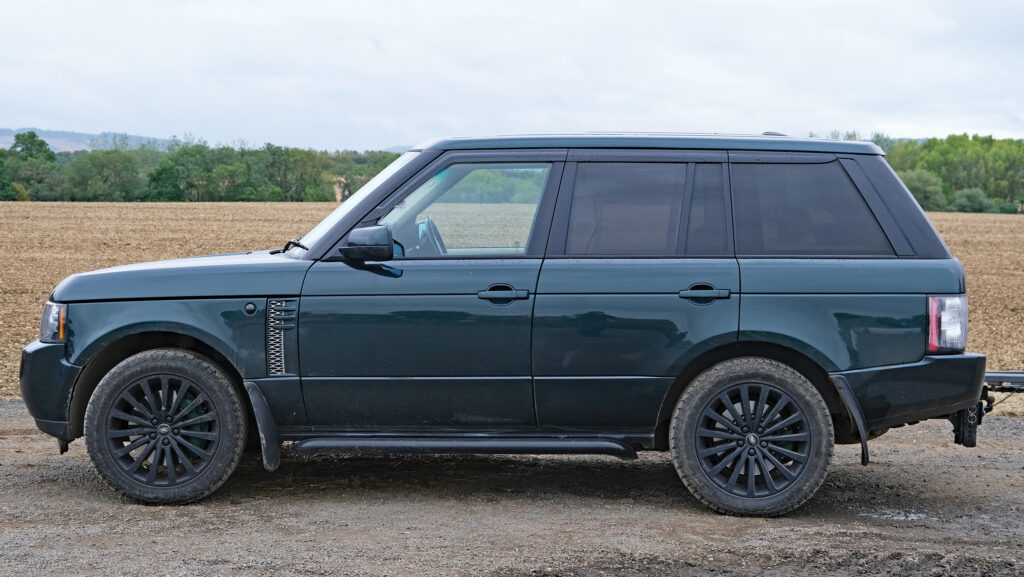
Range Rover L322 © James Andrews
What’s your everyday transport?
The eight-cylinder theme continues with the cars. I recently bought a 2014 Range Rover L494 with a 4.4-litre V8 and Dad has a 2012 Range Rover L322 with the same engine.
It’s a seriously tough engine and has load of power for towing. The L494 is surprisingly good on fuel, averaging 28mpg, but the L322 struggles to reach 20mpg. It’s all about the smiles per mile, though.
Best tractor you’ve ever had?
Back in the day we had a Ford 8630 that had the pump turned up so much that it was putting out about 200hp. It smoked for England, but pulled like a train and didn’t give us any serious trouble.
And the worst?
A Ford 6710 Q Cab. It was numb and gutless, so nobody liked driving it. We also had a John Deere 7810, which was nowhere near as good as it should have been. The engine was lovely, but it had the less-desirable AutoPowr transmission and we couldn’t stop the oil overheating.
Most surprisingly useful feature on a machine?
After years of drilling the headlands manually, I discovered last season that the tractor can do it on autosteer. It’s pretty neat watching it snake its way around the field on its own.
Biggest bargain?
The 2009 Quadtrac that we bought from Michael Burdge near Bristol for £51,000 when it was on 4,500 hours.
Other than a leaking half-shaft seal, it’s barely put a foot wrong in the 3,100 hours since. The rise in machinery prices has probably dragged the value up to about £70,000, too.
Biggest bugbear?
This isn’t machinery related, but I hate the fact that mills keep importing grain when there is plenty on their doorstep. On the one hand, we get some benefit as there’s haulage work off the back of it, but it doesn’t help UK farms.
A while ago we were contracted to take some German wheat from the docks to a mill. It was rejected due to bugs, so there were two more journeys taking it to and from the cleaners. How can that be cheaper than buying locally?