

2020 a year to forget: Covid, weather and anti-meat activists
 © AdobeStock/attraction art
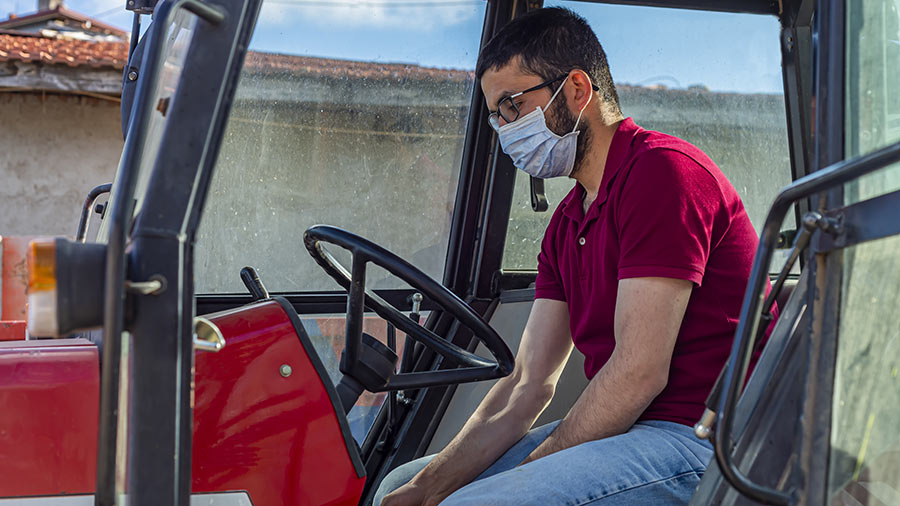
 The year 2020 will be remembered for the appearance of the first pandemic in decades, as coronavirus devastated people’s lives and businesses.
The weather did farms no favours either with both storms and very dry spells disrupting the growing season. And as if that wasn’t enough, dispiritingly for farmers, activists decided farming was to blame for climate change.
See also: Coronavirus: Diversified business pointers for safe reopening
Covid disruption to business and education.
The dairy sector was especially badly affected during the first lockdown with the loss of the food service market. Some farmers were even forced to pour milk into the slurry pit.
At the start of April, the NFU warned up to 30% of dairy farmers were at risk of receiving a cut price for their milk, due to the slump in demand. Thousands of tonnes of potatoes were also left languishing in store after fish and chip shops closed.
Meanwhile, supermarkets stepped up steak promotions to help beef farmers deal with a drop in demand for more premium cuts usually destined for restaurants.
Farming events and shows, often vital for charity fundraising, were cancelled or rescheduled across the country. Among the high-profile casualties were the Royal Welsh Show and the Great Yorkshire Show, which usually attract 240,000 and 130,000 visitors, respectively.
Both the pig and poultry sectors suffered from reduced processing capacity due to the pandemic, resulting in a backlog of live animals building up on some farms.
Farmers with diversifications and events sidelines also suffered from a drop in customer numbers.
Restrictions for students
It’s been a tricky time for universities and colleges providing education to the next generation of agriculturalists, with Covid-19 imposing severe restrictions on how they operate.
Forced to close their doors in late March, many students returned home and had to carry on their courses either through self-teaching or “virtual” lectures. Many students had to rethink their work placements – while ruing the fact their college “experience” had been cut short.
The new intake of students since September has had it slightly better, with most colleges offering some face-to-face sessions, though larger lectures are typically being conducted remotely. And again, students are missing out on the social side as various degrees of “lockdown” affect different parts of the country.
It’s been a particularly difficult year for Newton Rigg College in Cumbria, which was told by parent Askham Bryan College in May that its days as an educational establishment were numbered, following a report by the further education commissioner.
There is the possibility of a reprieve, however, as a cross-industry group called Newton Rigg Ltd recently submitted a bid to keep the college going as an educational establishment, rather than seeing it handed over to developers.
Plumpton College in East Sussex will also be glad see the back of 2020, having been hit in September with a £50,000 fine, plus costs of £45,000, for a serious pollution incident on its farm four years ago.
Extreme weather
Extreme weather events are becoming more frequent and more unpredictable – and 2020 was no exception. Farmers were left counting the cost of Storm Ciara in February, with floods covering a swathe of the country. Fast-moving water swept away a livestock trailer belonging to Amanda Owen in Swaledale, North Yorkshire.
Storm Dennis came hot on its heels. In Carmarthen, the River Towy burst its banks, making milk collection impossible. In Staffordshire, heavy rain flooded a barn housing Herdwick sheep on Highfields Farm, on the edge of the Peak District.
The weather then performed a quick about-turn as a dry spring followed. May 2020 was the sunniest calendar month on record, according to the Met Office. It had 266 hours of sunshine – surpassing the previous record of 265 hours in June 1957.
It was also the driest May on record in England and the second driest in Wales, with an average of 9.3mm and 14.3mm of rainfall, respectively – equivalent to just 17% of the monthly average.
But it didn’t last, with a wet harvest in many areas leading to secondary growth and reducing yields further.
Anti-meat agenda
Cancer support charity Macmillan prompted farmer fury at the start of the year when it encouraged people to give up eating meat for a month. Some farmers said it was “disheartening” to see the charity’s Meat-Free March initiative, given the efforts they had gone to in the past to help fundraise for Macmillan.
In response, the charity agreed not to promote the campaign, but did not pull it completely.
January also saw a spate of anti-meat programmes on TV, including Meat The Family – in which city families were asked to look after farm animals as pets, and then eat them – and How To Steal Pigs and Influence People, following the activities of so-called “vegan influencers”.
Environmentalist George Monbiot was also on the screens again, with a new TV programme, Apocalypse Cow – How Meat Killed the Planet, in which he claimed livestock farming was “destroying our life support system”.
These programmes were condemned by farmers, but were widely talked about on social media.
There was better news in October, however, when the BBC upheld a complaint from the NFU about the impartiality of its 2019 documentary Meat: A Threat to Our Planet? – and removed it from iPlayer.
Meanwhile, University of Edinburgh students voted to ban beef in cafes and restaurants on campus in response to climate change fears. And in November, the Oxford University students’ union followed suit, voting to ban beef and lamb at university-catered events and canteens.