

Analysis: How vehicle theft gangs are exploiting rural buildings
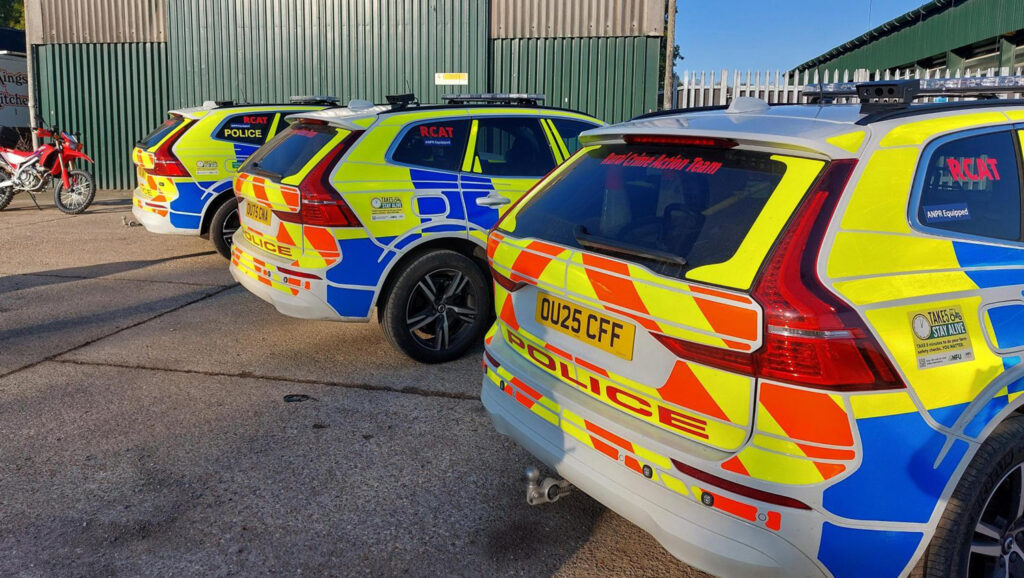 Rural Crime Team at a suspected 'chop shop' © Cambridgeshire Police
 A vacant farm building can provide a useful source of rental income. But crime experts are warning that empty barns and rural units can also attract a very different type of tenant – organised vehicle theft gangs.
Police and stolen vehicle recovery specialists say criminal networks are increasingly seeking out vacant rural buildings where stolen vehicles can be hidden, stripped for parts and moved on without attracting attention.
Although evidence of working farms being used as vehicle “chop shops” remains limited, police say vacant barns and units can appeal to organised criminals for a range of nefarious activities.
See also: Police recover £854k of stolen machinery in a week
Detective chief inspector Kate Brummell, head of operations at Opal, the national intelligence unit for serious and organised acquisitive crime, says illegal vehicle dismantling operations are a growing concern.
“As the number of ‘chop shops’ grow, we are seeing more being established in rural and remote locations,” she says.
“However, they are not confined to isolated areas. Many are hidden in plain sight, operating from industrial units, garages and seemingly legitimate business premises.
“Organised crime groups will use any location that provides the opportunity to store, dismantle and move stolen vehicles and parts while avoiding detection.”
Growing threat
The scale of vehicle dismantling activity identified by investigators has increased markedly in recent years.
Tracker Network UK says the number of illegal dismantling sites it has helped uncover alongside police has increased from just two illegal dismantling sites in 2020 to 78 in 2025.
Recovery specialists attribute the increase to strong demand for second-hand parts and ongoing supply chain pressures.
Ahron Tolley, director of asset recovery firm W4G Track Recovery, says organised vehicle crime has become increasingly sophisticated.
“We are walking into this perfect storm of supply and demand being run by criminality,” he says.
“Car parts are needed because the demand in the marketplace is there.
“At the same time, organised vehicle theft networks have invested heavily in research and development to bypass modern security.”
Modern theft methods increasingly rely on electronic devices that defeat vehicle security systems, allowing criminals to steal vehicles quickly and with little damage.
Mr Tolley says gangs are now targeting practical, high-demand vehicles as well as prestige models.
“Vehicles such as Toyota Hiluxes and Nissan Navaras are becoming increasingly attractive because there is strong demand for parts and they are widely used across rural industries,” he says.
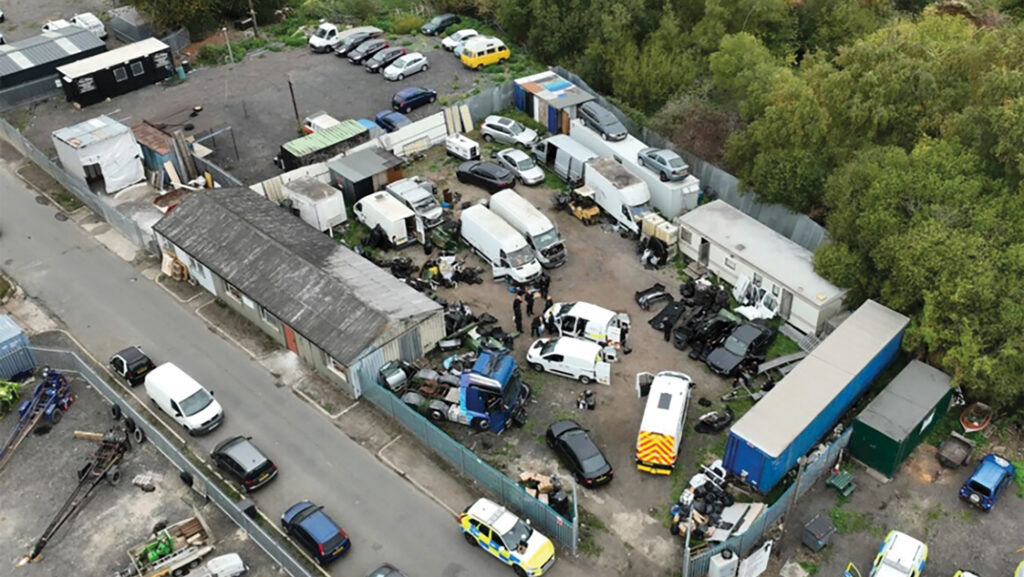
Aerial view of illegal ‘chop shop’ © Opal
Rural appeal
Investigators say some criminal groups are moving away from urban locations in favour of rural buildings that offer space, vehicle access and fewer nearby residents.
Mr Tolley says some gangs use seemingly legitimate businesses or dormant companies to rent units for months without attracting attention.
Earlier this year, Essex Police uncovered a large dismantling operation near South Ockendon, recovering more than £592,000 worth of stolen vehicles, vehicle shells and parts, including a Bentley Continental.
Meanwhile, a suspected chop shop operating from an agricultural building near Lakenheath in Suffolk led to the recovery of three stolen prestige vehicles.
Three men were subsequently convicted and jailed at Ipswich Crown Court in April for their roles in the illegal operation.
Investigators say stolen vehicles are often stripped within hours of arrival, with parts subsequently sold online, moved through distribution networks, or exported overseas.
Police urge perspective
Despite these cases, police are keen to avoid overstating the extent of the problem within agriculture.
Superintendent Andy Huddlestone, head of the National Rural Crime Unit, says farm machinery theft and waste crime remain a far greater concern for most farmers than chop shops.
“If you would ask me where I would find a chop shop, I can take you to a lot more places before you’d look on a farm,” he says.
“To have a chop shop on a farm, you’ve got to have multiple cars going in there at all sorts of times, lots of wagons going back and forwards, waste building up and signal jammers. These are things that tend to stand out on a farm.”
He adds that criminals do occasionally rent rural premises for illegal activity, but genuine vehicle dismantling sites on working farms remain uncommon.
He also notes that locations described as “farms” are sometimes traveller sites or commercial premises retaining historical agricultural names, rather than active farming businesses.
Nevertheless, Superintendent Huddlestone says landowners should remain vigilant when letting buildings.
Due diligence ‘essential’
The National Vehicle Crime Reduction Partnership says it is working with police, the National Vehicle Crime Intelligence Service and industry partners to improve intelligence sharing and help fund more specialist vehicle examiners capable of identifying stolen vehicles and components.
The greatest risk to farmers may not be criminals breaking onto their land, but criminals presenting themselves as legitimate tenants.
Experts advise carrying out background checks, obtaining references, avoiding cash-only arrangements and ensuring tenancy agreements permit regular inspections (see below).
CLA advice: Protecting farm buildings from criminal misuse
Letting surplus farm buildings can provide a valuable income stream, but landlords should carry out thorough checks before handing over the keys and continue monitoring premises throughout the tenancy, says Lucy Charman, national rural crime lead at the Country Land and Business Association (CLA).
Before agreeing a lease, verify a prospective tenant’s identity, check companies through Companies House where appropriate, obtain references and avoid accepting rent in cash.
A written lease should clearly state the permitted use of the building, prohibit illegal activity and subletting, and give the landlord the right to carry out regular inspections.
Once a tenancy is in place, routine visits can help spot problems early.
Warning signs include tenants discouraging inspections, unusual vehicle movements outside normal hours, recovery trucks or flatbeds making frequent visits, large quantities of vehicle parts or scrap being stored, or activity inconsistent with the agreed business use.
If criminal activity is suspected, the CLA advises against confronting those involved.
Instead, record details such as dates, times and vehicle registrations where it is safe to do so, report concerns to police on 101, or call 999 if there is an immediate threat.
Regular oversight and sensible due diligence can greatly reduce the risk of farm buildings being exploited by organised criminals.
Landlords should ensure tenancy agreements clearly define permitted uses and allow for periodic inspections.
Warning signs can include unusual vehicle movements, recovery trucks visiting regularly, tenants discouraging inspections or activity that does not match the agreed business purpose.
DCI Brummell says closer co-operation between police, vehicle manufacturers and private recovery firms is helping disrupt organised vehicle crime.
“Criminals will continuously seek to find new ways to stay a step ahead of law enforcement, but the improved partnership approach between policing, vehicle manufacturers and private firms is having a real impact,” she says.
Recent national enforcement campaigns have resulted in hundreds of arrests, millions of pounds worth of stolen vehicles being recovered and dozens of illegal dismantling operations being shut down, DCI Brummell adds.
Working farms are unlikely to be targeted, but vacant barns and underused buildings can appeal to organised criminals.
For landowners, the message is simple: know who you’re renting to, keep buildings secure and report suspicious activity.
Case highlights risk of renting vacant buildings
A recent investigation by W4G Track Recovery demonstrates the importance of carrying out due diligence when letting rural buildings.
Vehicle recovery specialists tracking a stolen vehicle led them to a unit on a rural property in Wiltshire that had been rented to an individual presenting themselves as a legitimate business operation.

Police at suspected chop shop at an ag business in Wiltshire © W4G Track Recovery
Subsequent enquiries uncovered evidence of suspected criminal activity linked to stolen vehicle parts.
The landowner was not implicated in any wrongdoing, but the case serves as a reminder that vacant barns and units can be attractive to organised criminals seeking discreet premises.
Because related legal proceedings are ongoing, further details cannot be reported.