

Analysis: Rural crime – down overall, but hotspots persist
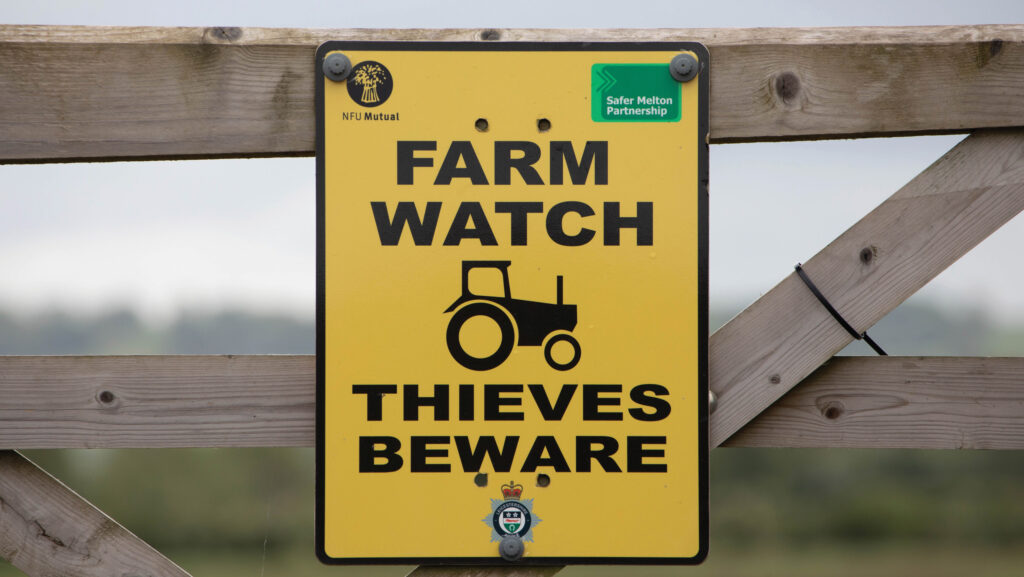 © Tim Scrivener
 First the good news – the cost of rural crime has fallen for the second year in a row.
According to latest figures from rural insurer the NFU Mutual, that cost in the UK came to £41.5m in 2025, compared with £44.1m the previous year and £52.8m in 2023 – a 21% drop in just two years.
NFU Mutual says this is a clear reflection of the investment and collaborative efforts being put in by farming organisations, policymakers and police forces to counter the activities of organised and serial criminals.
See also: Find all our rural crime stories and advice in one place
Indeed, its latest Rural Crime Report notes that such collaboration led to the recovery of more than £9m worth of stolen agricultural vehicles and machinery during the course of 2025.
This included Lincolnshire Police recovering more than half a million pounds’ worth of stolen kit, while earlier this year, equipment worth “tens of thousands of pounds” – including a Manitou telehandler and an Ifor Williams trailer – was retrieved from woods and fields in Rutland.
Hannah Binns, rural affairs specialist at NFU Mutual, says: “Rural crime is more organised than ever, with criminals prepared to go to extreme lengths.
“Yet targeted investment in rural crime fighting initiatives alongside industry collaboration with law enforcement is helping drive it down.”
While there is no room for complacency, two years of declining claims suggest the additional focus being placed on this issue is working.
“These figures emphasise the continued need for government, police, farmers, rural communities, insurers, and manufacturers to work together,” Ms Binns adds.
“Only a co-ordinated effort across industry, farming and law enforcement can deliver a unified response to rural crime.”
ATVs and other kit
But it’s not all good news – far from it – with certain items continuing to be targeted.
Quad bikes and all-terrain vehicles (ATVs) are a case in point, the theft of which soared 31% to an estimated £3.5m in 2025, highlighting the popularity of these items amongst the criminal fraternity.
“The very capabilities that make these vehicles indispensable to farmers, especially in upland areas, also make them highly attractive to thieves, leaving them consistently at risk of targeted criminal activity,” says the report.
The estimated cost of tractor theft and telehandlers also rose, up 8% to £1.6m and 38% to £773,000, respectively.
Overall, agricultural vehicle theft claims climbed 18% to an estimated £8.3m in 2025, though the number of stolen global positioning system (GPS) units fell as farmers and contractors paid greater attention to marking their equipment and taking other security measures.
Head of the Police National Rural Crime Unit Andrew Huddleston also points to the arrest and imprisonment of members of an international organised crime gang responsible for widespread farm GPS thefts.
“This outcome illustrates what can be achieved through collaboration between policing, industry, and the agricultural sector,” he says.
“Rural crime can be disrupted effectively when community action, information, expertise, and resources are shared.”
The introduction of the Equipment Theft (Prevention) Act in 2023 is also helping, requiring as it does all new ATVs and GPS units to carry forensic markers before sale.
Livestock rustling
It is less good news for livestock keepers, however, with the estimated cost of animal theft rising by nearly 30% to £4.5m last year, according to the NFU Mutual’s figures.
“Although it dates back centuries, this crime has become highly organised, in line with the wider trend in rural crime,” says the report.
“Rearing livestock is a long-term investment of time, planning and labour, which is why the theft of farm animals can be traumatic for farmers and their families.”
The scale of this crime is no better illustrated than by the recent case of Lincolnshire farmer Peter Parker, who was jailed earlier this month for four-and-a-half years for a seven-year spree of sheep thefts, taken at night from livestock marts across England.
It is concerning, too, says the report, that farm animals worth an estimated £1.95m were also severely injured or killed in dog attacks last year, up 10% compared to 2024.
Regional differences
As ever, there are strong regional differences in the rate of crime.
Within England, rural crime fell most in the Midlands, but actually grew in the North East. Northern Ireland and Scotland also saw notable uplifts, but Wales recorded the greatest downturn.
Despite the overall reduction, a survey of 119 NFU Mutual agents found that 91% believe rural crime is disrupting farming in their area, and 79% know farmers who have been targeted repeatedly.
Alarmingly, 29% have seen farmers change practices or leave the industry altogether due to rural crime.
“I know farmers who have sold up and moved to more rural parts of the country to escape the ever-present issues from fly-tipping, hare coursing and general challenges of farming on the urban fringe,” says one South West agent.
Rural crime – a regional breakdown |
|||
| Region or country | 2025 cost | 2024 cost | % change from 2024 |
| East | £5.9m | £6.3m | -6% |
| Midlands | £6.4m | £8.1m | -21% |
| North East | £7.6m | £7.1m | +7% |
| North West | £2.7m | £2.9m | -7% |
| South East | £6.8m | £7.1m | -4% |
| South West | £6.2m | £6.7m | -8% |
| Northern Ireland | £2.2m | £1.8m | +24% |
| Scotland | £1.4m | £1.2m | +14% |
| Wales | £2.2m | £2.8m | -21% |
| UK | £41.5m | £44.1m | -6% |
| Source: NFU Mutual | |||
How robust is the data?
Just how representative the figures quoted by NFU Mutual are is often called into question – after all, it is just one of a number of rural insurers, albeit the largest.
The figures are actually based on claims made to NFU Mutual, but a multiplier is applied which takes into account the market share of other insurers, and allows for the fact that around a quarter of crimes go unreported.
It is also understood that a number of crimes are not accounted for in the data, for example arson, hare coursing, fly-tipping and domestic burglary.
The figures are therefore likely to underestimate the true cost of rural crime in the UK. However they do shed important light on the trends, given that the same methodology is used each year.
The non-financial cost of rural crime
While losing equipment and livestock to rural criminals carries a significant financial cost, there is also a high emotional price to pay, says Farm Safety Foundation manager Stephanie Berkeley.
“For many farmers, it represents a violation of their home, livelihood and sense of safety,” she says.
“When margins are already tight and incomes unpredictable, the financial strain caused by rural crime can heighten anxiety, sleeplessness and feelings of helplessness – all recognised contributors to poor mental health in the industry.
“By recognising its emotional impact, encouraging open conversations and ensuring farmers know where to turn for both practical and emotional support, we can reduce harm and strengthen resilience across the farming community.”
This message is endorsed by NFU Mutual chairman Jim McLaren writing in the Forward to the report.
“Rural crime can undermine trust and connection,” he says. “Suspicion, worry and frustration often replace the vital sense of community, with farmers left traumatised and fearful that those responsible could return.”
Mr McLaren says it is “vital” farmers start talking more openly about their struggles, and seek support when needed.
“Although farming can sometimes be a lonely pursuit, a wide network of support exists to ensure you never have to tackle these challenges alone,” he says.
Case study: Thieves come back for more after ATV theft
One farmer to fall victim to the crime of ATV theft is John Blackwell, who runs an arable farm near Coggeshall in Essex.
He believes the thieves first staked out the farmyard to discover how to open the electric gates and how far the beam activating the security lights extended.
They then carried out the theft of a Polaris ATV in January 2025 at about 8pm, carefully wheeling the vehicle away and loading it into a trailer parked outside the farm.
They then came back three weeks later to see if the ATV had been replaced, so they could steal that one too.
But after the first theft, the Blackwell’s invested about £10,000 in additional security measures – which successfully foiled the second attempt.
“We know the thieves came back for a second try because we could hear them through the intercom on the gates discussing how we had ‘filled the gaps’ in the security,” says Mr Blackwell’s wife Sally, who describes the new set-up as “like living in Fort Knox”.
The stolen ATV had a tracking device, although it was never recovered.