

Empty supermarket shelves in Shetland highlight food security risk
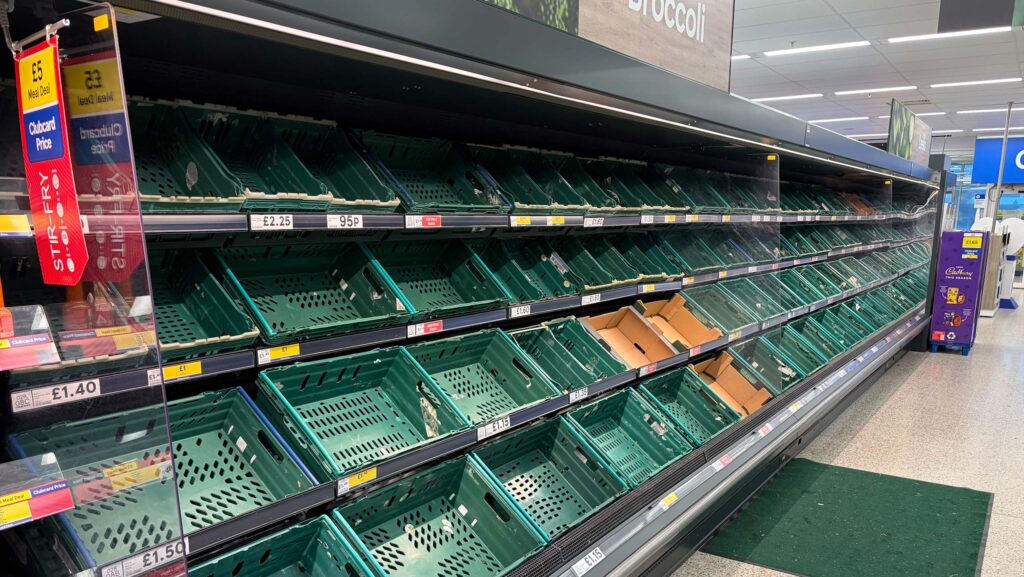 Empty shelves in Tesco in Shetland © Alistair Carmichael MP
 Alistair Carmichael MP has highlighted the importance of food security after sharing images of empty supermarket shelves in Shetland following several days of ferry cancellations.
The Liberal Democrat MP for Orkney and Shetland posted photographs on Facebook showing shortages at Tesco in Lerwick, after bad weather disrupted ferry services to the islands.
The post has been shared hundreds of times since Sunday (25 January), sparking widespread discussion about the vulnerability of island communities – and the UK more broadly – to supply chain disruption.
See also: Editor’s View: Lax food security must end in dangerous world
In his post, Mr Carmichael described the images as a “cut out and keep guide to food security and why it matters”, arguing that reliance on imported food leaves communities exposed.
He pointed out that Shetland, like the rest of the UK, is heavily dependent on food brought in from elsewhere, with most supermarket produce arriving from the mainland.
“Shetland is an island community [just as Britain is an island nation],” he wrote.
“After a few days of bad weather and no ferries, this is what the shelves look like.”
While islanders are used to coping with disruption, he questioned whether larger towns and cities would be as pragmatic in similar circumstances.
He added that the presence of a small number of local dairy farms meant fresh milk was still available, underlining the value of local food production.
“Food security is national security,” he said.
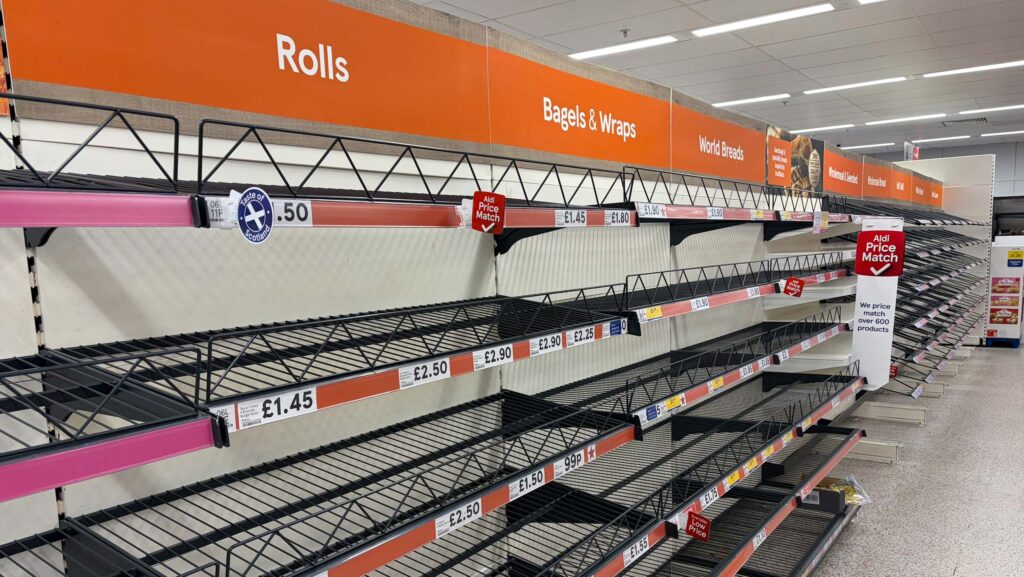
Empty bakery shelves in Tesco in Shetland © Alistair Carmichael MP
Mr Carmichael is chairman of the cross-party Environment, Food and Rural Affairs (Efra) select committee and recently secured a parliamentary debate on the future of the fisheries industry, held on 22 January.
Opening the debate, he stressed that food security discussions should not focus solely on farming on land but also recognise the role of well-managed seas in providing sustainable, low-carbon protein.
Mr Carmichael has repeatedly called on the government to recognise rural and island communities as essential to the UK’s food security and to support family farmers rather than undermine them.
Food self-sufficiency down
Defra ministers often repeat the mantra that “food security is national security”, yet the government refuses to set a minimum self‑sufficiency target on food.
UK food self-sufficiency has dropped sharply since the 1980s, falling from about 78% in 1984 to 62% in 2023, with self-sufficiency for foods that can be grown domestically at 75%.
Asked at the recent Oxford Farming Conference whether legislation was planned, Defra secretary Emma Reynolds replied, “No”.