

8 ways to prepare for tighter rules on water quality
 © Antony Robinson/iStockphoto
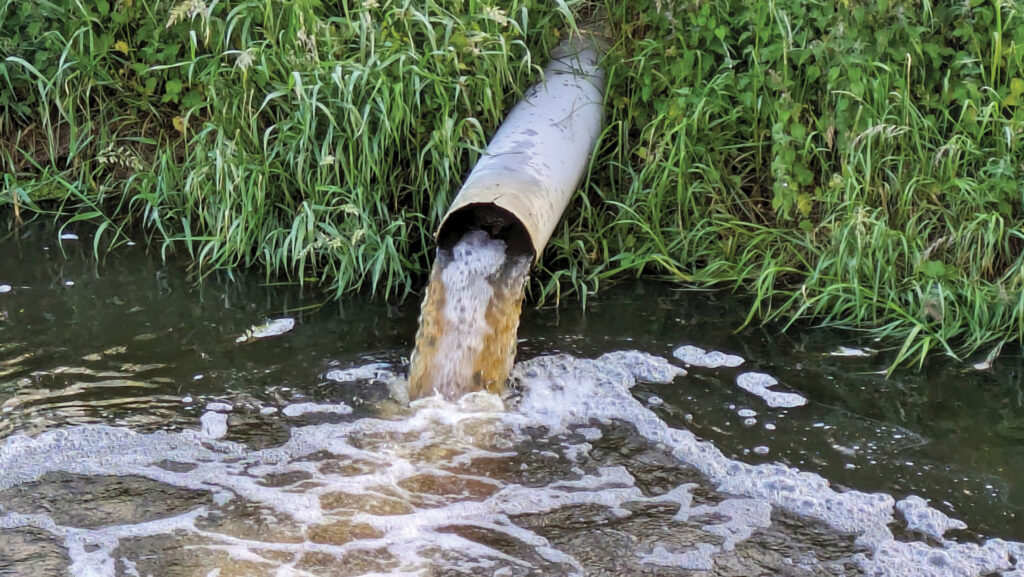
 Primarily focused on water companies and signalling a major overhaul of England’s water system, the government’s Water White Paper also targets farmers, pledging to hold them strictly accountable for the 40% of river pollution attributed to the sector.
See also: Advice on harvesting rainwater to build farm resilience
The paper sets out proposals to consolidate current farming regulations. These proposals are:
- Clearer and stronger national standards
- Boost Environment Agency inspections
- Improve slurry storage capacity
- Tighten rules on the use of sewage sludge on farmland
- Extend environmental permitting to cattle businesses.
Having a single set of standards to cover a more joined-up, prevention-first approach has been broadly welcomed by the industry, although there are concerns about how any changes will be introduced and what they will cost.
What help is available?
Anglian Water has various grant schemes aimed at finding solutions to local water quality challenges, which open at key times of the year:
- Farm Innovation Grant – up to £7,500
- Training Grant – up to £600
- Closed Transfer Scheme – up to £2,500
- Event Grant – up to £1,000
- Farm Cluster Grant – up to £30,000
- Nozzle Improvement Grant – tbc
- Land Management Grant – tbc
- Pigs on Grass – up to £1,500
- Special Projects – tbc
- Trials – tbc
Allowing the proposals a generous transition period and accessible grant funding will be essential, highlights the NFU.
It adds that there are two particular areas which could have implications for farmers and growers – reforms to the way that sewage sludge is used on farmland and the extension of environmental permitting to include cattle.
With sewage sludge, Defra says it is consulting on how sewage sludge is used and regulated and whether it should also come under the environmental permitting regime.
The review is being driven by concerns that harmful pollutants, including PFAS (forever chemicals), microplastics and heavy metals, are finding their way into watercourses.
And commentators point out that the current guidelines on using sewage sludge are more than 30 years old.
The government’s ambition to extend environmental permitting from pig and poultry businesses to cattle farming has been criticised by the NFU.
The union suggests permitting regulation is likely to cover dairy farming and intensive beef production, although there is little detail on the cattle numbers that would trigger the need for a permit.
The diverse range of production systems, extensive grazing periods during certain times of the year, the lack of mitigation options for certain businesses, plus the cost and paperwork associated with the implementation of a permitting regime, makes the proposal to extend environmental permitting directly from pigs and poultry to the dairy sector completely unfeasible, the union states.
The NFU has urged Defra to carefully consider its approach with two key asks:
Defra to commit to the inclusion of an industry-led option in any future consultation on the extension of environmental permitting regulations
A ministerial-level commitment from Defra and the Environment Agency to work fully alongside the industry to aid the design of an industry-led solution that is outcome-led.
How can farmers prepare?
Whatever the outcome of government decisions, the direction of travel is clear: tighter rules on nutrient management, slurry storage and diffuse pollution are on their way.
Staying ahead of regulation means preparing early, expecting stronger scrutiny and knowing where the risks lie – that way, farms will be in a better position for what lies ahead.
1. Understand your farm’s risk profile
Identify any hotspots for sediment loss, be aware of where water leaves the farm, recognise fields that slope towards watercourses, consider whether compacted headlands are channelling run-off and locate where field drains are discharging.
Have a documented risk assessment ready for when inspections and assurance audits occur.
2. Get slurry and manure storage up to scratch
Storage capacity remains a weak point on many farms so be prepared with plans and costings as grant funding windows open.
Aim for five to six months minimum slurry storage capacity, check that bases and walls are impermeable, separate clean and dirty water, and ensure there are proper covers on new or amended stores.
If importing manures, check that field heaps comply with rules on siting, run-off prevention and timing.
3. Tighten nutrient management
Regulators will be checking that farms are doing everything they can to minimise N and P losses.
Carry out soil testing every three to five years, use up-to-date fertiliser recommendations, account for the use of organic manures, avoid autumn applications to high-risk land and calibrate sprayers and spreaders annually.
Where appropriate, consider the use of precision technology to reduce costs and losses.
4. Improve soil structure and resilience
A healthy soil is the first line of defence against water pollution.
Build resilience by using cover crops to reduce run-off and aid nutrient cycling, introduce a controlled or reduced traffic system, establish grass buffer strips along watercourses, place in-field grass waterways to prevent erosion on slopes and make use of organic matter additions.
5. Separate clean and dirty water on yards
Yard infrastructure may need updating, especially where rainwater from roofs needs diverting away from slurry systems.
For lightly contaminated yard areas, think about additional guttering and downpipes, use of silt traps and sediment tanks, as well as drain inspection and maintenance.
A blocked drain or cracked concrete apron needs repairing promptly.
6. Train staff and review emergency plans
Make sure you can demonstrate due diligence by being prepared.
For this, have protocols for slurry spreading, carry out weather checks before application, keep staff training records, develop an emergency pollution plan and have spill kits in high-risk areas.
7. Keep ahead of inspections
Maintain up-to-date field records, prepare nutrient management plans, keep soil analysis results and have maps showing buffers and no-spread zones. Slurry store calculations are also relevant.
8. Think beyond compliance
Market forces and supply chain standards may go beyond rules and regulations, so demonstrating robust water stewardship can be a condition imposed by food processors and retailers.
This helps to develop stronger relationships, both with buyers and with local communities.
Government support
The Capital Grants 2026 offer, which opens in July, has £225m to support farmers to deliver environmental improvements.
Eligible items in the offer are in six groups – one of which is water quality.
A £25,000 funding limit applies to this group, which contains items and equipment for yard management, livestock management and drainage and filtration.
A full list, along with guidance notes, will be published in May.
Catchment Sensitive Farming (CSF) support is required for 24 items, so farmers are being advised to get organised and book visits, where possible.
Included in this 24 are automatic slurry scrapers, sprayer washdown areas, self-supporting covers for slurry and anaerobic digestion stores, as well as underground and above-ground tanks.
Demand for previous rounds has been very high and Defra is expecting strong interest again.
As a result, it will be issuing updates as the budget is allocated.
Otherwise, the latest round of the Farming Equipment Technology Fund (FETF) opened in mid-March, with a closure date of the end of this month.
Also run on a first-come, first-served basis, this is the last round of the FETF in its current form.
Grants are available to help buy equipment or technology for three groups, with slurry management being one of them. The others are productivity and animal health and welfare.
Eligible items must be new or ex-display, with the Rural Payments Agency paying 40-50% of the cost. If successful, there is a minimum grant contribution of £1,000 and a maximum of £25,000 for slurry items.
What is environmental permitting?
Environmental permitting is a regulatory process in the UK that requires businesses to get legal authorisation from the Environment Agency (EA) or local councils before operating activities that could harm the environment or human health.
It ensures compliance with conditions to control pollution to air, land and water.
Currently, it is a mandatory requirement for pig units with 2,000-plus production pigs or 750 sows, and poultry farms with 40,000-plus birds.
Permits focus on managing emissions, waste and pollution risks, requiring site plans, risk assessments and annual reporting.
The EA, which produces detailed guidance for agriculture, conducts inspections at least once every three years.
A key component of permits is the use of best available techniques, which are defined as the most effective, advanced and economically viable methods for minimising emissions and environmental impact.
For a standard rules permit, the initial application to the EA typically costs £4,000. More complex installations can cost in excess of £12,000. Thereafter, annual fees apply.
When asked about the likelihood of environmental permitting being extended for other livestock, Defra farming minister Dame Angela Eagle points out that the 40% of water pollution coming from agricultural run-off is too high.
“There’s no excuse for allowing it to carry on,” she says.
“Damage is being done and we need to take measures to prevent that. If permitting can help – I want to look at it.”
She accepts there are other techniques that could help.
© GNP
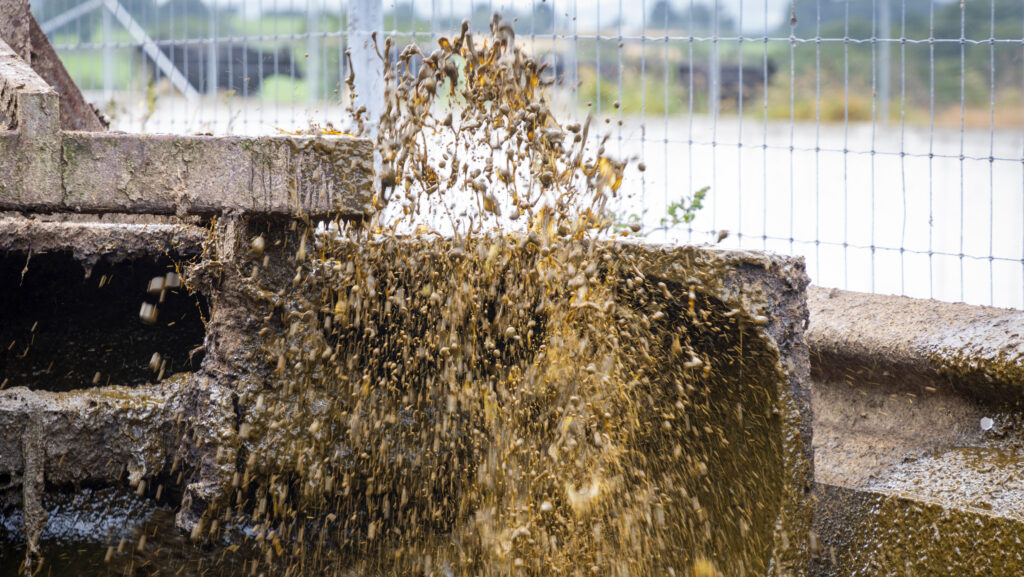
“There are all sorts of ways to reduce run-off from slurry applications and no final decisions have been made.
“However, this is a problem that we have to deal with – nothing is off the table.”
Case study: Rising nitrate levels in Grafham water
Grafham Reservoir has a large catchment of 3,200sq km, of which 70% is farmed, says Kim Hemmings, catchment adviser with Anglian Water.
In recent years, there has been a rising trend of nitrate levels found in the water, she reveals, with base levels in 2019 being 10mg/litre, but by 2022 that figure had risen to 20mg/litre.
“Currently, it’s at 35mg/litre and we need to understand why it has gone up and what can be done to change that situation.
“The legal nitrate standard is 50mg/litre.”
Under scrutiny
Grafham Water is fed by two rivers – the Ivel and the Ouse – so the quality of the water in the rivers is fundamental to the quality of the water in the reservoir.
That means the impact from farming is under scrutiny, as well as other activities in the region that may be contributing.
“We don’t think farmers are doing hugely different things and yet more nitrogen is being released from the land,” continues Kim.
“Of course what has changed in that time is the climate, with more droughts and floods, so that could be contributing to the rise.
“The wetter months may be having more of an effect than we envisaged.”
Another feature of the catchment is a high number of anaerobic digesters, which means that digestate with its high readily available nitrogen (RAN) content is spread on the land, she notes.
Some 30,000t of nitrogen fertiliser is applied across the catchment on 200,000ha, so its accurate and targeted application is key.
Monitoring by Anglian Water showed nitrate discharges of 9-13kg of N/ha a month in early 2025, which is why solutions are being sought.
The water company has recently funded the creation of a farmer cluster group, so that farmers and experts can work together to address water pollution and limit nitrate leaching.
“It’s only just started but we are already rolling out a testing programme for the outfalls from farms.
“The more information we can gather on how land use, cultivations and cropping are affecting the picture, the better advice we can give on minimising nitrate losses.”
Another trial being conducted is the use of ASC per plant sensors, which give high-resolution pictures of the crop and the weeds across 36m.
By building a picture of crop biomass, normalized difference vegetation index values and weeds throughout the growing season, it allows variable-rate applications and better targeting of inputs.
“Hopefully, this will improve nitrogen use efficiency, get more of the nutrient into the plant and prevent any unnecessary losses. It will help target the use of pesticides, too,” Kim adds.
David Felce, a Linking Environment and Farming demonstration farmer and a member of the cluster, is participating in the sensor trial and is acutely aware of the connectivity between his farm and Grafham Water.
“We have drainage ditches on our field boundaries, which take the water away. In our case, it then passes though two SSSIs [sites of special scientific interest] before it ends up in Grafham Water.”
Right balance
He believes that having well-structured soils and efficient drainage ditches is essential for productive farming and long-term sustainability.
“We know that waterlogged soils have higher nitrous oxide gas losses as well as productivity limits.
“So we need to strike the right balance between getting the water off the land and preventing drainage channels becoming pathways for nutrient losses.”
However, on some land going into a biodiversity net gain deal, he takes a different approach.
Where a temporary wetland is being established, the field has been split and now lies very wet.
“Drainage for ecology and biodiversity is very different to that required for productivity,” he points out. “Context is everything.”
Having a wetland will help with water management in a couple of ways, believes David.
“It slows the flow at wet times of the year and helps improve water quality through nutrient and sediment filtering.”

Explore more / Transition
During the series we follow our group of 16 Transition Farmers through the challenges and opportunities as they seek to improve their farm businesses.
Transition is an independent editorial initiative supported by our UK-wide network of partners, who have made it possible to bring you this series.
Visit the Transition content hub to find out more.
