

Nature-friendly farming on public display
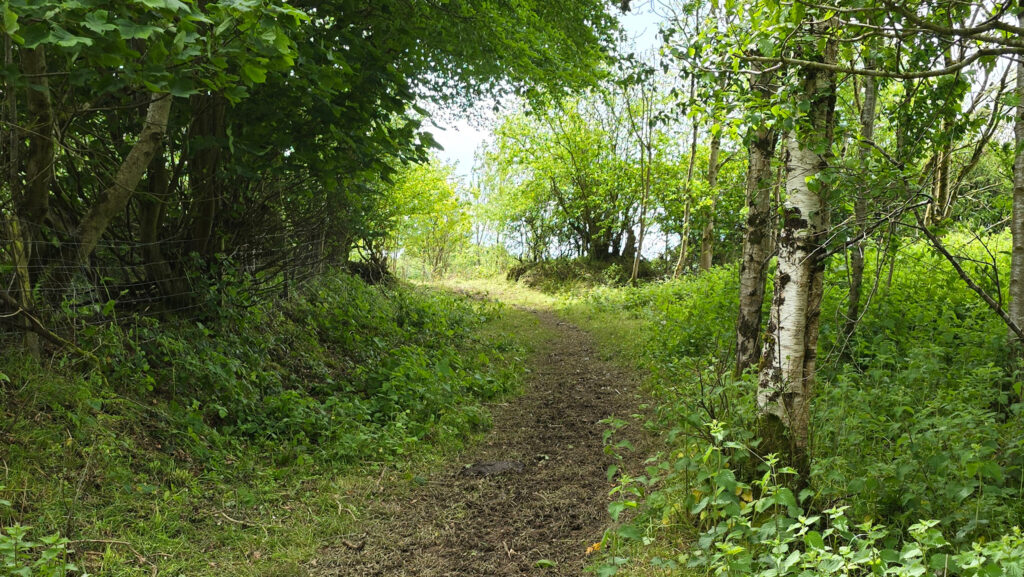 Woodland path at Treberfedd © MAG/Anne Dunn
 Farmers across the UK have been opening their gates this week to showcase how nature-friendly farming can help improve resilience, food production and biodiversity.
Nature Friendly Farming Week, running from 18 until 24 May, is organised by the Nature Friendly Farming Network (NFFN) and focuses on the theme “Solutions for Climate and Communities”.
Events aim to give farmers and members of the public a closer look at how environmental farming practices are being used on working farms.
See also: Climate experts urge food stockpiling to avoid shortages
At the start of the week, the NFFN launched its report, The Nature of Business, at the House of Commons.
The report sets out seven recommendations aimed at helping farmers transition to more sustainable production systems while improving long-term resilience.
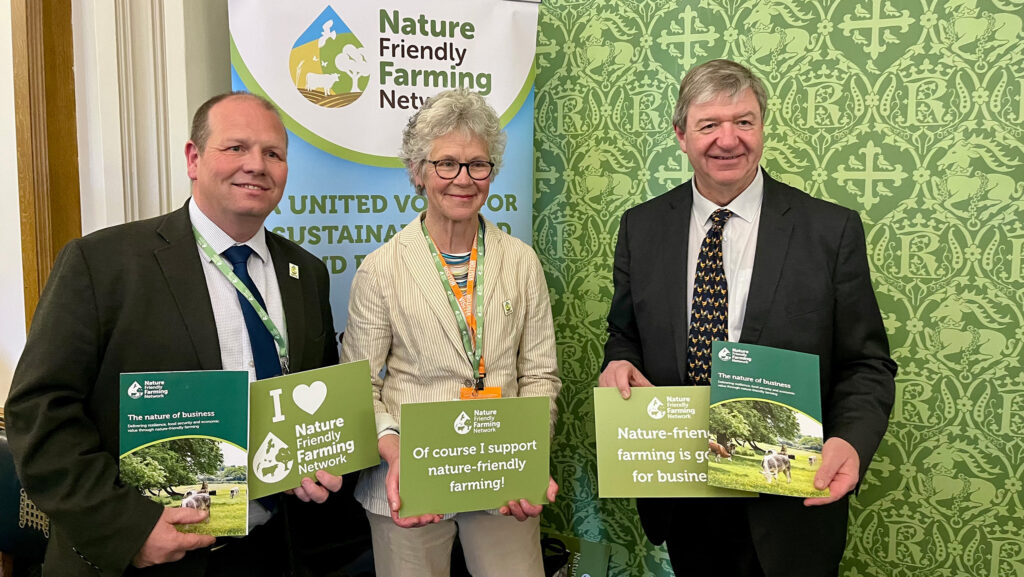
From left: Martin Lines, Denise Walton NFFN Scotland chairman, and MP Alistair Carmichael © MAG/Philip Clarke
NFFN chief executive Martin Lines said farmers had a central role to play in delivering government targets on food security, climate and biodiversity because more than 70% of UK land is managed as farmland.
“However, UK farming is in a challenging economic position,” he said.
“Without clear direction from the government and policymakers, uncertainty remains high, and action is too slow.”
Costly external inputs
The report argues that many farm businesses have become heavily reliant on costly external inputs, including manufactured fertilisers and imported animal feed, leaving them exposed to rising costs and market volatility.
According to the NFFN, production systems focused on maximising output through high input use can leave businesses vulnerable to economic and climate-related shocks.
Instead, the organisation is encouraging farms to adopt approaches centred on “maximum sustainable output”, balancing production with environmental resilience.
The report acknowledges that moving towards regenerative and nature-friendly systems can involve short-term financial pressures, particularly during the transition period when yields may initially fall.
It suggests the environmental, financial and productivity benefits may take between three and 10 years to materialise.
Greater financial support
Because of this, the NFFN is calling for greater public and private financial support to help farmers through the transition.
Other recommendations include encouraging whole-farm policy approaches rather than “pick-and-mix” schemes, improving environmental reporting by businesses, reducing siloed government decision-making, and investing in infrastructure to strengthen food system resilience.
Ceredigion farmer showcases nature-friendly farming
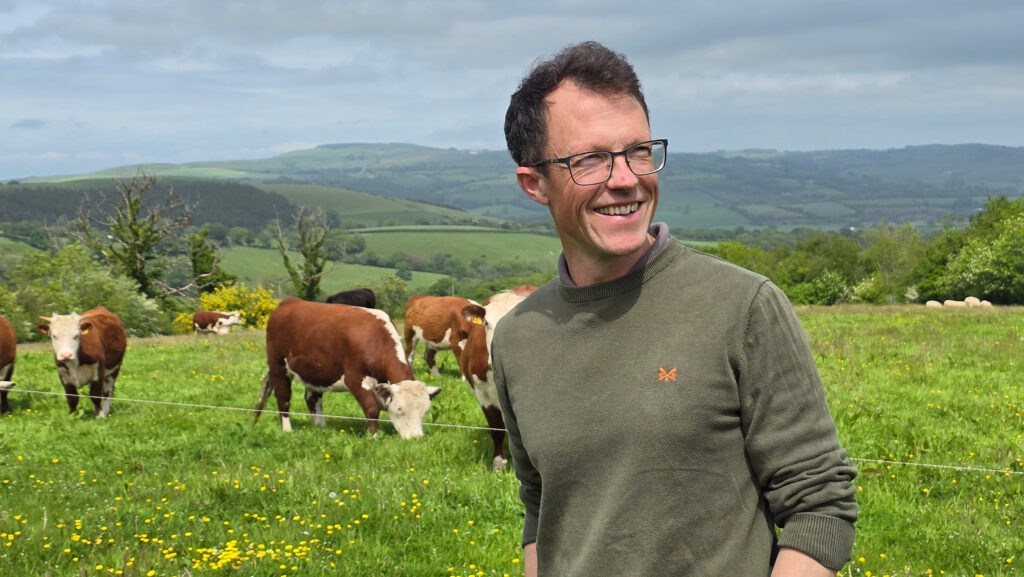
Jack Cockburn @MAG/Anne Dunn
Organic beef and sheep farmer Jack Cockburn has opened his Ceredigion farm to visitors to demonstrate how low-input livestock farming can work alongside biodiversity and soil improvement.
Mr Cockburn has spent about 20 years developing the organic system at Treberfedd, a 68ha farm that combines an 80-head Hereford herd, 80 Llanwenog sheep, woodland and tourism enterprises, including glamping and holiday cottages.
The farming approach focuses on reducing reliance on bought-in fertiliser and feed by using clover, herbal leys and rotational grazing to improve soil and animal health.
Trees and woodland are also integrated into the system through agroforestry, providing shade, shelter and forage for livestock.
Cattle are finished entirely on forage at 28-30 months and housed for around five months during winter.
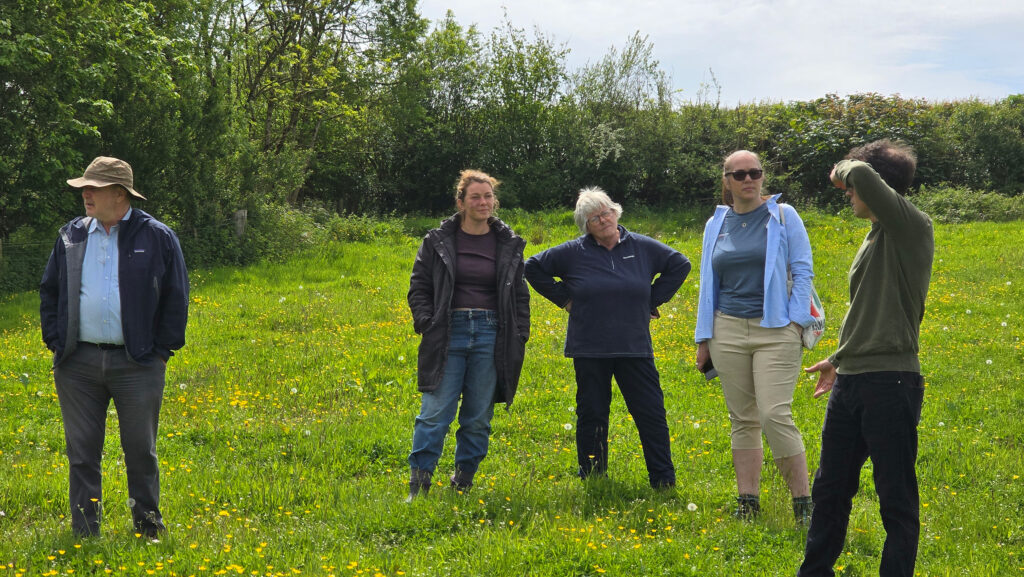
Visitors to Treberfedd © MAG/Anne Dunn
‘Explosion in nature’
Livestock are grazed in four groups on a 40-60 day rotation, allowing longer recovery periods for grassland.
“I’ve realised that if you give the fields a longer rest period between grazing, and you allow plants to set seed and flower more often, then you get deeper-rooting plants, which are more resilient to drought,” said Mr Cockburn.
“You get better soil structure that will increase organic matter levels and you improve your soil organic matter levels, and in turn you also get healthier livestock.”
He said allowing grassland plants to flower and set seed had also boosted wildlife across the farm.
“Alongside that you get an explosion in nature, because by letting plants set seed and flower, it’s great for the birds and the pollinators,” he said.
Woodland benefits
Treberfedd includes about 14ha of woodland, alongside scattered trees and hedgerows, which Mr Cockburn regards as an important part of the farm’s infrastructure.
He said trees help protect livestock during periods of heat and drought by providing shade, shelter and what he described as “emergency paddocks”.
Hedgerows and woodland also provide high-mineral forage and wildlife habitat, he added.
Mr Cockburn said the low-input system had reduced the business’s exposure to fluctuating input prices.
“Other farmers talk about fertiliser prices, input prices, and stuff. I never even look at what the prices are,” he said.