

Restoring nature on farms should be kept simple, OFC delegates told
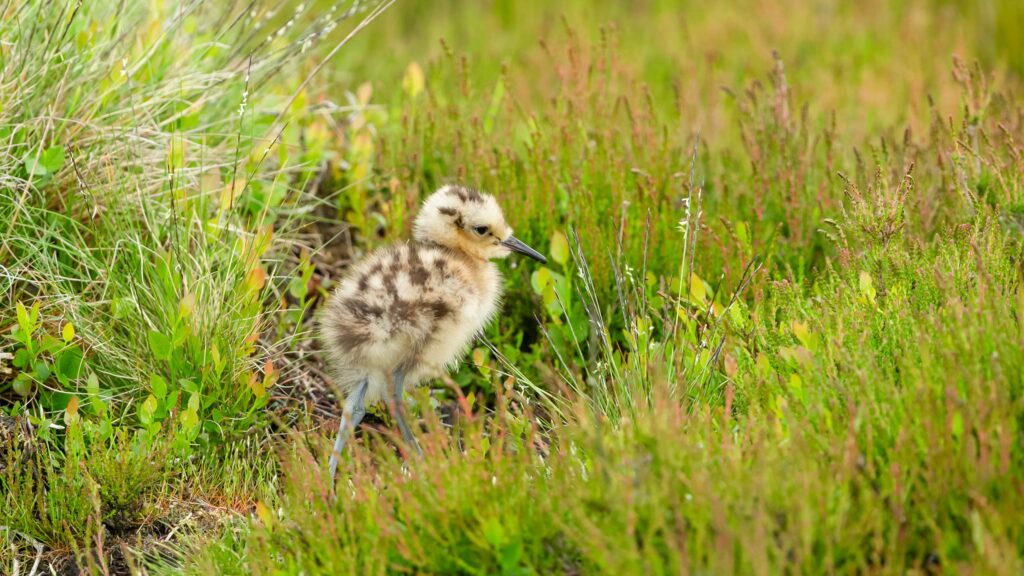 Curlew chick in the grass © Adobe Stock
 Keep it simple and make sure that it pays are key to nature-friendly farming success, delegates at the Oxford Farming Conference (OFC) were told on Thursday (8 January).
Addressing a session on reversing nature decline organised by the RSPB, East Anglian farmer Richard Evans said that, sometimes, doing nothing was the best approach to let nature “bounce back”.
Rather than planting specific pollen and bird food mixes, it was often better to just cultivate the margins and allow the indigenous seed banks to rejuvenate and then “see what happens”, he said.
See also: How financial support helps make nature-friendly farming pay
Nature-friendly farming still had to pay, however, and with the price of livestock currently strong, income from agri-environment measures had to match up.
This was why the various stewardship schemes he was involved in underpinned the business, helping to keep the operation viable.
Dartmoor farmer Naomi Oakley agreed that “less is more”.
She explained that on her regenerative unit, trimming variable costs was key, with bought-in feeds cut to zero and all fertility coming from natural sources.
“If an animal does not fit in with the system, then it has to go,” she said.
She also recommended selling as much as possible to consumers.
Her Dartmoor farm attracted a heavy footfall from visitors.
Ms Oakley said they were willing to “buy into the idea of nature”, with the fleeces from her sheep fetching more from direct sales than the value of their meat.
“Because of farming for nature, our business is thriving,” she said.
Little extras
Northumberland farmer Ian Bell described how he had planted six miles of hedgerows on his holding, connecting up areas of ancient woodland.
And he created 13 ponds to encourage wildlife, from Ospreys to dragon flies.
His core farming had not really changed, but by providing some “little extras” around the sides, nature recovery had been significant.
“Working with nature just makes farming so much more pleasurable,” he said.
Georgie Bray, farm manager at the RSPB’s Hope Farm in Cambridgeshire, agreed that focusing on habitat creation “around the edges” was the best approach, though nature-friendly farming was not always easy and involved management, effort, finance and advice.
For Ana Reynolds, a farmer from Northamptonshire, it was getting off the farm that often made the difference.
Getting out among the community and learning from other farmers was a great way to learn – and then to try things at home and see if it benefited the bottom line.