

Stirling University casts doubt on full value of tree planting
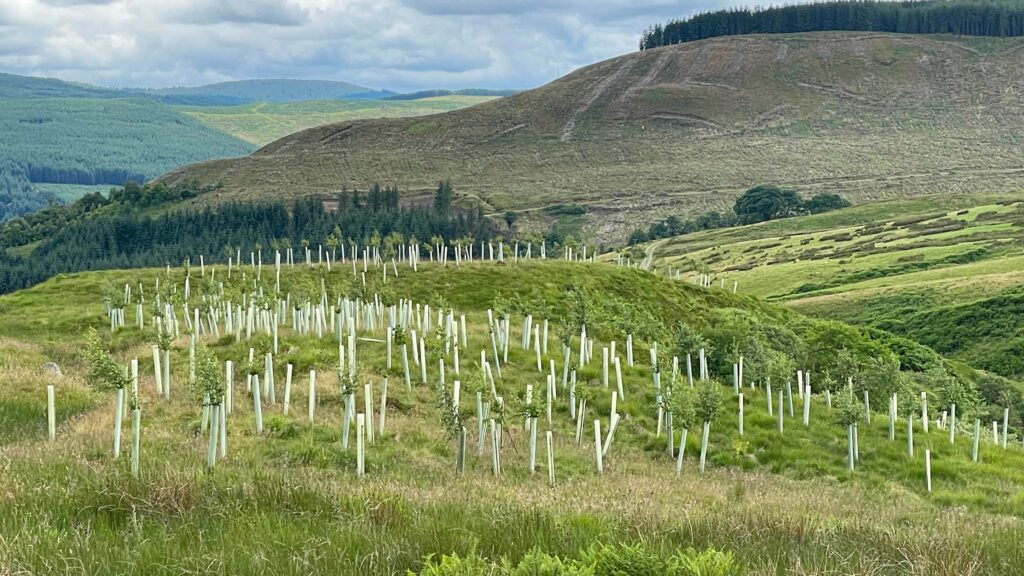 © Adobe Stock
 Planting trees might not be the silver bullet often hoped for when it comes to storing carbon, according to Stirling University.
Published in Global Change Biology, the commentary from Prof Jens-Arne Subke of the university’s faculty of natural sciences, suggests that deep soils found in forests may be less effective at storing carbon in the long term than previously assumed.
Examining the findings of a BOKU University-led study, which focused on European beech forests in Central Europe, Prof Subke said it showed that ignoring deep soil carbon levels could lead to overly optimistic estimates of how much carbon forests can store.
See also: Tree planting at high level despite subdued forestry market
This potentially reduces the net climate benefits of tree planting, he warned.
Prof Subke said: “Our findings emphasised that we cannot over-rely on forests to mitigate the impacts of climate change because there is still so much that we don’t understand.
“Despite accumulating tree biomass, we may be losing carbon capital – the carbon stored long‑term in soils and ecosystems – to the atmosphere.”
No silver bullet
Commentary co-author, Dr Thomas Parker, added: “Forests are an essential for human and planetary wellbeing for a range of reasons, but we need to acknowledge that they are not a silver bullet for all our problems.”
Dr Parker added that there are complexities and “trade-offs that need to be understood” to maximise the net benefits that we gain from forests.
This latest study builds on previous work by Prof Subke, which warned that the climate benefits of tree-planting could be overstated if soil carbon losses aren’t included in calculations.
Better storage in grassland
Examining pine plantations in Scotland, researchers took soil samples from 16 sites in the Scottish Lowlands where pines had been planted on former long-term grasslands, with the oldest planted 68 years ago.
These samples were analysed to assess both carbon content and stability, consistently showing that soil carbon declined as trees aged.
It also found that soils under mature pine forests had about half as much carbon as nearby soils that remained in grassland, and that the carbon lost from the soil was roughly equal to a third of the carbon the trees had absorbed from the atmosphere.
Presumed benefits
François-Xavier Joly, who led the study in Prof Subke’s research team, added: “There are important financial incentives for landowners to plant more trees; however, these are linked to presumed benefits brought by a change in vegetation towards forests.”
He added that their research has added an important aspect to these schemes by clarifying the consequences of tree planting within the soil.
“Administration of the Woodland Carbon Code, or equivalent schemes, must take account of potential soil losses – which we were able to demonstrate across a significant area in Scotland,” said Dr Joly.
Full range of habitats
Commenting on the finding, Nature Friendly Farming Network chief executive Martin Lines said: “Trees on farms are increasingly important as our climate becomes more volatile.
“However, this research makes clear that they are not a silver bullet capable of solving every challenge on their own.”
Mr Lines added that this instead highlights the importance of protecting and enhancing all carbon-storing habitats, and further reinforces how vital farmland is in the battle against climate change.
“Well-managed, nature-friendly farms can contain grasslands, restored peatlands and agroforestry systems, each capable of sequestering carbon while delivering wider climate and biodiversity benefits,” he said and added that our soil could in fact be our biggest carbon asset.
“We need a carbon policy that takes a holistic approach, one that values carbon storage across whole farm systems while also prioritising meaningful emission reductions.”